🇯🇵 Magic in Japan
362 entries from Japan, best known first, across 80 places of magic.
Onmyōdō is a Japanese system of divination and ritual magic rooted in the Chinese philosophies of yin-yang and the five elements. It evolved from astronomical and calendrical knowledge into a court institution that blended with Shinto beliefs to manage fortune, health, and spiritual protection.
- Abe no Seimei is the most famous onmyoji, active in the Heian period
- Shikigami are spirit servants summoned and controlled by practitioners
- Katatagae involves changing direction to avoid unlucky bearings
- The Tensha Shinto Prohibition Ordinance banned the practice in 1870
- Onmyoji handled kegare, spiritual pollution, unlike Shinto priests
Overview
This tradition began as an import from China and Korea during the sixth century, combining astronomy, calendar science, and elemental theory. Over time, it merged with indigenous Japanese beliefs, particularly Shinto and the worship of restless spirits known as goryo. The practice shifted from high-level state advisory work to include magical rites for protection and cursing. By the Heian period, it had become a distinct Japanese system that addressed both political decisions and personal well-being through the manipulation of auspicious forces.
Practices and beliefs
Practitioners used complex calculations based on celestial movements and seasonal changes to determine lucky or unlucky times and directions. They performed rituals to ward off evil influences, prevent disasters, and ensure agricultural success. A key feature was the summoning and control of shikigami, which were spirit servants used to carry out tasks or protect the practitioner. Divination helped guide major life events, such as moving capitals or choosing marriage dates, by identifying harmful energies in the environment.
Rites and charms
Rituals often involved purification and specific gestures to align with cosmic forces. Unlike Shinto priests who avoided impurity, onmyoji could handle kegare, or spiritual pollution, allowing them to perform protective ceremonies that others could not. These rites included casting talismans and conducting exorcisms to calm angry spirits. The community also observed strict rules about direction; if a person faced an unlucky bearing, they would change their path to avoid bad luck, a practice called katatagae.
Who practises
The main figures were onmyoji, civil servants appointed by the imperial court to manage these arts. They served as astronomers, diviners, and spiritual guards for the capital. Famous lineages, such as the Abe and Kamo families, dominated the field for centuries. Abe no Seimei remains the most celebrated figure, known for his exceptional skill in divination and magic. Today, while the official role has vanished, the title persists in popular culture as a symbol of occult mastery.
Regions and communities
The practice originated in the imperial capital and was centered around the court aristocracy. Its influence spread from the elite to the general public as the need for personal protection grew. The Abe and Kamo families held monopolies on the highest levels of the art within the capital region. Outside the court, local interpretations may have varied, but the core techniques remained tied to the centralized calendar and astronomical data maintained by the state.
The calendar
Daily life and major events were scheduled according to the onmyodo calendar. Specific days and hours were designated as auspicious or inauspicious for activities like starting a journey, building a house, or holding a funeral. The changing seasons dictated different types of rituals, with particular attention paid to transitional periods believed to be vulnerable to spiritual interference. Festivals and religious observances were often timed to coincide with favorable celestial alignments.
Law and the state
The system was officially part of the government structure under the Taiho Code, which defined the duties of onmyoji. In 1870, the Tensha Shinto Prohibition Ordinance banned the practice, labeling it superstition. After World War II, religious freedom allowed its revival, leading to the formation of modern organizations like Tensha Tsuchimikado Shinto in 1954. The legal status shifted from state mandate to private religious association.
Today
Modern Japan sees onmyodo primarily through popular media, including manga, anime, and novels that romanticize its history. While some groups claim continuity with the ancient traditions, the practice is largely a cultural heritage rather than a widespread religious activity. Scholars study it as a historical blend of science and magic, reflecting how pre-modern societies understood the natural world.
The facts in this overview come from the Wikipedia article "Onmyōdō", written by its contributors and used under the CC BY-SA 4.0 licence. EveryJaadu rewrote the text in its own words, with AI assistance, and compares every page with the article to make sure no passage is copied. It may be reused under the same CC BY-SA 4.0 licence with a link back.
Places of magic in Japan
 🇯🇵 JapanAshiya Dōman蘆屋道満
A legendary Heian onmyōji known for his rivalry with Abe no Seimei and his use of cursesFigure · Cursing and harm · Power and authority Legendary
 🇯🇵 JapanTengu天狗
Japanese mountain spirits that evolved from ominous birds into protective forest guardians.Being · Cursing and harm · Protection Legendary
 🇯🇵 JapanKitsuneきつね
A Japanese fox spirit known for shapeshifting and trickeryBeing · Cursing and harm · Protection Legendary
 🇯🇵 JapanKappa河童
A river-dwelling yōkai known for its head dish and love of cucumbersBeing · Cursing and harm · Wonder and entertainment Legendary
 🇨🇳 China and 2 moreFox spirit狐狸精
A shapeshifting creature from Chinese folklore that can take human form and live for centuries.Being · Cursing and harm · Love and attraction Legendary
 🇯🇵 Japan and 2 moreTamamo-no-Mae玉藻前
A nine-tailed fox spirit from Japanese legend who possessed emperors and concubines across Asia.Figure · Cursing and harm · Power and authority Legendary
🇯🇵 JapanJorōgumo絡新婦 (kanji), じょろうぐも (hiragana)
A shapeshifting spider yōkai of Japanese folklore that lures victims with human guise.Being · Cursing and harm Legendary
 🇯🇵 Japan and 1 moreRokurokubiろくろ首
A Japanese spirit with a stretching neck or a flying headBeing · Cursing and harm · Speaking with spirits and the dead Legendary
🇯🇵 JapanKuda-gitsune管狐 (kuda-gitsune)
A small spirit kept in a tube or sleeve, used by Japanese folk practitioners for divination and cursing.Being · Seeing and foretelling · Cursing and harm Legendary
🇯🇵 JapanIttan-momen一反木綿
A flying cloth yōkai from Japanese folklore that warns children to stay indoors at nightBeing · Cursing and harm Legendary
 🇯🇵 JapanHyakki Yagyō百鬼夜行
A Japanese folklore concept of a night parade of supernatural creaturesBelief · Cursing and harm · Wonder and entertainment Legendary
🇯🇵 JapanOsaki尾先
A mountain spirit in Japanese folklore that brings wealth or possession.Being · Luck and prosperity · Cursing and harm Legendary
 🇯🇵 JapanTide jewels潮干る珠 (Shiohiru-tama) and 潮満つ珠 (Shiomitsu-tama)
Two magical gems from Japanese mythology that control the tides to drown or save enemies.Charm · Cursing and harm · Power and authority Legendary
🇯🇵 JapanHito-gitsune人狐
A spirit of a small marten that possesses people in western JapanBelief · Cursing and harm · Luck and prosperity Legendary
 🇯🇵 JapanGashadokuroがしゃどくろ
A giant skeleton spirit born from the bones of those who died in war or famine.Being · Cursing and harm Legendary
🇯🇵 JapanRaijū雷獣
A Japanese lightning creature that sleeps in navels and falls from stormsBeing · Cursing and harm Legendary
 🇮🇩 Indonesia and 1 moreVengeful ghost
A restless spirit said to return from death to punish those who caused harmBeing · Cursing and harm Legendary
🇯🇵 JapanKijo鬼女
A demon woman from Japanese folklore, born of resentment and karma.Being · Cursing and harm Legendary
 🇯🇵 JapanShikome黄泉醜女 (Yomotsu-shikome)
A hag from the Japanese underworld who pursued Izanagi after he shamed Izanami.Figure · Cursing and harm Legendary
🇯🇵 JapanMazoku魔族
Supernatural beings in Japanese myth and fantasy, often evil.Being · Cursing and harm Legendary
 🇯🇵 JapanTesso鉄鼠
A Japanese yōkai born from a monk’s curse and the destructive power of ratsBeing · Cursing and harm · Power and authority Legendary
🇯🇵 Japan and 2 moreChimimōryō魑魅魍魎
A Chinese term for mountain and river spirits that spread to Japan and VietnamBeing · Cursing and harm Legendary
🇯🇵 JapanShichinin misaki七人ミサキ
A group of seven vengeful ghosts from Japan that appear near water and kill those who see them.Being · Cursing and harm Legendary
🇨🇳 China and 1 moreFengxi封豨
A two-headed boar monster and ancient rain deity from Chinese mythBeing · Cursing and harm · Seeing and foretelling Legendary
🇨🇳 China and 1 moreKakuen玃猿 (Jué yuán)
A legendary ape-like creature from Chinese and Japanese folklore known for abducting humans.Being · Cursing and harm Legendary
🇯🇵 JapanNure-onna濡女
A Japanese water spirit with a woman's face and a serpent body that lures victims with an infant.Being · Cursing and harm Legendary
 🇯🇵 JapanAkashita赤舌
A red-tongued beast from Edo-period scrolls, tied to water and bad daysBeing · Protection · Cursing and harm Legendary
🇨🇳 China and 1 moreMōryō魍魎
Spirits of nature and graves in East Asian folklore, often linked to corpse theft.Being · Cursing and harm Legendary
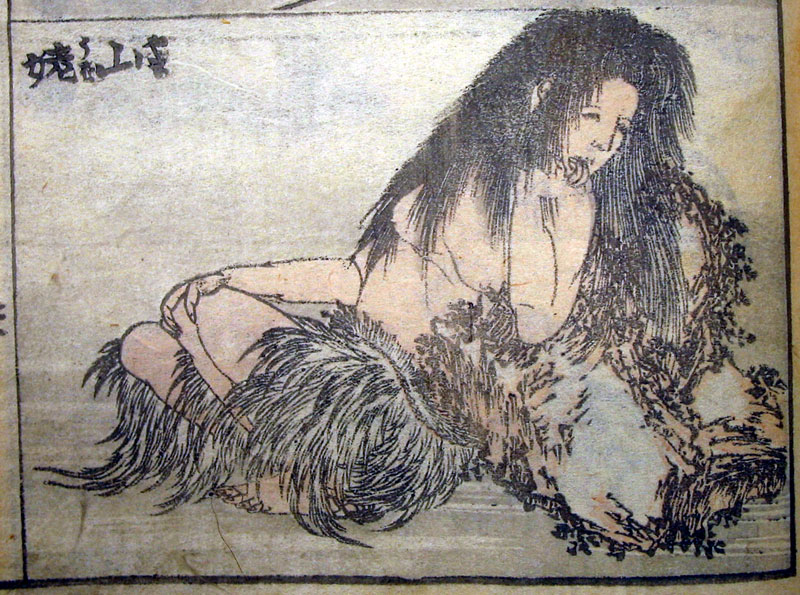 🇯🇵 JapanYama-uba山姥
A Japanese mountain spirit depicted as either a cannibalistic monster or a benevolent guardian.Being · Cursing and harm · Luck and prosperity Legendary
🇯🇵 JapanTenome手の目
A Japanese yōkai with eyes on its palms, known from Edo-period illustrations and tales.Being · Cursing and harm Legendary
🇯🇵 JapanOkuri-inu送り犬
A Japanese yōkai that follows travelers on mountain paths at nightBeing · Cursing and harm · Protection Legendary
🇯🇵 JapanAmikiri網切
A scorpion-like Japanese yōkai said to snip nets, mosquito nets and blindsBeing · Cursing and harm Legendary
🇯🇵 JapanAzukibabaaあずきばばあ
A Japanese yōkai that mimics the sound of red beans to lure or frighten peopleBeing · Cursing and harm Legendary
 🇯🇵 JapanAmazake-babaa甘酒婆
A hag of northern Japanese legend whose night-time question brings sickness when answeredBeing · Protection · Cursing and harm Legendary
 🇯🇵 JapanShidaidaka次第高
A tall spirit in Japan that grows when you look up and shrinks when you look down.Being · Cursing and harm Legendary
🇯🇵 JapanKeneō懸衣翁
A Japanese oni who judges souls by the weight of their clothes at the Sanzu RiverBeing · Cursing and harm Legendary
🇯🇵 JapanFutakuchi-onnaふたくちおんな (二口女)
A Japanese yōkai: a woman with a second, hungry mouth hidden in her hairBeing · Change and initiation · Cursing and harm Legendary
🇯🇵 JapanBake-kujira化鯨
A skeletal whale spirit from Japanese coastal folklore, said to avenge whaling.Being · Cursing and harm Legendary
🇯🇵 JapanAzukiarai小豆洗い
A Japanese water yōkai heard washing beans, said to pull the curious into the waterBeing · Cursing and harm Legendary
🇯🇵 JapanMokumokuren目目連
A Japanese yōkai of eyes that crowds the tears in a paper screenBeing · Cursing and harm Legendary
🇯🇵 JapanWanyūdō輪入道
A flaming wheel with a monk's head that steals souls in Japanese folkloreBeing · Cursing and harm · Speaking with spirits and the dead Legendary
 🇨🇳 China and 3 moreSwan maiden
A folk motif where a man steals a bird-woman's feather cloak to force marriage.Figure · Love and attraction · Cursing and harm Legendary
🇯🇵 JapanFurutsubaki-no-rei古椿の霊
A spirit said to live in old camellia trees, appearing as a woman who lures or warnsBeing · Cursing and harm · Seeing and foretelling Legendary
 🇯🇵 JapanAkaname垢嘗
A Japanese bath yōkai said to lick grime from tubs at nightBeing · Cleansing and purification · Cursing and harm Legendary
 🇯🇵 JapanŌkubi大首
A huge female head among Japan's yōkai, said to be a vengeful spirit that sickensBeing · Cursing and harm Legendary
 🇯🇵 JapanOtoroshiおとろし
A Japanese yōkai with blue skin and tusks that guards temple gates and punishes the wicked.Being · Protection · Cursing and harm Legendary
 🇯🇵 JapanShuten-dōji酒呑童子
A demon leader of Japanese legend, slain by a warrior after a drinking trickBeing · Cursing and harm Legendary
 🇯🇵 JapanHitotsume-nyūdō独眼僧
A one-eyed Japanese monk spirit from folklore and legendBeing · Cursing and harm Legendary
Photo credits on this page
The small pictures above come from Wikimedia Commons under free licences. Some are cropped to fit.
- Tengu: Katsushika Hokusai, Public domain, source
- Minamoto no Yorimitsu: Yoshitoshi, Public domain, source
- Fox spirit: Chen Menglei, Public domain, source
- Tamamo-no-Mae: ウィキ太郎 Wiki Taro, Public domain, source
- Ashiya Dōman: Unknown author, CC BY-SA 3.0, source
- Vengeful ghost: Tsukioka Yoshitoshi; Tsukioka Yoshitoshi died 1892; Negishi Chokuzan;, Public domain, source
- Akashita: Brigham Young University, CC BY-SA 4.0, source
- Yama-uba: Unknown author, Public domain, source
- Amazake-babaa: Fred Cherrygarden, CC BY-SA 4.0, source
- Shidaidaka: by Reggaeman, CC BY-SA 3.0, source
- Shikome: Raita Futo, CC BY 2.0, source
- Rokurokubi: Unknown author, CC BY 4.0, source
- Hyakki Yagyō: Unknown author, Public domain, source
- Swan maiden: Walter Crane, Public domain, source
- Tesso: Katsushika Hokusai, Public domain, source
- Gashadokuro: Unknown author, Public domain, source
- Tide jewels: Shizhao, CC BY-SA 3.0, source
- Kitsune: Yoshitoshi, Public domain, source
- Kappa: Unknown author, CC0, source
- Akaname: Ueda Hiromitsu 上田寛満 (illust.) fl. c. 1780, CC0, source
- Ōkubi: Unknown author, Public domain, source
- Otoroshi: Unknown author, Public domain, source
- Hitotsume-nyūdō: Kashiwa Seiho (柏正甫), Public domain, source
The weekly digest
Every Monday: seven entries you may not know, what is on the calendar this week, and one rite drawn step by step.