Kakuen
In its own language: 玃猿 (Jué yuán)
A legendary ape-like creature from Chinese and Japanese folklore known for abducting humans.
The kakuen is a mythical beast described in ancient Chinese texts and later adopted into Japanese folklore. It resembles a large monkey that walks upright and is said to abduct human women to serve as wives and mothers for its offspring.
- The kakuen is a large, dark blue ape that walks upright.
- It abducts human women to serve as wives and mothers.
- Ancient texts claim it evolves from monkeys living for centuries.
- Japanese folklore links it to the yokai known as kuronbō.
- Its victims may return to villages with children bearing the Yang surname.
What it is
The kakuen, or jue yuan, is a legendary animal found in the folklore of China and Japan. It is described as a large, dark blue ape that stands about 1.6 meters tall and walks on two legs like a human. Ancient medical and supernatural texts describe it as an old monkey that has lived for centuries. The creature is primarily known for its habit of kidnapping human women from mountain villages. These women are taken as wives and forced to bear children with the beast.
Where it comes from
The creature appears in several classical Chinese works. The Bencao Gangmu describes it as an aged monkey with a dark blue hue that can walk like a person. Other texts, such as the Baopuzi, suggest it is the result of a rhesus monkey living for hundreds of years. The In Search of the Supernatural places these beings in the mountains of southwest Shu. Later Japanese encyclopedias from the Edo period adopted the concept, linking it to local mountain spirits known as yamako.
How it is done
The kakuen is said to distinguish between men and women by scent. It targets solitary women passing through mountain paths or living near streams. After abduction, the women are kept in the mountains. If they fail to produce children, they are not allowed to leave and eventually lose their human will and appearance. Those who give birth may return to human villages with their children, though they often raise them out of fear for the child's survival if left alone.
Kakuen, drawn and placed
- Living
- Revived
- Fading
- Historical
- Legendary
- Performed
Peoples and places
In China, the kakuen is linked to the origin of the Yang surname in southwest Shu, with tales claiming many locals are descendants of these unions. In Japan, the creature was associated with yokai such as the kuronbō. These were described as black, hairy, monkey-like beings that could understand human speech and read minds. Artists like Sekien Toriyama depicted the kakuen under the name satori, illustrating its role in Japanese supernatural lore during the Edo period.
At a glance: who, where and when
Belief worlds
What people believe
Folklore holds that the kakuen lives for thousands of years, evolving from smaller monkeys over centuries. The creatures are said to possess no females of their own, necessitating the abduction of human women. A specific tale recounts a kakuen disguising itself as a ferryman to help people cross a river. When attacked by a suspicious traveler, the beast revealed its true form and emitted a foul odor when burned, confirming its supernatural nature.
How scholars and sceptics see it
Modern scholars and cryptid enthusiasts have noted similarities between the kakuen and the yeren, a Chinese apelike cryptid. Historians trace the evolution of the myth from Chinese medical texts to Japanese yokai encyclopedias. The connection between the Chinese jue yuan and the Japanese kuronbō is debated, with some noting textual references while others argue the link is not conclusive.
Compare and confuse
The kakuen shares traits with the chóu, a western mythical creature that kidnaps men instead of women. Both are monkey-like beings that bridge human and animal worlds through abduction. In Japan, the kakuen is often compared to the satori and kuronbō, which are also mountain-dwelling, intelligent, and elusive creatures.
Questions people ask about Kakuen
What is a kakuen?
The kakuen is a legendary ape-like creature from Chinese and Japanese folklore. It is described as a large, dark blue monkey that walks like a human and is known for abducting women from mountain villages.
Where does the kakuen come from?
The creature originates in ancient Chinese texts such as the Bencao Gangmu and In Search of the Supernatural. It was later adopted into Japanese folklore during the Edo period, where it was associated with local mountain spirits.
What does the kakuen do to humans?
The kakuen is said to abduct human women by scent. It keeps them in the mountains to bear children. Women who produce offspring may return to human society, while those who do not remain trapped in the mountains.
Good reading and sources
The facts on this page come from the Wikipedia article "Jueyuan (mythology)", written by its contributors and used under the CC BY-SA 4.0 licence, and from its Wikidata record (CC0). EveryJaadu rewrote the text in its own words, with AI assistance, and compares every page with the article to make sure no passage is copied. It may be reused under the same CC BY-SA 4.0 licence with a link back.
It may contain mistakes. Names and customs differ from one community to the next, and some knowledge is closed to outsiders and left out here. This page describes belief and practice. It does not say that any of it works, it is not a how-to, and it is not medical advice. If something is wrong, tell us. Last refreshed 2026-10-06.
More from China
All the entries from China 🇨🇳 China and 3 moreChinese dragon龍
A legendary water deity and imperial symbol in East Asian cultureBeing · Protection · Luck and prosperity Historical
🇨🇳 China and 3 moreChinese dragon龍
A legendary water deity and imperial symbol in East Asian cultureBeing · Protection · Luck and prosperity Historical
 🇨🇳 ChinaLan Caihe藍采和
An ambiguous Taoist immortal known for a flower basket and wandering songsBeing · Wonder and entertainment Legendary
🇨🇳 ChinaLan Caihe藍采和
An ambiguous Taoist immortal known for a flower basket and wandering songsBeing · Wonder and entertainment Legendary
 🇨🇳 China and 2 moreXiezhi獬豸
A one-horned beast from East Asia that separates the guilty from the innocentBeing · Cursing and harm · Protection Legendary
🇨🇳 China and 2 moreXiezhi獬豸
A one-horned beast from East Asia that separates the guilty from the innocentBeing · Cursing and harm · Protection Legendary
 🇨🇳 China and 2 moreEight Immortals八仙
Eight legendary Taoist figures of China, each with a power and a vesselFigure · Protection · Healing Living
🇨🇳 China and 2 moreEight Immortals八仙
Eight legendary Taoist figures of China, each with a power and a vesselFigure · Protection · Healing Living
Related elsewhere
All being 🇷🇸 Serbia and 5 moreVampire
An undead creature from folklore that feeds on the blood or life force of the livingBeing · Cursing and harm · Luck and prosperity Legendary
🇷🇸 Serbia and 5 moreVampire
An undead creature from folklore that feeds on the blood or life force of the livingBeing · Cursing and harm · Luck and prosperity Legendary
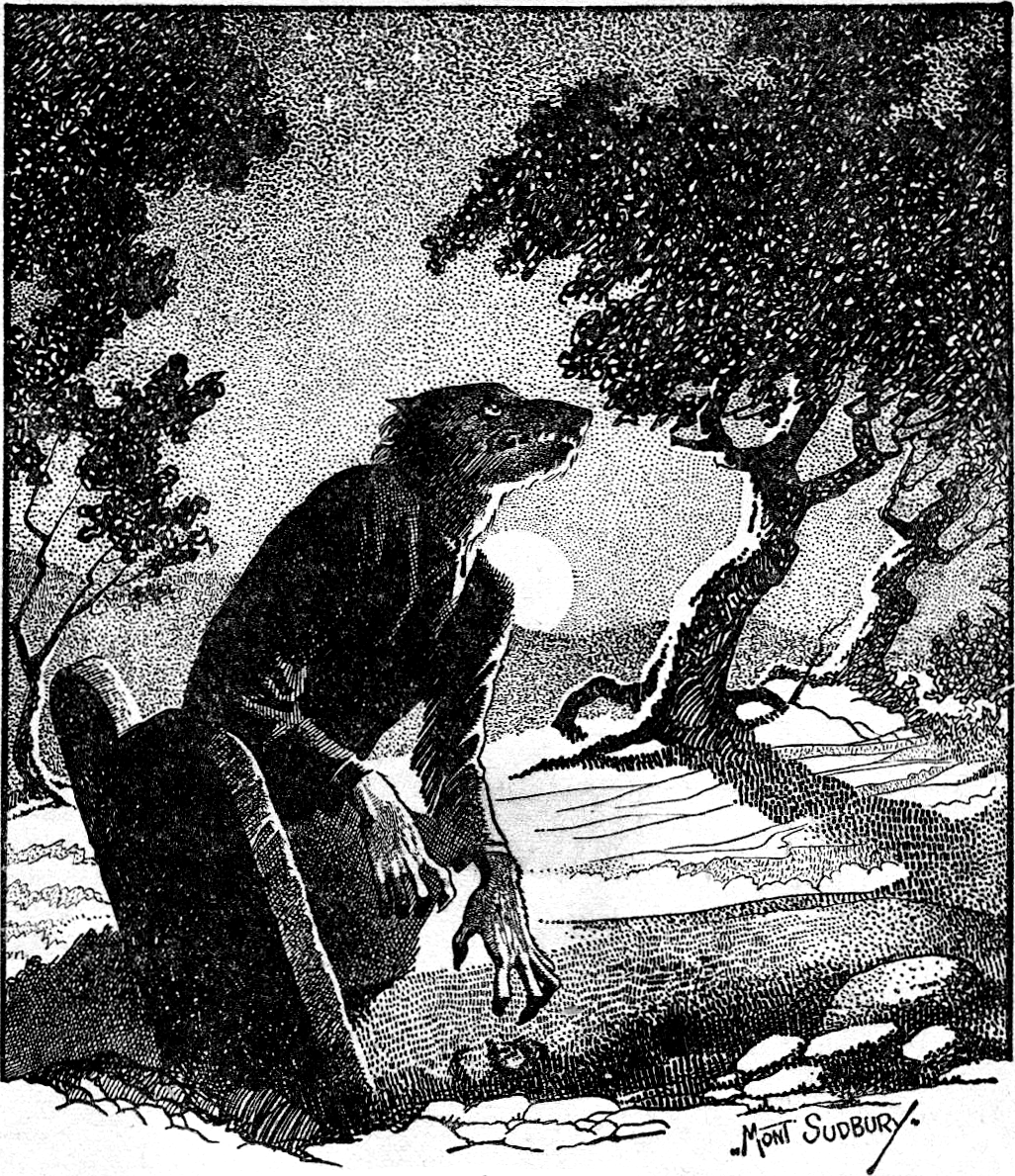 🇫🇷 France and 5 moreWerewolf
A mythical shapeshifter that turns into a wolf, central to European witch-hunts and Gothic horror.Being · Cursing and harm · Wonder and entertainment Legendary
🇫🇷 France and 5 moreWerewolf
A mythical shapeshifter that turns into a wolf, central to European witch-hunts and Gothic horror.Being · Cursing and harm · Wonder and entertainment Legendary
 🇪🇬 Egypt and 1 moreLilithלִילִית
A feminine figure from Mesopotamian and Jewish mythology, often depicted as a night demon or spirit.Being · Cursing and harm Legendary
🇪🇬 Egypt and 1 moreLilithלִילִית
A feminine figure from Mesopotamian and Jewish mythology, often depicted as a night demon or spirit.Being · Cursing and harm Legendary
 🇪🇬 EgyptCurse
A spoken wish for misfortune to befall a person or placeBelief · Cursing and harm · Luck and prosperity Historical
🇪🇬 EgyptCurse
A spoken wish for misfortune to befall a person or placeBelief · Cursing and harm · Luck and prosperity Historical