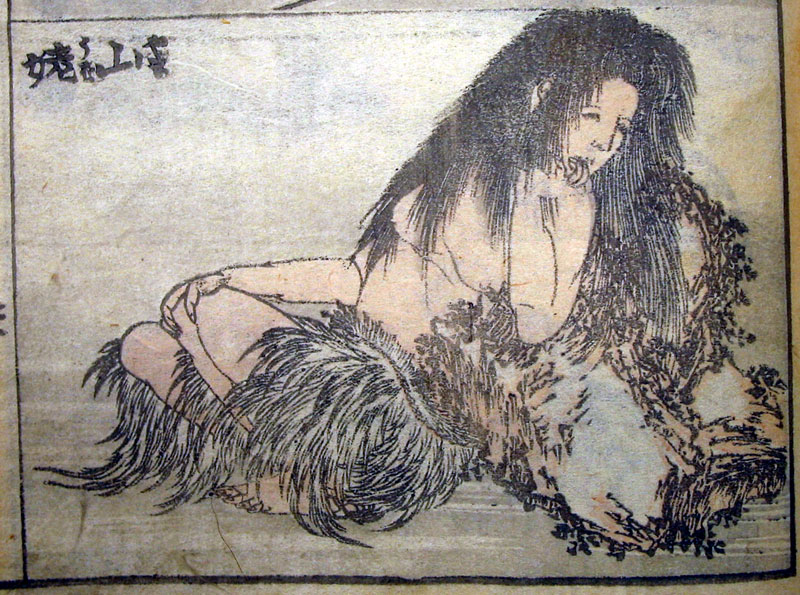
Yama-uba
In its own language: 山姥
from Japanese yama (mountain) and uba (old woman)
A Japanese mountain spirit depicted as either a cannibalistic monster or a benevolent guardian.
Yama-uba is a yōkai from Japanese folklore found in tales across the archipelago. She appears as an old woman who may devour travelers or raise human children to become heroes. Her nature shifts between terrifying predator and protective deity depending on the region and story.
- She may have a second mouth hidden under her long white hair.
- She raised the hero Kintarō, who became the warrior Sakata no Kintoki.
- In some tales, she gives treasure to kind sisters and curses rude ones.
- Her weakness in one story is a specific flower containing her soul.
- Noh drama depicts her as a fairy who cares for the mountains.
What it is
Yama-uba is a figure from Japanese folklore classified as a yōkai, or supernatural entity. The name translates to mountain old woman. Stories describe her as a monstrous crone with long, unkempt golden-white hair and a mouth hidden beneath it. In some accounts, she possesses cannibalistic tendencies and preys on travelers. Other tales portray her as a benevolent being who cares for lost children or grants fortune. This duality makes her a complex figure in Japanese myth.
Where it comes from
The concept of yama-uba emerges from regional folktales throughout Japan. Variations exist in names such as yamahaha or yamahime. Some legends suggest she has cared for the mountains since the world began. The character appears in Noh drama, where she is depicted as a fairy of the mountains who decks them with snow and blossoms. Western writers like Lafcadio Hearn later introduced these tales to global audiences, often emphasizing her fearsome aspects.
Tools and materials
Tales mention specific items associated with her. A cauldron that fits only a small amount of rice is used by a gentle variant. A golden chain falling from the sky appears in stories where she chases victims. Her physical features include long white hair and sometimes sores on her body. In one legend, her soul is contained within a certain flower, which serves as her only weakness.
Yama-uba, drawn and placed
- Living
- Revived
- Fading
- Historical
- Legendary
- Performed
- Lineage
- Japanese yōkai tradition
What it is for
Her role varies by story. In frightening tales, she hunts merchants and ox drivers along mountain paths, intending to eat them. Conversely, she acts as a foster mother to the hero Kintarō, raising him to become the warrior Sakata no Kintoki. In other regions, she rewards kind sisters with treasure or curses ill-mannered ones. Some families deify her as a protective god believed to bring wealth to their homes.
Peoples and places
Stories feature yama-uba across many Japanese prefectures. In Miyazaki, a related spirit called yamahime sings in the mountains. Hokkaido and Shikoku tales pair her with a mountain old man and child. Shizuoka legends describe her resting in houses or appearing as a beautiful young woman. In Kagawa, river variants are known as kawajorō. Nagano and Kōchi have unique local versions involving single-eyed monsters or household guardians.
At a glance: who, where and when
Peoples
Belief worlds


What people believe
Yama-uba reflects ancient beliefs about the dangers and mysteries of the wild mountains. She embodies the fear of getting lost or being eaten by predators. At the same time, she represents the potential for kindness from strangers. The duality suggests that nature itself is neither purely good nor evil but depends on how one interacts with it. Her transformation into a deity shows how fear can evolve into reverence.
How scholars and sceptics see it
Scholars study yama-uba as part of Japanese mythology and folklore. Writers like Michael Ashkenazi and Patricia Monaghan document her place in broader mythological contexts. Lafcadio Hearn’s translations shaped Western perceptions, often highlighting her cannibalistic traits. Academic analysis focuses on her dual nature and regional variations, tracing how oral traditions evolved into literary and theatrical forms like Noh drama.
Compare and confuse
Yama-uba shares traits with Baba Yaga from Slavic folklore, another mountain-dwelling female figure who can be helpful or harmful. She is also similar to the onibaba, a demoness known for cannibalism and infanticide. Modern pop culture references include the Pokémon species Jynx, which draws visual inspiration from her appearance. These comparisons highlight common archetypes of the wild woman across different cultures.
Questions people ask about Yama-uba
What is a yama-uba?
A yama-uba is a yōkai from Japanese folklore, meaning mountain old woman. She appears as an old woman who may be a cannibalistic monster or a benevolent guardian of travelers and children.
Where does the term come from?
The name comes from Japanese words: yama for mountain and uba for old woman. Variations include yamamba and yamanba, reflecting different regional dialects and spellings.
Is she always evil?
No. While some tales depict her as a predator who eats travelers, others show her as a kind figure who raises human children or grants fortune to those who treat her well.
How is she connected to famous heroes?
In one popular legend, she finds and raises the orphan Kintarō. He grows up to become the famous warrior Sakata no Kintoki, showing her role as a foster mother rather than just a monster.
Good reading and sources
- Yama-uba on WikipediaEncyclopedia
- More photos on Wikimedia CommonsPhotos and video
- Wikidata recordOpen data
The facts on this page come from the Wikipedia article "Yama-uba", written by its contributors and used under the CC BY-SA 4.0 licence, and from its Wikidata record (CC0). EveryJaadu rewrote the text in its own words, with AI assistance, and compares every page with the article to make sure no passage is copied. It may be reused under the same CC BY-SA 4.0 licence with a link back.
It may contain mistakes. Names and customs differ from one community to the next, and some knowledge is closed to outsiders and left out here. This page describes belief and practice. It does not say that any of it works, it is not a how-to, and it is not medical advice. If something is wrong, tell us. Last refreshed 2026-10-06.
More from Japan
All the entries from Japan 🇨🇳 China and 3 moreChinese dragon龍
A legendary water deity and imperial symbol in East Asian cultureBeing · Protection · Luck and prosperity Historical
🇨🇳 China and 3 moreChinese dragon龍
A legendary water deity and imperial symbol in East Asian cultureBeing · Protection · Luck and prosperity Historical
 🇯🇵 JapanOni鬼(おに)
A horned demon of Japanese folklore known for strength and evil deedsBeing · Cursing and harm · Luck and prosperity Legendary
🇯🇵 JapanOni鬼(おに)
A horned demon of Japanese folklore known for strength and evil deedsBeing · Cursing and harm · Luck and prosperity Legendary
 🇯🇵 JapanBaku獏
A Japanese spirit said to eat bad dreams and protect sleepersBeing · Protection Living
🇯🇵 JapanKuda-gitsune管狐 (kuda-gitsune)
A small spirit kept in a tube or sleeve to aid fortune-telling and cursing in Japanese folklore.Being · Seeing and foretelling · Cursing and harm Legendary
🇯🇵 JapanBaku獏
A Japanese spirit said to eat bad dreams and protect sleepersBeing · Protection Living
🇯🇵 JapanKuda-gitsune管狐 (kuda-gitsune)
A small spirit kept in a tube or sleeve to aid fortune-telling and cursing in Japanese folklore.Being · Seeing and foretelling · Cursing and harm Legendary
Related elsewhere
All being 🇮🇳 India and 1 moreNavagrahaनवग्रह
A group of nine celestial deities in Hinduism that govern fate and astrologyTradition · Protection · Luck and prosperity Living
🇧🇷 Brazil and 1 moreQuimbanda
An Afro-Brazilian religion focused on male and female street spirits for worldly mattersTradition · Protection · Luck and prosperity Living
🇮🇳 India and 1 moreNavagrahaनवग्रह
A group of nine celestial deities in Hinduism that govern fate and astrologyTradition · Protection · Luck and prosperity Living
🇧🇷 Brazil and 1 moreQuimbanda
An Afro-Brazilian religion focused on male and female street spirits for worldly mattersTradition · Protection · Luck and prosperity Living
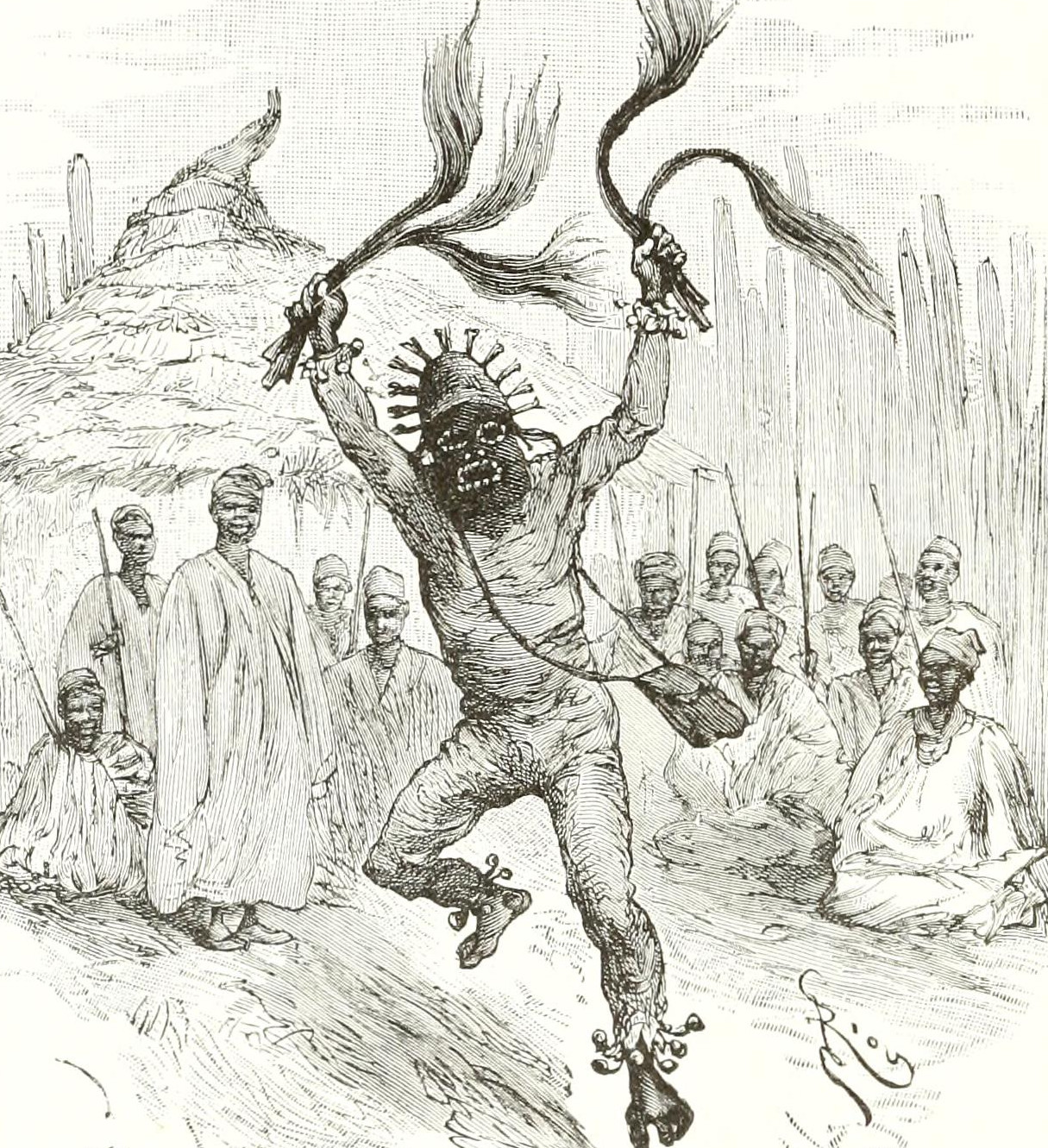 🇺🇸 United States and 2 moreLouisiana Voodoo
An African diasporic religion practiced in Louisiana from the 18th to early 20th centuriesTradition · Healing · Protection Historical
🇵🇪 Peru and 1 moreSupay
An Andean spirit of the underworld who balances life and death forcesBeing · Cursing and harm · Protection Historical
🇺🇸 United States and 2 moreLouisiana Voodoo
An African diasporic religion practiced in Louisiana from the 18th to early 20th centuriesTradition · Healing · Protection Historical
🇵🇪 Peru and 1 moreSupay
An Andean spirit of the underworld who balances life and death forcesBeing · Cursing and harm · Protection Historical