Shinto and Taoist: magic in this belief world
Ofuda and omamori, fu talismans, onmyodo, and the rites of temples and mountains.
Shinto and Taoism are two major East Asian religions, and both include rites that outsiders may label magic. Shinto shrines sell omamori and perform purification, and Taoist priests make fu talismans and perform rites for the living and the dead. Related practices include onmyodo in Japan and feng shui and divination in China. This page covers how these traditions work and how states have treated them. They differ greatly: Shinto is tied to place and community, while Taoism offers both a philosophy and an organised priesthood.
Shinto rites
Shinto centres on kami, the spirits and powers of places and ancestors, and on purification (harae). Shrines offer omamori, ofuda and fortune slips called omikuji, and priests perform rites for new cars, buildings and births. Many Japanese take part without describing themselves as believers, and the rites are woven into the calendar. Ordinary visitors buy a charm for a particular aim, such as safe childbirth, exam success or traffic safety, and may return it to the shrine after a year.
Taoist ritual and talismans
Taoism includes philosophy, monastic practice and a priestly tradition of liturgy and exorcism. Priests of lineages such as Zhengyi write fu, written talismans, and perform rites for protection and the dead. The I Ching and feng shui are also linked with Taoist thought, though they have separate histories. Several Chinese dynasties licensed Taoist priests and also tried to control them. Taoist masters have trained in lineages that run for many generations, and some rites are reserved for the ordained and not for the public.
Onmyodo and the state
Onmyodo, a Japanese system of divination and calendar-keeping drawn from Chinese yin-yang thought, served the imperial court. The famed Abe no Seimei lived in the Heian period. The Meiji government abolished the official onmyodo bureau in 1870 and separated Shinto from Buddhism, which reshaped practice. In China, Taoist temples were closed during the Cultural Revolution and have partly revived. Women have long served as shrine maidens in Shinto and as priests in several Taoist lineages, though the top posts are mostly held by men.
Commerce and the West
Feng shui and fortune-telling are large industries in Hong Kong, Taiwan and the diaspora, and Japanese lucky charms are bought by tourists. Scholars debate the line between religion and superstition, a distinction introduced in Asia by modern states in the late nineteenth and twentieth centuries. Practitioners tend to describe what they do as ritual service to the community. Taiwanese and Hong Kong temples and Japanese shrines are visited by large numbers of people, and communities overseas have built new shrines and temples.
Shinto and Taoist on EveryJaadu
The entries written up so far, best known first.
 🇸🇳 Senegal and 5 moreAncestor veneration
Rituals of respect and offerings for the dead across many culturesTradition · Protection · Speaking with spirits and the dead Living
🇸🇳 Senegal and 5 moreAncestor veneration
Rituals of respect and offerings for the dead across many culturesTradition · Protection · Speaking with spirits and the dead Living
 🇯🇵 JapanOnmyōdō陰陽道
A Japanese system of divination and calendar science rooted in yin-yang philosophyTradition · Seeing and foretelling · Protection Revived
🇯🇵 JapanOnmyōdō陰陽道
A Japanese system of divination and calendar science rooted in yin-yang philosophyTradition · Seeing and foretelling · Protection Revived
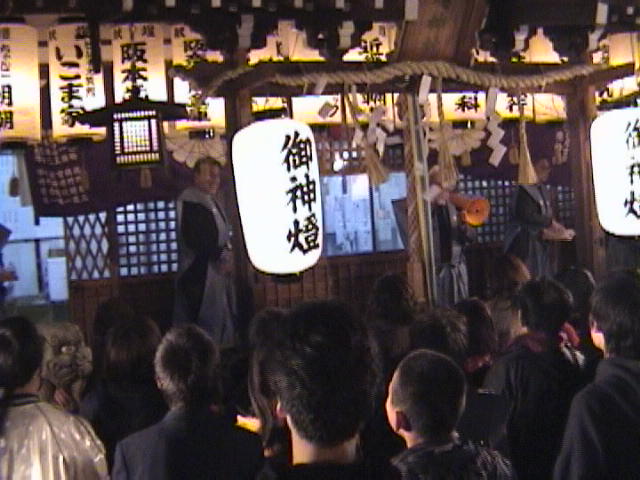 🇯🇵 JapanSetsubun節分
A Japanese seasonal rite to drive away bad luck and welcome spring with roasted beansRite · Protection · Luck and prosperity Living
🇯🇵 JapanSetsubun節分
A Japanese seasonal rite to drive away bad luck and welcome spring with roasted beansRite · Protection · Luck and prosperity Living
 🇯🇵 JapanShinto shrine神社 (jinja)
A structure housing kami deities within the Shinto tradition of JapanTradition · Protection · Speaking with spirits and the dead Living
🇯🇵 JapanShinto shrine神社 (jinja)
A structure housing kami deities within the Shinto tradition of JapanTradition · Protection · Speaking with spirits and the dead Living
 🇮🇳 India and 5 moreAncestor worship
Rites of respect for the dead that maintain family bonds and seek spiritual guidanceTradition · Protection · Speaking with spirits and the dead Living
🇮🇳 India and 5 moreAncestor worship
Rites of respect for the dead that maintain family bonds and seek spiritual guidanceTradition · Protection · Speaking with spirits and the dead Living
 🇨🇳 ChinaNeidan内丹
A Taoist practice using the body as a cauldron to refine inner energies for longevity and immortalityTradition · Healing · Power and authority Living
🇨🇳 ChinaNeidan内丹
A Taoist practice using the body as a cauldron to refine inner energies for longevity and immortalityTradition · Healing · Power and authority Living
 🇨🇳 ChinaWaidan外丹
An early Chinese alchemical practice focused on compounding mineral elixirs for immortalityTradition Historical
🇨🇳 ChinaWaidan外丹
An early Chinese alchemical practice focused on compounding mineral elixirs for immortalityTradition Historical
 🇯🇵 Japan and 2 moreTanabataたなばた (七夕)
A Japanese celebration of star-crossed lovers and written wishesTradition · Luck and prosperity · Wonder and entertainment Living
🇯🇵 Japan and 2 moreTanabataたなばた (七夕)
A Japanese celebration of star-crossed lovers and written wishesTradition · Luck and prosperity · Wonder and entertainment Living
 🇯🇵 JapanTorii鳥居
A traditional Japanese gate marking the boundary between the mundane and sacred spaces of Shinto shrines.Tradition · Speaking with spirits and the dead · Protection Living
🇨🇳 China and 3 moreZi Wei Dou Shu紫微斗數
A Chinese natal astrology system mapping stars across twelve life palacesTradition · Seeing and foretelling Living
🇯🇵 JapanTorii鳥居
A traditional Japanese gate marking the boundary between the mundane and sacred spaces of Shinto shrines.Tradition · Speaking with spirits and the dead · Protection Living
🇨🇳 China and 3 moreZi Wei Dou Shu紫微斗數
A Chinese natal astrology system mapping stars across twelve life palacesTradition · Seeing and foretelling Living
 🇯🇵 JapanMiko巫女
A Shinto shrine priestess and traditional female medium in JapanTradition · Speaking with spirits and the dead · Protection Living
🇯🇵 JapanMiko巫女
A Shinto shrine priestess and traditional female medium in JapanTradition · Speaking with spirits and the dead · Protection Living
 🇯🇵 JapanShugendō修験道
A Japanese mountain ascetic path blending Esoteric Buddhism, Shinto, and folk ritualsTradition · Protection · Healing Living
🇯🇵 JapanShugendō修験道
A Japanese mountain ascetic path blending Esoteric Buddhism, Shinto, and folk ritualsTradition · Protection · Healing Living
 🇯🇵 JapanKagura神楽
A Shinto ritual dance where performers embody deities to purify and welcome spiritsTradition · Protection · Speaking with spirits and the dead Living
🇯🇵 JapanKagura神楽
A Shinto ritual dance where performers embody deities to purify and welcome spiritsTradition · Protection · Speaking with spirits and the dead Living
 🇨🇳 China and 1 moreAncestor veneration in China中國傳統宗法性宗教
Rites for dead kin who are thought to watch over the familyTradition · Protection · Speaking with spirits and the dead Living
🇯🇵 JapanAbe no Seimei安倍 晴明
A historical court official turned legendary Japanese onmyōji and folk heroFigure · Protection · Seeing and foretelling Legendary
🇨🇳 China and 1 moreAncestor veneration in China中國傳統宗法性宗教
Rites for dead kin who are thought to watch over the familyTradition · Protection · Speaking with spirits and the dead Living
🇯🇵 JapanAbe no Seimei安倍 晴明
A historical court official turned legendary Japanese onmyōji and folk heroFigure · Protection · Seeing and foretelling Legendary
 🇯🇵 JapanItakoイタコ
Blind women in Japan who train to channel spirits and communicate with the dead.Tradition · Speaking with spirits and the dead · Seeing and foretelling Fading
🇯🇵 JapanItakoイタコ
Blind women in Japan who train to channel spirits and communicate with the dead.Tradition · Speaking with spirits and the dead · Seeing and foretelling Fading
 🇨🇳 China and 2 moreDiyu地獄
The underworld realm of trial, atonement, and rebirth in Chinese mythologyBelief · Cleansing and purification · Change and initiation Living
🇨🇳 China and 2 moreDiyu地獄
The underworld realm of trial, atonement, and rebirth in Chinese mythologyBelief · Cleansing and purification · Change and initiation Living
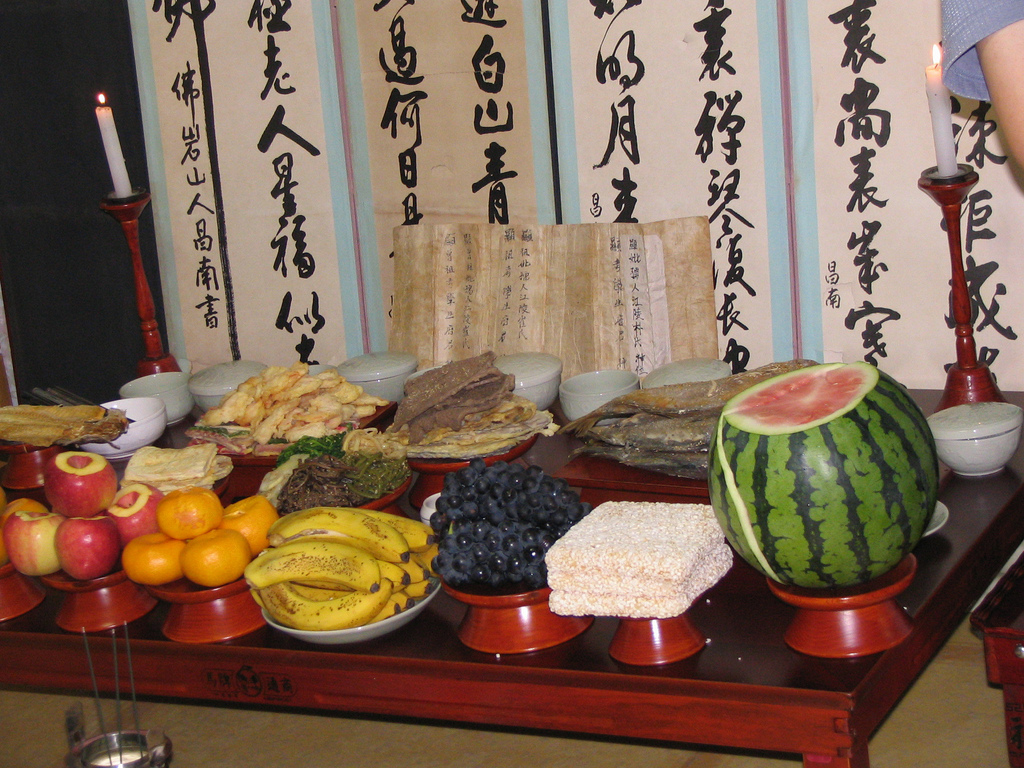 🇰🇷 South Korea and 1 moreChuseok추석 (Chuseok), 한가위 (Hangawi)
A Korean autumn harvest festival marked by ancestral rites and feasting on the full moon.Tradition · Speaking with spirits and the dead · Luck and prosperity Living
🇰🇷 South Korea and 1 moreChuseok추석 (Chuseok), 한가위 (Hangawi)
A Korean autumn harvest festival marked by ancestral rites and feasting on the full moon.Tradition · Speaking with spirits and the dead · Luck and prosperity Living
 🇨🇳 China and 5 moreQingming Festival清明节
A spring day for sweeping graves, feeding the dead and honouring ancestorsTradition · Speaking with spirits and the dead · Protection Living
🇨🇳 China and 5 moreQingming Festival清明节
A spring day for sweeping graves, feeding the dead and honouring ancestorsTradition · Speaking with spirits and the dead · Protection Living
 🇮🇳 India and 5 moreMandalaमण्डल
A sacred geometric design used in Indian religions for meditation and spiritual mapping.Tradition · Speaking with spirits and the dead · Wonder and entertainment Living
🇯🇵 JapanYutaユタ
Okinawan folk shamans who guide families through spirits and fortune-tellingTradition · Protection · Healing Living
🇮🇳 India and 5 moreMandalaमण्डल
A sacred geometric design used in Indian religions for meditation and spiritual mapping.Tradition · Speaking with spirits and the dead · Wonder and entertainment Living
🇯🇵 JapanYutaユタ
Okinawan folk shamans who guide families through spirits and fortune-tellingTradition · Protection · Healing Living
 🇨🇳 ChinaChinese alchemy煉丹術
A Taoist pursuit of longevity through elixirs and internal cultivationTradition · Healing · Speaking with spirits and the dead Historical
🇨🇳 ChinaChinese alchemy煉丹術
A Taoist pursuit of longevity through elixirs and internal cultivationTradition · Healing · Speaking with spirits and the dead Historical
 🇨🇳 China and 1 moreDongyue Dadi東嶽大帝
The Chinese mountain god of Mount Tai who rules lifespans and underworld recordsBeing · Speaking with spirits and the dead · Power and authority Living
🇨🇳 China and 1 moreDongyue Dadi東嶽大帝
The Chinese mountain god of Mount Tai who rules lifespans and underworld recordsBeing · Speaking with spirits and the dead · Power and authority Living
 🇨🇳 China and 1 moreChinese shamanism巫教 (Wūjiào)
Spirit-mediums of China who dance and trance to carry messages between people and godsTradition · Speaking with spirits and the dead · Seeing and foretelling Living
🇨🇳 China and 1 moreChinese shamanism巫教 (Wūjiào)
Spirit-mediums of China who dance and trance to carry messages between people and godsTradition · Speaking with spirits and the dead · Seeing and foretelling Living
 🇯🇵 JapanChinkon kishin鎮魂帰神
A Japanese spiritual practice combining soul calming with spirit possessionRite · Speaking with spirits and the dead · Healing Living
🇯🇵 JapanChinkon kishin鎮魂帰神
A Japanese spiritual practice combining soul calming with spirit possessionRite · Speaking with spirits and the dead · Healing Living
 🇨🇳 China and 1 moreFalun Gong法轮功
A Chinese cultivation practice blending meditative exercises with moral principlesTradition · Healing · Protection Living
🇨🇳 China and 1 moreFalun Gong法轮功
A Chinese cultivation practice blending meditative exercises with moral principlesTradition · Healing · Protection Living
 🇨🇳 China and 1 moreNuo folk religion傩 (Nuó)
A Chinese exorcistic tradition using wooden masks and ancestor worship to drive away malevolent forcesTradition · Protection · Speaking with spirits and the dead Living
🇨🇳 China and 1 moreNuo folk religion傩 (Nuó)
A Chinese exorcistic tradition using wooden masks and ancestor worship to drive away malevolent forcesTradition · Protection · Speaking with spirits and the dead Living
 🇪🇬 Egypt and 5 moreWorship of heavenly bodies
Veneration of stars, planets, and the sky as divine forces or deitiesTradition · Protection · Power and authority Historical
🇪🇬 Egypt and 5 moreWorship of heavenly bodies
Veneration of stars, planets, and the sky as divine forces or deitiesTradition · Protection · Power and authority Historical
 🇯🇵 JapanGoryō御霊
A Japanese belief in appeasing vengeful spirits through Shinto shrinesBelief · Protection · Speaking with spirits and the dead Historical
🇯🇵 JapanGoryō御霊
A Japanese belief in appeasing vengeful spirits through Shinto shrinesBelief · Protection · Speaking with spirits and the dead Historical
 🇨🇳 China and 3 moreFengshui woodland風水林
A protected grove in East Asia believed to shape the local environment and bring luck to nearby communities.Tradition · Protection · Luck and prosperity Living
🇨🇳 China and 3 moreFengshui woodland風水林
A protected grove in East Asia believed to shape the local environment and bring luck to nearby communities.Tradition · Protection · Luck and prosperity Living
 🇯🇵 JapanSeimei Shrine晴明神社
A Shinto shrine in Kyoto dedicated to the legendary onmyōji Abe no SeimeiTradition · Speaking with spirits and the dead Living
🇯🇵 JapanSeimei Shrine晴明神社
A Shinto shrine in Kyoto dedicated to the legendary onmyōji Abe no SeimeiTradition · Speaking with spirits and the dead Living
Photo credits on this page
The small pictures above come from Wikimedia Commons under free licences. Some are cropped to fit.
- Chinkon kishin: Tomokiyo Yoshisane (友清歓真), also known as Tomokiyo Kyūgo (友清九吾), Public domain, source
- Onmyōdō: Unknown author, Public domain, source
- Setsubun: Unknown author, CC BY-SA 3.0, source
- Shinto shrine: No machine-readable author provided. Fg2 assumed (based on copyright c, Public domain, source
- Ancestor worship: Lyn Gateley, CC BY 2.0, source
- Neidan: A16898, CC BY-SA 4.0, source
- Waidan: 尹真人, Public domain, source
- Tanabata: Laika ac, CC BY-SA 2.0, source
- Torii: JordyMeow, CC BY-SA 3.0, source
- Miko: Chris Gladis, Flickr user MShades, CC BY 2.0, source
- Shugendō: 唐山健志郎 (Kenshiro Karayama), CC BY-SA 3.0, source
- Jesa: by Joseph Steinberg (Baltimoron in Korea) at Flickr, CC BY-SA 2.0, source
- Kagura: Elstner Hilton, Public domain, source
- Ancestor veneration in China: Three huntings, CC BY-SA 4.0, source
- Itako: User Geomr~commonswiki self upload, CC BY-SA 3.0, source
- Falun Gong: longtrekhome, CC BY 3.0, source
- Nuo folk religion: Wikiwikiyarou, CC BY-SA 3.0, source
- Chinese shamanism: No machine-readable author provided. +上帝+ assumed (based on copyright, CC BY-SA 3.0, source
- Mandala: Marion Golsteijn, CC BY-SA 3.0, source
- Chinese alchemy: 尹真人, Public domain, source
- Dongyue Dadi: H2v5o68z, CC0, source
- Ancestor veneration: Thang Nguyen, CC BY-SA 2.0, source
- Worship of heavenly bodies: Jean-Pierre Dalbéra, CC BY 2.0, source
- Qingming Festival: Jacklee ., CC BY-SA 3.0, source
- Goryō: Tsukioka Yoshitoshi (1839–1892), Public domain, source
- Fengshui woodland: 猫猫的日记本 (Cat's diary), CC BY-SA 3.0, source
- Diyu: ScribblingGeek, CC BY-SA 4.0, source
- Seimei Shrine: Naokijp, CC BY-SA 4.0, source