Scholars and sceptics
Anthropologists, historians and investigators who study magic and test its claims.
Scholars and sceptics are the people who study magic from outside the practice: anthropologists, historians, folklorists, psychologists, scholars of religion and investigators who test claims. They have names such as E. E. Evans-Pritchard, Marcel Mauss, Bronislaw Malinowski, Mary Douglas, Keith Thomas and Carlo Ginzburg, and also investigators such as James Randi. This page covers what they have found, how they disagree, and what their work has cost and changed. Their work has changed how the whole subject is understood.
Early theories
Nineteenth-century writers such as James Frazer treated magic as a mistaken early science, a view now widely rejected as arrogant and inaccurate. Later anthropologists, including Evans-Pritchard in his 1937 study of the Azande, showed that magical belief can be a consistent way of reasoning about misfortune. Mauss and Malinowski stressed its social role. Fieldwork, archives, laboratory studies and surveys are their main methods, and each field has its own debates and schools.
The history of witch trials
Historians have revised their view of the witch trials. Keith Thomas and Alan Macfarlane studied English village accusations, Carlo Ginzburg found the benandanti in Friuli, and Ronald Hutton has argued about the numbers and causes, and Silvia Federici links the persecution to the rise of capitalism, a thesis historians dispute. The older figure of nine million victims has been dropped, and estimates now run to tens of thousands of executions.
Testing claims
Sceptics test whether claims hold up. James Randi offered a prize for evidence of paranormal power that was never won, and organisations such as the Committee for Skeptical Inquiry investigate fraud. Researchers study why people believe: pattern-seeking, uncertainty and the wish to control events. The best sceptics aim to understand people, not to mock them. Sceptics hold that claims should be tested, and they have a long record of exposing cases such as spirit photography and fake healers.
Ethics of study
Scholars were often colonial officials or missionaries, and their reports shaped how Indigenous religions were named. Contemporary researchers work with communities, ask consent and respect closed knowledge. Practitioners sometimes object to being explained, and sceptics sometimes to being called closed-minded. The conversation continues, and this guide aims to stay neutral on whether magic works. Their critics reply that science cannot measure everything that matters to a community, and that explaining a ritual away is not the same as understanding it.
Scholars and sceptics on EveryJaadu
The entries written up so far, best known first.
 🇮🇱 Israel and 1 moreAzazelעזאזל
A desert place and fallen angel linked to the Yom Kippur scapegoat ritualFigure · Cursing and harm · Cleansing and purification Historical
 🇨🇳 China and 2 moreJiang Ziya姜子牙
A historical strategist and war god who helped establish the Zhou dynastyFigure · Power and authority · Cursing and harm Historical
 🇫🇷 FranceÉliphas Lévi
A French writer who shaped modern occult thought and ceremonial magic.Figure · Power and authority · Change and initiation Historical
🇬🇧 United Kingdom and 1 moreSamuel Liddell MacGregor Mathers
British occultist and co-founder of the Hermetic Order of the Golden DawnFigure Historical
🇯🇵 JapanKamo no Yasunori賀茂 保憲
A Heian-era onmyōji and teacher of Abe no Seimei in Japanese esoteric artsFigure · Seeing and foretelling · Cursing and harm Historical
 🇪🇬 EgyptLucifer
A Latin name for the planet Venus that became an epithet for the Devil in Christian traditionFigure · Cursing and harm Historical
🇪🇸 SpainMaslama al-Majritiأبو القاسم مسلمة بن أحمد المجريطي
A tenth-century scholar of alchemy and astronomy in Islamic Spain.Figure · Wonder and entertainment · Power and authority Historical
 🇪🇬 EgyptImhotepỉỉ-m-ḥtp
An ancient Egyptian architect deified as a god of healing and wisdomBeing · Healing · Power and authority Historical
🇩🇪 GermanyJohannes Junius
A German mayor executed in the Bamberg witch trials who wrote a final letter from his cell.Figure · Cursing and harm Historical
 🇬🇧 United KingdomWilliam Lilly
A seventeenth-century English astrologer and author who shaped Western tradition.Text · Seeing and foretelling · Power and authority Historical
 🇮🇳 IndiaBamakhepaবামাখ্যাপা
A Bengali Hindu saint known for his devotion to Goddess Tara and meditation in cremation grounds.Figure · Speaking with spirits and the dead Historical
 🇮🇹 ItalyWitches of Benevento
A medieval Italian legend of witches gathering under a walnut treeBelief · Cursing and harm · Luck and prosperity Historical
🇩🇪 GermanyPhilipp Adolf von Ehrenberg
A German prince-bishop who directed a massive witch-hunt in the 1620sFigure · Cursing and harm Historical
 🇮🇳 India and 1 moreYoginiयोगिनी
A female master of yoga and tantra, or a fierce goddess aspect worshipped in open-air shrines.Tradition · Power and authority · Protection Historical
🇬🇧 United KingdomGiles Corey
An English-born farmer pressed to death for refusing to plead during the Salem witch trialsFigure Historical
 🇮🇷 Iran and 2 moreJabir ibn Hayyanجابِر بِن حَيّان
A legendary Islamic alchemist and philosopher whose writings shaped medieval magic and chemistryText · Power and authority · Wonder and entertainment Historical
🇫🇷 France and 5 moreCount of St. GermainComte de Saint Germain
An 18th-century European adventurer known for alchemy, music, and claims of immortality.Figure · Power and authority · Wonder and entertainment Historical
 🇮🇱 Israel and 1 moreShimon bar Yochaiשמעון בר יוחאי
A second-century sage of the Land of Israel and a central figure in Kabbalistic tradition.Figure · Power and authority Historical
 🇪🇬 Egypt and 1 moreJannes and Jambresיניס וימבריס
Named Egyptian magicians who opposed Moses in biblical traditionFigure · Cursing and harm Historical
 🇮🇳 India and 1 moreTilopa
A tenth-century Buddhist tantric master who transmitted Mahamudra and the Six Yogas of Naropa.Figure · Change and initiation · Power and authority Historical
 🇵🇰 Pakistan and 4 moreLal Shahbaz Qalandarلعل شهباز قلندر
A Sufi saint and poet revered in South Asia, especially among the Sindhi people.Figure · Speaking with spirits and the dead Historical
 🇪🇬 EgyptKhaemwesetḫꜥ m wꜣst
A prince and priest remembered for restoring ancient Egyptian monuments.Figure Historical
 🇯🇵 JapanEn no Gyōja役小角
A legendary Japanese ascetic and founder of Shugendō mountain practiceFigure · Power and authority · Protection Historical
 🇹🇷 Turkey and 2 moreApollonius of TyanaἈπολλώνιος ὁ Τυανεύς
A first-century philosopher and miracle worker whose life became a legend of divine power.Figure · Wonder and entertainment Historical
🇨🇳 ChinaChen Tuan陳摶
A Chinese Taoist sage known for internal arts and sleep cultivation methodsFigure · Healing · Power and authority Historical
 🇮🇹 Italy and 1 morePietro d'Abano
A medieval physician and astrologer accused of heresy and magic.Text · Healing · Wonder and entertainment Historical
 🇮🇳 IndiaNaropa
An Indian Buddhist master whose teachings shaped Tibetan Vajrayana practiceFigure · Change and initiation Historical
 🇬🇧 United Kingdom and 3 moreEdward Kelley
An English occultist and scryer who worked with John Dee to contact angels and practice alchemy.Figure · Power and authority · Wonder and entertainment Historical
🇮🇪 IrelandBodach
A Gaelic trickster figure used to frighten children and warn of deathFigure · Cursing and harm · Seeing and foretelling Historical
 🇺🇸 United StatesCotton Mather
A Puritan minister and writer known for his role in the Salem witch trials and promotion of smallpox inoculationFigure Historical
 🇮🇷 Iran and 1 moreZoroasterZarathushtra Spitama
Spiritual founder of Zoroastrianism and composer of the GathasFigure Historical
 🇬🇧 United KingdomMatthew Hopkins
The English witch-hunter who led the deadliest wave of executions in Britain.Figure · Cursing and harm Historical
 🇫🇮 Finland and 1 moreSampo
A magical mill or world pillar in Finnish and Estonian mythology that produces wealth.Figure · Luck and prosperity · Power and authority Historical
 🇳🇱 Netherlands and 3 morePig-faced women
A European legend of a woman with the face of a pig, and the charms used to break her curseFigure · Change and initiation Historical
 🇧🇷 BrazilThe Hairy LegPerna cabeluda
A Brazilian urban legend of a detached leg that attacks people at nightFigure · Cursing and harm · Wonder and entertainment Historical
 🇺🇦 UkraineGhost of KyivПривид Києва
A wartime legend of a mythical fighter pilot who rallied Ukrainian morale.Figure · Power and authority Historical
🇪🇪 Estonia and 1 moreKalevaKalev
A primordial giant and ancestral figure in the mythologies of Estonia and FinlandBeing · Power and authority Historical
 🇷🇸 Serbia and 5 moreWolves in folklore, religion and mythology
A global survey of how cultures view the wolf as symbol, spirit or threatBelief · Power and authority · Cursing and harm Historical
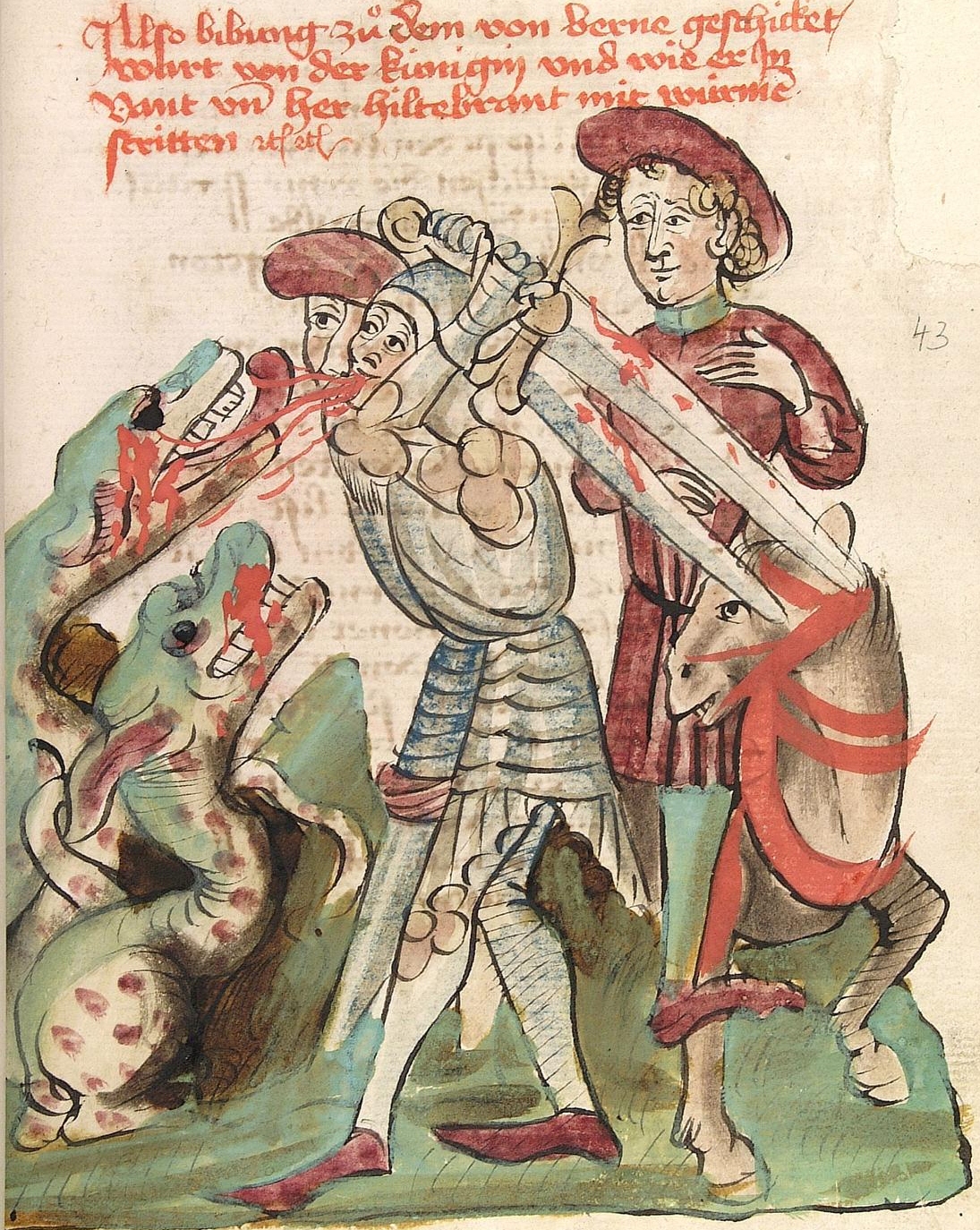 🇩🇪 Germany and 2 moreDietrich von Bern
A legendary Germanic hero based on the Ostrogothic king Theodoric the GreatFigure · Power and authority Historical
 🇯🇵 JapanAosaginohi青鷺火
A Japanese will-o'-the-wisp attributed to the glowing flight of herons at nightBelief · Wonder and entertainment Historical
 🇮🇪 Ireland and 4 moreFairy Queen
A female ruler of fairies found in folklore, literature, and witchcraft trials across Europe.Figure · Power and authority Historical
 🇺🇸 United StatesHodag
A fabricated American cryptid from Wisconsin folklore and tall talesFigure · Wonder and entertainment Historical
 🇷🇺 RussiaTriple-headed eagle
A heraldic and mythological bird with three heads, appearing in Russian symbolism and European manuscripts.Being · Power and authority Historical
 🇺🇸 United States and 1 moreFearsome critters
Tall tale animals from North American logging camps used to jest and explain the wild.Figure · Wonder and entertainment · Luck and prosperity Historical
🇮🇹 Italy and 1 moreCola Pesce
An Italian merman legend about a boy cursed by his mother to live in the seaFigure · Cursing and harm · Seeing and foretelling Historical
 🇮🇹 ItalyScrofa semilanuta
A legendary sow seen in a dream that became the ancient emblem of Milan.Figure · Wonder and entertainment · Seeing and foretelling Historical
 🇩🇿 AlgeriaTassili Mushroom Figure
Neolithic cave art in Algeria interpreted by some as depicting psychedelic mushroom use.Belief · Speaking with spirits and the dead · Wonder and entertainment Historical
🇬🇧 United KingdomNine sorceressesnaw chwaer
A group of nine magical women in Welsh and Arthurian legendFigure · Cursing and harm · Protection Historical
Photo credits on this page
The small pictures above come from Wikimedia Commons under free licences. Some are cropped to fit.
- Yogini: Soumendra Barik, CC BY-SA 3.0, source
- Dietrich von Bern: Workshop of Diebolt Lauber, Hagenau 1444-1448, CC BY-SA 3.0, source
- Jiang Ziya: Wang Qi, Public domain, source
- Wolves in folklore, religion and mythology: Unknown author, CC0, source
- Éliphas Lévi: Eliphas Lévi [1810-1875], Public domain, source
- Lucifer: Gustave Doré, Public domain, source
- Imhotep: Rama, CC BY-SA 3.0 fr, source
- William Lilly: Simon Harriyott, CC BY 2.0, source
- Bamakhepa: Pinakpani, CC BY-SA 4.0, source
- Witches of Benevento: Guglielmo della Porta, CC0, source
- Hugag: Coert Du Bois, Public domain, source
- Azazel: Louis Le Breton, Public domain, source
- Jabir ibn Hayyan: Unknown author, Public domain, source
- Ghost of Kyiv: Андрій Данкович / Andriy Dankovych, CC BY-SA 4.0, source
- Fairy Queen: Henry Fuseli, Public domain, source
- Shimon bar Yochai: איתי פרץ, Attribution, source
- Jannes and Jambres: Gerard Hoet, Public domain, source
- Tilopa: Unknown author, Public domain, source
- Lal Shahbaz Qalandar: Fassifarooq, CC BY-SA 4.0, source
- Khaemweset: No machine-readable author provided. Neithsabes assumed (based on copy, Public domain, source
- En no Gyōja: Wmpearl, CC0, source
- Apollonius of Tyana: Zde, CC BY-SA 4.0, source
- Tassili Mushroom Figure: I redrawn the rock art written by ancient people., Public domain, source
- Pietro d'Abano: Marco Chemello (Wikimedia Italia), CC BY-SA 4.0, source
- Naropa: Unknown author, CC BY-SA 3.0, source
- Hodag: Gourami Watcher, CC BY-SA 3.0, source
- Aosaginohi: Koikawa Harumachi ja:恋川春町 (1744-1789), Public domain, source
- The Hairy Leg: Diógenes Montenegro, Public domain, source
- Scrofa semilanuta: M.casanova, CC BY-SA 4.0, source
- Pig-faced women: DubhEire, CC0, source
- Triple-headed eagle: Неизвестный автор. (фото обложки сборника: Александр Храмов), Public domain, source
- Sampo: Väinö Blomstedt, Public domain, source
- Edward Kelley: Thomas Pennant, Public domain, source
- Cotton Mather: Peter Pelham, Public domain, source
- Zoroaster: 19th century in Mumbai according to 青木健 The original uploader was Aria, Public domain, source
- Matthew Hopkins: Unknown author, CC BY 4.0, source