
Éliphas Lévi
The pen name adapts his given names into Hebrew.
A French writer who shaped modern occult thought and ceremonial magic.
Born Alphonse Louis Constant, he was a French esotericist and poet who wrote over twenty books on magic and the Kabbalah. His pen name drew from Hebrew roots, and his theories on the astral light and will influenced later Western magical orders.
- Wrote over twenty books on magic and the Kabbalah.
- Integrated the Tarot into Western magical systems.
- Defined the pentagram's orientation as good or evil.
- Proposed the concept of the astral light as a universal medium.
- Influenced the Hermetic Order of the Golden Dawn.
What it is
Éliphas Lévi was a French writer and thinker who helped define modern occult practice. He produced more than twenty volumes covering magic, alchemy, and the Kabbalah. His work attracted attention in Paris and London among artists and esotericists. He is best known for codifying ceremonial magic and integrating the Tarot into Western magical systems. His ideas on the astral light and the power of imagination became foundational for later groups like the Golden Dawn.
Where it comes from
He was born Alphonse Louis Constant in Paris in 1810. He initially studied for the Catholic priesthood but left the seminary in 1836. After years of poverty and political writing that led to imprisonment, he turned to esoteric studies around 1850. Influenced by figures like Paracelsus and Swedenborg, he developed a unique system blending Christian mysticism with magical theory. His pen name combined elements of his birth name with Hebrew tradition.
How it is done
Lévi described magic as a science of will and imagination acting upon the astral light. He viewed the astral light as a universal medium connecting all things. Practitioners use focused intent to shape this energy. He integrated the Tarot deck into ritual work, assigning each card specific symbolic meanings. Pentagrams were used as protective or directing symbols, with orientation indicating good or evil forces. His methods emphasized study and mental discipline over elaborate rituals.
Tools and materials
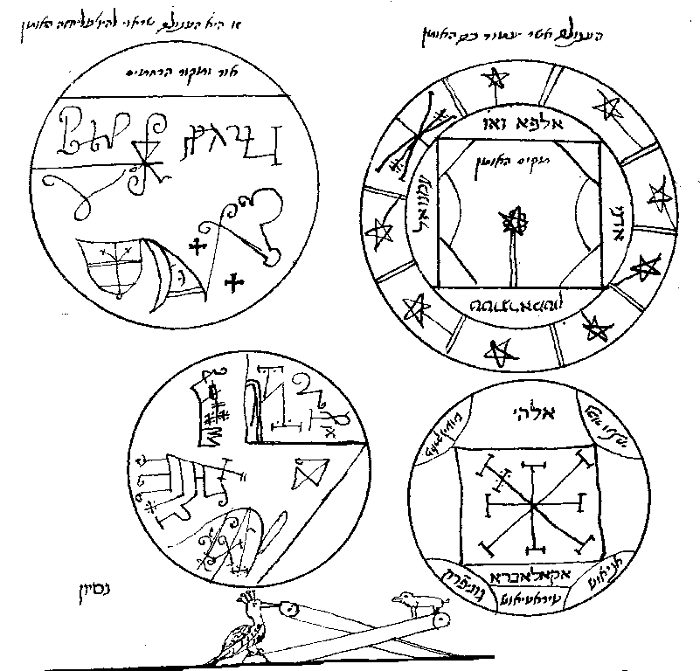
The primary tools in his system include the Tarot cards and the pentagram. The Tarot serves as a map of spiritual principles. The pentagram represents the microcosm of humanity. He also referenced the lever of Archimedes as a metaphor for the power of will. Materials for physical rituals were considered secondary to mental focus. He noted that equipment could be expensive and difficult to gather, preferring internal study.
Éliphas Lévi, drawn and placed
- Living
- Revived
- Fading
- Historical
- Legendary
- Performed
- Lineage
- Western esotericism
What it is for
His work aimed to reveal the hidden laws governing nature and spirit. Practitioners sought to master their own will and influence the astral light. The goal was spiritual elevation and understanding of universal secrets. He believed magic conferred powers beyond ordinary human capacity. It was also intended to unify religious truths under a single esoteric framework. Followers looked to his writings for guidance on moral and spiritual development.
Who does it
Lévi himself was a scholar and former cleric who became a professional writer. He taught through his books rather than formal apprenticeships. His followers included members of later magical orders like the Golden Dawn. Aleister Crowley and Helena Blavatsky were influenced by his teachings. He described himself as a poor scholar offering knowledge for the benefit of humanity. Training involved deep study of the Kabbalah and symbolic systems.
Peoples and places
His work originated in France and gained traction in the United Kingdom. Artists and writers in both countries engaged with his ideas. The Swedish author August Strindberg also referenced his concepts. His influence spread through English translations of his French texts. The French context provided the backdrop for his critique of both church and state. British esotericists adopted his Tarot interpretations and ritual frameworks.
At a glance: who, where and when


What people believe
Lévi posited the existence of an astral light, a subtle substance permeating the universe. He believed the human will could direct this energy through imagination. Spirits were seen as mental constructs or astral forms rather than independent entities. He rejected literal interpretations of religious myths, viewing them as symbolic veils. True religion, in his view, was an esoteric doctrine accessible only to initiates. This framework blended Christian theology with Hermetic philosophy.
When it is done
No specific festivals or calendar dates are tied to his personal practices. His major works were published between 1854 and 1868. He revisited London in 1861 during this period of intense writing. His life events, such as leaving the seminary or marrying, marked personal transitions rather than ritual occasions. His legacy is observed annually through the continued study of his texts by modern occultists.
How scholars and sceptics see it
Historians view Lévi as a pivotal figure in the revival of Western esotericism. Scholars note his role in systematizing chaotic occult traditions. Critics point out contradictions in his political views and personal life. A.E. Modern researchers analyze his integration of psychology and magic as ahead of his time.
Cautions and what is closed
Lévi faced imprisonment for his political writings against the French government. His departure from the priesthood caused personal and social difficulties. He experienced financial instability throughout much of his early life. Some contemporaries questioned his claims of magical power. His marriage ended in annulment after tragic family losses. His critiques of Spiritualism led to disputes with practitioners of table-turning and mediumship.
Compare and confuse
His work differs from Spiritualism by denying autonomous spirits. He shared some ideas with Rosicrucians and earlier Hermeticists. The Golden Dawn adapted his Tarot system and ritual structures. Unlike folk magicians, he presented magic as a rigorous intellectual discipline. His use of the pentagram contrasted with earlier ambiguous symbolism. His synthesis of Kabbalah and Christian mysticism was unique in its systematic approach.
Questions people ask about Éliphas Lévi
Who was Éliphas Lévi?
He was a French writer and esotericist born Alphonse Louis Constant. He created a system of ceremonial magic that influenced many later occult groups.
What is the astral light?
It is a concept Lévi described as a universal medium connecting all things. He believed the human will could shape this energy through imagination.
How did he use the Tarot?
He assigned specific symbolic meanings to each card. He integrated the deck into his magical system, making it central to Western magical practice.
What does the pentagram represent?
He declared that a pentagram with one point up represents good. One with two points up represents evil, establishing a key symbol in modern magic.
Good reading and sources
- Éliphas Lévi on WikipediaEncyclopedia
- More photos on Wikimedia CommonsPhotos and video
- Wikidata recordOpen data
The facts on this page come from the Wikipedia article "Éliphas Lévi", written by its contributors and used under the CC BY-SA 4.0 licence, and from its Wikidata record (CC0). EveryJaadu rewrote the text in its own words, with AI assistance, and compares every page with the article to make sure no passage is copied. It may be reused under the same CC BY-SA 4.0 licence with a link back.
It may contain mistakes. Names and customs differ from one community to the next, and some knowledge is closed to outsiders and left out here. This page describes belief and practice. It does not say that any of it works, it is not a how-to, and it is not medical advice. If something is wrong, tell us. Last refreshed 2026-10-05.
More from France
All the entries from France 🇮🇹 Italy and 5 moreTarottarocchi
A set of playing cards used for games and divinationTradition · Seeing and foretelling · Luck and prosperity Living
🇮🇹 Italy and 5 moreTarottarocchi
A set of playing cards used for games and divinationTradition · Seeing and foretelling · Luck and prosperity Living
 🇫🇷 France and 1 moreNostradamus
A French astrologer and physician known for a book of poetic propheciesText · Seeing and foretelling · Power and authority Historical
🇫🇷 France and 1 moreNostradamus
A French astrologer and physician known for a book of poetic propheciesText · Seeing and foretelling · Power and authority Historical
 🇮🇹 Italy and 2 moreKey of SolomonClavicula Salomonis
A Renaissance grimoire attributed to King Solomon, detailing ritual preparations and invocations.Text · Cursing and harm · Love and attraction Historical
🇮🇹 Italy and 2 moreKey of SolomonClavicula Salomonis
A Renaissance grimoire attributed to King Solomon, detailing ritual preparations and invocations.Text · Cursing and harm · Love and attraction Historical
 🇬🇧 United Kingdom and 5 moreAleister Crowley
English occultist and founder of the religion of ThelemaText · Power and authority · Change and initiation Living
🇬🇧 United Kingdom and 5 moreAleister Crowley
English occultist and founder of the religion of ThelemaText · Power and authority · Change and initiation Living
Related elsewhere
All text 🇮🇳 India and 1 moreMantraमन्त्रम्
A sacred sound or phrase repeated to focus the mind and invoke spiritual powerText · Speaking with spirits and the dead · Power and authority Living
🇮🇳 India and 1 moreMantraमन्त्रम्
A sacred sound or phrase repeated to focus the mind and invoke spiritual powerText · Speaking with spirits and the dead · Power and authority Living
 🇮🇩 IndonesiaNyepiᬜᬾᬧᬶ
A Balinese day of total silence, fasting, and self-reflection to mark the new year.Rite · Cleansing and purification · Speaking with spirits and the dead Living
🇮🇩 IndonesiaNyepiᬜᬾᬧᬶ
A Balinese day of total silence, fasting, and self-reflection to mark the new year.Rite · Cleansing and purification · Speaking with spirits and the dead Living
 🇮🇳 India and 2 moreHomaहोम
A fire ritual found across Asian religions where offerings are burned as a votive exchange with the divine.Rite · Protection · Speaking with spirits and the dead Living
🇮🇳 India and 2 moreHomaहोम
A fire ritual found across Asian religions where offerings are burned as a votive exchange with the divine.Rite · Protection · Speaking with spirits and the dead Living
 🇳🇵 Nepal and 1 moreMatsyendranathMacchindranāth, Mīnanātha
A yogi and rain deity revered across Hindu and Buddhist traditions in South Asia.Figure · Speaking with spirits and the dead · Power and authority Living
🇳🇵 Nepal and 1 moreMatsyendranathMacchindranāth, Mīnanātha
A yogi and rain deity revered across Hindu and Buddhist traditions in South Asia.Figure · Speaking with spirits and the dead · Power and authority Living