Maslama al-Majriti
In its own language: أبو القاسم مسلمة بن أحمد المجريطي
The name al-Majriti indicates an origin from Majrit, the old name for Madrid.
A tenth-century scholar of alchemy and astronomy in Islamic Spain.
Maslama al-Majriti was a prominent Muslim Arab scholar active in al-Andalus during the tenth century. He is remembered for his work in astronomy, mathematics, and alchemy, including early experiments with mercury that noted the conservation of mass.
- Born c. 950 in Madrid, died 1007 in Córdoba.
- Known in Latin sources as Methilem.
- Conducted early experiments noting conservation of mass.
- Attributed works include Rutbat al-hakim and Picatrix.
- Established a school for astronomy and mathematics.
What it is
Maslama al-Majriti was a distinguished scholar in al-Andalus who worked across several disciplines. He served as an astronomer, mathematician, economist, and alchemist. His contributions included improving translations of Ptolemy's astronomical works and introducing new surveying techniques. He also edited texts related to the Brethren of Purity. Later writers attributed two major esoteric works to him, though these are now considered the work of followers or imitators.
Where it comes from
He was born around 950 in Madrid, which was then part of Al-Andalus under Muslim rule. He died in 1007 in Córdoba. His career flourished during the reign of Caliph Al-Hakam II. He established a school for astronomy and mathematics, creating a center for organized scientific research in the region. His students included notable figures like Ibn al-Saffar and at-Turtushi.
How it is done
In alchemy, he conducted experiments on metals. One famous account describes heating mercury in a sealed glass vessel over a gentle fire for forty days. The process turned the mercury into a red powder without changing its weight. This observation is cited as an early recognition of the conservation of mass. He also worked on translating and adapting astronomical tables from Persian and Greek sources.
Tools and materials
His alchemical work utilized simple laboratory equipment. He used a glass vessel shaped like an egg placed inside a larger pot. The setup was heated slowly over a long period. In astronomy, he employed methods of triangulation and surveying to improve accuracy in calculations and observations.
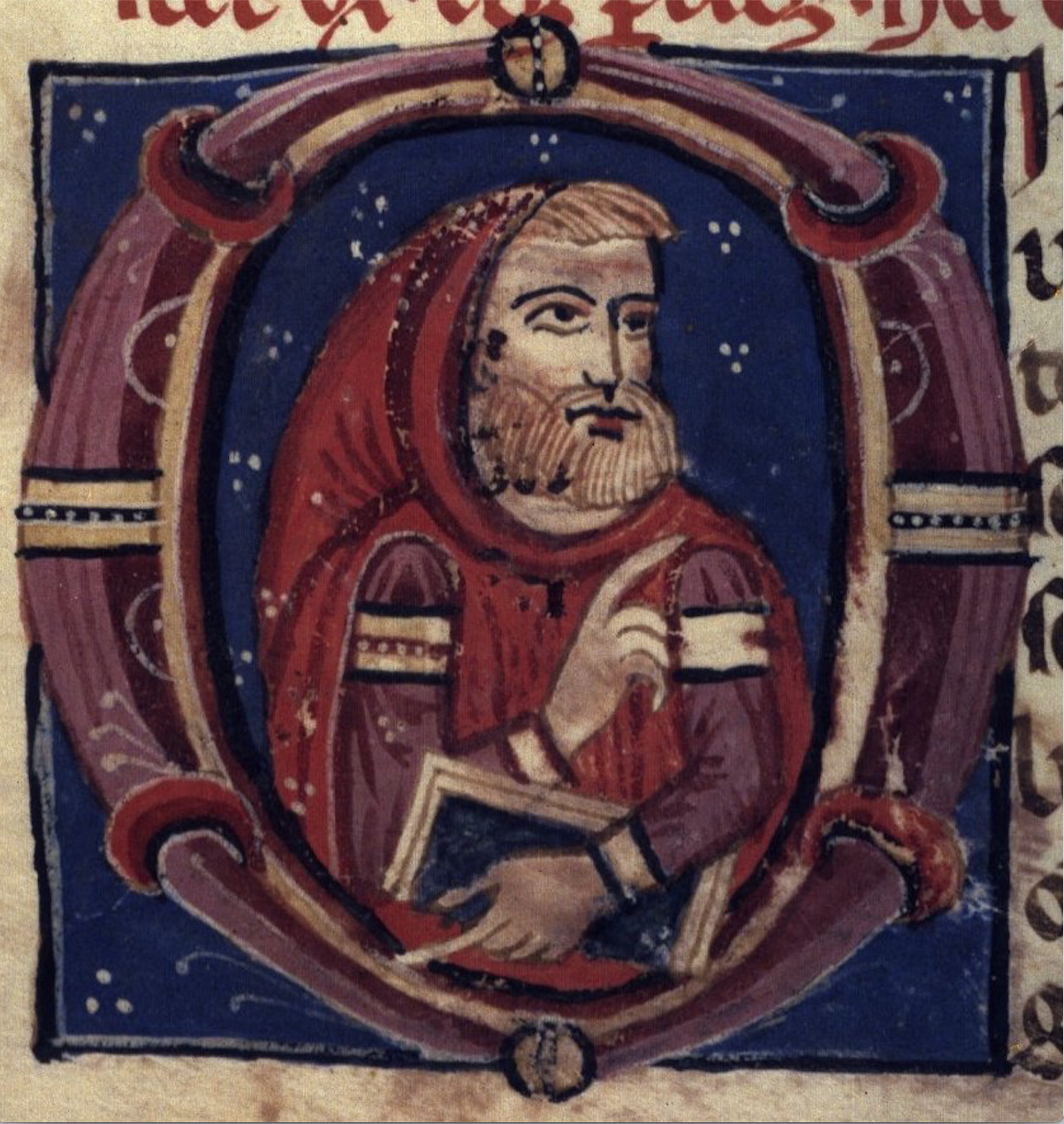
Maslama al-Majriti, drawn and placed
- Living
- Revived
- Fading
- Historical
- Legendary
- Performed
- Lineage
- Islamic Golden Age scholarship
What it is for
His scientific work aimed to refine existing knowledge and make it accessible in the Islamic world. He sought to improve the accuracy of astronomical predictions and economic records. His alchemical writings were intended to guide practitioners through purification processes and spiritual advancement, linking material transformation with esoteric wisdom.
Who does it
Maslama was a trained scholar and intellectual. He held positions of respect within the court of Al-Andalus. He taught at his own school, passing on knowledge to a new generation of scientists. His reputation grew so significantly that later authors claimed his name to lend authority to their own writings on magic and alchemy.
Peoples and places
He lived and worked among the Muslim population of Al-Andalus. His influence extended into Latin Europe through translations commissioned by King Alfonso X of Castile. These translations helped spread his ideas, albeit sometimes altered by Christian theological perspectives. His legacy is tied to the broader cultural exchange between Islamic and European scholars.
At a glance: who, where and when
What people believe
His alchemical writings connect physical changes in matter with spiritual states. The Rutbat al-hakim presents alchemy as a path to wisdom, requiring both technical skill and moral purity. The Picatrix focuses on astrology and talismanic magic, suggesting that celestial forces can be harnessed for specific outcomes. These texts reflect a worldview where science and mysticism are intertwined.
When it is done
His work was continuous throughout his life. The attribution of his later works to specific times is uncertain due to the pseudonymous nature of some texts. The translations of his works occurred centuries after his death, during the thirteenth century.
How scholars and sceptics see it
Modern historians view him as a key figure in the transmission of scientific knowledge. They note that while he made genuine contributions to astronomy and mathematics, many of his most famous alchemical texts were likely written by others. The attribution of the Picatrix and Rutbat al-hakim to him is now generally rejected by scholars, who see them as products of his school rather than his own hand.
Cautions and what is closed
There are no reports of harm or fraud associated with his direct actions. However, the misattribution of his name to later esoteric works has led to confusion about his actual beliefs and practices. Some modern sources claim he had a daughter named Fátima de Madrid, but this lacks historical evidence and appears to be a later invention.
Compare and confuse
He is often compared to other polymaths of the Islamic Golden Age. His work in astronomy overlaps with that of Al-Zarqali, while his alchemical writings are linked to the broader tradition of Arabic hermeticism. The confusion between his authentic scientific works and the pseudo-Majriti alchemical texts mirrors similar patterns in other scholarly traditions.
Questions people ask about Maslama al-Majriti
Who was Maslama al-Majriti?
He was a Muslim Arab scholar in tenth-century al-Andalus (Spain). He worked as an astronomer, mathematician, and alchemist. He is known for improving astronomical tables and establishing a scientific school.
What is the Picatrix?
The Picatrix is a text on astrology and talismanic magic. It was long attributed to Maslama al-Majriti. Modern scholars believe it was written by someone else in his name to gain authority.
Did Maslama discover conservation of mass?
He described an experiment where heating mercury did not change its weight. This observation is cited as an early example of the principle. However, the text describing it may be from a follower.
Why is he called Methilem?
Methilem is the Latinized version of his name used in European sources. It reflects how his name was adapted when his works were translated into Latin in later centuries.
Where did he live?
He lived in al-Andalus, specifically in Madrid and Córdoba. These cities were centers of learning during the Caliphate of Córdoba under rulers like Al-Hakam II.
Good reading and sources
The facts on this page come from the Wikipedia article "Maslama al-Majriti", written by its contributors and used under the CC BY-SA 4.0 licence, and from its Wikidata record (CC0). EveryJaadu rewrote the text in its own words, with AI assistance, and compares every page with the article to make sure no passage is copied. It may be reused under the same CC BY-SA 4.0 licence with a link back.
It may contain mistakes. Names and customs differ from one community to the next, and some knowledge is closed to outsiders and left out here. This page describes belief and practice. It does not say that any of it works, it is not a how-to, and it is not medical advice. If something is wrong, tell us. Last refreshed 2026-10-05.
More from Spain
All the entries from Spain 🇵🇹 Portugal and 5 moreCocoCoca
A monster used to frighten children into obedience across the Iberian world and Latin America.Figure · Cursing and harm · Binding and oaths Living
🇵🇹 Portugal and 5 moreCocoCoca
A monster used to frighten children into obedience across the Iberian world and Latin America.Figure · Cursing and harm · Binding and oaths Living
 🇮🇹 Italy and 5 moreBogeyman
A mythical creature used across cultures to frighten children into obedienceFigure · Cursing and harm Living
🇮🇹 Italy and 5 moreBogeyman
A mythical creature used across cultures to frighten children into obedienceFigure · Cursing and harm Living
 🇬🇧 United Kingdom and 2 moreMichael Scot
A medieval scholar and astrologer who became a legendary magician in folklore.Figure · Seeing and foretelling · Wonder and entertainment Legendary
🇬🇧 United Kingdom and 2 moreMichael Scot
A medieval scholar and astrologer who became a legendary magician in folklore.Figure · Seeing and foretelling · Wonder and entertainment Legendary
 🇪🇸 SpainSorginak
Mythical beings and historical figures associated with Basque witchcraft and the goddess Mari.Figure · Speaking with spirits and the dead · Cursing and harm Historical
🇪🇸 SpainSorginak
Mythical beings and historical figures associated with Basque witchcraft and the goddess Mari.Figure · Speaking with spirits and the dead · Cursing and harm Historical
Related elsewhere
All figure 🇮🇳 India and 2 moreYantraयन्त्र
A geometric diagram from Indian traditions used for worship and meditationTradition · Protection · Speaking with spirits and the dead Living
🇮🇳 India and 2 moreYantraयन्त्र
A geometric diagram from Indian traditions used for worship and meditationTradition · Protection · Speaking with spirits and the dead Living
 🇮🇳 India and 1 moreAshtamangalaअष्टमङ्गल
A set of eight sacred symbols used in Indian religions to mark auspicious occasions and teach spiritual truths.Tradition · Power and authority · Wonder and entertainment Living
🇮🇳 India and 1 moreAshtamangalaअष्टमङ्गल
A set of eight sacred symbols used in Indian religions to mark auspicious occasions and teach spiritual truths.Tradition · Power and authority · Wonder and entertainment Living
 🇮🇳 India and 1 moreMantraमन्त्रम्
A sacred sound or phrase repeated to focus the mind and invoke spiritual powerText · Speaking with spirits and the dead · Power and authority Living
🇮🇳 India and 1 moreMantraमन्त्रम्
A sacred sound or phrase repeated to focus the mind and invoke spiritual powerText · Speaking with spirits and the dead · Power and authority Living
 🇵🇪 Peru and 1 moreViracochaWiraqucha
The supreme creator deity of the Andes, associated with the sea and civilization.Being · Power and authority · Wonder and entertainment Historical
🇵🇪 Peru and 1 moreViracochaWiraqucha
The supreme creator deity of the Andes, associated with the sea and civilization.Being · Power and authority · Wonder and entertainment Historical