
Cotton Mather
A Puritan minister and writer known for his role in the Salem witch trials and promotion of smallpox inoculation
Cotton Mather was a prominent Puritan theologian and naturalist in colonial New England. He is historically significant for his defense of the Salem witch trials and his early advocacy for variolation against smallpox.
- Defended the Salem witch trials in Wonders of the Invisible World
- Promoted smallpox inoculation based on knowledge from Onesimus
- Elected Fellow of the Royal Society in 1713
- Wrote nearly 400 works on theology and natural history
- Led resistance against Governor Edmund Andros in 1689
What it is
Cotton Mather was a leading intellectual figure in English-speaking colonial America during the late seventeenth and early eighteenth centuries. He served as a Congregationalist minister in Boston and wrote extensively on theology, morality, and natural history. Scholars often describe him as the first American Evangelical due to his prolific output and influence on religious thought. His work covered diverse subjects including demonology, astronomy, and medicine, reflecting the broad interests of the era's learned men.
Where it comes from
Born in Boston in 1663, Mather came from a distinguished family of Puritan ministers. His father, Increase Mather, and grandfathers were central figures in the establishment of the Massachusetts colony. Educated at Harvard College from a young age, he entered the clergy tradition established by his ancestors. His early life was shaped by the political tensions between the colony and the English Crown, which influenced his later public actions and writings.
Cotton Mather, drawn and placed
- Living
- Revived
- Fading
- Historical
- Legendary
- Performed
Who does it
Mather was trained at Harvard College, where he studied Hebrew and the sciences. He joined his father as assistant pastor before becoming co-pastor of the Old North Meeting House in Boston. Unlike many contemporaries who focused solely on spiritual matters, Mather engaged with the scientific community, corresponding with European intellectuals and publishing reports to the Royal Society. His status as a minister gave him authority, but his involvement in politics and science set him apart as a unique figure in colonial society.
Peoples and places
Mather is primarily associated with the Puritan communities of New England, particularly in Boston and Salem. His influence extended through his writings and correspondence across the Atlantic. The Salem witch trials remain the most controversial aspect of his legacy in this region. While he championed Puritan ideals, his support for new ideas like inoculation created divisions within the very communities he sought to lead.
At a glance: who, where and when


What people believe
As a Puritan theologian, Mather operated within a worldview that acknowledged the reality of the invisible world, including demons and spirits. This belief system underpinned his defense of the Salem witch trials, where he argued for the legitimacy of spectral evidence. His theological framework integrated faith with the emerging experimental science of his time, seeing no contradiction between studying nature and believing in divine intervention.
How scholars and sceptics see it
Historians have long debated Mather's legacy. In the nineteenth century, writers like Nathaniel Hawthorne criticized him as a chief agent of mischief during the witch trials. Modern scholars tend to downplay his direct role in the legal proceedings, noting that he never called for an end to the trials but also did not hold official judicial power. His reputation has been further complicated by his advocacy for smallpox inoculation, which faced violent opposition from some citizens despite saving lives.
Cautions and what is closed
Mather's life illustrates the dangers of mixing religious authority with political and medical controversy. His defense of the witch trials damaged his standing among many colonists and later generations. His promotion of inoculation led to public unrest, with opponents viewing it as a violation of traditional beliefs or divine will. These controversies highlight the risks faced by innovators in rigid social structures.
Compare and confuse
Mather is often compared to his father, Increase Mather, though he produced more written works. He is distinct from other Puritan leaders by his active engagement with secular science and international correspondence. His role in the witch trials sets him apart from ministers who opposed the hysteria, marking him as a polarizing figure in American religious history.
Questions people ask about Cotton Mather
Who was Cotton Mather?
He was a Puritan minister and writer in colonial New England, known for his extensive publications on theology and science.
What is Cotton Mather famous for?
He is best known for defending the Salem witch trials and for promoting smallpox inoculation in Boston.
Did Cotton Mather practice witchcraft?
No, he was a minister who believed in the reality of witchcraft and defended the trials that prosecuted those accused of it.
Why was Cotton Mather controversial?
His support for the witch trials and his advocacy for smallpox inoculation both caused significant public outrage and division.
Good reading and sources
- Cotton Mather on WikipediaEncyclopedia
- More photos on Wikimedia CommonsPhotos and video
- Wikidata recordOpen data
The facts on this page come from the Wikipedia article "Cotton Mather", written by its contributors and used under the CC BY-SA 4.0 licence, and from its Wikidata record (CC0). EveryJaadu rewrote the text in its own words, with AI assistance, and compares every page with the article to make sure no passage is copied. It may be reused under the same CC BY-SA 4.0 licence with a link back.
It may contain mistakes. Names and customs differ from one community to the next, and some knowledge is closed to outsiders and left out here. This page describes belief and practice. It does not say that any of it works, it is not a how-to, and it is not medical advice. If something is wrong, tell us. Last refreshed 2026-10-05.
More from the United States
All the entries from the United States 🇺🇸 United States and 1 moreMarie Laveau
A New Orleans priestess and herbalist who led Louisiana Voodoo in the nineteenth centuryTradition · Healing · Protection Historical
🇺🇸 United States and 1 moreMarie Laveau
A New Orleans priestess and herbalist who led Louisiana Voodoo in the nineteenth centuryTradition · Healing · Protection Historical
 🇺🇸 United StatesFolk healer
An unlicensed community member who provides healing care using local plants and traditional knowledge.Tradition · Healing · Protection Historical
🇺🇸 United StatesFolk healer
An unlicensed community member who provides healing care using local plants and traditional knowledge.Tradition · Healing · Protection Historical
 🇺🇸 United States and 1 moreMedicine wheel
Circular stone formations built by Indigenous peoples of North America for ceremony and astronomy.Tradition · Speaking with spirits and the dead · Power and authority Living
🇺🇸 United StatesDeliverance ministry
A Christian practice to remove evil spirits believed to cause personal afflictionRite · Cursing and harm · Cleansing and purification Living
🇺🇸 United States and 1 moreMedicine wheel
Circular stone formations built by Indigenous peoples of North America for ceremony and astronomy.Tradition · Speaking with spirits and the dead · Power and authority Living
🇺🇸 United StatesDeliverance ministry
A Christian practice to remove evil spirits believed to cause personal afflictionRite · Cursing and harm · Cleansing and purification Living
Related elsewhere
All figure 🇷🇸 Serbia and 5 moreVampire
An undead creature from folklore that feeds on the blood or life force of the livingBeing · Cursing and harm · Luck and prosperity Legendary
🇷🇸 Serbia and 5 moreVampire
An undead creature from folklore that feeds on the blood or life force of the livingBeing · Cursing and harm · Luck and prosperity Legendary
 🇬🇧 United Kingdom and 2 moreKing ArthurBrenin Arthur
A legendary British king and folk hero of medieval literature and Welsh mythologyFigure · Power and authority · Wonder and entertainment Legendary
🇬🇧 United Kingdom and 2 moreKing ArthurBrenin Arthur
A legendary British king and folk hero of medieval literature and Welsh mythologyFigure · Power and authority · Wonder and entertainment Legendary
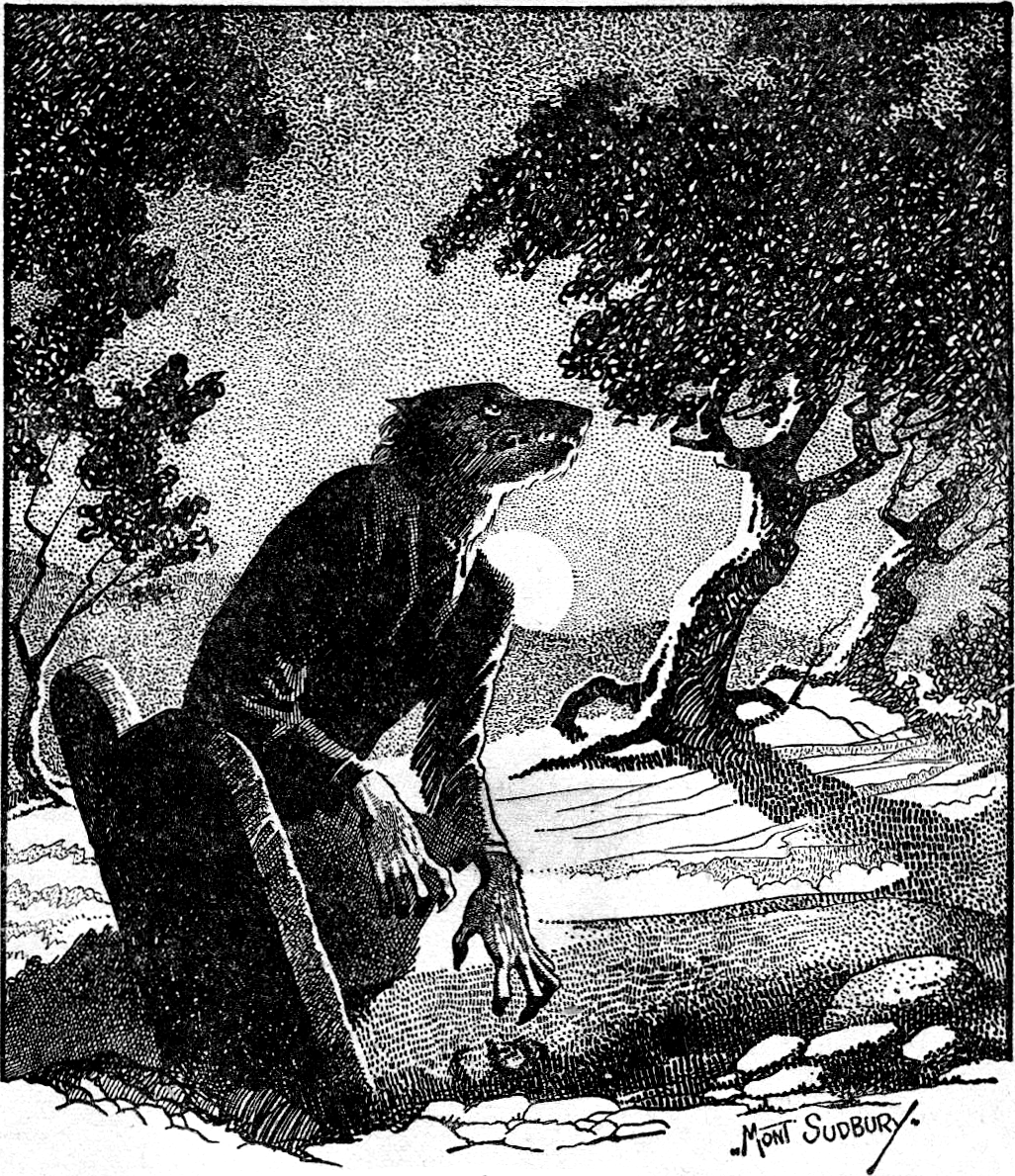 🇫🇷 France and 5 moreWerewolf
A mythical shapeshifter that turns into a wolf, central to European witch-hunts and Gothic horror.Being · Cursing and harm · Wonder and entertainment Legendary
🇫🇷 France and 5 moreWerewolf
A mythical shapeshifter that turns into a wolf, central to European witch-hunts and Gothic horror.Being · Cursing and harm · Wonder and entertainment Legendary
 🇪🇬 Egypt and 1 moreLilithלִילִית
A feminine figure from Mesopotamian and Jewish mythology, often depicted as a night demon or spirit.Being · Cursing and harm Legendary
🇪🇬 Egypt and 1 moreLilithלִילִית
A feminine figure from Mesopotamian and Jewish mythology, often depicted as a night demon or spirit.Being · Cursing and harm Legendary