
Pietro d'Abano
from the town of Abano Terme in Italy
A medieval physician and astrologer accused of heresy and magic.
Pietro d'Abano was an Italian scholar who studied medicine and philosophy in the thirteenth century. He is remembered for his medical writings and a grimoire attributed to him, which led to accusations of witchcraft by the Inquisition.
- Born in Abano Terme around 1257.
- Studied in Constantinople and Paris.
- Wrote the Conciliator Differentiarum.
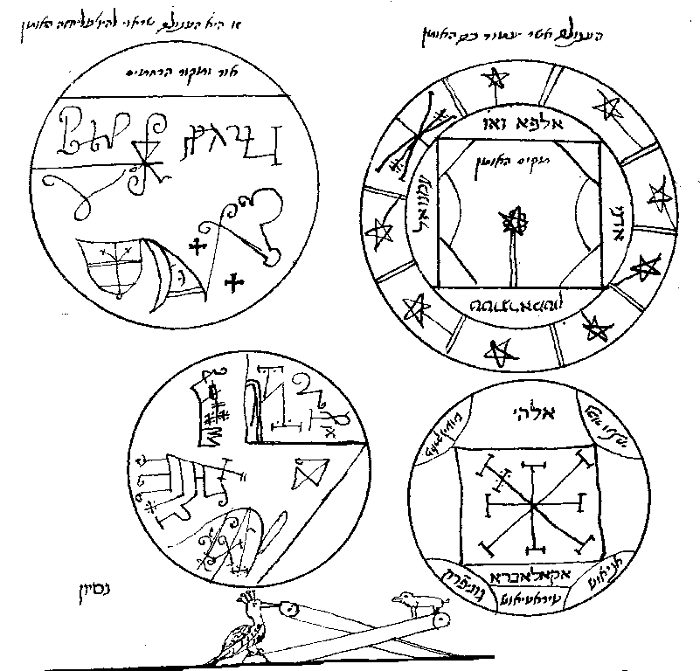
- Attributed author of the Heptameron.
- Died in prison after Inquisition trial.
What it is
Pietro d'Abano was a philosopher, astrologer, and physician active in the late thirteenth and early fourteenth centuries. He is best known for his medical treatises and a magical text called the Heptameron. Scholars view him as a bridge between ancient knowledge and later European science. His work combined Aristotelian philosophy with Islamic medical theories. He is also remembered for his controversial views on healing and spirits.
Where it comes from
He was born around 1257 in Abano Terme, Italy. He studied in Constantinople, learning Greek, before moving to Paris. There, he earned degrees in philosophy and medicine. He later returned to Padua, where he practiced medicine and taught. His time in Paris exposed him to new ideas that challenged traditional beliefs.
How it is done
D'Abano wrote extensively on medicine and astrology. He reconciled contradictions between Aristotle and contemporary medical knowledge. He also authored the Heptameron, a book of rituals for conjuring angels. These rituals were tied to the days of the week. His medical methods focused on physical causes rather than spiritual ones.
Tools and materials
He used celestial bodies to guide his medical practice. Astrology played a key role in his treatments. The Heptameron involves rituals using crystals to contain spirits. He also relied on written texts from Islamic scholars like Averroes and Avicenna. His work included translations of Hebrew texts by Abraham Aben Ezra.
Pietro d'Abano, drawn and placed
- Living
- Revived
- Fading
- Historical
- Legendary
- Performed
- Lineage
- medieval scholasticism
- Timing
- daily
What it is for
His medical writings aimed to improve healthcare through rational analysis. The Heptameron was intended for ritual magic, seeking angelic aid. D'Abano sought to explain healing without relying on divine intervention. He believed trust between healer and patient was crucial for recovery. His work was meant to educate physicians and magicians alike.
Who does it
D'Abano was a trained physician and professor. He studied under leading scholars in Paris and Constantinople. His high fees made him wealthy but unpopular. He faced accusations from the Inquisition for his views. Despite this, he remained influential among scholars until his death.
Peoples and places
He was Italian by birth but studied in Greece and France. His work influenced Italian and French medical traditions. The Heptameron is attributed to him across Europe. His ideas spread through manuscripts printed in the fifteenth and sixteenth centuries. He is remembered primarily in Italy and France.
At a glance: who, where and when
Who does it
Peoples
What people believe
D'Abano rejected the idea that demons or God directly caused illness. He believed only physical matter could affect the body. He attributed supernatural events to celestial influences. This view contradicted Church teachings, leading to his trial. He argued that healing charms worked through psychological trust, not magic.
When it is done
The Heptameron links rituals to the seven days of the week. Each day is associated with specific angels. D'Abano's medical practices likely followed seasonal cycles. His life events are tied to the thirteenth and fourteenth centuries. No specific festivals are mentioned in relation to his work.
How scholars and sceptics see it
Historians view d'Abano as a transitional figure in medicine. He integrated Islamic and Jewish knowledge into European scholarship. His rejection of spiritual healing was seen as heretical. Modern scholars study his work to understand medieval science. His trial highlights the tension between reason and faith.
Cautions and what is closed
D'Abano was accused of heresy and atheism. He died in prison before his trial concluded. His body was ordered burned, but friends saved it. Accusations included possessing the Philosopher's Stone. His work was banned to discourage readers. His legacy includes both scientific and magical elements.
Compare and confuse
He is often compared to other medieval physicians who blended astrology and medicine. The Heptameron is similar to other grimoires of the period. His views on healing contrast with those who relied on prayer.
Law and persecution
The Inquisition tried him for heresy due to his denial of demonic influence. He was found guilty posthumously. His sentence included burning in effigy. His writings were suppressed to prevent further controversy. His case illustrates the risks faced by scholars challenging religious doctrine.
Questions people ask about Pietro d'Abano
Who was Pietro d'Abano?
He was an Italian philosopher, astrologer, and physician who lived from around 1257 to 1316. He studied in Greece and France before returning to Italy to practice medicine and teach.
What is the Heptameron?
It is a grimoire attributed to d'Abano. It contains rituals for conjuring angels based on the days of the week. The book reflects his interest in astral magic and celestial influences.
Why was he accused of heresy?
He denied that demons or God directly caused illness. He believed physical matter and celestial bodies were responsible. This view contradicted Church teachings, leading to his trial by the Inquisition.
Where did he study?
He studied in Constantinople, learning Greek, and later in Paris, where he earned degrees in philosophy and medicine. He then moved to Padua to practice and teach.
How did he view healing?
He believed healing came from physical causes and the trust between healer and patient. He rejected the idea that prayers or charms had direct spiritual power, though he acknowledged their psychological effect.
Good reading and sources
- Pietro d'Abano on WikipediaEncyclopedia
- More photos on Wikimedia CommonsPhotos and video
- Wikidata recordOpen data
The facts on this page come from the Wikipedia article "Pietro d'Abano", written by its contributors and used under the CC BY-SA 4.0 licence, and from its Wikidata record (CC0). EveryJaadu rewrote the text in its own words, with AI assistance, and compares every page with the article to make sure no passage is copied. It may be reused under the same CC BY-SA 4.0 licence with a link back.
It may contain mistakes. Names and customs differ from one community to the next, and some knowledge is closed to outsiders and left out here. This page describes belief and practice. It does not say that any of it works, it is not a how-to, and it is not medical advice. If something is wrong, tell us. Last refreshed 2026-10-05.
More from Italy
All the entries from Italy 🇫🇷 France and 1 moreNostradamus
A French astrologer and physician known for a book of poetic propheciesText · Seeing and foretelling · Power and authority Historical
🇫🇷 France and 1 moreNostradamus
A French astrologer and physician known for a book of poetic propheciesText · Seeing and foretelling · Power and authority Historical
 🇮🇹 Italy and 2 moreKey of SolomonClavicula Salomonis
A Renaissance grimoire attributed to King Solomon, detailing ritual preparations and invocations.Text · Cursing and harm · Love and attraction Historical
🇮🇹 Italy and 2 moreKey of SolomonClavicula Salomonis
A Renaissance grimoire attributed to King Solomon, detailing ritual preparations and invocations.Text · Cursing and harm · Love and attraction Historical
 🇮🇹 ItalyCumaean SibylSibylla Cumana
The priestess of the Apollonian oracle at Cumae, famous in Roman legend for her prophetic books and underworld guidance.Figure · Seeing and foretelling · Speaking with spirits and the dead Legendary
🇮🇹 ItalyCumaean SibylSibylla Cumana
The priestess of the Apollonian oracle at Cumae, famous in Roman legend for her prophetic books and underworld guidance.Figure · Seeing and foretelling · Speaking with spirits and the dead Legendary
 🇬🇧 United Kingdom and 2 moreExcalibur
The mythical sword of King Arthur, symbolizing rightful sovereignty and magical power.Figure · Power and authority Legendary
🇬🇧 United Kingdom and 2 moreExcalibur
The mythical sword of King Arthur, symbolizing rightful sovereignty and magical power.Figure · Power and authority Legendary
Related elsewhere
All text 🇺🇸 United States and 2 moreSéance
A gathering to communicate with spirits, ranging from religious services to stage performances.Rite · Speaking with spirits and the dead · Healing Living
🇺🇸 United States and 2 moreSéance
A gathering to communicate with spirits, ranging from religious services to stage performances.Rite · Speaking with spirits and the dead · Healing Living
 🇲🇦 Morocco and 1 moreGnawa musicڭْناوة or كْناوة
Moroccan ritual music blending West African heritage with Islamic practice for healing and tranceTradition · Healing · Speaking with spirits and the dead Living
🇲🇦 Morocco and 1 moreGnawa musicڭْناوة or كْناوة
Moroccan ritual music blending West African heritage with Islamic practice for healing and tranceTradition · Healing · Speaking with spirits and the dead Living
 🇨🇳 ChinaHe Xiangu何仙姑
A female immortal from Chinese Taoist legend known for divination and lotus magicFigure · Seeing and foretelling · Healing Legendary
🇨🇳 ChinaHe Xiangu何仙姑
A female immortal from Chinese Taoist legend known for divination and lotus magicFigure · Seeing and foretelling · Healing Legendary
 🇺🇸 United States and 3 moreSandpainting
A ritual art of pouring colored sand to create temporary images for healing or spiritual teachingTradition · Healing · Speaking with spirits and the dead Living
🇺🇸 United States and 3 moreSandpainting
A ritual art of pouring colored sand to create temporary images for healing or spiritual teachingTradition · Healing · Speaking with spirits and the dead Living