
Fearsome critters
Tall tale animals from North American logging camps used to jest and explain the wild.
Fearsome critters are legendary beasts from North American folklore, originating in logging camps around the turn of the twentieth century. They served as oral entertainment and explanations for natural phenomena, with many tales spreading through traveling lumberjacks across the continent.
- Originated in North American logging camps around 1900.
- Used to haze newcomers and pass time in the wilderness.
- Many tales were based on exaggerated observations of real animals.
- Henry H. Tryon published a key collection in 1939.
- Creatures like the Hodag and Squonk are famous examples.
What it is
Fearsome critters are a collection of mythical animals rooted in North American folklore, specifically within the culture of logging camps during the late nineteenth and early twentieth centuries. These creatures were not feared monsters but rather comical or bizarre figures designed to entertain. They often featured exaggerated physical traits or impossible behaviors, such as the hidebehind, which could vanish behind a tree, or the sidehill gouger, which had legs of unequal length. The term now applies broadly to similar fabulous beasts found in regional myths.
Where it comes from
The tradition emerged in the wilderness areas surrounding logging camps, particularly in the Great Lakes region. It began as an oral practice among lumberjacks who traveled between camps, swapping stories to pass time or haze newcomers. A common method involved two narrators building a convincing story while a third listened, eventually becoming convinced of the creature's existence. These tales spread across the continent as workers moved, with some stories serving as humorous explanations for unexplained sounds or missing persons.
How it is done
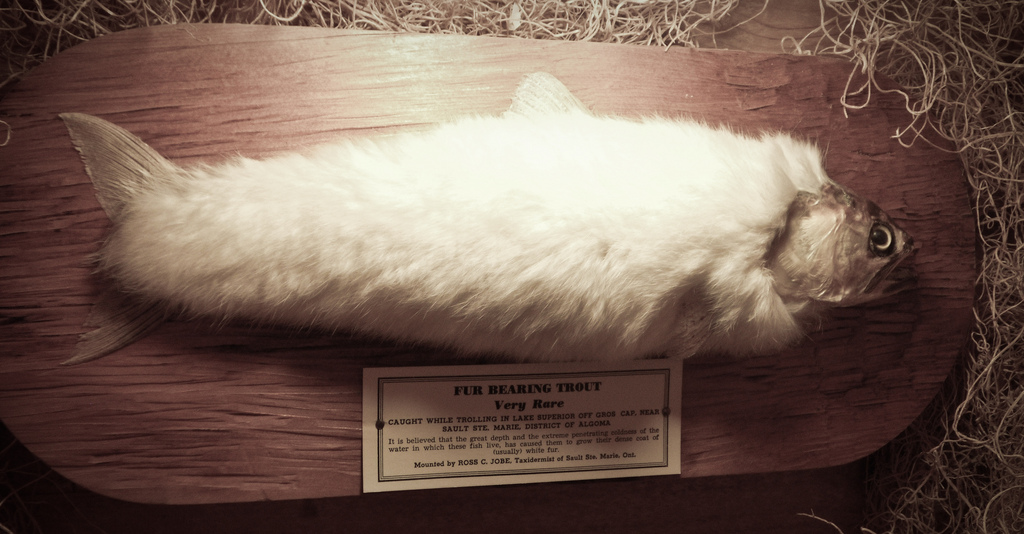
The delivery of these tales relied on collaborative storytelling. Two individuals would present a narrative with solemn seriousness, using specific emphasis to convince a listener. The story often included details that mirrored real animal behaviors or natural phenomena, making the fiction plausible. Some elaborate ruses incorporated taxidermy or trick photography to add visual proof. The lack of consistent physical descriptions allowed each storyteller to adapt the creature to their own imagination.
Tools and materials
No specific tools were required beyond the spoken word and the environment of the camp. However, some accounts mention the use of taxidermy mounts or staged photographs to support the claims. The primary materials were the stories themselves, often grounded in observations of real wildlife like the wood stork or mangrove killifish, which were exaggerated into legends like the fillyloo or upland trout.
Fearsome critters, drawn and placed
- Living
- Revived
- Fading
- Historical
- Legendary
- Performed
- Lineage
- North American folklore
What it is for
These creatures served multiple social functions within the logging community. They provided entertainment during long, isolated nights in the woods. They also acted as a form of initiation or hazing for new recruits, testing their gullibility. Additionally, they offered a way to rationalize strange occurrences in the forest, such as unexplained noises or the disappearance of workers, turning fear into shared humor.
Who does it
The primary practitioners were lumberjacks and forest tradesmen who passed these tales orally. Scholars have documented these stories in various books, including works by Henry H. Tryon and William T. Cox. The tradition was maintained by those who lived in or near the logging camps, with veterans sharing knowledge with newcomers. The role of the scholar is to record and analyze these fading oral traditions.
Peoples and places
The tradition is distinctly North American, with strong roots in the United States, particularly in Wisconsin, Michigan, and New Jersey. It also appears in Canadian folklore. Different regions developed unique variations; for example, the wampus cat was described differently in various texts, ranging from a panther to a creature with pantographic limbs. The stories reflect the specific environments of the forests and swamps where logging took place.
At a glance: who, where and when
Who does it
Peoples


What people believe
There is no religious belief attached to fearsome critters; they are secular folklore. They represent a playful engagement with the unknown aspects of nature. The creatures are not worshipped or feared in a spiritual sense but are enjoyed as part of a rich tapestry of tall tales. They reflect a worldview where the wilderness is full of surprises, both real and imagined, and where humor is a coping mechanism for the harsh realities of frontier life.
When it is done
The tales were told whenever loggers gathered, particularly at night in the camps. There were no specific festivals or holy days associated with them. The stories were part of daily life in the woods, shared during breaks or after work. The timing was informal, driven by the need for companionship and distraction in isolated settings.
How scholars and sceptics see it
Anthropologists and folklorists study fearsome critters as examples of oral tradition and social bonding. Scholars note that many creatures were based on real animals but distorted through exaggeration. The academic interest lies in how these stories spread and evolved, reflecting the cultural history of logging communities. Researchers also examine the psychological aspect of hazing and the human tendency to create narratives for unexplained events.
Cautions and what is closed
The tradition does not involve harm or danger. It is a harmless form of entertainment. However, the stories sometimes reflected the real dangers of logging life, such as accidents or getting lost in the woods. The tales served as a way to process these risks through humor. There is no risk of fraud or abuse associated with the folklore itself, though modern cryptozoology sometimes takes these tales more seriously than intended.
Compare and confuse
Fearsome critters are related to other forms of tall tale folklore, such as the Paul Bunyan stories. They share similarities with European folk tales but are distinct in their American setting and industrial context. Unlike cryptids like Bigfoot, which are often taken seriously, fearsome critters are generally understood as jokes. They differ from horror monsters in their comedic intent and lack of malevolent power.
Questions people ask about Fearsome critters
What are fearsome critters?
They are legendary animals from North American logging camp folklore, known for their comical and bizarre traits. They originated as tall tales told by lumberjacks to entertain each other and haze newcomers.
Where did this tradition come from?
It came from the oral traditions of logging camps in the Great Lakes region and other parts of North America in the late nineteenth and early twentieth centuries. Traveling workers spread the stories across the continent.
Are these creatures real?
No, they are fictional creatures from folklore. Many were inspired by real animals but exaggerated into absurdity. They serve as humorous explanations for natural phenomena or simply as entertainment.
Why were they called fearsome?
The name is ironic. Most critters were not actually frightening but funny or weird. The term reflects the dramatic way they were presented in tall tales, often with serious emphasis despite their silly nature.
Good reading and sources
- Fearsome critters on WikipediaEncyclopedia
- More photos on Wikimedia CommonsPhotos and video
- Wikidata recordOpen data
The facts on this page come from the Wikipedia article "Fearsome critters", written by its contributors and used under the CC BY-SA 4.0 licence, and from its Wikidata record (CC0). EveryJaadu rewrote the text in its own words, with AI assistance, and compares every page with the article to make sure no passage is copied. It may be reused under the same CC BY-SA 4.0 licence with a link back.
It may contain mistakes. Names and customs differ from one community to the next, and some knowledge is closed to outsiders and left out here. This page describes belief and practice. It does not say that any of it works, it is not a how-to, and it is not medical advice. If something is wrong, tell us. Last refreshed 2026-10-06.
More from the United States
All the entries from the United States 🇺🇸 United States and 1 moreMarie Laveau
A New Orleans priestess and herbalist who led Louisiana Voodoo in the nineteenth centuryTradition · Healing · Protection Historical
🇺🇸 United States and 1 moreMarie Laveau
A New Orleans priestess and herbalist who led Louisiana Voodoo in the nineteenth centuryTradition · Healing · Protection Historical
 🇺🇸 United StatesCotton Mather
A Puritan minister and writer known for his role in the Salem witch trials and promotion of smallpox inoculationFigure Historical
🇺🇸 United StatesRed Ghost
A legendary red camel with a skeleton rider from Arizona frontier folkloreFigure · Wonder and entertainment Legendary
🇺🇸 United StatesCotton Mather
A Puritan minister and writer known for his role in the Salem witch trials and promotion of smallpox inoculationFigure Historical
🇺🇸 United StatesRed Ghost
A legendary red camel with a skeleton rider from Arizona frontier folkloreFigure · Wonder and entertainment Legendary
 🇺🇸 United States and 1 moreBigfoot
A large, hairy humanoid creature of North American folklore and cryptozoologyFigure · Wonder and entertainment Legendary
🇺🇸 United States and 1 moreBigfoot
A large, hairy humanoid creature of North American folklore and cryptozoologyFigure · Wonder and entertainment Legendary
Related elsewhere
All figure 🇯🇵 Japan and 2 moreTanabataたなばた (七夕)
A Japanese celebration of star-crossed lovers and written wishesTradition · Luck and prosperity · Wonder and entertainment Living
🇯🇵 Japan and 2 moreTanabataたなばた (七夕)
A Japanese celebration of star-crossed lovers and written wishesTradition · Luck and prosperity · Wonder and entertainment Living
 🇮🇪 Ireland and 5 moreCairn
A human-made stack of stones used as a marker, memorial, or religious symbol across many cultures.Tradition · Protection · Speaking with spirits and the dead Living
🇮🇪 Ireland and 5 moreCairn
A human-made stack of stones used as a marker, memorial, or religious symbol across many cultures.Tradition · Protection · Speaking with spirits and the dead Living
 🇷🇺 Russia and 3 moreFirebird
A glowing bird of Slavic folklore that brings both fortune and peril to those who seek itFigure · Wonder and entertainment · Luck and prosperity Legendary
🇷🇺 Russia and 3 moreFirebird
A glowing bird of Slavic folklore that brings both fortune and peril to those who seek itFigure · Wonder and entertainment · Luck and prosperity Legendary
 🇬🇧 United KingdomMari LwydY Fari Lwyd
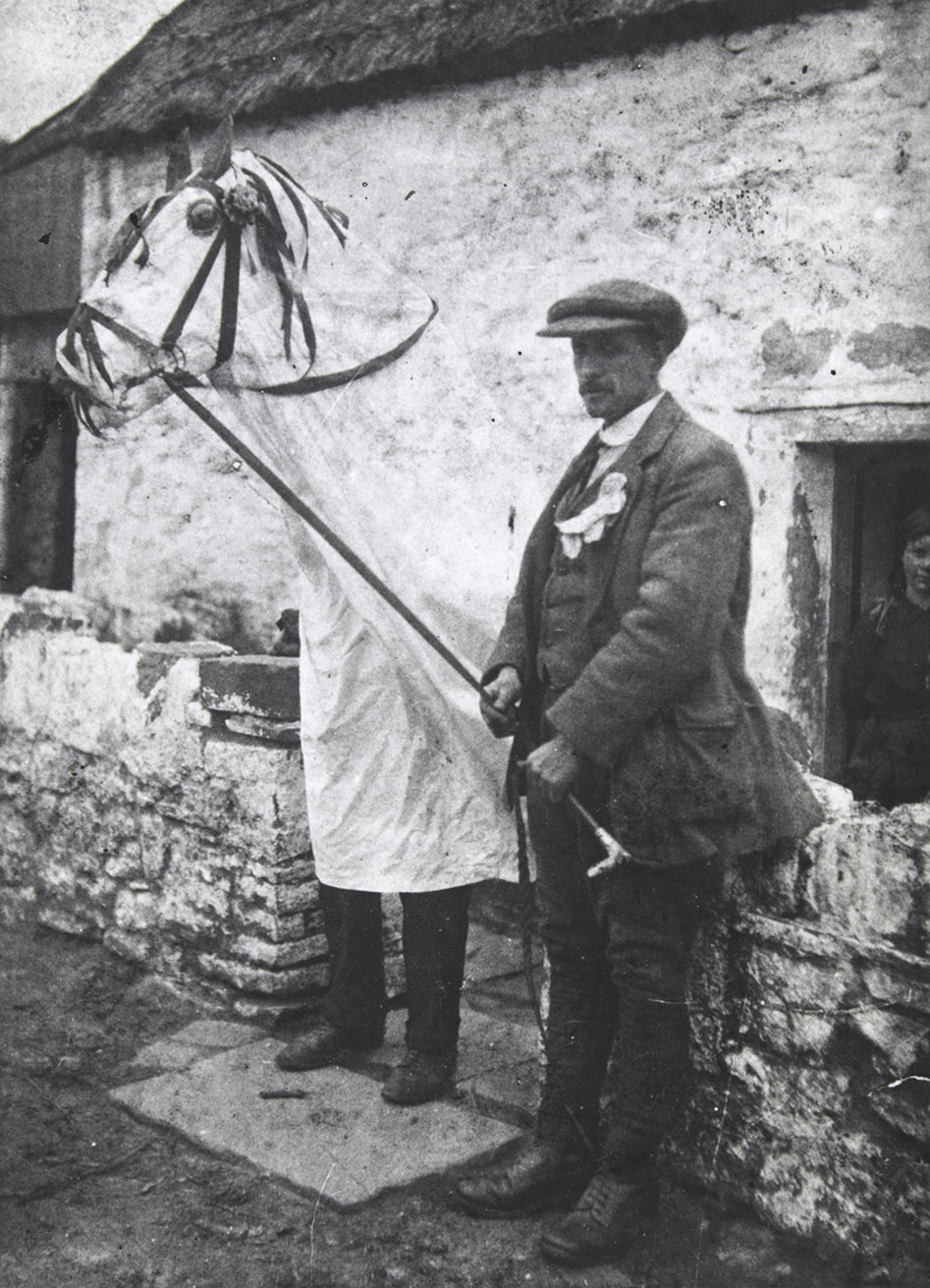
A Welsh winter custom featuring a horse skull carried through villages for song and hospitality.Rite · Luck and prosperity · Wonder and entertainment Revived
🇬🇧 United KingdomMari LwydY Fari Lwyd
A Welsh winter custom featuring a horse skull carried through villages for song and hospitality.Rite · Luck and prosperity · Wonder and entertainment Revived