Dietrich von Bern
from High German Dietrich and Theodoric meaning ruler of the people
A legendary Germanic hero based on the Ostrogothic king Theodoric the Great
Dietrich von Bern is a figure from Germanic heroic legend who originated as a mythic version of the historical Ostrogothic king Theodoric the Great. He is portrayed as an exiled ruler fighting to reclaim his kingdom from Italy while living among the Huns.
- Dietrich is a legendary version of King Theodoric the Great
- He is portrayed as exiled from his kingdom in Italy
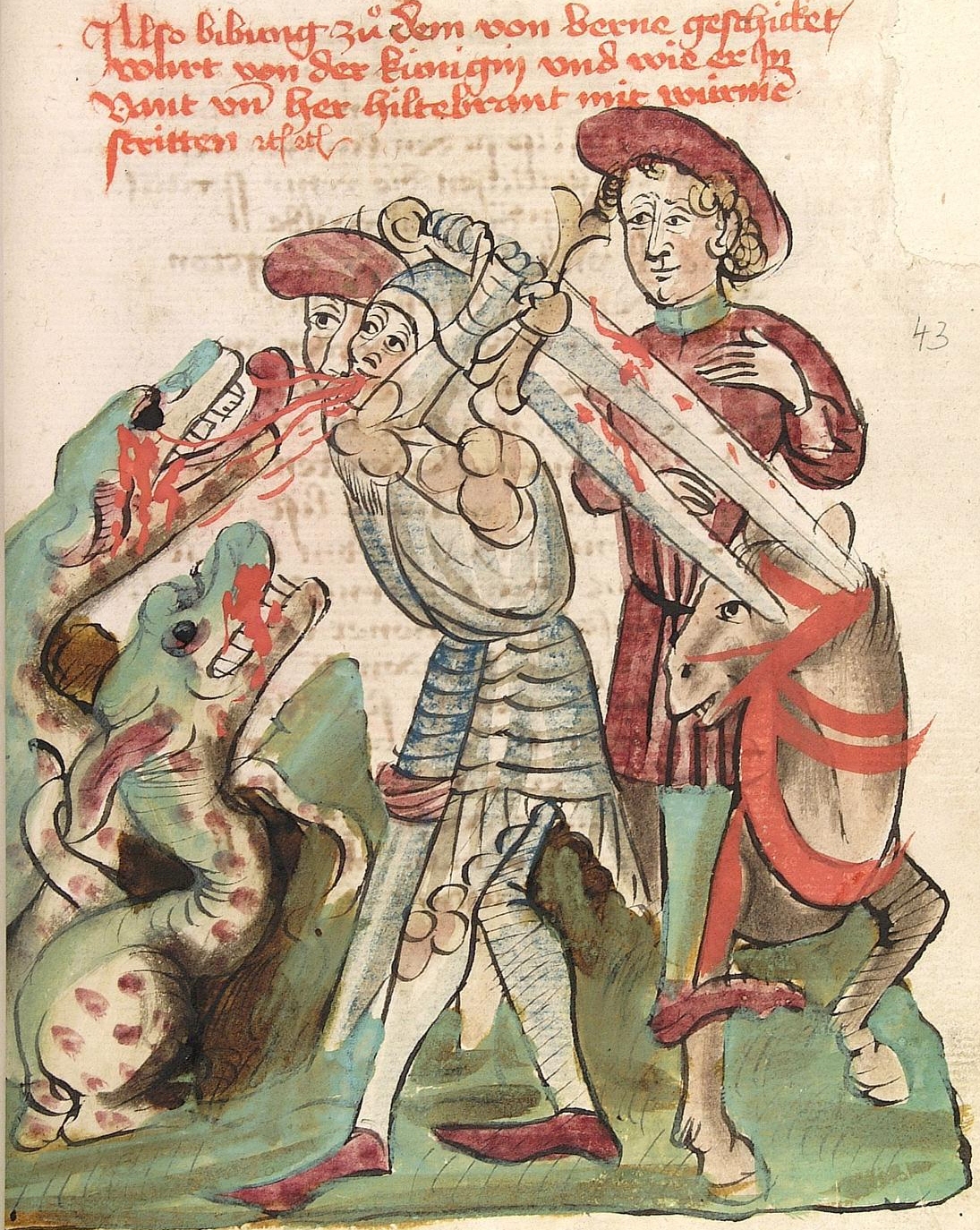
- He fights mythical creatures like dragons and giants
- Early mentions appear in Old English and Old High German poems
- Some traditions claim he breathed fire or rode to hell
What it is
Dietrich von Bern is a central character in Germanic heroic legend. He serves as a mythic counterpart to the historical Ostrogothic king Theodoric the Great. In these stories, he is a rightful king forced into exile by his uncle Ermenrich. He lives among the Huns under their leader Etzel. Unlike the historical invader, the legend portrays him as a defender of his homeland trying to return to Italy. He battles mythical creatures like dragons and giants. He also interacts with other heroes such as Siegfried. His story reflects oral traditions that evolved over centuries.
Where it comes from
The legends likely began shortly after Theodoric's death in 526. They developed through oral storytelling across Germanic-speaking regions. Early mentions appear in Old English poems like Widsith and Deor. The Old High German poem Hildebrandslied also references him. Later medieval texts expanded his role significantly. The Norse Thidrekssaga drew upon German sources to tell his tale. Scholars note that differences between history and legend stem from long-standing oral traditions. These tales continued to evolve well into the sixteenth century.
Dietrich von Bern, drawn and placed
- Living
- Revived
- Fading
- Historical
- Legendary
- Performed
- Lineage
- Germanic heroic legend
Peoples and places
The figure appears across several cultures. In Germany, he features in Middle High German poetry and the Nibelungenlied. Scandinavian sources include the Rök runestone carved in Sweden. Old English literature also records his name. The legends were popular among medieval nobility and later patrician classes. Church critics often targeted these poems. Despite criticism, the stories remained influential. In South Tyrol, specific legends about Laurin remain important today. The Rosengarten mountains are associated with these local tales.
At a glance: who, where and when
Who does it


What people believe
The legends attribute mythological traits to Dietrich. He is said to breathe fire in multiple texts. He fights dwarfs, wild men, and giants. Some traditions claim he rode to hell on an infernal horse. Others suggest he was the son of the Devil. These demonic attributes may stem from ecclesiastical criticism of the Arian Theodoric. Church reports claimed his soul was punished for persecuting orthodox Christians. However, the heroic material itself presents a generally positive view of the hero without demonizing him.
How scholars and sceptics see it
Scholars analyze the shift from historical invader to exiled king. This change follows common oral tradition motifs of exile and return. It may reflect the destruction of the Gothic kingdom by the Byzantine Empire. Synchronization of timelines places Dietrich with Attila and Ermanaric. Longobardic influence is suggested due to associations with Verona. Heinz Ritter-Schaumburg proposed Dietrich was a distinct Frankish king, but this view is rejected as pseudo-science by mainstream scholarship. Critics note the oral tradition transformed historical facts into literary schemes.
Compare and confuse
Dietrich is often confused with the historical Theodoric the Great. While they share a name meaning ruler of the people, their lives differ significantly. Theodoric conquered Italy as an invader. Dietrich is portrayed as a rightful king in exile. The historical Theodoric died after Attila, while the legend makes them contemporaries. The figure of Ermenrich replaces the historical opponent Odoacer in later tales. This comparison highlights how oral tradition reshaped historical events into heroic narratives.
Questions people ask about Dietrich von Bern
Who is Dietrich von Bern?
He is a character in Germanic heroic legend based on the historical Ostrogothic king Theodoric the Great. The names both mean ruler of the people. Legends portray him as an exiled king rather than the historical invader.
Where do the legends come from?
The stories originated in oral tradition shortly after Theodoric's death. They appear in early poems like Widsith and the Hildebrandslied. Later medieval texts expanded his adventures against mythical beings and other heroes.
What makes him different from the real king?
Historical Theodoric conquered Italy as an invader. Legend depicts Dietrich as a rightful king forced into exile by his uncle. He lives among the Huns and tries to reclaim his throne, reflecting oral tradition motifs.
Does he have magical powers?
Legends attribute mythological traits to him. Texts record him breathing fire and fighting giants or dwarfs. Some church traditions claimed he rode to hell, though the heroic poems present him positively.
Good reading and sources
- Dietrich von Bern on WikipediaEncyclopedia
- More photos on Wikimedia CommonsPhotos and video
- Wikidata recordOpen data
The facts on this page come from the Wikipedia article "Dietrich von Bern", written by its contributors and used under the CC BY-SA 4.0 licence, and from its Wikidata record (CC0). EveryJaadu rewrote the text in its own words, with AI assistance, and compares every page with the article to make sure no passage is copied. It may be reused under the same CC BY-SA 4.0 licence with a link back.
It may contain mistakes. Names and customs differ from one community to the next, and some knowledge is closed to outsiders and left out here. This page describes belief and practice. It does not say that any of it works, it is not a how-to, and it is not medical advice. If something is wrong, tell us. Last refreshed 2026-10-06.
More from Germany
All the entries from Germany 🇫🇷 France and 5 moreWerewolf
A mythical shapeshifter that turns into a wolf, central to European witch-hunts and Gothic horror.Being · Cursing and harm · Wonder and entertainment Legendary
🇫🇷 France and 5 moreWerewolf
A mythical shapeshifter that turns into a wolf, central to European witch-hunts and Gothic horror.Being · Cursing and harm · Wonder and entertainment Legendary
 🇩🇪 GermanyPied Piper of Hamelinder Rattenfänger von Hameln
A medieval legend about a piper who leads children away from the town of HamelinFigure · Cursing and harm · Luck and prosperity Legendary
🇩🇪 GermanyJohannes Junius
Mayor of Bamberg executed in the witch trials, known for a letter to his daughterFigure Historical
🇩🇪 GermanyPied Piper of Hamelinder Rattenfänger von Hameln
A medieval legend about a piper who leads children away from the town of HamelinFigure · Cursing and harm · Luck and prosperity Legendary
🇩🇪 GermanyJohannes Junius
Mayor of Bamberg executed in the witch trials, known for a letter to his daughterFigure Historical
 🇧🇷 Brazil and 5 moreWhite Lady
A female ghost in white clothing linked to tragedy and omens across many culturesFigure · Cursing and harm · Seeing and foretelling Legendary
🇧🇷 Brazil and 5 moreWhite Lady
A female ghost in white clothing linked to tragedy and omens across many culturesFigure · Cursing and harm · Seeing and foretelling Legendary
Related elsewhere
All figure 🇮🇳 India and 5 moreAstrology
A divinatory practice that reads human fate through the positions of celestial bodies.Belief · Seeing and foretelling · Luck and prosperity Living
🇮🇳 India and 5 moreAstrology
A divinatory practice that reads human fate through the positions of celestial bodies.Belief · Seeing and foretelling · Luck and prosperity Living
 🇮🇳 India and 2 morePalmistry
A divination method that interprets the lines and shapes of the hand to predict fate or reveal character.Oracle · Seeing and foretelling · Power and authority Living
🇮🇳 India and 2 morePalmistry
A divination method that interprets the lines and shapes of the hand to predict fate or reveal character.Oracle · Seeing and foretelling · Power and authority Living
 🇨🇳 China and 3 moreChinese dragon龍
A legendary water deity and imperial symbol in East Asian cultureBeing · Protection · Luck and prosperity Historical
🇨🇳 China and 3 moreChinese dragon龍
A legendary water deity and imperial symbol in East Asian cultureBeing · Protection · Luck and prosperity Historical
 🇮🇳 India and 1 moreGarba
A Gujarati circle dance performed around a central symbol during NavaratriIllusion · Power and authority · Luck and prosperity Living
🇮🇳 India and 1 moreGarba
A Gujarati circle dance performed around a central symbol during NavaratriIllusion · Power and authority · Luck and prosperity Living