Magicians, witches and legendary figures
The wise woman, the sorcerer, the legendary mage: Merlin, Baba Yaga, Circe and their kin.
Magical figures are the people, real and legendary, who stand for magic: Merlin, Baba Yaga, Circe, Hermes Trismegistus, Dr John Dee, Madame Blavatsky, the sorcerer in a village story, the Bulgarian seer Baba Vanga, and the performers Houdini and Chung Ling Soo. Some lived, some are composite, and some are pure myth. This page looks at who becomes a magic figure, and why. They are described here as stories and as history, and kept apart.
Who becomes a figure
Figures often sit at the edge of society. In many stories the witch is an older woman living alone, the sorcerer a foreigner or a rival tribe, the wise man a hermit. Real figures include John Dee, adviser to Elizabeth I, and Agrippa, whose De occulta philosophia (1533) shaped European occultism. Others are legend: Merlin appears in Welsh and French tales, and Baba Yaga is a Slavic folk figure who both helps and threatens.
Gender and reputation
The witch figure has been mostly female in Europe, where trials in the sixteenth and seventeenth centuries killed tens of thousands of people, most of them women. In other places accusation falls on men, on the old, on the poor or on the outsider. The learned magician, by contrast, was often male, literate and protected by rank, a division that shows how class shaped who was punished. Not every figure carries a stigma: Chinese immortals, Indian rishis and Irish saints are honoured, and the line between holy person and magician depends on who is telling the story.
Colonial and modern use
Missionary and colonial writers often cast African and Indigenous healers as the witch-doctor, a term most communities reject. The word covers healers, diviners and rulers who had very different roles. Today, figures are re-used in fantasy and branding. The Merlin of modern fantasy films is a long way from the Welsh Myrddin, and the name of a real tradition may be turned into a costume. Their stories have also been tools of politics: rulers have claimed legendary magicians as ancestors, and enemies have painted rivals as sorcerers to justify their removal.
Scholars and the real person
Historians separate documented people from legend and warn that many reports of magicians were written by their enemies. Evidence for some famous names, including Hermes Trismegistus, who was long thought to be an Egyptian sage, turned out to be later Greek-language writings. Treating a figure as legend rather than biography is no insult to those who revere them. A figure who may be a real person with a name, a date and a grave belongs in a different category from a legend, even when popular memory blends them, and the entries here try to keep them separate.
Figure on EveryJaadu
The entries written up so far, best known first.
 🇨🇳 China and 2 moreJiang Ziya姜子牙
A historical strategist and war god who helped establish the Zhou dynastyFigure · Power and authority · Cursing and harm Historical
 🇬🇧 United Kingdom and 3 moreJack
A trickster hero from English folklore who outwits giants and oppressorsFigure · Cursing and harm · Luck and prosperity Living
 🇬🇧 United KingdomWilliam Lilly
A seventeenth-century English astrologer and author who shaped Western tradition.Text · Seeing and foretelling · Power and authority Historical
🇪🇸 SpainMaslama al-Majritiأبو القاسم مسلمة بن أحمد المجريطي
A tenth-century scholar of alchemy and astronomy in Islamic Spain.Figure · Wonder and entertainment · Power and authority Historical
🇫🇷 France and 5 moreCount of St. GermainComte de Saint Germain
An 18th-century European adventurer known for alchemy, music, and claims of immortality.Figure · Power and authority · Wonder and entertainment Historical
 🇪🇬 EgyptImhotepỉỉ-m-ḥtp
An ancient Egyptian architect deified as a god of healing and wisdomBeing · Healing · Power and authority Historical
 🇬🇧 United Kingdom and 3 moreEdward Kelley
An English occultist and scryer who worked with John Dee to contact angels and practice alchemy.Figure · Power and authority · Wonder and entertainment Historical
🇬🇧 United Kingdom and 1 moreSamuel Liddell MacGregor Mathers
British occultist and co-founder of the Hermetic Order of the Golden DawnFigure Historical
 🇮🇳 IndiaBamakhepaবামাখ্যাপা
A Bengali Hindu saint known for his devotion to Goddess Tara and meditation in cremation grounds.Figure · Speaking with spirits and the dead Historical
 🇪🇬 Egypt and 1 moreJannes and Jambresיניס וימבריס
Named Egyptian magicians who opposed Moses in biblical traditionFigure · Cursing and harm Historical
🇨🇱 ChileCaleuche
A luminous ghost ship of Chilote mythology that sails the canals and seas of southern Chile.Figure · Wonder and entertainment Living
 🇮🇹 ItalyWitches of Benevento
A medieval Italian legend of witches gathering under a walnut treeBelief · Cursing and harm · Luck and prosperity Historical
🇯🇵 JapanKamo no Yasunori賀茂 保憲
A Heian-era onmyōji and teacher of Abe no Seimei in Japanese esoteric artsFigure · Seeing and foretelling · Cursing and harm Historical
 🇵🇰 Pakistan and 4 moreLal Shahbaz Qalandarلعل شهباز قلندر
A Sufi saint and poet revered in South Asia, especially among the Sindhi people.Figure · Speaking with spirits and the dead Historical
 🇪🇬 EgyptKhaemwesetḫꜥ m wꜣst
A prince and priest remembered for restoring ancient Egyptian monuments.Figure Historical
🇮🇪 IrelandBodach
A Gaelic trickster figure used to frighten children and warn of deathFigure · Cursing and harm · Seeing and foretelling Historical
 🇮🇱 Israel and 1 moreShimon bar Yochaiשמעון בר יוחאי
A second-century sage of the Land of Israel and a central figure in Kabbalistic tradition.Figure · Power and authority Historical
 🇬🇧 United KingdomMatthew Hopkins
The English witch-hunter who led the deadliest wave of executions in Britain.Figure · Cursing and harm Historical
🇩🇪 GermanyJohannes Junius
A German mayor executed in the Bamberg witch trials who wrote a final letter from his cell.Figure · Cursing and harm Historical
🇮🇹 Italy and 1 moreAradia
A figure of Italian folklore and modern pagan witchcraft, seen as a teacher of magic and liberation.Figure · Cursing and harm · Power and authority Revived
 🇪🇬 EgyptLucifer
A Latin name for the planet Venus that became an epithet for the Devil in Christian traditionFigure · Cursing and harm Historical
 🇯🇵 JapanEn no Gyōja役小角
A legendary Japanese ascetic and founder of Shugendō mountain practiceFigure · Power and authority · Protection Historical
 🇫🇷 FranceÉliphas Lévi
A French writer who shaped modern occult thought and ceremonial magic.Figure · Power and authority · Change and initiation Historical
 🇹🇷 Turkey and 2 moreApollonius of TyanaἈπολλώνιος ὁ Τυανεύς
A first-century philosopher and miracle worker whose life became a legend of divine power.Figure · Wonder and entertainment Historical
🇬🇧 United KingdomGiles Corey
An English-born farmer pressed to death for refusing to plead during the Salem witch trialsFigure Historical
 🇺🇸 United StatesCotton Mather
A Puritan minister and writer known for his role in the Salem witch trials and promotion of smallpox inoculationFigure Historical
 🇬🇧 United KingdomCeridwenCerridwen
A Welsh enchantress and modern goddess of poetic inspiration and transformation.Being · Change and initiation Revived
🇩🇪 GermanyPhilipp Adolf von Ehrenberg
A German prince-bishop who directed a massive witch-hunt in the 1620sFigure · Cursing and harm Historical
 🇮🇳 IndiaNaropa
An Indian Buddhist master whose teachings shaped Tibetan Vajrayana practiceFigure · Change and initiation Historical
🇨🇳 ChinaChen Tuan陳摶
A Chinese Taoist sage known for internal arts and sleep cultivation methodsFigure · Healing · Power and authority Historical
 🇮🇹 Italy and 1 morePietro d'Abano
A medieval physician and astrologer accused of heresy and magic.Text · Healing · Wonder and entertainment Historical
 🇮🇳 India and 1 moreTilopa
A tenth-century Buddhist tantric master who transmitted Mahamudra and the Six Yogas of Naropa.Figure · Change and initiation · Power and authority Historical
 🇮🇱 Israel and 1 moreAzazelעזאזל
A desert place and fallen angel linked to the Yom Kippur scapegoat ritualFigure · Cursing and harm · Cleansing and purification Historical
 🇸🇳 Senegal and 5 moreMaraboutmurābiṭ
A Muslim religious leader and teacher in West Africa, often linked to Sufi brotherhoods.Tradition · Protection · Speaking with spirits and the dead Living
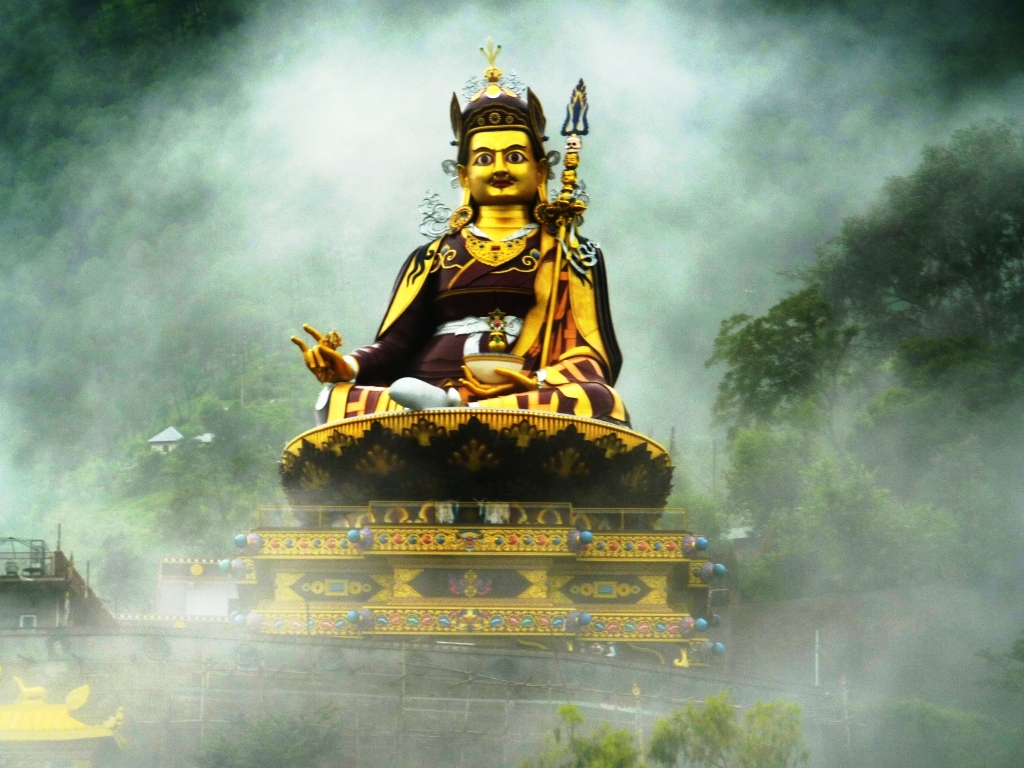 🇮🇳 India and 2 morePadmasambhavaཔདྨ་འབྱུང་གནས།
A tantric master credited with establishing Buddhism in Tibet and founding the Nyingma school.Figure · Protection · Power and authority Living
 🇮🇷 Iran and 1 moreZoroasterZarathushtra Spitama
Spiritual founder of Zoroastrianism and composer of the GathasFigure Historical
 🇮🇳 India and 2 moreGorakhnathगोरक्षनाथ
A Hindu yogi and saint who founded the Nath monastic order in India.Figure · Power and authority · Speaking with spirits and the dead Living
 🇮🇳 India and 1 moreYoginiयोगिनी
A female master of yoga and tantra, or a fierce goddess aspect worshipped in open-air shrines.Tradition · Power and authority · Protection Historical
 🇳🇵 Nepal and 1 moreMatsyendranathMacchindranāth, Mīnanātha
A yogi and rain deity revered across Hindu and Buddhist traditions in South Asia.Figure · Power and authority · Wonder and entertainment Living
 🇮🇷 Iran and 2 moreJabir ibn Hayyanجابِر بِن حَيّان
A legendary Islamic alchemist and philosopher whose writings shaped medieval magic and chemistryText · Power and authority · Wonder and entertainment Historical
 🇲🇽 Mexico and 5 morePersonifications of death
Figures from many cultures that embody the end of life and guide soulsFigure · Speaking with spirits and the dead Living
 🇫🇮 Finland and 1 moreSampo
A magical mill or world pillar in Finnish and Estonian mythology that produces wealth.Figure · Luck and prosperity · Power and authority Historical
 🇳🇱 Netherlands and 3 morePig-faced women
A European legend of a woman with the face of a pig, and the charms used to break her curseFigure · Change and initiation Historical
🇧🇷 Brazil and 1 moreSaciSaci-pererê
A one-legged prankster of Brazilian folklore who hides in dust devils and wears a magic red cap.Figure · Luck and prosperity · Cursing and harm Living
 🇧🇷 BrazilThe Hairy LegPerna cabeluda
A Brazilian urban legend of a detached leg that attacks people at nightFigure · Cursing and harm · Wonder and entertainment Historical
 🇺🇦 UkraineGhost of KyivПривид Києва
A wartime legend of a mythical fighter pilot who rallied Ukrainian morale.Figure · Power and authority Historical
🇪🇪 Estonia and 1 moreKalevaKalev
A primordial giant and ancestral figure in the mythologies of Estonia and FinlandBeing · Power and authority Historical
 🇷🇸 Serbia and 5 moreWolves in folklore, religion and mythology
A global survey of how cultures view the wolf as symbol, spirit or threatBelief · Power and authority · Cursing and harm Historical
Photo credits on this page
The small pictures above come from Wikimedia Commons under free licences. Some are cropped to fit.
- Lucifer: Gustave Doré, Public domain, source
- Wolves in folklore, religion and mythology: Unknown author, CC0, source
- Edward Kelley: Thomas Pennant, Public domain, source
- Cotton Mather: Peter Pelham, Public domain, source
- Ceridwen: Chris Denny, CC BY-SA 2.0, source
- Jiang Ziya: Wang Qi, Public domain, source
- The Hairy Leg: Diógenes Montenegro, Public domain, source
- William Lilly: Simon Harriyott, CC BY 2.0, source
- Jack: Internet Archive Book Images, No restrictions, source
- Zoroaster: 19th century in Mumbai according to 青木健 The original uploader was Aria, Public domain, source
- Imhotep: Rama, CC BY-SA 3.0 fr, source
- Bamakhepa: Pinakpani, CC BY-SA 4.0, source
- Shimon bar Yochai: איתי פרץ, Attribution, source
- Matthew Hopkins: Unknown author, CC BY 4.0, source
- Azazel: Louis Le Breton, Public domain, source
- Personifications of death: No machine-readable author provided. Kirtap assumed (based on copyrigh, CC BY 2.5, source
- Gorakhnath: Anandanath, CC BY-SA 4.0, source
- Yogini: Soumendra Barik, CC BY-SA 3.0, source
- Matsyendranath: Unknown author, Public domain, source
- Jabir ibn Hayyan: Unknown author, Public domain, source
- Marabout: Jan Broekhuijse, CC BY-SA 3.0, source
- Naropa: Unknown author, CC BY-SA 3.0, source
- Pig-faced women: DubhEire, CC0, source
- Jannes and Jambres: Gerard Hoet, Public domain, source
- Witches of Benevento: Guglielmo della Porta, CC0, source
- Sampo: Väinö Blomstedt, Public domain, source
- Lal Shahbaz Qalandar: Fassifarooq, CC BY-SA 4.0, source
- Khaemweset: No machine-readable author provided. Neithsabes assumed (based on copy, Public domain, source
- En no Gyōja: Wmpearl, CC0, source
- Éliphas Lévi: Eliphas Lévi [1810-1875], Public domain, source
- Apollonius of Tyana: Zde, CC BY-SA 4.0, source
- Ghost of Kyiv: Андрій Данкович / Andriy Dankovych, CC BY-SA 4.0, source
- Pietro d'Abano: Marco Chemello (Wikimedia Italia), CC BY-SA 4.0, source
- Tilopa: Unknown author, Public domain, source
- Padmasambhava: John Hill, CC BY-SA 3.0, source