Beliefs, omens and superstitions
Luck and unluck, the evil eye, knocking on wood and the small customs people keep without asking why.
Beliefs, omens and superstitions are the small customs people keep without asking why: knocking on wood, salt over the shoulder, avoiding the number thirteen, the evil eye, a black cat crossing the road, a first visitor of the new year. They are found on every continent and are rarely tied to a priest or book. This page looks at where they come from, what the word superstition hides, and why they persist.
What they look like
Beliefs differ by place. The number four is avoided in China, Japan and Korea because it sounds like the word for death, while thirteen is avoided in much of the West. In India, a sneeze before leaving home may delay a journey, and a lemon and chillies are hung over a shop. The evil eye is feared under many names: nazar, mal de ojo, ayin hara. First-footing at new year in Scotland is said to bring luck to a house.
Whose word is superstition
The word superstition has a history. Roman writers used it for religion they disliked, and Christian writers for forbidden practice. Today it often means someone else's belief. Many religions regard some of their own customs as faith and others as superstition, and where the line falls depends on the speaker. Using the word can mark a speaker as modern and a neighbour as backward. Tests of common superstitions show that people who hold them are not less educated or less rational than others, and many hold them lightly.
Why people keep them
Psychologists find that superstition rises with uncertainty and stakes, which is why athletes, sailors, students and gamblers are known for them. Anthropologist Bronislaw Malinowski observed in the 1920s that Trobriand fishermen used rites in dangerous deep-sea fishing and not in safe lagoon fishing. Most people who follow small customs say they do so partly in jest and partly just in case. Similar customs turn up in places that have never met each other, which suggests that people everywhere respond to risk in similar ways.
When belief causes harm
Most superstitions are harmless. Some are not: beliefs about witchcraft have led to killings in parts of Africa, India and Papua New Guinea, and beliefs about albinism have led to attacks in Tanzania and Malawi. Others cost people money, as when a fee is demanded to lift a bad omen. Education, law and trusted community leaders have all been part of reducing harm. Campaigns by health workers, teachers and community radio have been effective where they listen first and explain later.
Belief on EveryJaadu
The entries written up so far, best known first.
 🇪🇪 Estonia and 1 moreEstonian mythologyeesti mütoloogia
The pre-Christian beliefs and legends of the Estonian peopleTradition · Protection · Speaking with spirits and the dead Historical
🇫🇯 FijiFijian mythology
The traditional beliefs and stories of the indigenous people of FijiTradition · Speaking with spirits and the dead Living
 🇮🇳 India and 5 moreAncestor veneration
Rituals to honor the dead and maintain kinship bonds across generationsTradition · Speaking with spirits and the dead · Protection Living
 🇹🇭 Thailand and 1 moreGhosts in Thai cultureผี (phi)
A wide range of spirits and ghosts found in Thai folklore and popular belief.Belief · Protection · Cursing and harm Living
🇯🇵 JapanYutaユタ
Okinawan folk shamans who guide families through spirits and fortune-tellingTradition · Protection · Healing Living
 🇮🇳 India and 1 moreMantraमन्त्रम्
A sacred sound or phrase repeated to focus the mind and invoke spiritual powerText · Speaking with spirits and the dead · Power and authority Living
 🇮🇳 India and 5 morePretaप्रेत
A suffering spirit of Indian and Asian belief, often called a hungry ghostBeing · Speaking with spirits and the dead · Change and initiation Living
 🇷🇺 Russia and 4 moreFolk Orthodoxyнародное православие
A blend of Eastern Orthodox doctrine and pre-Christian pagan beliefs in Slavic communitiesTradition · Protection · Luck and prosperity Living
🇧🇷 BrazilQuimbanda
An Afro-Brazilian spirit religion centred on exús and pombagirasTradition · Speaking with spirits and the dead · Luck and prosperity Living
 🇫🇮 Finland and 1 moreFinnish mythology
The pre-Christian folklore and cosmology of the Finns and KareliansTradition · Speaking with spirits and the dead · Protection Revived
 🇮🇳 India and 3 moreSpirit
An invisible force or soul found in many cultures, linked to gods, humans, and nature.Being · Speaking with spirits and the dead · Power and authority Living
 🇱🇦 Laos and 3 moreTai folk religionສາສະໜາຜີ
Spirits, ancestor rites, and soul-calling ceremonies of the Tai peoplesTradition · Protection · Healing Living
🇯🇲 Jamaica and 2 moreKromanti
A ritual language spoken by ancestral spirits in Jamaican Maroon ceremoniesBelief · Speaking with spirits and the dead Living
 🇮🇱 Israel and 4 moreAngelמלאך
A supernatural messenger or intermediary spirit found in many religious traditions.Being · Speaking with spirits and the dead · Protection Living
 🇯🇵 Japan and 4 moreHousehold deity
A spirit or minor god believed to guard a home and its family members.Being · Protection · Speaking with spirits and the dead Historical
 🇺🇸 United StatesAshtar
A channeled extraterrestrial figure central to mid-century American ufology and New Age spiritualityBeing · Speaking with spirits and the dead · Seeing and foretelling Living
🇷🇺 Russia and 4 moreIriyВырай
A mythical Slavic realm where souls and birds gather for the winterBelief · Speaking with spirits and the dead Legendary
 🇮🇳 IndiaShamanism in Ayyavazhi
A divination practice within the Hindu denomination of Ayyavazhi in South India.Rite · Seeing and foretelling · Speaking with spirits and the dead Living
 🇫🇷 FranceBlack Mass
A deliberate parody of the Catholic Mass, known mostly from French trials and booksRite · Cursing and harm · Love and attraction Living
🇯🇵 JapanReikon霊魂
The Shinto soul: it joins the ancestors after funeral rites, or haunts as a yūreiBeing · Speaking with spirits and the dead · Cursing and harm Living
🇪🇬 EgyptQuran code
A claim that the Quran's word and letter counts reveal a design built on the number 19Belief · Speaking with spirits and the dead Living
 🇪🇸 Spain and 2 moreHoly ChaliceSanto Cáliz
A cup believed to have held the blood of Jesus at the Last SupperCharm · Speaking with spirits and the dead · Power and authority Living
🇫🇷 France and 5 moreProcession of the dead
A folktale pattern of ghosts or souls marching in company, sometimes ledBelief · Speaking with spirits and the dead Legendary
🇮🇱 Israel and 2 moreBiblical numerology
A system of interpreting numbers in sacred texts as carrying symbolic meaning beyond their mathematical valueBelief · Speaking with spirits and the dead Historical
🇸🇪 SwedenSpirit world
A realm inhabited by spirits, as described in Spiritualist beliefBelief · Speaking with spirits and the dead Living
 🇫🇷 France and 4 moreEctoplasm
A substance said to be excreted by mediums during séances, later exposed as common household materials.Substance · Speaking with spirits and the dead Historical
 🇮🇱 Israel and 1 moreTree of life vision
A symbolic prophecy in the Book of Mormon about salvation and spiritual perilBelief · Protection · Healing Living
🇮🇳 IndiaKeśin
A Vedic hymn describing long-haired ascetics who travel on the wind and share a cup with Rudra.Tradition · Power and authority · Wonder and entertainment Historical
 🇮🇳 India and 3 moreOmॐ
A sacred syllable chanted in Hindu, Buddhist, Jain and Sikh practiceBelief · Speaking with spirits and the dead Living
 🇬🇷 GreeceNympholepsy
An ancient Greek belief in being possessed by nymphs, later redefined as a wild passion.Belief · Speaking with spirits and the dead Historical
 🇨🇳 ChinaYao folk religion梅山教
The ethnic religion of the Yao, blended with Taoism since the 13th centuryTradition · Protection · Cleansing and purification Living
 🇮🇷 Iran and 5 moreAxis mundi
A concept describing a central point connecting the earthly and heavenly realms.Belief · Speaking with spirits and the dead · Power and authority Historical
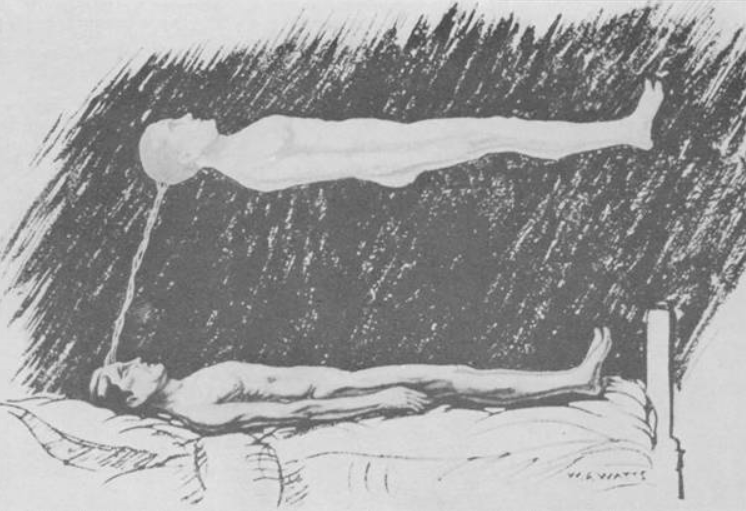 🇮🇳 India and 3 moreAstral projection
An intentional out-of-body experience where consciousness travels through the astral planeTradition · Speaking with spirits and the dead · Change and initiation Living
🇮🇳 IndiaCausal plane
A high spiritual realm in Theosophy and New Age cosmologyBelief · Speaking with spirits and the dead · Change and initiation Living
 🇯🇵 JapanNyonin Kinsei女人禁制
A Japanese custom prohibiting women from sacred sites and certain cultural spaces.Tradition · Protection · Speaking with spirits and the dead Fading
🇬🇧 United KingdomUwaisiأُوَيْس
A Sufi method of spiritual transmission between master and disciple without physical contact.Tradition · Speaking with spirits and the dead · Power and authority Living
 🇺🇸 United States and 2 moreFlying Africans
A legend of enslaved people returning to Africa by magic flightFigure · Cursing and harm · Speaking with spirits and the dead Legendary
 🇬🇷 GreeceDaimonδαίμων
A Greek spirit or divine force that mediates between gods and humansBeing · Protection · Speaking with spirits and the dead Historical
🇨🇭 SwitzerlandSegen
A German term for blessing, charm, or spell rooted in Christian and folk traditions.Belief · Protection · Speaking with spirits and the dead Historical
🇰🇷 South Korea and 3 moreCorner Game구석놀이
A four-player summoning game told as an urban legend across East AsiaRite · Speaking with spirits and the dead Legendary
 🇺🇸 United States and 2 moreElectronic voice phenomenon
Sounds on recordings interpreted as spirit voices by enthusiasts and dismissed as noise by scientistsBelief · Speaking with spirits and the dead Living
🇮🇳 IndiaGreat White Brotherhood
An unseen company of spiritual teachers said to guide human developmentBelief · Speaking with spirits and the dead · Change and initiation Living
 🇻🇳 Vietnam and 3 moreWhale worshipCá Ông
A folk practice across East and Southeast Asia honoring cetaceans as divine protectors of fishermenTradition · Protection · Luck and prosperity Living
 🇮🇱 IsraelMatzevahמַצֵּבָה
A standing stone used as a sacred marker or grave monument in ancient and Jewish traditionCharm · Speaking with spirits and the dead · Protection Living
 🇬🇧 United Kingdom and 4 moreSpiritualism
A metaphysical belief that spirits communicate with the living through mediums.Belief · Speaking with spirits and the dead Living
🇷🇴 RomaniaTanacu exorcism
A 2005 Romanian Orthodox ritual that ended in a nun's death and a murder convictionRite · Speaking with spirits and the dead · Cursing and harm Historical
 🇮🇳 India and 5 moreLock of hair
A piece of human hair kept for symbolic, sentimental, or superstitious reasons.Substance · Protection · Luck and prosperity Living
Photo credits on this page
The small pictures above come from Wikimedia Commons under free licences. Some are cropped to fit.
- Nympholepsy: Jebulon, CC0, source
- Shamanism in Ayyavazhi: Vaikunda Raja, CC BY-SA 3.0, source
- Spiritualism: Internet Archive Book Images, No restrictions, source
- Ashtar: Evedawn99, Public domain, source
- Electronic voice phenomenon: Omegatron, CC BY-SA 3.0, source
- Daimon: François-André Vincent, Public domain, source
- Flying Africans: Matthew T Rader, CC BY-SA 4.0, source
- Yao folk religion: Daderot, Public domain, source
- Mediumship: Harvey Metcalfe, Public domain, source
- Estonian mythology: Jeannette Berkowitz (illustrator), Public domain, source
- Ancestor veneration: Thang Nguyen, CC BY-SA 2.0, source
- Om: Anandajoti Bhikkhu, CC BY 2.0, source
- Preta: Temple, Richard Carnac, Sir, Public domain, source
- Tree of life vision: David Hyrum Smith, Public domain, source
- Finnish mythology: Väinö Blomstedt, Public domain, source
- Household deity: Claus Ableiter, CC BY-SA 3.0, source
- Holy Chalice: Vitold Muratov, CC BY-SA 3.0, source
- Black Mass: Unknown XIXe s, Public domain, source
- Ghosts in Thai culture: Heinrich Damm ( User:Hdamm , Hdamm at de.wikipedia.org ), CC BY 2.0, source
- Spirit: Jastrow, Public domain, source
- Angel: Unknown author, CC0, source
- Folk Orthodoxy: Лобачев Владимир, CC BY-SA 4.0, source
- Mantra: Markrosenrosen, CC BY-SA 3.0, source
- Axis mundi: Unknown author, Public domain, source
- Astral projection: Hereward Carrington, Sylvan Muldoon., Public domain, source
- Nyonin Kinsei: MightyAtom at English Wikipedia, Public domain, source
- Tai folk religion: ( เทวประภาส มากคล้าย ), Tevaprapas, Public domain, source
- Whale worship: Bùi Thụy Đào Nguyên, CC BY-SA 3.0, source
- Matzevah: Gilslovik, CC BY-SA 4.0, source
- Lock of hair: Unknown author, CC0, source