Kromanti is a sacred language used in Myal rituals by Jamaican and Surinamese Maroons. It is believed to be the speech of distant ancestors, distinct from everyday Jamaican Creole.
- Kromanti is a sacred language used in Jamaican Maroon spirit possession rituals.
- It is considered the speech of distant ancestors, prior to creolization.
- The language shows strong Akan influence and differs from standard Jamaican Creole.
- Fluency in Kromanti is attributed to the power and remoteness of the possessing spirit.
- Maroon exile to Sierra Leone and Suriname spread related creole influences.
What it is
Kromanti is a ritual language central to the Myal tradition among Jamaican Maroons. It is not a daily tongue but a sacred code used during ceremonies involving spirit possession. Practitioners view it as the original speech of their ancestors before the development of modern Jamaican Creole. The language serves as a bridge between the living community and the spiritual realm, allowing mediums to communicate with departed relatives and ancestral figures.
Where it comes from
The language traces its roots to the Akan peoples of West Africa, brought to Jamaica by enslaved Africans who escaped to form free Maroon communities. Historical records note that Maroons were exiled from Jamaica to Nova Scotia in 1796 and later to Sierra Leone in 1800. Their linguistic practices influenced the development of Krio in Sierra Leone. In Jamaica, the language evolved within isolated towns like Moore Town, Charles Town, and Scott's Hall, preserving elements of African speech patterns distinct from the broader colonial creole.
How it is done
During Myal ceremonies, individuals enter states of spirit possession. While possessed, these mediums are believed to speak Kromanti rather than their usual dialect. The language functions as a marker of spiritual authority; the more remote and powerful the ancestor, the stronger the command of this non-creolized speech. It is used to address the possessed or to invoke ancestral presence, acting as a specialized register within the ritual context.
Kromanti, drawn and placed
- Living
- Revived
- Fading
- Historical
- Legendary
- Performed
- Lineage
- Myal religion
What it is for
The primary purpose of Kromanti is to facilitate communion with ancestors. It is used to honor the dead and seek their guidance or intervention. The language reinforces the identity of the Maroon people as descendants of those who resisted slavery. It also serves to distinguish the sacred space of the ceremony from ordinary life, marking the medium as a vessel for forces beyond the human world.
Who does it
Mediums within the Myal tradition are the primary users of Kromanti. These individuals are often respected elders or spiritual leaders known as 'Older Heads.' They undergo training or initiation to handle the responsibilities of spirit communication. The ability to speak Kromanti fluently is attributed to the depth of the ancestral connection, with greater proficiency linked to more distant lineage.
Peoples and places
The language is maintained by Jamaican Maroons, particularly in the eastern parishes. It is also found among Surinamese Maroons, especially those of Coromantee descent. The linguistic similarities between Jamaican Maroon Creole and the creoles of Sierra Leone (Krio) and Suriname (Sranan Tongo, Ndyuka) highlight shared African heritage and historical migration patterns across the Atlantic.
At a glance: who, where and when
Who does it
Belief worlds
What people believe
Maroon belief holds that Kromanti is the authentic voice of the past, untouched by the corruption of colonial English. It is seen as a direct link to the African homeland. The gradient of fluency suggests that older ancestors retain pure knowledge, while recent generations have lost some of this connection through assimilation into the dominant culture. This belief validates the authority of the spirits and the mediums who channel them.
How scholars and sceptics see it
Linguist Kenneth Bilby has studied Kromanti extensively, noting its distinct phonological features compared to standard Jamaican Creole. He highlights vowel epithesis and liquid consonant shifts as key markers. Scholars view Kromanti as a case study in how sacred languages preserve archaic forms and resist linguistic change. The language demonstrates the complex relationship between oral tradition, memory, and identity in post-slavery societies.
Compare and confuse
Kromanti is often confused with general Jamaican Patois, but it is structurally different. It shares more features with West African-based creoles like Krio and Sranan Tongo than with the urban Jamaican dialect. While other traditions use pidgin or secret languages, Kromanti is specifically tied to ancestral possession and Maroon history.
Today
Kromanti remains a vital part of Maroon cultural identity in Jamaica and Suriname. It is kept alive through oral transmission and ceremonial practice. Despite the dominance of English and standard Creole, the language persists as a symbol of resistance and continuity. Diaspora communities maintain connections to these traditions, though the number of fluent speakers may be limited to ritual specialists.
Questions people ask about Kromanti
What is Kromanti?
Kromanti is a ritual language used by Jamaican Maroons in Myal ceremonies. It is believed to be the original speech of their African ancestors, preserved in sacred contexts rather than daily life.
Where does Kromanti come from?
It originates from the Akan languages of West Africa, brought to Jamaica by enslaved people who formed Maroon communities. It is closely related to creoles in Suriname and Sierra Leone.
Who speaks Kromanti?
Only mediums in a state of spirit possession are believed to speak Kromanti. They act as vessels for ancestors, using the language to communicate with the living during rituals.
Is Kromanti the same as Jamaican Patois?
No. Kromanti is distinct from standard Jamaican Creole. It retains archaic features and lacks common English content, serving as a specialized sacred code rather than a vernacular tongue.
Good reading and sources
The facts on this page come from the Wikipedia article "Jamaican Maroon Creole", written by its contributors and used under the CC BY-SA 4.0 licence, and from its Wikidata record (CC0). EveryJaadu rewrote the text in its own words, with AI assistance, and compares every page with the article to make sure no passage is copied. It may be reused under the same CC BY-SA 4.0 licence with a link back.
It may contain mistakes. Names and customs differ from one community to the next, and some knowledge is closed to outsiders and left out here. This page describes belief and practice. It does not say that any of it works, it is not a how-to, and it is not medical advice. If something is wrong, tell us. Last refreshed 2026-10-06.
More from Jamaica
All the entries from Jamaica 🇯🇲 Jamaica and 5 moreObeah
A Caribbean tradition of ritual healing and spell-casting with African rootsTradition · Protection · Healing Living
🇯🇲 Jamaica and 3 moreDuppy
A Caribbean term for a ghost or malevolent spirit, rooted in West African folklore.Being · Cursing and harm · Luck and prosperity Living
🇯🇲 Jamaica and 1 moreMyal
An Afro-Jamaican healing tradition rooted in Arawak and Akan spiritualityTradition · Healing · Protection Living
🇯🇲 Jamaica and 5 moreObeah
A Caribbean tradition of ritual healing and spell-casting with African rootsTradition · Protection · Healing Living
🇯🇲 Jamaica and 3 moreDuppy
A Caribbean term for a ghost or malevolent spirit, rooted in West African folklore.Being · Cursing and harm · Luck and prosperity Living
🇯🇲 Jamaica and 1 moreMyal
An Afro-Jamaican healing tradition rooted in Arawak and Akan spiritualityTradition · Healing · Protection Living
 🇹🇹 Trinidad and Tobago and 3 moreCaribbean folklore
The blended tales and spirits of the Caribbean islandsTradition · Wonder and entertainment Living
🇹🇹 Trinidad and Tobago and 3 moreCaribbean folklore
The blended tales and spirits of the Caribbean islandsTradition · Wonder and entertainment Living
Related elsewhere
All belief 🇮🇳 IndiaChakraचक्र
Meditation points in the subtle body used in Hindu and Buddhist yogaTradition · Speaking with spirits and the dead · Change and initiation Living
🇮🇳 IndiaChakraचक्र
Meditation points in the subtle body used in Hindu and Buddhist yogaTradition · Speaking with spirits and the dead · Change and initiation Living
 🇪🇸 Spain and 5 moreSt John's Eve
A Christian vigil marked by bonfires and plant gathering on the summer solstice eveRite · Protection · Speaking with spirits and the dead Living
🇪🇸 Spain and 5 moreSt John's Eve
A Christian vigil marked by bonfires and plant gathering on the summer solstice eveRite · Protection · Speaking with spirits and the dead Living
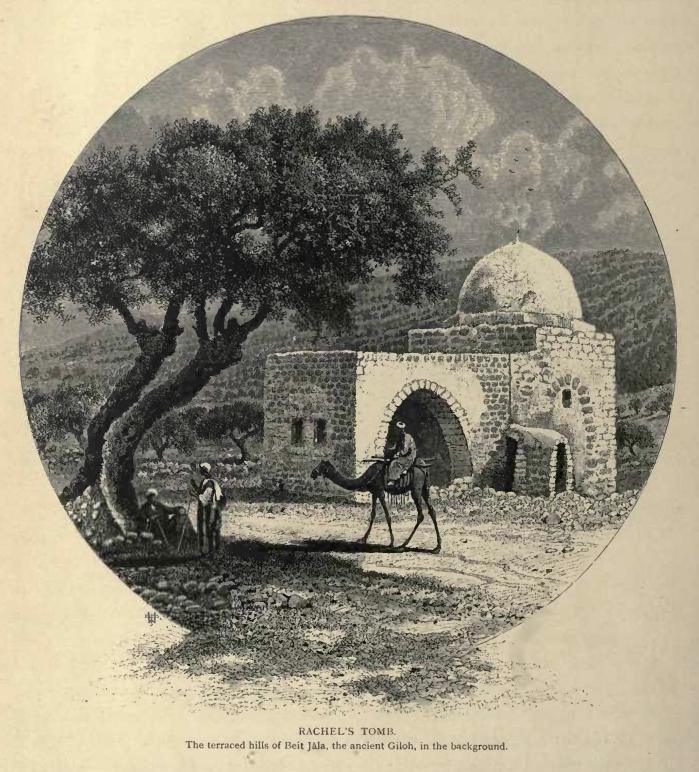 🇵🇸 Palestine and 1 moreRachel's TombQever Raḥel; Qabr Rāḥīl
A shared holy site near Bethlehem revered by Jews, Christians, and MuslimsTradition · Speaking with spirits and the dead · Protection Living
🇵🇸 Palestine and 1 moreRachel's TombQever Raḥel; Qabr Rāḥīl
A shared holy site near Bethlehem revered by Jews, Christians, and MuslimsTradition · Speaking with spirits and the dead · Protection Living
 🇳🇬 NigeriaOrunmilaỌ̀rúnmìlà
Yoruba deity of wisdom and the creator of the Ifá divination systemBeing · Seeing and foretelling · Speaking with spirits and the dead Living
🇳🇬 NigeriaOrunmilaỌ̀rúnmìlà
Yoruba deity of wisdom and the creator of the Ifá divination systemBeing · Seeing and foretelling · Speaking with spirits and the dead Living