
Angel
In its own language: מלאך
from Greek ángelos, meaning messenger
A supernatural messenger or intermediary spirit found in many religious traditions.
Angels are spiritual beings often depicted with wings that serve as intermediaries between the divine and humanity. They appear across Abrahamic faiths, Zoroastrianism, and ancient Near Eastern texts as messengers, protectors, or servants of God.
- The word comes from Greek ángelos, meaning messenger.
- Angels act as intermediaries between God and humanity.
- Zoroastrianism influenced the development of good and evil spirits.
- Fallen angels are believed to have been expelled from heaven.
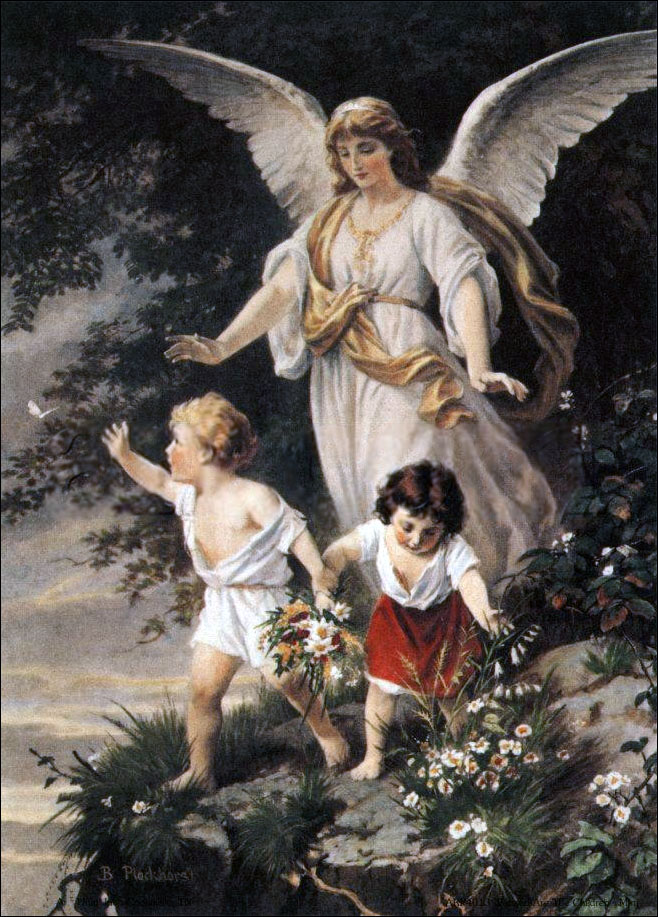
- Art depicts them with wings, halos, and divine light.
What it is
An angel is a supernatural entity described as a bridge between the transcendent realm and human existence. These beings frequently appear as humanoid figures equipped with bird-like wings. Their primary function involves delivering messages from the divine to people on earth. In some traditions, they act as guardians or guides for individuals.
Where it comes from
The term originates from the Greek word for messenger, which itself likely borrowed from Persian concepts of mounted couriers. Early Hebrew texts used similar words for human envoys before applying them to spirits. The idea evolved significantly under Zoroastrian influence, which introduced a dualistic struggle between light and darkness. This framework helped shape later views of benevolent and malevolent spirits within monotheistic systems.
How it is done
Angels do not have a single ritual method of operation. They are understood to act according to divine command rather than human instruction. Believers may invoke their presence through prayer or study sacred texts. Artistic representations use visual symbols like wings and halos to identify them. These images help followers recognize the presence of these unseen intermediaries in their spiritual lives.
Tools and materials
Visual depictions rely heavily on wings, halos, and rays of light to signify holiness. Some traditions describe them as beings created from fire. Symbols of divine authority often accompany their portrayal in religious art and literature.
Angel, drawn and placed
- Living
- Revived
- Fading
- Historical
- Legendary
- Performed
- Lineage
- Abrahamic religions
What it is for
They serve to communicate God's will to prophets and ordinary people. Many traditions view them as protectors who guide individuals through life. Some are believed to record human actions or advocate for specific groups. Their presence reassures believers that the divine remains involved in earthly affairs despite its transcendence.
Who does it
Scholars study these figures through historical and theological analysis. Religious communities regard them as real entities worthy of respect. Mystics in Jewish tradition sometimes seek communion with higher angelic ranks. No formal priesthood exists solely for serving angels, though priests may reference them in liturgy.
Peoples and places
Judaism, Christianity, and Islam all feature prominent angelic hierarchies. Zoroastrianism includes similar figures like the Amesha Spentas. Ancient Near Eastern cultures contributed early concepts of heavenly messengers. Different sects vary in how they rank and name these beings, reflecting local theological developments.
At a glance: who, where and when
Who does it
Belief worlds



What people believe
Angels are subordinate to the supreme deity and lack independent will. They execute specific commands without deviation. In some views, they represent aspects of God's interaction with the world. Malevolent versions, known as fallen angels, are thought to oppose divine order. This duality reflects broader cosmic struggles between good and evil forces.
When it is done
No specific festivals are dedicated exclusively to angels in major traditions. They are invoked during general prayers or times of crisis. Liturgical calendars may mention them in readings related to prophecy or apocalypse. Their presence is felt throughout daily religious observance rather than on fixed dates.
How scholars and sceptics see it
Researchers trace the evolution of angelology from polytheistic pantheons to monotheistic servants. Linguists analyze the shift from human messenger terms to supernatural labels. Historians note the impact of Persian religion on Jewish and Christian theology. Psychologists sometimes interpret angelic experiences as manifestations of inner states or cultural conditioning.
Cautions and what is closed
Some traditions warn against worshipping angels instead of God. Conjuring practices exist but carry risks of misinterpretation or spiritual danger. Fallen angels are associated with deception and harm. Misunderstanding their nature can lead to theological errors regarding divine omnipotence.
Compare and confuse
Angels differ from demons by their alignment with divine will. They share traits with daemons in earlier Greek thought but hold higher status. Zoroastrian yazatas and Fravashi offer comparable roles as helpers or guardians. Human messengers in ancient texts provide the linguistic root for these supernatural beings.
Questions people ask about Angel
What does the word angel mean?
It derives from the Greek word ángelos, which translates directly to messenger. This term was adopted into Latin and eventually English to describe supernatural beings who deliver divine messages.
Where did the concept of angels originate?
Early Hebrew texts used the term for human messengers. The concept evolved under Zoroastrian influence, which introduced distinct forces of light and darkness, shaping later views of benevolent and malevolent spirits.
Are angels always depicted as beautiful humans?
While art often shows them as handsome humans with wings, texts describe them as potentially frightening or inhuman. Their appearance varies based on the context of their message and the viewer's perception.
Do angels have free will?
In many traditions, angels lack independent will and strictly follow divine commands. They are seen as servants who execute specific tasks assigned by God, unlike humans who possess moral choice.
Good reading and sources
- Angel on WikipediaEncyclopedia
- More photos on Wikimedia CommonsPhotos and video
- Wikidata recordOpen data
The facts on this page come from the Wikipedia article "Angel", written by its contributors and used under the CC BY-SA 4.0 licence, and from its Wikidata record (CC0). EveryJaadu rewrote the text in its own words, with AI assistance, and compares every page with the article to make sure no passage is copied. It may be reused under the same CC BY-SA 4.0 licence with a link back.
It may contain mistakes. Names and customs differ from one community to the next, and some knowledge is closed to outsiders and left out here. This page describes belief and practice. It does not say that any of it works, it is not a how-to, and it is not medical advice. If something is wrong, tell us. Last refreshed 2026-10-06.
More from Israel
All the entries from Israel 🇮🇱 IsraelNumber of the beastἈριθμὸς τοῦ θηρίου
A biblical number linked to a prophetic figure and interpreted through ancient letter values.Belief · Cursing and harm Historical
🇮🇱 IsraelNumber of the beastἈριθμὸς τοῦ θηρίου
A biblical number linked to a prophetic figure and interpreted through ancient letter values.Belief · Cursing and harm Historical
 🇮🇱 Israel and 5 moreTetragrammatonיהוה
The four-letter name of God in the Hebrew Bible, written as YHWH.Belief · Speaking with spirits and the dead Living
🇮🇱 Israel and 5 moreTetragrammatonיהוה
The four-letter name of God in the Hebrew Bible, written as YHWH.Belief · Speaking with spirits and the dead Living
 🇸🇾 Syria and 5 moreBaetyl
A sacred stone, often a meteorite, believed to house a deity in ancient Near Eastern and Mediterranean traditions.Charm · Power and authority · Speaking with spirits and the dead Historical
🇮🇱 Israel and 2 moreBelialבְּלִיַּעַל
A Hebrew term for worthlessness that evolved into a demon of darkness in Jewish and Christian texts.Being · Cursing and harm Historical
🇸🇾 Syria and 5 moreBaetyl
A sacred stone, often a meteorite, believed to house a deity in ancient Near Eastern and Mediterranean traditions.Charm · Power and authority · Speaking with spirits and the dead Historical
🇮🇱 Israel and 2 moreBelialבְּלִיַּעַל
A Hebrew term for worthlessness that evolved into a demon of darkness in Jewish and Christian texts.Being · Cursing and harm Historical
Related elsewhere
All being 🇮🇳 India and 2 moreHomaहोम
A fire ritual found across Asian religions where offerings are burned as a votive exchange with the divine.Rite · Protection · Speaking with spirits and the dead Living
🇮🇳 India and 2 moreHomaहोम
A fire ritual found across Asian religions where offerings are burned as a votive exchange with the divine.Rite · Protection · Speaking with spirits and the dead Living
 🇪🇸 Spain and 5 moreSt John's Eve
A Christian vigil marked by bonfires and plant gathering on the summer solstice eveRite · Protection · Speaking with spirits and the dead Living
🇨🇳 China and 4 moreKitchen God灶君
The Chinese hearth deity who reports domestic conduct to the Jade EmperorBeing · Protection · Luck and prosperity Living
🇪🇸 Spain and 5 moreSt John's Eve
A Christian vigil marked by bonfires and plant gathering on the summer solstice eveRite · Protection · Speaking with spirits and the dead Living
🇨🇳 China and 4 moreKitchen God灶君
The Chinese hearth deity who reports domestic conduct to the Jade EmperorBeing · Protection · Luck and prosperity Living