Spirits, creatures and beings
Djinn, fairies, orisha, golems and the other powers that magic deals with.
Beings are the powers that magic deals with: spirits, ancestors, gods, djinn, fairies, orisha, nats, kami, demons, golems, ghosts and the many kinds of household and landscape spirit. People in most cultures have described a world shared with unseen others, who may help, trouble or ask for respect. This page covers what these beings are said to be and the very different ways communities relate to them. They are always described here as what communities believe, not as established fact.
Different kinds of beings
A being can be a god with a priesthood, such as an orisha served in Yoruba religion, Cuba and Brazil. It can be an ancestor, honoured in China, Africa and Mexico. It can belong to a place, such as the kami of Shinto, the Thai phi or the Burmese nats. It can be a trouble-maker, like the djinn of Arabic and Islamic tradition, formed from smokeless fire, or the fairies of Ireland, whom people avoided naming.
Relationship, not command
In many traditions, a person does not command a being but enters a relationship with it, through offerings, promises and respect. Possession and mediumship are forms of that relationship, as in Vodou, Candomblé, Korean mudang rites and Sufi gatherings. In ceremonial magic of the European grimoires, by contrast, the magician summons spirits by name and authority, which the Church condemned as demon-raising. The same being may be loved in one household and feared in the next, and a spirit helpful to its servant can be harmful to a stranger.
Religions and renaming
Dominant religions often absorbed beings by relabelling them. Christian missionaries called many African and Indigenous spirits demons. Islam reads the djinn as real creatures, some of whom are Muslim, and Hindu and Buddhist traditions fold local deities into their own pantheons. Pagan and fairy beliefs were sometimes recast as the devil's work, which fed witch trials in Europe. Churches and mosques have sometimes divided beings into good and evil in ways the older traditions did not, so that a neutral local spirit became a demon on the day a missionary arrived.
Harm and interpretation
Belief in harmful spirits has been used to accuse people. Children in parts of West and Central Africa have been branded as witches possessed by evil spirits, and some have been abused by pastors or families in the name of deliverance. Scholars read spirit beliefs as ways to make sense of illness, loss and conflict, and many communities see them simply as neighbours. That is why accusations tied to spirit beliefs fall hardest on children and the vulnerable, and why many agencies train local leaders to challenge them.
Being on EveryJaadu
The entries written up so far, best known first.
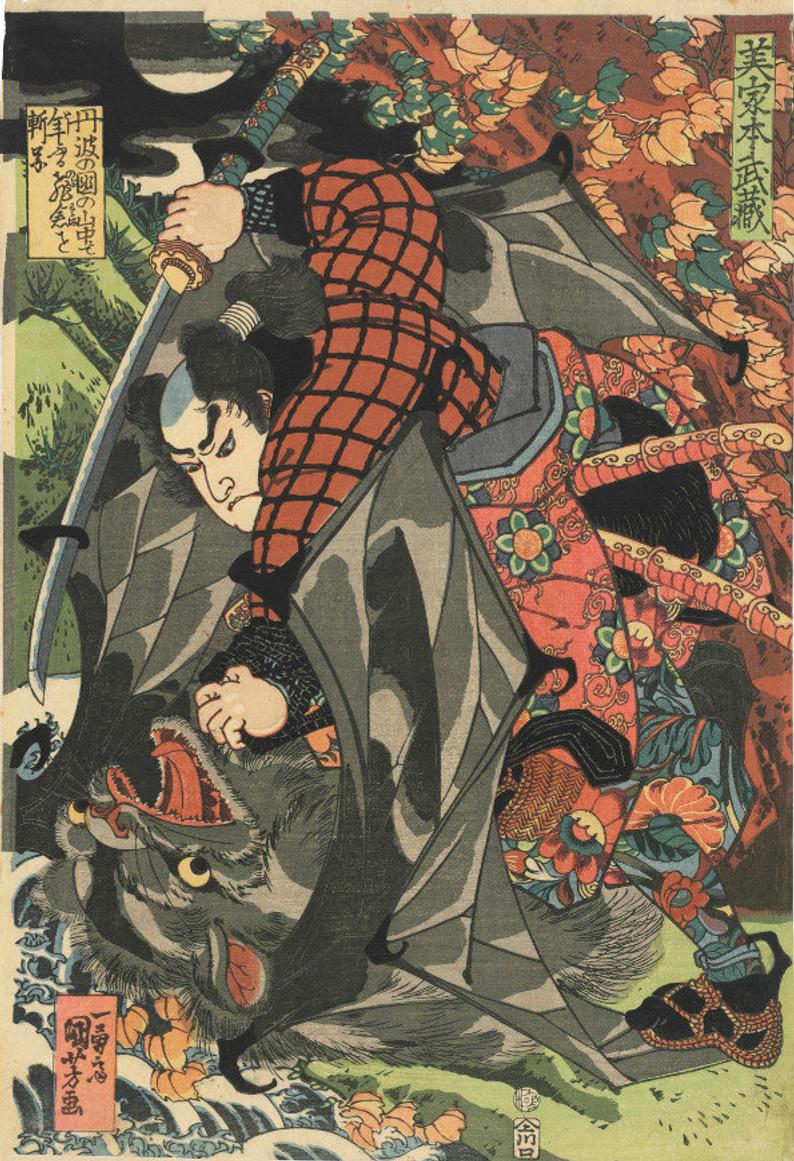 🇯🇵 JapanNobusuma野衾
A Japanese yōkai said to be a flying squirrel or bat that attacks travelers at night.Being · Cursing and harm · Luck and prosperity Legendary
 🇪🇸 SpainGuayota
Tenerife's dark god of Mount Teide, said to have stolen the sunBeing · Cursing and harm Legendary
🇺🇸 United States and 1 moreMuut
A Cahuilla spirit who guides souls, often shown as an owlBeing · Speaking with spirits and the dead Legendary
🇮🇳 IndiaIndus worm
A giant carnivorous river creature from ancient Greek accounts of the IndusBeing · Cursing and harm Legendary
🇯🇵 JapanJubokko樹木子
A blood-drinking yōkai tree from Japanese folklore that mimics ordinary wood.Being · Cursing and harm · Healing Legendary
 🇨🇳 ChinaLuduan甪端
A mythical Chinese creature said to speak every language and travel vast distances in a single dayBeing · Wonder and entertainment Legendary
🇯🇵 JapanSazae-oni栄螺鬼
A yōkai born from an old turban snail, said to take human shape and bargain for goldBeing · Cursing and harm Legendary
 🇬🇧 United KingdomFat Lips
A spirit said to live in a Scottish abbey ruin, tidying and drying a woman's cellBeing · Protection Legendary
🇲🇽 MexicoAlicante
A mythical Mexican snake that steals milk and hypnotizes its victimsBeing · Cursing and harm · Luck and prosperity Legendary
🇨🇱 Chile and 1 moreChonchon
A human head that flies at night in Mapuche belief, its cry warning of a death to comeBeing · Cursing and harm · Seeing and foretelling Legendary
🇲🇽 MexicoOtomitl
A giant son of Aztec myth who settled the land after a great flood.Being Legendary
 🇮🇪 Ireland and 1 moreManannán mac Lir
A sea god and otherworld king in Gaelic mythology who guards the hidden lands of the Tuatha Dé Danann.Being · Protection · Power and authority Legendary
 🇩🇪 Germany and 1 moreAufhocker
A German folklore spirit that leaps on travelers and weighs them down.Being · Cursing and harm Legendary
 🇮🇸 Iceland and 3 moreElf
A supernatural person of Germanic lore, linked to illness, beauty and magicBeing · Cursing and harm Legendary
🇧🇪 Belgium and 1 moreKabouter
A tiny Dutch folklore spirit that helps with chores and punishes those who spy on them.Being · Protection · Cursing and harm Legendary
 🇯🇵 JapanNuribotoke塗仏
A blackened corpse yōkai said to slip out of a neglected household altarBeing Legendary
🇪🇸 SpainRamidreju
A green-furred, weasel-like being of Cantabrian folklore, said to be born once a centuryBeing · Healing Legendary
 🇩🇪 Germany and 5 moreSchrat
A German and Slavic spirit of the woods, the house and the nightBeing · Cursing and harm · Protection Legendary
 🇯🇵 JapanSōjōbō僧正坊
The long-nosed king of Japan's tengu, said to dwell on Mount KuramaBeing · Power and authority Legendary
🇸🇪 SwedenVardøger
A spirit double that precedes a person in time and spaceBeing · Wonder and entertainment Legendary
🇨🇳 ChinaNine-tailed turtle九尾龜
A legendary Chinese creature linked to divination and folkloreBeing · Seeing and foretelling · Luck and prosperity Legendary
🇯🇵 JapanTsuchinokoツチノコ
A snake-like cryptid from Japanese folklore said to roll like a wheelBeing · Wonder and entertainment Legendary
🇮🇳 India and 5 moreWerecat
A feline shapeshifter found in global folklore and occult beliefBeing · Cursing and harm · Power and authority Legendary
🇯🇵 JapanAbura-akago油赤子
A Japanese yōkai drawn as an infant lapping oil from a paper lampBeing Legendary
🇹🇹 Trinidad and TobagoLagahoo
A shape-changing Caribbean monster said to walk at night with a coffinBeing · Cursing and harm Legendary
🇯🇵 JapanNure-onna濡女
A Japanese water spirit with a woman's face and a serpent body that lures victims with an infant.Being · Cursing and harm Legendary
🇯🇵 JapanAkateko赤手児
A red hand said to come down from a tree, with a young woman's ghost belowBeing Legendary
🇨🇳 China and 1 moreMōryō魍魎
Spirits of nature and graves in East Asian folklore, often linked to corpse theft.Being · Cursing and harm Legendary
🇨🇱 Chile and 1 moreKalku
A Mapuche sorcerer who works with negative powers and malevolent spiritsBeing · Cursing and harm Legendary
🇬🇧 United KingdomGwragedd Annwngwraig Annwn
Welsh lake fairies linked to the origin of black cattle and the Tylwyth TegBeing Legendary
🇪🇬 EgyptAkhekh
A winged desert creature of Egyptian myth linked to chaos and royal powerBeing · Power and authority Legendary
🇹🇹 Trinidad and Tobago and 1 moreDouen
A faceless creature with backwards feet from Trinidad and Tobago folkloreBeing · Cursing and harm Legendary
🇦🇱 AlbaniaKukudh
An undead revenant from Albanian folklore that haunts houses and spreads sickness.Being · Cursing and harm Legendary
 🇳🇵 Nepal and 4 moreYetiགཡའ་དྲེད་
A hairy humanoid of Himalayan story, known in the West as the Abominable SnowmanBeing · Protection Legendary
🇿🇲 ZambiaIlomba
A made sea snake said to kill at its owner's word and take the soulBeing · Cursing and harm Legendary
🇬🇷 GreeceMormoΜορμώ
A Greek bogey whose name adults spoke to frighten childrenBeing Legendary
🇦🇱 AlbaniaStihistihí
A fire-breathing storm demon from Albanian folkloreBeing Legendary
🇷🇴 RomaniaSântoaderi
Supernatural beings in Romanian folklore known for causing illness through music and danceBeing · Cursing and harm · Luck and prosperity Legendary
🇪🇸 SpainTrenti
A forest goblin from Cantabrian mythology known for pranks and mischiefBeing · Cursing and harm Legendary
🇦🇱 AlbaniaXhindi
Invisible spirits in Albanian mythology that appear at night and may help or harm.Being · Cursing and harm · Power and authority Legendary
🇦🇱 AlbaniaLugat
A shadow-dwelling vampire of Albanian folklore that attacks sleepers and hides in ruins.Being · Cursing and harm Legendary
 🇮🇷 IranAkvan Divاکوان دیو
A shape-shifting demon from Persian mythology that disguises itself as a wild horse.Being · Cursing and harm Legendary
 🇮🇹 ItalyWinged lion
A mythological creature combining a lion's body with bird wings, used in heraldry and art.Being · Protection · Power and authority Legendary
🇳🇪 NigerJobar
A Tuareg boogeyman beast linked to a fossil discovery in NigerBeing · Cursing and harm Legendary
🇬🇧 United KingdomBaobh-shìth
A beautiful Highland fairy woman who lures hunters, then kills themBeing · Cursing and harm Legendary
Photo credits on this page
The small pictures above come from Wikimedia Commons under free licences. Some are cropped to fit.
- Schrat: Photo: Andreas Praefcke, Public domain, source
- Div: Unknown Calligrapher, Public domain, source
- Nobusuma: Utagawa Kuniyoshi ( 歌川国芳 , Japanese, *1798, †1861), Public domain, source
- Guayota: MPF, CC BY-SA 3.0, source
- Luduan: Gisling, CC BY 2.5, source
- Fat Lips: Pasicles, CC0, source
- Manannán mac Lir: Kenneth Allen, CC BY-SA 2.0, source
- Aufhocker: Longbow4u, Public domain, source
- Elf: Martin Brandenburg, Public domain, source
- Nuribotoke: Brigham Young University, CC BY-SA 4.0, source
- Sōjōbō: Unknown author, Public domain, source
- Yeti: Gardner Soule, Public domain, source
- Winged lion: Rjcastillo, CC BY-SA 4.0, source