Spirits, creatures and beings
Djinn, fairies, orisha, golems and the other powers that magic deals with.
Beings are the powers that magic deals with: spirits, ancestors, gods, djinn, fairies, orisha, nats, kami, demons, golems, ghosts and the many kinds of household and landscape spirit. People in most cultures have described a world shared with unseen others, who may help, trouble or ask for respect. This page covers what these beings are said to be and the very different ways communities relate to them. They are always described here as what communities believe, not as established fact.
Different kinds of beings
A being can be a god with a priesthood, such as an orisha served in Yoruba religion, Cuba and Brazil. It can be an ancestor, honoured in China, Africa and Mexico. It can belong to a place, such as the kami of Shinto, the Thai phi or the Burmese nats. It can be a trouble-maker, like the djinn of Arabic and Islamic tradition, formed from smokeless fire, or the fairies of Ireland, whom people avoided naming.
Relationship, not command
In many traditions, a person does not command a being but enters a relationship with it, through offerings, promises and respect. Possession and mediumship are forms of that relationship, as in Vodou, Candomblé, Korean mudang rites and Sufi gatherings. In ceremonial magic of the European grimoires, by contrast, the magician summons spirits by name and authority, which the Church condemned as demon-raising. The same being may be loved in one household and feared in the next, and a spirit helpful to its servant can be harmful to a stranger.
Religions and renaming
Dominant religions often absorbed beings by relabelling them. Christian missionaries called many African and Indigenous spirits demons. Islam reads the djinn as real creatures, some of whom are Muslim, and Hindu and Buddhist traditions fold local deities into their own pantheons. Pagan and fairy beliefs were sometimes recast as the devil's work, which fed witch trials in Europe. Churches and mosques have sometimes divided beings into good and evil in ways the older traditions did not, so that a neutral local spirit became a demon on the day a missionary arrived.
Harm and interpretation
Belief in harmful spirits has been used to accuse people. Children in parts of West and Central Africa have been branded as witches possessed by evil spirits, and some have been abused by pastors or families in the name of deliverance. Scholars read spirit beliefs as ways to make sense of illness, loss and conflict, and many communities see them simply as neighbours. That is why accusations tied to spirit beliefs fall hardest on children and the vulnerable, and why many agencies train local leaders to challenge them.
Being on EveryJaadu
The entries written up so far, best known first.
 🇸🇪 Sweden and 2 moreFreyja
Norse goddess of love, war, and seiðr magic who rides a chariot pulled by catsBeing · Love and attraction · Seeing and foretelling Legendary
 🇷🇺 Russia and 3 moreLeshyлеший
A forest spirit from Slavic folklore who guards the woods and misleads travelers.Being · Protection · Cursing and harm Legendary
 🇮🇪 Ireland and 5 moreFairy
A European spirit with magical powers and human form found in folklore and artBeing · Protection · Cursing and harm Legendary
 🇮🇸 Iceland and 2 moreValkyrievalkyrja
Female figures in Norse myth who select fallen warriors and guide them to Odin's hallBeing · Speaking with spirits and the dead Legendary
 🇮🇹 Italy and 1 moreCupidCupīdō
A Roman deity of desire and erotic love, often depicted with a bow and arrow.Being · Love and attraction · Cursing and harm Legendary
 🇬🇷 GreeceCeryneian HindΚερυνῖτις ἔλαφος
A swift deer with golden antlers and bronze hooves from Greek mythBeing Legendary
🇬🇷 GreeceEmpusaἜμπουσα
A shape-shifting phantom of Greek myth with a single brass leg, sent by Hecate to seduce and devour young men.Being · Cursing and harm · Speaking with spirits and the dead Legendary
 🇮🇪 IrelandSalmon of KnowledgeAn Bradán Feasa
A mythical fish in Irish folklore that holds all the world's wisdom.Being · Power and authority · Wonder and entertainment Legendary
 🇬🇷 GreeceCancer (mythology)Καρκίνος
A giant crab from Greek myth that became a zodiac constellationBeing · Cursing and harm Legendary
 🇷🇺 Russia and 2 moreSupernatural beings in Slavic religion
Mythic entities of nature, death, and fate in Slavic folklore and belief.Being · Protection · Cursing and harm Legendary
 🇬🇷 GreecePrometheusΠρομηθεύς
A Titan who took fire for humans and paid for itFigure · Speaking with spirits and the dead Legendary
 🇨🇿 Czech Republic and 1 moreRübezahl
A mountain spirit of the Giant Mountains, kindly to some and vengeful to othersBeing · Protection · Healing Legendary
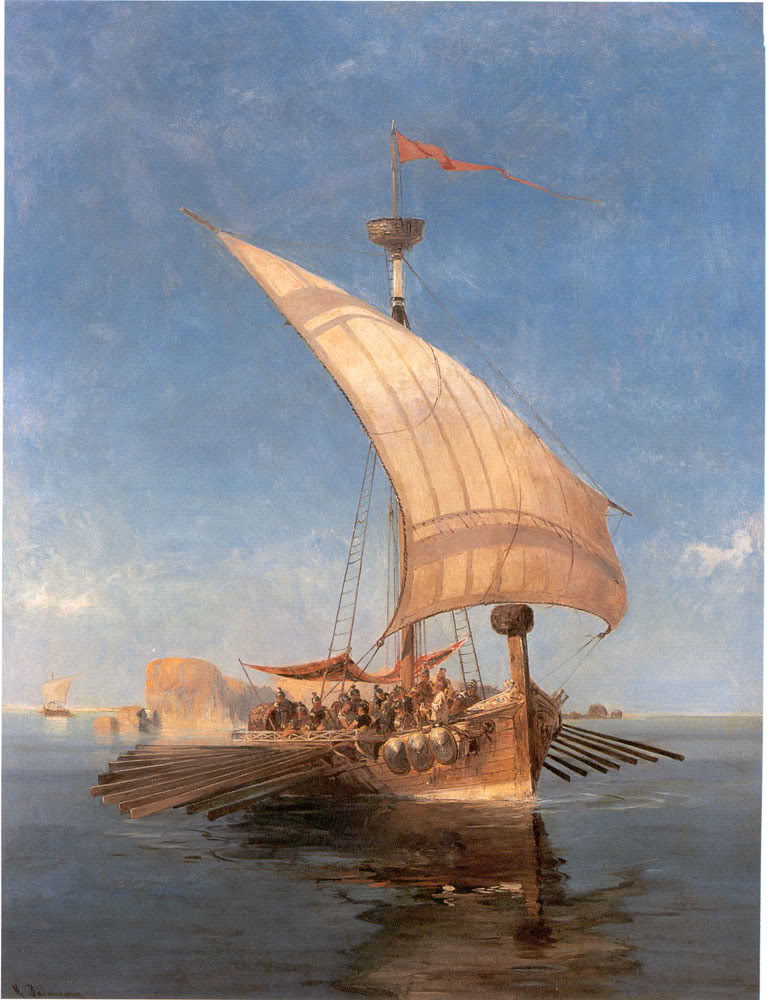 🇬🇷 GreeceArgoἈργώ
The mythic ship of Jason and the Argonauts, built with divine aid for a quest across the sea.Being · Power and authority Legendary
 🇮🇸 IcelandSurtrSurtur
A fire giant of Norse myth who guards a burning realm and ends the worldBeing · Cursing and harm Legendary
🇪🇬 EgyptSoul Collector
A mythical figure said to gather, guide, or judge the spirits of those who have passed away.Being · Speaking with spirits and the dead Legendary
 🇬🇷 GreeceAloadaeἈλωάδαι (Aloadai)
Twin giants of Thessaly who challenged the gods and built mountains to reach Olympus.Being Legendary
 🇬🇷 Greece and 1 moreScyllaΣκύλλα
A sea monster from Greek tales who guards a perilous passage and devours sailors.Being · Cursing and harm Legendary
 🇬🇷 GreeceCentaurideΚενταυρίδε (Kentauride)
A female centaur from Greek mythology, depicted in art and literature as a hybrid of woman and horse.Being · Wonder and entertainment Legendary
 🇮🇸 Iceland and 1 moreSleipnir
Odin's eight-legged horse in Norse myth, born of Loki and a stallionBeing Legendary
 🇳🇴 NorwayEinherjar
Óðinn's host of warriors killed in battle, feasting in Valhalla until RagnarökBeing Legendary
 🇮🇶 IraqWinged genie
Winged guardians of Assyrian palace walls, read as the apkallu sagesBeing · Protection · Luck and prosperity Legendary
 🇮🇹 ItalyCacus
A fire-breathing giant of Roman myth who stole cattle and was slain by HerculesBeing · Cursing and harm Legendary
 🇬🇷 GreeceHarpyἅρπυια (hárpyia)
Half-human, half-bird creatures from Greek and Roman myth, often seen as storm winds or snatchers of food.Being · Cursing and harm · Wonder and entertainment Legendary
 🇮🇸 Iceland and 3 moreElf
A supernatural person of Germanic lore, linked to illness, beauty and magicBeing · Cursing and harm Legendary
🇸🇾 SyriaAscusἌσκος
A Greek giant flayed by Hermes after chaining DionysusBeing Legendary
🇬🇷 GreecePolemosΠόλεμος
A Greek spirit of war and the personification of conflictBeing · Cursing and harm Legendary
🇬🇷 GreeceMormoΜορμώ
A Greek bogey whose name adults spoke to frighten childrenBeing Legendary
🇮🇪 IrelandAibellAoibheall
A Munster goddess turned fairy queen, said to foretell deathsFigure · Seeing and foretelling · Cursing and harm Legendary
 🇬🇷 GreeceTalosΤάλως
A bronze automaton that guarded Crete from invaders and piratesBeing · Protection Legendary
Photo credits on this page
The small pictures above come from Wikimedia Commons under free licences. Some are cropped to fit.
- Seiðr: John Bauer, Public domain, source
- Prometheus: No machine-readable author provided. Atoma assumed (based on copyright, Public domain, source
- Winged genie: James Spurrier, CC BY-SA 2.0, source
- Cacus: William Blake, Public domain, source
- Leshy: Γραφέας, CC BY-SA 4.0, source
- Harpy: Unknown, near the Tyrrhenian Group?, CC BY-SA 2.0, source
- Elf: Martin Brandenburg, Public domain, source
- Fairy Queen: Henry Fuseli, Public domain, source
- Salmon of Knowledge: Man vyi, Public domain, source
- Supernatural beings in Slavic religion: Bartolomeo Giuliano, CC BY-SA 3.0, source
- Talos: Unknown artist, Public domain, source
- Einherjar: Emil Doepler, Public domain, source
- Valkyrie: Lorenz Frølich, Public domain, source
- Rübezahl: User:Antosh, CC BY-SA 4.0, source
- Ceryneian Hind: Unknown artist, Public domain, source
- Cancer (mythology): Diosphos Painter, Public domain, source
- Cupid: Bertel Thorvaldsen, CC BY-SA 3.0, source
- Argo: Konstantinos Volanakis, Public domain, source
- Surtr: Friedrich Wilhelm Heine (1845-1921) after an original by Friedrich Wil, Public domain, source
- Aloadae: No machine-readable author provided. Antars~commonswiki assumed (based, Public domain, source
- Scylla: Unknown artist, Public domain, source
- Centauride: John La Farge, Public domain, source
- Sleipnir: Unknown author, CC BY 4.0, source