Sântoaderi
from a regional name for Saint Theodore
Supernatural beings in Romanian folklore known for causing illness through music and dance
The Sântoaderi are supernatural entities from Romanian folklore, often depicted as young men with long feet or hooves. They are believed to appear in villages to sing and drum, causing sickness or kidnapping people.
- Described as seven or nine young men with hooves
- Cause illness through drumming and singing
- Name derived from Saint Theodore
- Meet zîne after Easter to offer flowers
- Victims may return with gifts or insane
What it is
The Sântoaderi are supernatural figures found in the folklore of Romania. They are typically described as seven or nine young men who possess long feet and hooves. These entities are also thought to wear capes while they move. They are viewed as mysterious visitors who appear in villages to perform rituals that affect the local population.
Where it comes from
The name Sântoader comes from a regional term used for Saint Theodore. Folklore suggests that these creatures were more likely to show up on the saint's feast day. The historian Mircea Eliade noted similarities between the Sântoaderi and the zîne, which are Romanian equivalents of fairy godmothers. Both groups are believed to travel at night in dancing processions.
How it is done
The Sântoaderi are said to cause harm by singing and beating drums. This noise is believed to wrap victims in chains, leading to rheumatism or other ailments. They may also stamp on people's bodies to inflict injury. Those who hear their music and hoofbeats are advised to stay inside to remain safe from their influence.
Tools and materials
Drums are central to the Sântoaderi's presence, creating the sounds that signal their arrival. They are also associated with wearing capes. In some accounts, chains are mentioned as instruments used to bind victims, resulting in physical suffering such as joint pain or illness.
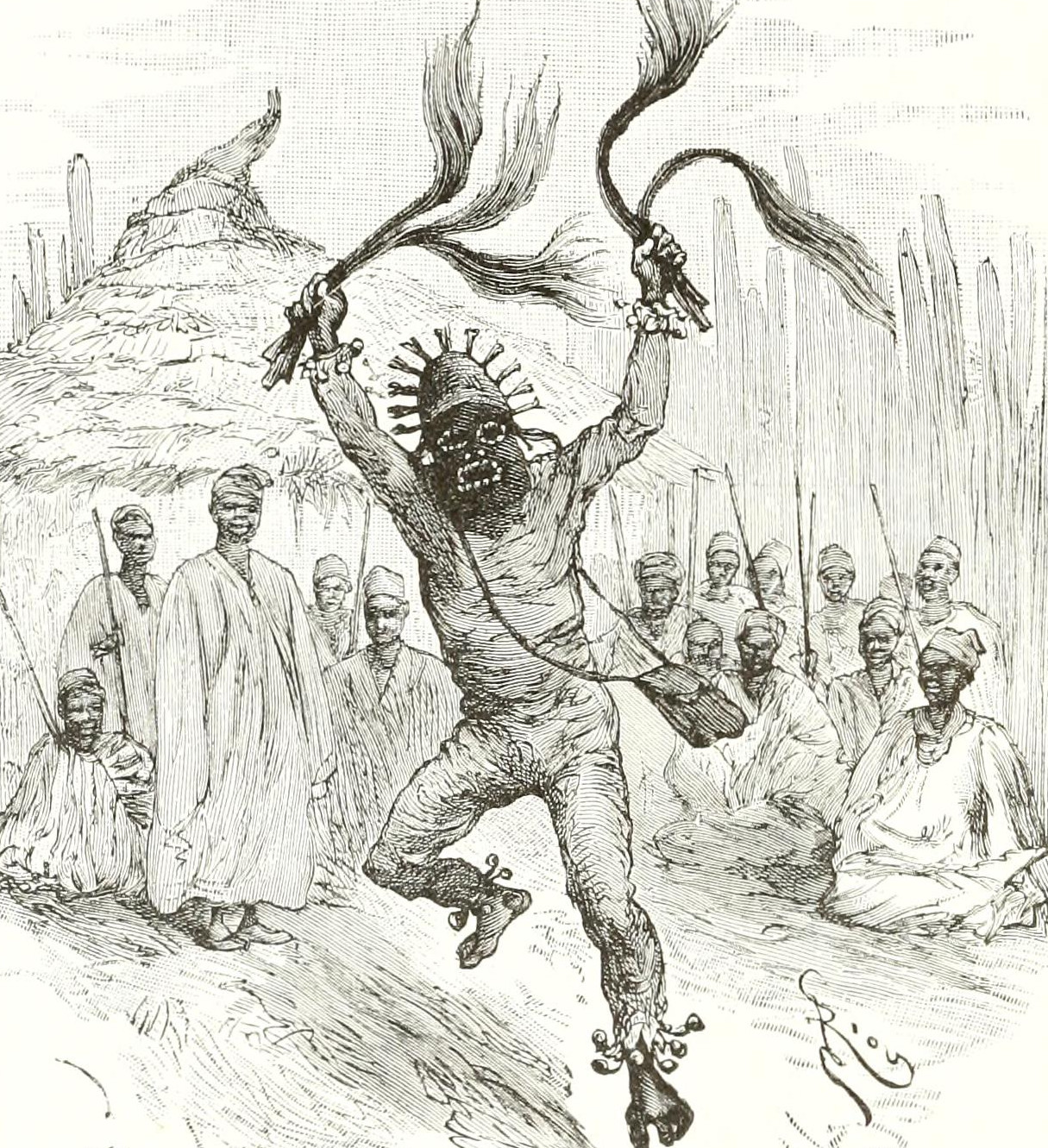
Sântoaderi, drawn and placed
- Living
- Revived
- Fading
- Historical
- Legendary
- Performed
- Lineage
- Romanian folklore
- Timing
- night, feast days
What it is for
These beings are primarily associated with causing harm and illness within communities. Their actions can lead to kidnapping, where individuals are taken into their procession. Victims may return healthy with gifts, but they can also come back sick, dying, or insane depending on the encounter.
Who does it
There are no specific practitioners listed for the Sântoaderi as they are supernatural entities rather than human ritual specialists. However, the folklore advises ordinary villagers to take protective measures by staying indoors when hearing their approach.
Peoples and places
The Sântoaderi are specific to Romanian folklore. They share characteristics with the fairies of Irish mythology. The connection to the zîne highlights a broader European theme of nocturnal fairy-like processions. The belief is deeply rooted in the cultural narratives of Romania.
At a glance: who, where and when
What people believe
The worldview behind the Sântoaderi involves spirits that operate outside normal human boundaries. They are linked to religious dates, specifically the feast of Saint Theodore. On the twenty-fourth day after Easter, it is believed that the zîne and Sântoaderi meet to play and offer flower bouquets, blending sacred and folk elements.
When it is done
Appearances are tied to specific times, particularly the feast day of Saint Theodore. There is also a connection to the period following Easter, where interactions with the zîne occur. Nighttime is the primary time for their activities, aligning with many folkloric traditions of supernatural movement.
How scholars and sceptics see it
Historians like Mircea Eliade have analyzed these figures, comparing them to other European fairy traditions. These studies help place the Sântoaderi within a wider context of folklore, showing how similar beliefs about nocturnal dancers exist across different cultures in Europe.
Cautions and what is closed
The folklore presents clear dangers associated with the Sântoaderi. Staying outdoors during their appearance can lead to kidnapping or severe illness. The text does not mention modern legal issues or fraud, focusing instead on the traditional risks posed by these supernatural entities.
Compare and confuse
The Sântoaderi are compared to Irish fairies and Romanian zîne due to their shared traits of nocturnal dancing and procession. They are distinct from the Călușari and the Wild Hunt, though all involve group movements and supernatural themes in European tradition.
Today
As legendary figures, the Sântoaderi exist primarily in stories and academic study of Romanian folklore. They do not have a living practice today but remain part of the cultural heritage and historical records of the region.
Questions people ask about Sântoaderi
What are the Sântoaderi?
They are supernatural beings in Romanian folklore, often seen as young men with long feet or hooves who cause illness through music.
Where do they come from?
They originate from Romanian folklore, with their name linked to a regional name for Saint Theodore.
How do they harm people?
They are believed to cause rheumatism and other ailments by wrapping victims in chains or stamping on their bodies while drumming.
When do they appear?
They are most likely to appear on the feast day of Saint Theodore and are active at night.
Good reading and sources
The facts on this page come from the Wikipedia article "Sântoaderi", written by its contributors and used under the CC BY-SA 4.0 licence, and from its Wikidata record (CC0). EveryJaadu rewrote the text in its own words, with AI assistance, and compares every page with the article to make sure no passage is copied. It may be reused under the same CC BY-SA 4.0 licence with a link back.
It may contain mistakes. Names and customs differ from one community to the next, and some knowledge is closed to outsiders and left out here. This page describes belief and practice. It does not say that any of it works, it is not a how-to, and it is not medical advice. If something is wrong, tell us. Last refreshed 2026-10-06.
More from Romania
All the entries from Romania 🇷🇸 Serbia and 5 moreVampire
An undead creature from folklore that feeds on the blood or life force of the livingBeing · Cursing and harm · Luck and prosperity Legendary
🇷🇴 Romania and 2 moreStrigoi
A Romanian undead spirit linked to witchcraft and vampirismBeing · Cursing and harm Historical
🇷🇸 Serbia and 5 moreVampire
An undead creature from folklore that feeds on the blood or life force of the livingBeing · Cursing and harm · Luck and prosperity Legendary
🇷🇴 Romania and 2 moreStrigoi
A Romanian undead spirit linked to witchcraft and vampirismBeing · Cursing and harm Historical
 🇫🇷 France and 5 moreRevenant
An animated corpse or spirit that returns from the grave to haunt the livingBeing · Cursing and harm Legendary
🇷🇴 Romania and 2 moreSolomonariȘolomonar
A Romanian weather wizard who rides a dragon and controls the storms.Being · Cursing and harm · Luck and prosperity Legendary
🇫🇷 France and 5 moreRevenant
An animated corpse or spirit that returns from the grave to haunt the livingBeing · Cursing and harm Legendary
🇷🇴 Romania and 2 moreSolomonariȘolomonar
A Romanian weather wizard who rides a dragon and controls the storms.Being · Cursing and harm · Luck and prosperity Legendary
Related elsewhere
All being 🇪🇬 EgyptCurse
A spoken wish for misfortune to befall a person or placeBelief · Cursing and harm · Luck and prosperity Historical
🇺🇸 United StatesPukwudgie
A short forest spirit from Algonquian lore, known for mischief and danger.Being · Cursing and harm · Luck and prosperity Legendary
🇪🇬 EgyptCurse
A spoken wish for misfortune to befall a person or placeBelief · Cursing and harm · Luck and prosperity Historical
🇺🇸 United StatesPukwudgie
A short forest spirit from Algonquian lore, known for mischief and danger.Being · Cursing and harm · Luck and prosperity Legendary
 🇮🇳 India and 5 moreHoliहोली
A Hindu spring festival marked by coloured powders and bonfires to celebrate love and virtue.Tradition · Love and attraction · Cursing and harm Living
🇮🇳 India and 5 moreHoliहोली
A Hindu spring festival marked by coloured powders and bonfires to celebrate love and virtue.Tradition · Love and attraction · Cursing and harm Living
 🇺🇸 United States and 2 moreLouisiana Voodoo
An African diasporic religion practiced in Louisiana from the 18th to early 20th centuriesTradition · Healing · Protection Historical
🇺🇸 United States and 2 moreLouisiana Voodoo
An African diasporic religion practiced in Louisiana from the 18th to early 20th centuriesTradition · Healing · Protection Historical