🇯🇵 Magic in Japan
362 entries from Japan, best known first, across 80 places of magic.
Onmyōdō is a Japanese system of divination and ritual magic rooted in the Chinese philosophies of yin-yang and the five elements. It evolved from astronomical and calendrical knowledge into a court institution that blended with Shinto beliefs to manage fortune, health, and spiritual protection.
- Abe no Seimei is the most famous onmyoji, active in the Heian period
- Shikigami are spirit servants summoned and controlled by practitioners
- Katatagae involves changing direction to avoid unlucky bearings
- The Tensha Shinto Prohibition Ordinance banned the practice in 1870
- Onmyoji handled kegare, spiritual pollution, unlike Shinto priests
Overview
This tradition began as an import from China and Korea during the sixth century, combining astronomy, calendar science, and elemental theory. Over time, it merged with indigenous Japanese beliefs, particularly Shinto and the worship of restless spirits known as goryo. The practice shifted from high-level state advisory work to include magical rites for protection and cursing. By the Heian period, it had become a distinct Japanese system that addressed both political decisions and personal well-being through the manipulation of auspicious forces.
Practices and beliefs
Practitioners used complex calculations based on celestial movements and seasonal changes to determine lucky or unlucky times and directions. They performed rituals to ward off evil influences, prevent disasters, and ensure agricultural success. A key feature was the summoning and control of shikigami, which were spirit servants used to carry out tasks or protect the practitioner. Divination helped guide major life events, such as moving capitals or choosing marriage dates, by identifying harmful energies in the environment.
Rites and charms
Rituals often involved purification and specific gestures to align with cosmic forces. Unlike Shinto priests who avoided impurity, onmyoji could handle kegare, or spiritual pollution, allowing them to perform protective ceremonies that others could not. These rites included casting talismans and conducting exorcisms to calm angry spirits. The community also observed strict rules about direction; if a person faced an unlucky bearing, they would change their path to avoid bad luck, a practice called katatagae.
Who practises
The main figures were onmyoji, civil servants appointed by the imperial court to manage these arts. They served as astronomers, diviners, and spiritual guards for the capital. Famous lineages, such as the Abe and Kamo families, dominated the field for centuries. Abe no Seimei remains the most celebrated figure, known for his exceptional skill in divination and magic. Today, while the official role has vanished, the title persists in popular culture as a symbol of occult mastery.
Regions and communities
The practice originated in the imperial capital and was centered around the court aristocracy. Its influence spread from the elite to the general public as the need for personal protection grew. The Abe and Kamo families held monopolies on the highest levels of the art within the capital region. Outside the court, local interpretations may have varied, but the core techniques remained tied to the centralized calendar and astronomical data maintained by the state.
The calendar
Daily life and major events were scheduled according to the onmyodo calendar. Specific days and hours were designated as auspicious or inauspicious for activities like starting a journey, building a house, or holding a funeral. The changing seasons dictated different types of rituals, with particular attention paid to transitional periods believed to be vulnerable to spiritual interference. Festivals and religious observances were often timed to coincide with favorable celestial alignments.
Law and the state
The system was officially part of the government structure under the Taiho Code, which defined the duties of onmyoji. In 1870, the Tensha Shinto Prohibition Ordinance banned the practice, labeling it superstition. After World War II, religious freedom allowed its revival, leading to the formation of modern organizations like Tensha Tsuchimikado Shinto in 1954. The legal status shifted from state mandate to private religious association.
Today
Modern Japan sees onmyodo primarily through popular media, including manga, anime, and novels that romanticize its history. While some groups claim continuity with the ancient traditions, the practice is largely a cultural heritage rather than a widespread religious activity. Scholars study it as a historical blend of science and magic, reflecting how pre-modern societies understood the natural world.
The facts in this overview come from the Wikipedia article "Onmyōdō", written by its contributors and used under the CC BY-SA 4.0 licence. EveryJaadu rewrote the text in its own words, with AI assistance, and compares every page with the article to make sure no passage is copied. It may be reused under the same CC BY-SA 4.0 licence with a link back.
Places of magic in Japan
 🇯🇵 JapanIbaraki-dōji茨木童子
A Japanese oni of Heian tales, servant of Shuten-dōji who loses an armBeing · Cursing and harm Legendary
 🇯🇵 JapanShuten-dōji酒呑童子
A demon leader of Japanese legend, slain by a warrior after a drinking trickBeing · Cursing and harm Legendary
🇯🇵 JapanAzukiarai小豆洗い
A Japanese water yōkai heard washing beans, said to pull the curious into the waterBeing · Cursing and harm Legendary
🇯🇵 JapanFutakuchi-onnaふたくちおんな (二口女)
A Japanese yōkai: a woman with a second, hungry mouth hidden in her hairBeing · Change and initiation · Cursing and harm Legendary
 🇯🇵 JapanAmazake-babaa甘酒婆
A hag of northern Japanese legend whose night-time question brings sickness when answeredBeing · Protection · Cursing and harm Legendary
🇯🇵 JapanMokumokuren目目連
A Japanese yōkai of eyes that crowds the tears in a paper screenBeing · Cursing and harm Legendary
 🇯🇵 JapanTeke Tekeテケテケ
A Japanese legend of a vengeful spirit who drags herself along on her elbowsBeing · Cursing and harm Legendary
🇯🇵 JapanReikon霊魂
The Shinto soul: it joins the ancestors after funeral rites, or haunts as a yūreiBeing · Speaking with spirits and the dead · Cursing and harm Living
🇯🇵 JapanAobōzu青坊主
A blue priest yōkai of Japan, told differently in every provinceBeing · Cursing and harm Legendary
🇯🇵 JapanSazae-oni栄螺鬼
A yōkai born from an old turban snail, said to take human shape and bargain for goldBeing · Cursing and harm Legendary
🇯🇵 JapanMintuciミントゥチ
A water spirit of Ainu tales: bringer of the catch and the hunt, and of drownings.Being · Luck and prosperity · Protection Legendary
🇯🇵 JapanFurutsubaki-no-rei古椿の霊
A spirit said to live in old camellia trees, appearing as a woman who lures or warnsBeing · Cursing and harm · Seeing and foretelling Legendary
🇯🇵 JapanIsonade磯撫で
A giant sea yōkai of Western Japan said to hook sailors with its barbed tailBeing · Cursing and harm Legendary
 🇯🇵 JapanAkashita赤舌
A red-tongued beast from Edo-period scrolls, tied to water and bad daysBeing · Protection · Cursing and harm Legendary
 🇯🇵 JapanUbume産女
The ghost of a mother who died in labour, and the child that turns to stoneBeing · Cursing and harm · Power and authority Legendary
🇯🇵 JapanAmikiri網切
A scorpion-like Japanese yōkai said to snip nets, mosquito nets and blindsBeing · Cursing and harm Legendary
 🇯🇵 JapanAkaname垢嘗
A Japanese bath yōkai said to lick grime from tubs at nightBeing · Cleansing and purification · Cursing and harm Legendary
🇯🇵 JapanAmanojaku天邪鬼(あまのじゃく)
A contrary small ogre of Japanese folklore that reads hearts and does the oppositeBeing · Cursing and harm Legendary
🇯🇵 JapanKuchisake-onna口裂け女
A masked Japanese spirit said to ask strangers if she is beautifulBeing · Cursing and harm Legendary
🇯🇵 JapanAme no Ohabari天之尾羽
A legendary sword and Shinto spirit from Japanese mythBeing · Cursing and harm · Power and authority Historical
 🇯🇵 JapanUmibōzu海坊主
A giant black sea being said to rise from calm water and wreck boatsBeing · Cursing and harm Legendary
🇯🇵 JapanWanyūdō輪入道
A flaming wheel with a monk's head that steals souls in Japanese folkloreBeing · Cursing and harm · Speaking with spirits and the dead Legendary
🇯🇵 Japan and 1 moreHiderigami日照り神
A drought spirit from Chinese and Japanese folklore that brings dry weather.Being · Cursing and harm Legendary
🇮🇳 India and 5 moreWerecat
A feline shapeshifter found in global folklore and occult beliefBeing · Cursing and harm · Power and authority Legendary
 🇯🇵 JapanDatsue-ba奪衣婆
A Japanese underworld figure who strips clothes from spirits at the river of deathBeing · Cursing and harm Historical
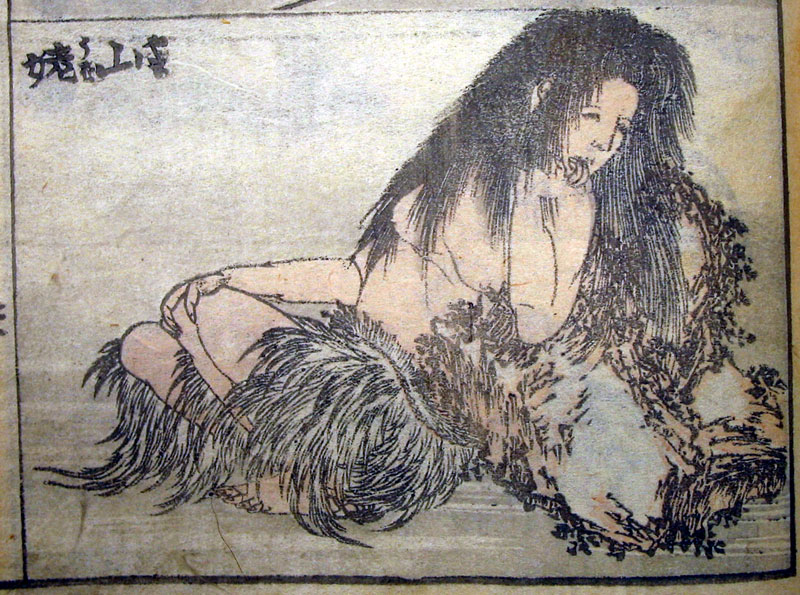 🇯🇵 JapanYama-uba山姥
A Japanese mountain spirit depicted as either a cannibalistic monster or a benevolent guardian.Being · Cursing and harm · Luck and prosperity Legendary
 🇯🇵 JapanShinigami死神
A Japanese spirit or deity associated with inviting humans toward deathBeing · Cursing and harm Historical
🇯🇵 JapanNyūdō-bōzu入道坊主
A Japanese yokai that grows taller when stared at and can kill or vanish depending on the responseBeing · Cursing and harm Legendary
🇯🇵 JapanMakuragaeshi枕返し
A Japanese spirit that flips pillows and turns sleepers upside downBeing · Cursing and harm · Luck and prosperity Legendary
 🇯🇵 JapanShidaidaka次第高
A tall spirit in Japan that grows when you look up and shrinks when you look down.Being · Cursing and harm Legendary
🇯🇵 JapanAzukibabaaあずきばばあ
A Japanese yōkai that mimics the sound of red beans to lure or frighten peopleBeing · Cursing and harm Legendary
🇯🇵 JapanAyakashi妖
Water spirits and ghost lights in Japanese folkloreBeing · Cursing and harm · Luck and prosperity Historical
 🇯🇵 JapanHitotsume-nyūdō独眼僧
A one-eyed Japanese monk spirit from folklore and legendBeing · Cursing and harm Legendary
🇯🇵 JapanŌnyūdō大僧正
A giant monk spirit in Japanese folklore, ranging from helpful helpers to menacing shadows.Being · Cursing and harm · Healing Legendary
 🇯🇵 Japan and 1 moreBake-danuki化け狸
A shape-shifting raccoon dog spirit from Japanese folklore known for pranks and illusions.Being · Cursing and harm · Luck and prosperity Legendary
🇯🇵 JapanSankai産怪
A yōkai born from a woman during childbirth if proper care is neglectedBeing · Cursing and harm Legendary
🇯🇵 JapanHashihime橋姫
A Japanese bridge spirit linked to jealousy and demonic transformation in folklore and Noh theatre.Being · Protection · Cursing and harm Historical
🇯🇵 JapanYosuzume夜雀
A Japanese mountain spirit that appears as a bird or butterfly and signals the presence of wolves.Being · Cursing and harm · Protection Historical
🇯🇵 JapanYamajijii山爺
A one-eyed mountain spirit from Shikoku folklore known for its thunderous voice and unpredictable nature.Being · Cursing and harm · Luck and prosperity Historical
 🇯🇵 JapanKamikiri髪切り
A Japanese yōkai blamed for the sudden disappearance of human hairBeing · Cursing and harm Historical
 🇨🇳 China and 2 moreOx-Head and Horse-Face牛頭馬面
Guardians of the underworld who escort souls to judgment in East Asian myth.Being · Cursing and harm Legendary
🇯🇵 JapanNoderabō野寺坊
A Japanese yōkai of abandoned temples and broken vowsBeing · Cursing and harm Historical
🇯🇵 JapanUmi zatō海座頭
A sea yōkai depicted as a giant blind musician that threatens shipsBeing · Cursing and harm Historical
🇨🇳 China and 1 moreMōryō魍魎
Spirits of nature and graves in East Asian folklore, often linked to corpse theft.Being · Cursing and harm Legendary
🇯🇵 JapanKeneō懸衣翁
A Japanese oni who judges souls by the weight of their clothes at the Sanzu RiverBeing · Cursing and harm Legendary
 🇯🇵 JapanOtoroshiおとろし
A Japanese yōkai with blue skin and tusks that guards temple gates and punishes the wicked.Being · Protection · Cursing and harm Legendary
🇯🇵 JapanJubokko樹木子
A blood-drinking yōkai tree from Japanese folklore that mimics ordinary wood.Being · Cursing and harm · Healing Legendary
 🇯🇵 JapanAkubōzu灰坊主
A hearth spirit of northern Japan that emerges from ash and is said to consume those who disturb it.Being · Cursing and harm Legendary
Photo credits on this page
The small pictures above come from Wikimedia Commons under free licences. Some are cropped to fit.
- Datsue-ba: Fred Cherrygarden, CC BY-SA 4.0, source
- Ubume: Brigham Young University, CC BY-SA 4.0, source
- Minamoto no Yorimitsu: Yoshitoshi, Public domain, source
- Shinigami: 日: Jnn, CC BY 2.1 jp, source
- Umibōzu: Brigham Young University, CC BY-SA 4.0, source
- Bake-danuki: Poposhka at English Wikipedia, Public domain, source
- Ibaraki-dōji: Utagawa Kunisada, CC BY-SA 4.0, source
- Teke Teke: Dr.Lantis, CC BY-SA 4.0, source
- Akaname: Ueda Hiromitsu 上田寛満 (illust.) fl. c. 1780, CC0, source
- Amazake-babaa: Fred Cherrygarden, CC BY-SA 4.0, source
- Yama-uba: Unknown author, Public domain, source
- Kamikiri: Sawaki Suushi (佐脇嵩之, Japanese, *1707, †1772), Public domain, source
- Akashita: Brigham Young University, CC BY-SA 4.0, source
- Otoroshi: Unknown author, Public domain, source
- Hitotsume-nyūdō: Kashiwa Seiho (柏正甫), Public domain, source
- Akubōzu: No machine-readable author provided. Fg2 assumed (based on copyright c, Public domain, source
- Ox-Head and Horse-Face: ScribblingGeek, CC BY-SA 4.0, source
- Shidaidaka: by Reggaeman, CC BY-SA 3.0, source
The weekly digest
Every Monday: seven entries you may not know, what is on the calendar this week, and one rite drawn step by step.