
Teke Teke
In its own language: テケテケ
from the teke teke sound her body is said to make as it drags
A Japanese legend of a vengeful spirit who drags herself along on her elbows
A Japanese urban legend. It tells of a young woman or schoolgirl, killed when a train cut her body in two, who returns as an onryō, a spirit driven by resentment. She is said to move on her hands or elbows, and the scraping that follows gives her the name. Tellings have her chase people after dark and cut them through the middle.
- Her name is taken from the scraping noise she is said to make as she moves
- She is an onryō, a spirit kept in the world by a grudge
- The older Kashima Reiko story places the missing legs on the Meishin Expressway
- Essayist Yuki Yoshida suggests the Kashima Reiko tale and Teke Teke shaped each other
- A 2009 film, Teketeke, was based on the legend
What it is
Teke Teke belongs to Japan's stock of contemporary scare stories, the sort passed between schoolchildren and posted online. The central figure is an onryō, a spirit held in the world by resentment, in this case a young woman or a girl still at school. A train cut her body in two, and she is said to keep moving on her hands or elbows, hauling the upper half of herself along. That dragging makes a scratch or a scrape, heard as teke teke, which becomes her name. People who meet her after dark are said to be chased and cut across the waist.
Where it comes from
Full tellings usually put the accident on a railway line in the north of Japan. The girl falls, a train severs her lower body, and in the longer versions she does not die straight away: she lies in pain while station staff do nothing, and neglect finishes what the train began. A separate and older narrative, about a woman named Kashima Reiko, has legs lost to a train in the same manner. Essayist Yuki Yoshida has proposed that the two stories borrowed from each other. One online telling names the dead girl Sachiko Kiritani and links a fresh verse of a children's song to her.
How it is done
The story keeps a steady shape. She is met after dark, in a town or at a station. With the lower half of her body gone, she comes forward on her hands or elbows, and hearers are told the scraping arrives before the sight of her. She gives chase. When she catches someone, she is said to cut them through the middle, so that the death repeats her own injury. A scythe appears in some retellings. In the bathroom variant attached to Kashima Reiko, the attack follows a question and an unacceptable answer rather than a run.
Tools and materials
Objects are few. A scythe is named in some versions and is the only weapon mentioned; the cutting itself carries the meaning, since it repeats what the train did. The other marker is sound: a scratch, a scrape, or the syllables teke teke, said to come from her elbows or from the cut end of her body meeting the ground. In the Kashima Reiko form the working tools are words, a question about missing legs and two replies held to satisfy her.
Teke Teke, drawn and placed
- Living
- Revived
- Fading
- Historical
- Legendary
- Performed
- Lineage
- Japanese urban legend; the onryō, or vengeful spirit, of Japanese ghost lore
- Timing
- after dark, at stations and in streets; within a month of hearing the Kashima Reiko tale
What it is for
These tales are told to frighten, and they place the fright in ordinary settings: a station after dark, a toilet stall, the walk home. The Kashima Reiko version builds a rule into the telling. Hearing it is said to bring her within a month, and passing it on is the way out, so the story asks to be repeated. The Satchan song variant works in the same manner, fastening a rhyme that everyone knows to a death.
Peoples and places
The legend is Japanese, and the fullest tellings set the accident in the north of the country. Beyond that it belongs to no single district: it travels through schools and across the internet, and details shift with each retelling. The chase form and the bathroom form circulate side by side, and a reader may meet either one first. Figures from elsewhere, among them the Women in Black of Wat Samian Nari in Thailand, are noted for resembling her.
What people believe
Behind the tale sits the onryō, a spirit whose grudge keeps it among the living. Teke Teke is said to act from spite, reproducing her own mutilation on whoever crosses her. The legend also carries a small set of rules of the kind common in such stories: a question must be met with the right words, a story must be handed on, a rhyme must not be mocked. Break the rule and she is said to come; keep it and the encounter closes.
When it is done
Night is the hour given to her. She is said to roam stations and streets after dark, and meetings happen then. The Kashima Reiko story adds a deadline of one month: once a person has learned the tale, she is expected within that span unless it is told onward. Beyond these, no season, festival or fixed date is tied to her.
Compare and confuse
Kashima Reiko is the older cousin, and the two are often told as one. Nearby figures in Japanese storytelling include Kuchisake-onna, the slit-mouthed woman; Hanako-san of the school toilets; and Aka Manto, the red-caped presence in a stall. Madam Koi Koi haunts schools in African tellings, and the Women in Black of Wat Samian Nari in Thailand are compared to her. Sadako Yamamura of the Ring novels is a separate ghost.
Today
The story lives online and in printed collections of urban legends, and it has moved into other media. A 2009 film, Teketeke, is based on it. A Canadian rock group took the name TEKE::TEKE. The Satchan variant shows how readily the tale fastens onto something already familiar: a children's song gains a fourth verse about the girl, and the account of the student said to have written it ends badly.
Questions people ask about Teke Teke
What is Teke Teke?
A figure from Japanese urban legends: an onryō, or vengeful spirit, of a young woman or schoolgirl whose body was cut in two by a train. She is said to move on her hands or elbows and to chase people after dark.
Where does the story come from?
Japan. Full tellings put the railway accident in the north of the country. The related story of Kashima Reiko is older, and essayist Yuki Yoshida has suggested that the two influenced one another.
How is she said to move?
With her lower body gone, she travels on her hands or elbows, dragging her torso. The scraping that follows gives her the name, and it is said to come from her elbows or from the cut end of her body.
What is said to happen to people who meet her?
The legend holds that she gives chase and cuts them in half at the waist, matching her own injury. Some tellings give her a scythe. In the Kashima Reiko version, the attack follows a question about her missing legs.
Can the encounter be avoided in the stories?
Some versions hold that a reply placing the legs on the Meishin Expressway, or the phrase kamen shinin ma, satisfies her. The Kashima Reiko tale adds that passing the story on keeps her from appearing.
Good reading and sources
The facts on this page come from the Wikipedia article "Teke Teke", written by its contributors and used under the CC BY-SA 4.0 licence, and from its Wikidata record (CC0). EveryJaadu rewrote the text in its own words, with AI assistance, and compares every page with the article to make sure no passage is copied. It may be reused under the same CC BY-SA 4.0 licence with a link back.
It may contain mistakes. Names and customs differ from one community to the next, and some knowledge is closed to outsiders and left out here. This page describes belief and practice. It does not say that any of it works, it is not a how-to, and it is not medical advice. If something is wrong, tell us. Last refreshed 2026-10-18.
More from Japan
All the entries from Japan 🇯🇵 JapanOni鬼(おに)
A horned demon of Japanese folklore known for strength and evil deedsBeing · Cursing and harm · Luck and prosperity Legendary
🇯🇵 JapanOni鬼(おに)
A horned demon of Japanese folklore known for strength and evil deedsBeing · Cursing and harm · Luck and prosperity Legendary
 🇯🇵 JapanBaku獏
A Japanese spirit said to eat bad dreams and protect sleepersBeing · Protection Living
🇯🇵 JapanBaku獏
A Japanese spirit said to eat bad dreams and protect sleepersBeing · Protection Living
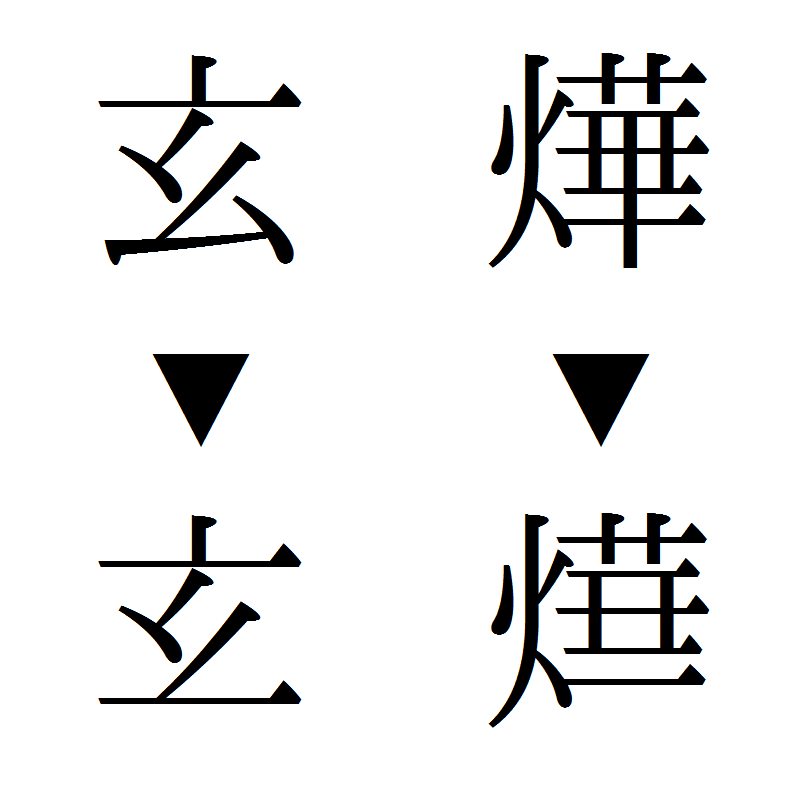 🇨🇳 China and 2 moreNaming taboo避諱
A cultural rule against speaking or writing the names of rulers and ancestors in East AsiaBelief · Protection Historical
🇨🇳 China and 2 moreNaming taboo避諱
A cultural rule against speaking or writing the names of rulers and ancestors in East AsiaBelief · Protection Historical
Related elsewhere
All being 🇷🇸 Serbia and 5 moreVampire
An undead being from European folklore that feeds on the life force of the living.Being · Cursing and harm Legendary
🇷🇸 Serbia and 5 moreVampire
An undead being from European folklore that feeds on the life force of the living.Being · Cursing and harm Legendary
 🇨🇭 Switzerland and 5 moreWerewolf
A figure in folklore who transforms into a wolf or hybrid beastFigure · Cursing and harm Legendary
🇨🇭 Switzerland and 5 moreWerewolf
A figure in folklore who transforms into a wolf or hybrid beastFigure · Cursing and harm Legendary
 🇺🇸 United States and 5 moreSatanism
A modern set of beliefs using the figure of Satan as a symbol or deity.Tradition · Power and authority · Cursing and harm Living
🇺🇸 United States and 5 moreSatanism
A modern set of beliefs using the figure of Satan as a symbol or deity.Tradition · Power and authority · Cursing and harm Living
 🇪🇬 Egypt and 1 moreLilithלִילִית
A feminine figure from Mesopotamian and Jewish mythology, often depicted as a night demon or spirit.Being · Cursing and harm Legendary
🇪🇬 Egypt and 1 moreLilithלִילִית
A feminine figure from Mesopotamian and Jewish mythology, often depicted as a night demon or spirit.Being · Cursing and harm Legendary