🇮🇳 Magic in India
350 entries from India, best known first, across 80 places of magic.
Tantra is an esoteric yogic tradition from the Indian subcontinent, initially within Shaivism and Shaktism, later in Buddhism and Vaishnavism. It views the body as divine and uses mantras and rituals to achieve spiritual goals like liberation or supernatural power.
- Tantra means loom or weave in Sanskrit
- It began in India around the 1st millennium CE
- Mantras are central to tantric practice
- Sexual practices are rare and restricted
- Vajrayana Buddhism uses tantric ideas
Overview
Tantra developed in India around the middle of the first millennium CE. It began in Shaivism and Shaktism before spreading to Buddhism and Vaishnavism. The word means loom or weave, suggesting a system that interlaces different teachings. Practitioners see the human body as a reflection of the cosmos. They aim for union with the divine through complex cosmologies. This path is also called the Path of Mantra. It shares influences with Jainism, Taoism, and Shinto. Western views often wrongly link it to sex, but scholars say sexual practices are rare and restricted.
Practices and beliefs
Practitioners use mantras, rituals, and yoga to transform the self. Goals include siddhi, supernatural accomplishment, and kundalini ascent. Texts describe systems for worship and meditation. Deities, both male and female, are central to ritual worship. Magic, sorcery, and divination appear in these texts. The subtle body is mapped to cosmic elements. Geometric patterns called mandalas guide meditation. Initiation by a teacher is required for many advanced techniques.
Rites and charms
Rites focus on sādhanā, which includes initiation and daily practice. Puja, or ritual worship, honors deities and icons. Meditation helps awaken inner energy. Physical purification techniques cleanse the body and mind. Specific gestures and sounds assign meaning to sacred spaces. The house is swept and salt is thrown at the door in some folk contexts, though Tantra focuses more on internal transformation. These rites are said to protect against negative forces and aid spiritual progress.
Who practises
Tantrikas are adepts who follow specific tantric lineages. They undergo diksha, or initiation, to receive knowledge. Teachers guide students through complex practices. Scholars note that living traditions are often secretive. Ethnography of these groups remains scarce due to this secrecy. Practitioners view their path as a way to realize non-duality. They mix tantric elements with other religious aspects freely.
Regions and communities
Tantra spread across South and East Asia. In Tibet, it influenced Vajrayana Buddhism. Japan has Shingon Buddhism, which uses tantric ideas. China developed Esoteric Buddhism based on Indian tantras. Nepal has Newar Buddhist traditions with tantric roots. Southern Esoteric Buddhism parallels tantric ideas without direct reference. These regional variations show how the tradition adapted to local cultures while keeping core concepts.
The calendar
The text does not specify particular festivals or seasonal events for tantric rites. Practices are often tied to personal sadhana rather than public calendars. Life events may involve tantric rituals for protection or blessing. However, no detailed calendar of ceremonies is provided in the source material.
Law and the state
No information is given about legal status or persecution. The text mentions colonial-era definitions but not modern laws. Western scholarship historically labeled tantra as occult or secret. This was a construction by 19th-century Indologists. There is no mention of state treatment or witch-hunts in the provided article.
Today
Modern views often misrepresent tantra as erotic. Scholars work to correct this by studying texts and living traditions. Anthropological study is difficult due to the secretive nature of practitioners. Some researchers try to demystify the myth of secrecy. The tradition continues to influence Hindu, Buddhist, and Jain practices globally.
The facts in this overview come from the Wikipedia article "Tantra", written by its contributors and used under the CC BY-SA 4.0 licence. EveryJaadu rewrote the text in its own words, with AI assistance, and compares every page with the article to make sure no passage is copied. It may be reused under the same CC BY-SA 4.0 licence with a link back.
Places of magic in India
 🇮🇳 India and 1 morePishachaपिशाच (piśāca)
A flesh-eating demon from Indian religions, feared for possession and madness.Being · Cursing and harm Legendary
 🇪🇹 Ethiopia and 5 morePrester JohnPresbyter Ioannes
A legendary Christian king and priest said to rule a lost kingdom in the East.Figure · Power and authority Legendary
 🇮🇳 India and 5 moreFountain of Youth
A legendary spring said to reverse aging and cure illness, appearing in myths across the world.Belief · Healing · Change and initiation Legendary
 🇮🇳 IndiaParashuramaपरशुराम (Paraśurāma)
The warrior sage of Hinduism who wields a divine axe to restore cosmic balance.Being · Power and authority · Cursing and harm Legendary
 🇮🇷 Iran and 5 moreParīپری
A winged being of Persian origin, linked to beauty and the spirit world across AsiaBeing · Love and attraction · Cursing and harm Legendary
 🇮🇳 India and 6 moreChurel
A female revenant of South Asian folklore, feared for luring men awayBeing · Cursing and harm Legendary
 🇯🇵 Japan and 2 moreTamamo-no-Mae玉藻前
A nine-tailed fox spirit from Japanese legend who possessed emperors and concubines across Asia.Figure · Cursing and harm · Power and authority Legendary
 🇮🇳 IndiaIndian rope trick
A legendary stage illusion involving a levitating rope and a disappearing boy assistantIllusion · Wonder and entertainment Legendary
 🇮🇳 India and 2 moreApsaraअप्सरस् (Sanskrit), អប្សរា (Khmer)
Celestial water spirits and dancers from Hindu and Buddhist traditions across South and Southeast AsiaBeing · Wonder and entertainment Legendary
🇮🇳 India and 1 morePichal periਪਿੱਛਲ ਪੈਰੀ
A backward-footed female spirit of northwestern South Asia and Central AsiaBeing · Cursing and harm Legendary
 🇮🇳 India and 1 moreRavanaरावण (Rāvaṇa)
A ten-headed demon king of Lanka and a devoted follower of Shiva in Hindu tradition.Figure · Cursing and harm · Power and authority Legendary
 🇮🇳 IndiaMahishasuraमहिषासुर
A bovine asura slain by the goddess Durga in Hindu myth and legendBeing · Cursing and harm Legendary
 🇮🇳 India and 5 moreKinnaraकिन्नर (Sanskrit)
A half-human, half-bird creature from Hindu and Buddhist myth, known for music and devotion.Being · Love and attraction · Wonder and entertainment Legendary
 🇷🇺 Russia and 1 moreVegetable Lamb of Tartary
A legendary plant-animal from Central Asia said to grow sheep as fruitFigure · Wonder and entertainment Legendary
 🇸🇪 Sweden and 5 moreLindwormlindorm
A serpentine dragon of Northern and Central European folklore, often depicted as limbless or winged.Being · Luck and prosperity · Cursing and harm Legendary
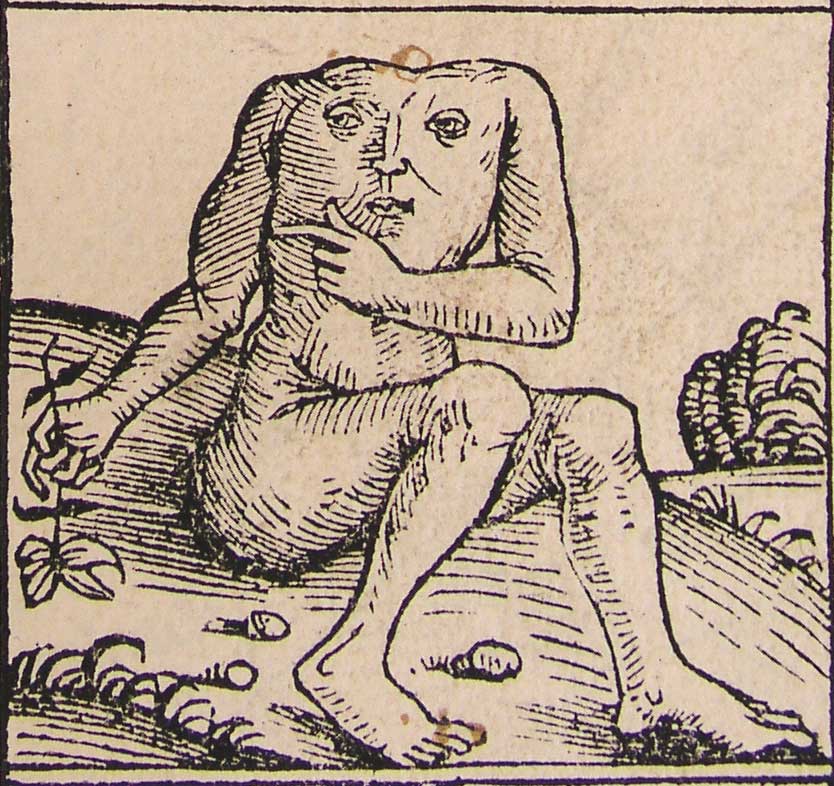 🇱🇾 Libya and 4 moreHeadless men
A legendary race of people described as lacking heads or having facial features on their chest.Being · Wonder and entertainment Legendary
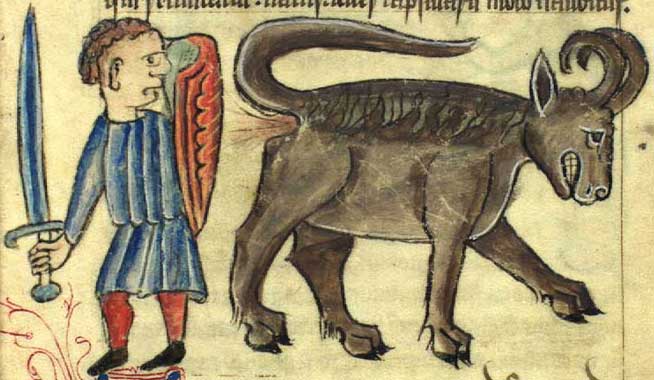 🇮🇳 IndiaBonnaconβόνασος
A legendary bull that defends itself with burning excrementBeing · Wonder and entertainment Legendary
 🇮🇳 India and 1 moreWorld Turtle
A mythic giant turtle said to support the earth or contain the world in various cultures.Being · Power and authority Legendary
 🇮🇱 Israel and 1 moreSolomon's shamirשָׁמִיר
A legendary worm or stone used to carve stone without iron toolsBeing · Power and authority Legendary
 🇮🇳 India and 1 moreCrocotta
A mythical dog-wolf of India and Ethiopia that mimics human voicesBeing · Cursing and harm Legendary
🇮🇳 IndiaBramrachokh
A demon in Kashmiri myth that mimics a light to lead travellers astrayBeing · Cursing and harm Legendary
 🇮🇳 India and 1 moreTarand
A legendary reindeer-like creature said to change its hair colour like a chameleon.Being · Wonder and entertainment Legendary
 🇮🇳 IndiaKeibu Keioiba
A tiger-headed man from Manipur folklore who was once a priestFigure · Cursing and harm Legendary
 🇮🇳 IndiaDawon
The lion mount of the goddess Durga in Hindu traditionBeing · Power and authority Legendary
🇲🇱 Mali and 4 moreKonrulQonrul
A giant bird of Turkic myth that regenerates and aids heroesBeing · Power and authority Legendary
 🇮🇳 IndiaHingchabiꯍꯤꯡꯆꯥꯕꯤ
A giantess figure from Meitei folklore who feeds on raw fleshBeing · Cursing and harm Legendary
🇨🇳 China and 4 moreHuoshu火鼠
A legendary fire-resistant rat from Chinese folklore said to yield self-cleaning cloth.Being · Wonder and entertainment Legendary
🇮🇳 IndiaBuru
A fierce swamp creature from Apatani founding narrativesBeing Legendary
🇮🇳 IndiaEcheneis
A legendary fish said to hold back ships and influence legal proceedingsBeing · Cursing and harm · Love and attraction Legendary
🇮🇳 IndiaPinglak
A lion from the Panchatantra whose friendship with a bull is destroyed by cunning advisorsFigure · Cursing and harm Legendary
🇮🇳 India and 5 moreWerecat
A feline shapeshifter found in global folklore and occult beliefBeing · Cursing and harm · Power and authority Legendary
 🇲🇲 Myanmar and 1 moreAreindamaအရိန္ဒမာ
A legendary Burmese spear linked to royal power and divine favorFigure · Power and authority Legendary
 🇮🇳 India and 1 moreVimanaविमान
Mythological flying palaces and chariots from Hindu and Jain textsFigure · Wonder and entertainment Legendary
🇮🇷 Iran and 1 moreBabr-e Bayanبَبْرِ بَیان
A legendary armor worn by the Iranian hero Rostam, said to be made from a dragon's skin.Figure · Protection · Power and authority Legendary
🇮🇳 IndiaByangomaব্যাঙ্গমা
Human-faced birds of Bengali tales that tell fortunes and carry the deservingBeing · Seeing and foretelling · Protection Legendary
 🇳🇵 Nepal and 4 moreYetiགཡའ་དྲེད་
A hairy humanoid of Himalayan story, known in the West as the Abominable SnowmanBeing · Protection Legendary
🇮🇳 IndiaAl-Abyad
A jinn called the White King, tied to Monday, the Moon and silverBeing · Cursing and harm Legendary
🇮🇳 IndiaLaphumatonꯂꯐꯨꯃꯇꯣꯟ
A Meitei folktale of a plantain-named hero, a golden lotus and a cruel king's tests.Figure · Wonder and entertainment Legendary
 🇮🇳 IndiaPanchajanyaपाञ्चजन्य
The sacred conch of Vishnu and Krishna, said to sound creation's first callSubstance · Speaking with spirits and the dead · Cleansing and purification Legendary
 🇮🇳 IndiaDaityaदैत्याः
A race of asuras in Hindu mythology descended from Kashyapa and DitiBeing Legendary
 🇮🇳 India and 2 moreAgartha
A legendary underground kingdom said to rule the world from within the EarthFigure · Power and authority Legendary
🇮🇳 IndiaPandi
A legendary race of giant-eared people from ancient geographic textsBeing · Wonder and entertainment Legendary
 🇮🇳 IndiaLai Khadang Pandabiꯂꯥꯏ ꯈꯗꯥꯡ ꯄꯥꯟꯗꯕꯤ
A Meitei folktale about a dishonest wife and the creature she invents to hide her greedFigure · Cursing and harm Legendary
🇮🇳 India and 1 moreOrphan Bird
A medieval bestiary bird whose good eggs float and bad eggs sink in the seaBeing Legendary
 🇮🇳 India and 2 moreAiravataऐरावत
A pristine white mythic elephant that carries the king of gods and controls the rains.Being · Power and authority · Protection Legendary
🇮🇳 IndiaHenjunaha and LairoulembiHensunaha Lailoulempi
A Meitei epic of lovers who die and return from the underworld through devotion.Figure · Love and attraction Legendary
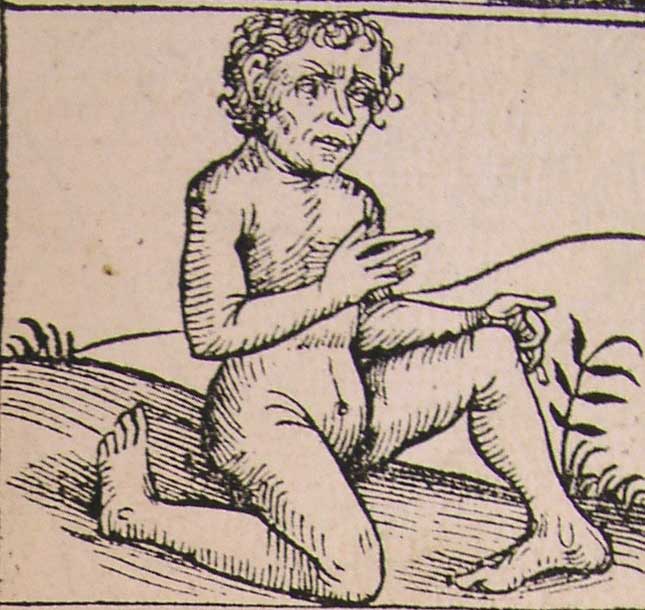 🇮🇳 IndiaAbarimon
A mythical tribe with reversed feet, said to inhabit the Himalayas and run at extreme speeds.Figure · Wonder and entertainment Legendary
🇮🇳 IndiaChedipeचेदिप
A witch-vampire spirit of the Godavari region that drains men and feeds on sorrowBeing · Cursing and harm Legendary
Photo credits on this page
The small pictures above come from Wikimedia Commons under free licences. Some are cropped to fit.
- Dawon: Unknown author, CC BY 4.0, source
- Airavata: Unknown, India, Rajasthan, Amber, South Asia, Public domain, source
- Keibu Keioiba: Haoreima, CC BY-SA 4.0, source
- Lai Khadang Pandabi: Jamesoinam, CC0, source
- Bonnacon: unknown (medieval) author, Public domain, source
- Agartha: Louis Jacolliot, Public domain, source
- Panchajanya: Rajasekhar1961, CC BY-SA 4.0, source
- Fountain of Youth: Lucas Cranach the Elder, Public domain, source
- Parashurama: Unknown author, Public domain, source
- Parī: Ismoon ( talk ) 22:26, 10 February 2013 (UTC), CC BY-SA 4.0, source
- Churel: Joe Mabel, CC BY-SA 3.0, source
- Crocotta: Unknown author, Public domain, source
- Tamamo-no-Mae: ウィキ太郎 Wiki Taro, Public domain, source
- Indian rope trick: Anonymous Unknown author, CC0, source
- Hingchabi: Bemni, N, CC0, source
- Headless men: Hartmann Schedel (1440-1514), Public domain, source
- Lindworm: Unknown author, Public domain, source
- Vegetable Lamb of Tartary: Unknown author, Public domain, source
- Tarand: Anonymous Unknown author, Public domain, source
- Areindama: EmeraldRange, CC0, source
- World Turtle: Unknown author, Public domain, source
- Pishacha: Unknown author, Public domain, source
- Apsara: Unknown author, CC0, source
- Yeti: Gardner Soule, Public domain, source
- Mahishasura: Prakashsubbarao at English Wikipedia, Public domain, source
- Kinnara: ผู้สร้างสรรค์ผลงาน/ส่งข้อมูลเก็บในคลังข้อมูลเสรีวิกิมีเดียคอมมอนส์ - เ, Public domain, source
- Prester John: Diogo Homem, Public domain, source
- Ravana: Gita Press Gorakhpur, CC0, source
- Solomon's shamir: https://en.wikipedia.org/wiki/Eberhard_Werner_Happel, Public domain, source
- Abarimon: Hartmann Schedel (1440-1514),, Public domain, source
- Vimana: thesandiegomuseumofartcollection, Public domain, source
- Daitya: Unknown author, CC0, source
The weekly digest
Every Monday: seven entries you may not know, what is on the calendar this week, and one rite drawn step by step.