
Indian rope trick
A legendary stage illusion involving a levitating rope and a disappearing boy assistant
The Indian rope trick is a magic performance reputed to have occurred in India during the 19th century. It features a magician making a rope rise vertically while an assistant climbs it and vanishes. Historians generally consider the classic version to be a fabricated story rather than a documented reality.
- Peter Lamont traces the legend to a 1890 Chicago Tribune article.
- No magician has ever performed the full trick outdoors in daylight.
- Ancient texts describe philosophical metaphors, not the stage illusion.
- Rewards totaling thousands of rupees and pounds went unclaimed.
- Eyewitness accounts rarely mention dismemberment or falling limbs.
What it is
The Indian rope trick is a famous illusion described as one of the greatest in the world. It typically involves a magician, a length of rope, and a young assistant. The core effect requires the rope to rise into the air without support. A boy climbs the rope and disappears from view. In the most detailed version, the magician follows, limbs fall to the ground, and the boy reappears unharmed. This specific sequence is widely regarded by scholars as a myth constructed from fragmented reports.
Where it comes from
Accounts of similar feats appear in texts from the 9th, 14th, and 17th centuries. These include works by Adi Shankara, Ibn Battuta, and Jahangir. However, these descriptions differ significantly from the modern classic trick. Magic historian Peter Lamont argues that no accurate references exist before 1890. He suggests the legend was created by John Wilkie of the Chicago Tribune in that year. Later stage performances were likely inspired by this newspaper account rather than ancient traditions.
Tools and materials
The primary tool is a long rope. Performers often use a basket to hold the rope initially. In the dramatic variant, a knife or sword is used by the magician. A cape or blanket covers the fallen limbs before the boy's return. Some attempts involved bamboo poles disguised as ropes. Others used ordinary ropes supplied by manufacturers for verification.
Indian rope trick, drawn and placed
- Living
- Revived
- Fading
- Historical
- Legendary
- Performed
What it is for
The trick is performed for entertainment and wonder. It serves as a spectacle of skill and deception. Audiences watch for the impossible feat of levitation and disappearance. It is not associated with religious rites or spiritual healing.
Who does it
The practitioner is a stage magician or conjurer. Training involves mastering sleight of hand and misdirection. Many magicians claimed expertise but failed to produce the outdoor version. Professionals like Robert Elliot and Jasper Maskelyne offered rewards for successful demonstrations. Their refusal to accept certain terms suggests skepticism about the trick's feasibility.
Peoples and places
The legend is primarily associated with India. Travelers and journalists reported sightings in the 19th and early 20th centuries. Chinese jugglers performed similar acts in Batavia and Hangzhou. Writers like Pu Songling recorded versions in China. Despite widespread interest, Indian magicians consistently denied knowledge of the classic trick when questioned by researchers.
At a glance: who, where and when
Who does it

What people believe
Skeptics view the trick as a hoax or misunderstanding. Richard Wiseman and Peter Lamont found no eyewitness accounts describing limb severing. Most reports only mentioned climbing and vanishing. The violent imagery may stem from literary embellishment.
How scholars and sceptics see it
Anthropologists and historians analyze the trick as a cultural construct. Studies show that early accounts describe philosophical metaphors, not physical tricks. Researchers note that later reports became increasingly sensationalized. The lack of consistent details across centuries supports the theory of fabrication. Experts conclude that the classic version never existed as described.
Cautions and what is closed
No physical harm occurs in the actual performance because the event is fictional. However, fraudsters have claimed to perform it for money. Several individuals were exposed for using hidden ropes or illusions. Legal actions have addressed false advertising by performers claiming impossible abilities.
Compare and confuse
The trick is often confused with simple balancing acts or climbing stunts. Similar illusions exist in Chinese magic literature. The term 'juggler' appears in ancient Sanskrit texts regarding magical principles. These are distinct from the 19th-century stage illusion. The confusion arises from translating metaphorical descriptions as literal events.
Questions people ask about Indian rope trick
What is the Indian rope trick?
It is a legendary stage illusion where a rope rises vertically and a boy climbs it to disappear. The classic version includes the magician following and limbs falling. It is considered a myth by most historians.
Where does the Indian rope trick come from?
The legend originated in India but likely began as a hoax in 1890. Newspaper accounts inspired later stage performances. Ancient texts contain similar stories but they are philosophical, not magical.
Has anyone ever really done the trick?
No one has successfully performed the full version outdoors. The complete disappearance in daylight remains unproven.
Why do people think it is real?
Western audiences found the idea of exotic magic believable. Early reporters exaggerated simple climbing acts. The vivid details of dismemberment made the story more compelling.
Good reading and sources
- Indian rope trick on WikipediaEncyclopedia
- More photos on Wikimedia CommonsPhotos and video
- Wikidata recordOpen data
The facts on this page come from the Wikipedia article "Indian rope trick", written by its contributors and used under the CC BY-SA 4.0 licence, and from its Wikidata record (CC0). EveryJaadu rewrote the text in its own words, with AI assistance, and compares every page with the article to make sure no passage is copied. It may be reused under the same CC BY-SA 4.0 licence with a link back.
It may contain mistakes. Names and customs differ from one community to the next, and some knowledge is closed to outsiders and left out here. This page describes belief and practice. It does not say that any of it works, it is not a how-to, and it is not medical advice. If something is wrong, tell us. Last refreshed 2026-10-05.
More from India
All the entries from India 🇮🇳 India and 5 moreSnake charming
A street performance using a gourd flute to make snakes swayIllusion · Wonder and entertainment · Luck and prosperity Fading
🇮🇳 India and 5 moreSnake charming
A street performance using a gourd flute to make snakes swayIllusion · Wonder and entertainment · Luck and prosperity Fading
 🇮🇳 India and 1 moreFire eating
A performance art of extinguishing flames in the mouthIllusion · Wonder and entertainment Performed
🇮🇳 India and 1 moreFire eating
A performance art of extinguishing flames in the mouthIllusion · Wonder and entertainment Performed
 🇮🇳 India and 1 moreGarba
A Gujarati circle dance performed around a central symbol during NavaratriIllusion · Power and authority · Luck and prosperity Living
🇮🇳 India and 1 moreGarba
A Gujarati circle dance performed around a central symbol during NavaratriIllusion · Power and authority · Luck and prosperity Living
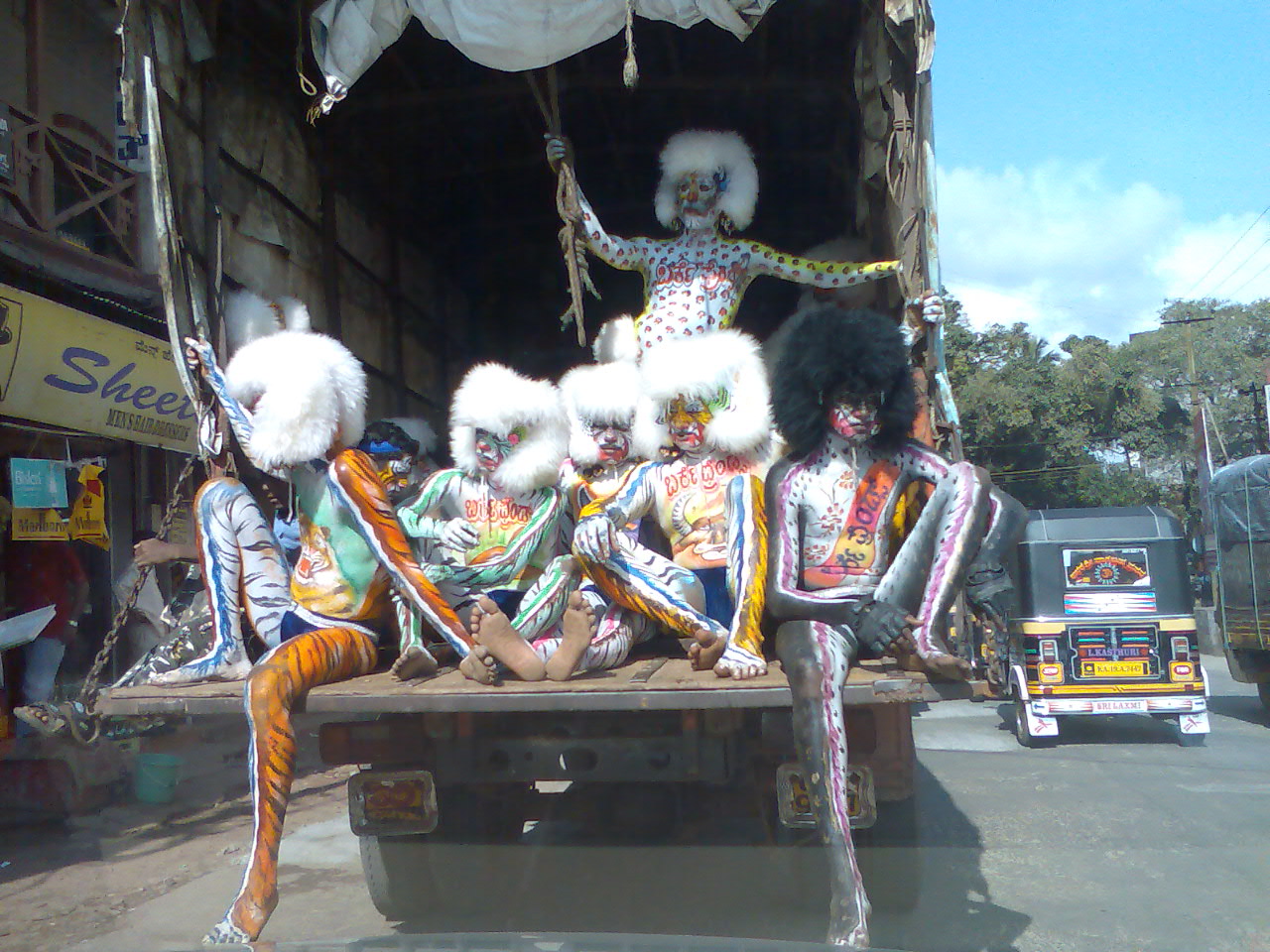 🇮🇳 IndiaPili Yesaಪಿಲಿವೇಷ
A coastal Karnataka folk dance where performers paint themselves as tigers to honour the Goddess DurgaIllusion · Protection · Power and authority Living
🇮🇳 IndiaPili Yesaಪಿಲಿವೇಷ
A coastal Karnataka folk dance where performers paint themselves as tigers to honour the Goddess DurgaIllusion · Protection · Power and authority Living
Related elsewhere
All illusion 🇬🇧 United Kingdom and 2 moreKing ArthurBrenin Arthur
A legendary British king and folk hero of medieval literature and Welsh mythologyFigure · Power and authority · Wonder and entertainment Legendary
🇬🇧 United Kingdom and 2 moreKing ArthurBrenin Arthur
A legendary British king and folk hero of medieval literature and Welsh mythologyFigure · Power and authority · Wonder and entertainment Legendary
 🇪🇬 Egypt and 1 moreSphinx
A mythical hybrid with a human head and lion body, serving as guardian or riddler in Egyptian and Greek traditions.Being · Protection · Wonder and entertainment Legendary
🇪🇬 Egypt and 1 moreSphinx
A mythical hybrid with a human head and lion body, serving as guardian or riddler in Egyptian and Greek traditions.Being · Protection · Wonder and entertainment Legendary
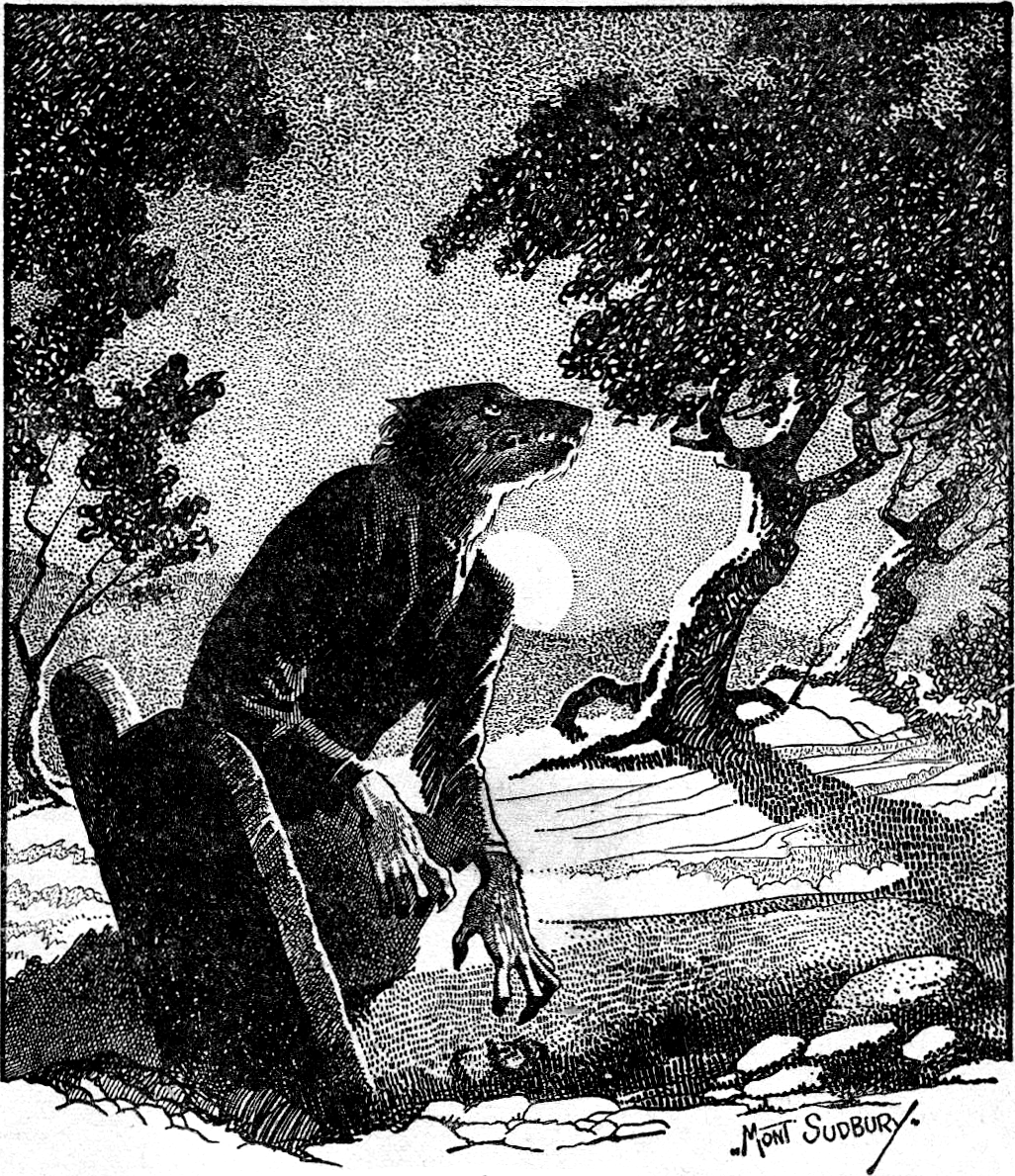 🇫🇷 France and 5 moreWerewolf
A mythical shapeshifter that turns into a wolf, central to European witch-hunts and Gothic horror.Being · Cursing and harm · Wonder and entertainment Legendary
🇫🇷 France and 5 moreWerewolf
A mythical shapeshifter that turns into a wolf, central to European witch-hunts and Gothic horror.Being · Cursing and harm · Wonder and entertainment Legendary
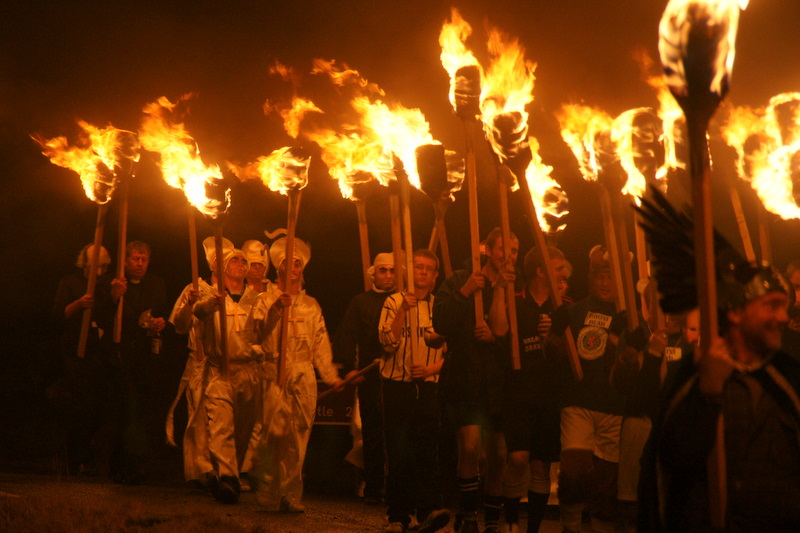 🇬🇧 United KingdomUp Helly Aa
A Shetland fire festival marking the end of Yule with a torchlit procession and burning of a Viking galleyRite · Wonder and entertainment Living
🇬🇧 United KingdomUp Helly Aa
A Shetland fire festival marking the end of Yule with a torchlit procession and burning of a Viking galleyRite · Wonder and entertainment Living