
Ravana
In its own language: रावण (Rāvaṇa)
From Sanskrit for 'roaring'
A ten-headed demon king of Lanka and a devoted follower of Shiva in Hindu tradition.
Ravana is the central antagonist of the Ramayana, depicted as a powerful rakshasa ruler. He is also revered as a learned scholar and a fervent devotee of the god Shiva.
- Ten-headed rakshasa king of Lanka
- Devotee of the god Shiva
- Antagonist in the Ramayana epic
- Author of astrological texts
- Worshipped in some Shiva temples
What it is
Ravana serves as the primary adversary in the ancient Hindu epic known as the Ramayana. He is portrayed as a rakshasa, or demon, who rules the island kingdom of Lanka. Despite his role as an enemy to the hero Rama, he is also recognized as a profound scholar and a dedicated worshipper of the deity Shiva. This dual nature makes him a complex figure in South Asian mythology, representing both immense power and deep spiritual devotion.
Where it comes from
He was born to the sage Vishrava and the princess Kaikasi. His grandfather on his mother's side was Sumali, a king of the rakshasas. The family sought to produce a powerful heir, leading to his birth. In some traditions, he is described as a reincarnation of gatekeepers who were cursed to be born as enemies of Vishnu. These origins explain his formidable status and his eventual conflict with divine forces.
Tools and materials
Ravana is often associated with the veena, a stringed instrument he played to please Shiva. He also possessed the Pushpaka Vimana, a flying chariot taken from his brother Kubera. In artistic depictions, he is shown with ten heads, though sometimes nine are visible because one was severed during a test of devotion. These items symbolize his musical talent, royal authority, and physical strength.
Ravana, drawn and placed
- Living
- Revived
- Fading
- Historical
- Legendary
- Performed
- Lineage
- Rakshasa lineage
- Timing
- During Dussehra festival
What it is for
His actions in the epic drive the narrative toward war. He abducted Sita, the wife of Rama, which led to a great battle. However, his purpose was not solely destructive. As a devotee, he sought blessings from Shiva through intense penance. He is credited with composing hymns and texts related to astrology and medicine, showing his intent to acquire knowledge and spiritual merit alongside worldly power.
Peoples and places
The story of Ravana is central to Indian culture but extends beyond it. He appears in Jain and Buddhist texts as well. In parts of India, certain communities like the Gonds claim descent from him and maintain temples dedicated to his memory. Festivals such as Dussehra involve burning effigies of him to celebrate victory over evil, while other groups view him as a saintly figure worthy of reverence.
At a glance: who, where and when
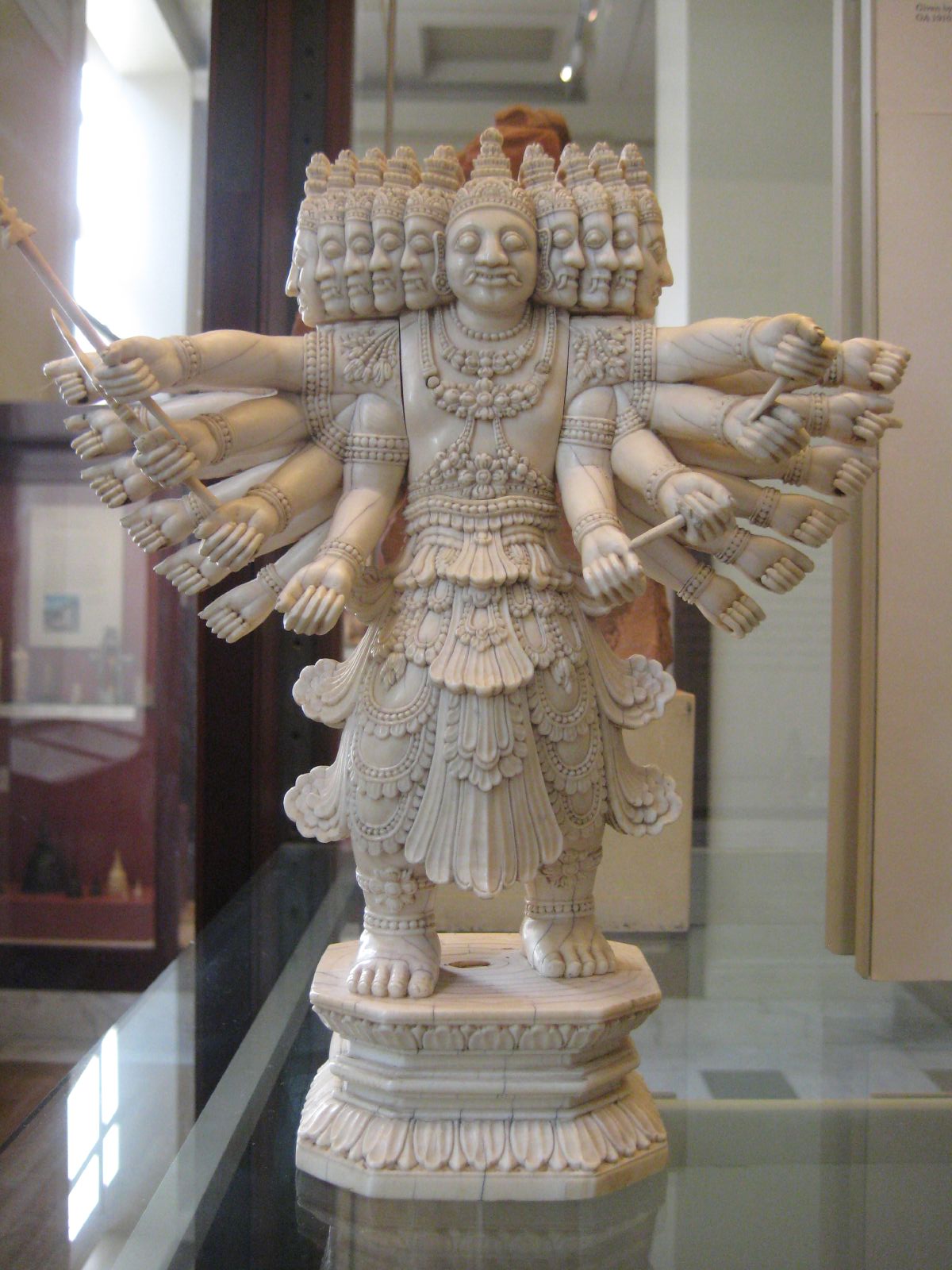


What people believe
He is believed to have received boons from Brahma that made him nearly invincible, except against humans. This belief underscores the theme that no being, regardless of power, is immune to fate. His devotion to Shiva suggests that even those considered demons can achieve spiritual heights. The curse placed upon him by various figures highlights the consequences of arrogance and violence in this worldview.
When it is done
The most significant event tied to him is the festival of Dussehra. During this time, large effigies of the ten-headed king are burned across India. This ritual commemorates Rama's victory over him. The festival marks a specific point in the calendar where the mythological defeat is reenacted and celebrated by communities throughout the region.
How scholars and sceptics see it
Scholars analyze Ravana as a multifaceted character who challenges simple good-versus-evil dichotomies. His portrayal as a scholar and musician adds depth to his villainy. Researchers note his presence in diverse religious traditions, indicating his widespread cultural impact. The varying interpretations across Hindu, Jain, and Buddhist texts show how different communities adapt the same figure to fit their own theological frameworks.
Compare and confuse
Ravana is often compared to other demon kings in mythology who possess great power but fall due to hubris. He differs from typical villains by his scholarly pursuits and devotion to Shiva. In some regions, he is viewed more sympathetically than in others, contrasting with the purely antagonistic role he plays in the standard Ramayana narrative.
Today
In modern times, Ravana remains a prominent figure in popular culture and religious practice. Temples dedicated to him exist in several Indian cities, particularly in Uttar Pradesh. Some communities continue to worship him as a saint. The burning of his effigy during festivals keeps the story alive, while academic interest in his complex character continues to grow.
Questions people ask about Ravana
Who is Ravana?
Ravana is the main antagonist of the Hindu epic Ramayana. He is depicted as a ten-headed demon king who ruled Lanka and abducted Rama's wife, Sita.
Where does the name come from?
The name Ravana comes from Sanskrit and means 'roaring'. It reflects his powerful voice and fierce nature as described in ancient texts.
Is he only a villain?
No. He is also revered as a great scholar and a devout follower of Shiva. Many believe his devotion earned him divine boons and weapons.
Why is he burned during festivals?
Effigies of Ravana are burned during Dussehra to celebrate Rama's victory over evil. This ritual symbolizes the triumph of righteousness over tyranny.
Good reading and sources
- Encyclopaedia BritannicaArticle
- Why Sri Lanka named its first-ever satellite after RavanaScroll.in, Article
- Celebrating RavanThe Hindu, Article
- Ravana on WikipediaEncyclopedia
- More photos on Wikimedia CommonsPhotos and video
- Wikidata recordOpen data
The facts on this page come from the Wikipedia article "Ravana", written by its contributors and used under the CC BY-SA 4.0 licence, and from its Wikidata record (CC0). EveryJaadu rewrote the text in its own words, with AI assistance, and compares every page with the article to make sure no passage is copied. It may be reused under the same CC BY-SA 4.0 licence with a link back.
It may contain mistakes. Names and customs differ from one community to the next, and some knowledge is closed to outsiders and left out here. This page describes belief and practice. It does not say that any of it works, it is not a how-to, and it is not medical advice. If something is wrong, tell us. Last refreshed 2026-10-06.
More from India
All the entries from India 🇮🇳 India and 2 moreGorakhnathगोरक्षनाथ
A Hindu yogi and saint who founded the Nath monastic order in India.Figure · Power and authority · Speaking with spirits and the dead Living
🇮🇳 India and 2 moreGorakhnathगोरक्षनाथ
A Hindu yogi and saint who founded the Nath monastic order in India.Figure · Power and authority · Speaking with spirits and the dead Living
 🇳🇵 Nepal and 1 moreMatsyendranathMacchindranāth, Mīnanātha
A yogi and rain deity revered across Hindu and Buddhist traditions in South Asia.Figure · Speaking with spirits and the dead · Power and authority Living
🇳🇵 Nepal and 1 moreMatsyendranathMacchindranāth, Mīnanātha
A yogi and rain deity revered across Hindu and Buddhist traditions in South Asia.Figure · Speaking with spirits and the dead · Power and authority Living
 🇮🇳 India and 1 moreYoginiयोगिनी
A female master of yoga and tantra, or a fierce goddess aspect in Indian temples.Tradition · Power and authority · Protection Historical
🇮🇳 India and 1 moreYoginiयोगिनी
A female master of yoga and tantra, or a fierce goddess aspect in Indian temples.Tradition · Power and authority · Protection Historical
 🇮🇳 IndiaNaropa
An Indian Buddhist master whose teachings shaped Tibetan Vajrayana practiceFigure · Change and initiation Historical
🇮🇳 IndiaNaropa
An Indian Buddhist master whose teachings shaped Tibetan Vajrayana practiceFigure · Change and initiation Historical
Related elsewhere
All figure 🇿🇦 South AfricaSympathetic magic
A magical principle based on imitation and contact to influence the worldTradition · Protection · Healing Historical
🇿🇦 South AfricaSympathetic magic
A magical principle based on imitation and contact to influence the worldTradition · Protection · Healing Historical
 🇮🇸 Iceland and 2 moreSeiðr
A Norse magic of fate and spirit, practiced by seers and sorcerers in the Viking Age.Tradition · Seeing and foretelling · Cursing and harm Revived
🇮🇸 Iceland and 2 moreSeiðr
A Norse magic of fate and spirit, practiced by seers and sorcerers in the Viking Age.Tradition · Seeing and foretelling · Cursing and harm Revived
 🇿🇦 South AfricaGrootslang
A legendary serpent from South Africa said to guard diamonds in a deep cave.Being · Cursing and harm · Power and authority Legendary
🇿🇦 South AfricaGrootslang
A legendary serpent from South Africa said to guard diamonds in a deep cave.Being · Cursing and harm · Power and authority Legendary