Bonnacon
In its own language: βόνασος
from Greek bonasos, meaning bison
A legendary bull that defends itself with burning excrement
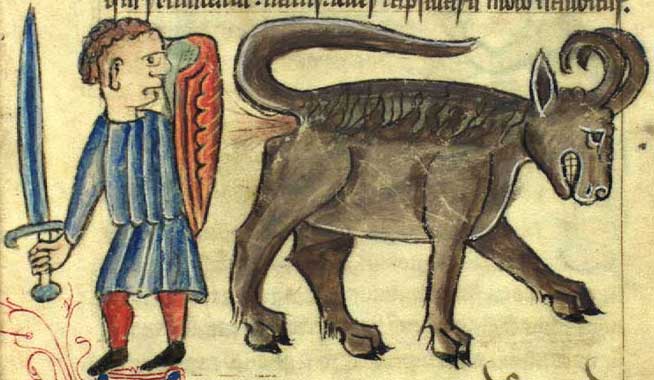
The bonnacon is a mythical beast from medieval bestiaries. It resembles a bull with curved horns and a horse's mane. Its primary defense is launching caustic waste at attackers.
- Horns curve inward and are useless for fighting
- Defends itself by spraying caustic feces
- First described by Pliny the Elder
- Sired the legendary Tarasque dragon
- Found in medieval bestiaries like Aberdeen
What it is
The bonnacon appears in ancient texts as a strange animal. Pliny the Elder first recorded it in Naturalis Historia. Later writers called it by different names like bonasus. The creature looks like a large bull. It has a thick mane similar to a horse. Its most distinct feature is its horns. These curve inward toward the head. This shape makes them useless for fighting. The beast relies on other methods to survive.
Where it comes from
Pliny placed the animal in Paeonia. He described it as a wild creature. Strabo used the name bonasus for zebu cattle. He saw these animals at festivals in India. Medieval authors moved the location to Asia. Jacobus de Voragine placed it in Galatia. The Golden Legend mentions the beast. It claims the bonnacon sired the Tarasque dragon.
How it is done
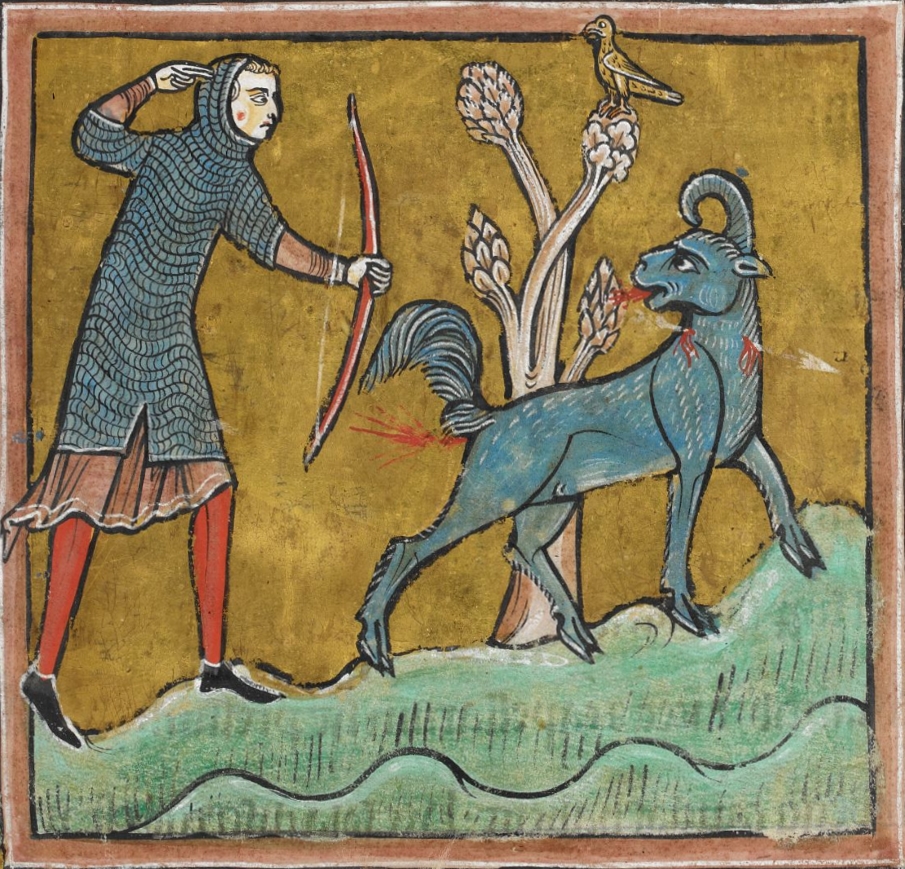
The bonnacon cannot fight with its horns. It escapes by running away quickly. As it flees, it expels large amounts of waste. This material is highly caustic and hot. It can travel a great distance. The spray scorches anyone who touches it. This burns pursuers and ensures safety. Medieval artists often showed hunters reacting to this. The humor came from the messy defense.
Tools and materials
Bestiaries usually colored the fur reddish-brown. Some manuscripts showed it as black. The creature had a horse-like mane. Its body was the size of a bull. The horns curled back tightly. The waste acted as a chemical weapon. It covered ground up to three acres. The heat was intense enough to ignite things.
Bonnacon, drawn and placed
- Living
- Revived
- Fading
- Historical
- Legendary
- Performed
- Lineage
- medieval bestiary tradition
What it is for
Scholars studied the bonnacon for entertainment. Bestiaries often taught moral lessons. The bonnacon gained no symbolic meaning. Writers found the creature amusing. The reaction of hunters provided comedy. The act of defecation was also funny. It served as a source of wonder. Readers enjoyed the absurd description.
Who does it
No one practices magic with the bonnacon. It is a figure of legend only. Ancient naturalists wrote about it. Medieval monks copied the descriptions. They added illustrations to manuscripts. Modern scholars analyze these texts. They study how myths evolved over time. The creature exists only in books.
Peoples and places
Greek writers first mentioned the beast. Pliny recorded the details in Latin. Roman readers learned about the animal. Medieval Europeans read the bestiaries. They included the creature in their collections. Jacobus de Voragine wrote about it in Italy. The story spread across Europe through manuscripts.
What people believe
The bonnacon belongs to myth and folklore. It is not a real living animal. Ancient people believed such creatures existed. They accepted the stories as fact. The creature represents impossible biology. Its defense mechanism is physically unlikely. It serves as a literary device. It illustrates the wonders of the natural world.
How scholars and sceptics see it
Anthropologists view the bonnacon as folklore. Historians trace its textual evolution. They note changes in location and name. Psychologists see it as a humorous invention. Sceptics recognize it as pure fiction. The creature reflects medieval curiosity. It shows how stories change over time. The lack of moral meaning is notable.
Compare and confuse
The bonnacon is confused with real bulls. It shares traits with the zebu. The Tarasque dragon is related to it. Both appear in medieval literature. Other bestiary creatures have moral lessons. The bonnacon lacks this feature. It stands out for its absurdity.
Today
The bonnacon lives in history books. It appears in digital bestiary archives. Scholars study its textual history. The creature remains a curiosity. It is not part of any living tradition. It serves as an example of medieval imagination.
Questions people ask about Bonnacon
What does the bonnacon look like?
It is a legendary bull with a horse-like mane. Its horns curve inward toward its head. This shape prevents it from using them for defense. Manuscripts often depict it with reddish-brown or black fur.
How does the bonnacon protect itself?
It runs away from danger. As it flees, it expels large amounts of waste. This material is caustic and hot. It burns pursuers and creates a barrier. The spray can cover a significant distance.
Where did the bonnacon originate?
Pliny the Elder first described it in Paeonia. Later sources moved it to Asia or Galatia. The name comes from Greek words for bison. Strabo may have based it on Indian zebu cattle.
Is the bonnacon a real animal?
No, it is a mythical creature. It appears in ancient texts and medieval books. No scientific evidence supports its existence. It serves as a subject of folklore and humor.
Good reading and sources
- Bonnacon on WikipediaEncyclopedia
- More photos on Wikimedia CommonsPhotos and video
- Wikidata recordOpen data
The facts on this page come from the Wikipedia article "Bonnacon", written by its contributors and used under the CC BY-SA 4.0 licence, and from its Wikidata record (CC0). EveryJaadu rewrote the text in its own words, with AI assistance, and compares every page with the article to make sure no passage is copied. It may be reused under the same CC BY-SA 4.0 licence with a link back.
It may contain mistakes. Names and customs differ from one community to the next, and some knowledge is closed to outsiders and left out here. This page describes belief and practice. It does not say that any of it works, it is not a how-to, and it is not medical advice. If something is wrong, tell us. Last refreshed 2026-10-06.
More from India
All the entries from India 🇮🇳 India and 5 morePretaप्रेत
A suffering spirit of insatiable hunger found in Asian religious traditionsBeing · Speaking with spirits and the dead Living
🇮🇳 India and 5 morePretaप्रेत
A suffering spirit of insatiable hunger found in Asian religious traditionsBeing · Speaking with spirits and the dead Living
 🇮🇳 IndiaTaraतारा (Sanskrit), তারা (Bengali)
A fierce Hindu goddess of protection and wisdom, central to the Mahavidya tradition.Being · Protection · Power and authority Living
🇮🇳 IndiaTaraतारा (Sanskrit), তারা (Bengali)
A fierce Hindu goddess of protection and wisdom, central to the Mahavidya tradition.Being · Protection · Power and authority Living
 🇮🇳 India and 1 moreYoginiयोगिनी
A female master of yoga and tantra, or a fierce goddess aspect in Indian temples.Tradition · Power and authority · Protection Historical
🇮🇳 India and 1 moreYoginiयोगिनी
A female master of yoga and tantra, or a fierce goddess aspect in Indian temples.Tradition · Power and authority · Protection Historical
Related elsewhere
All being 🇬🇧 United Kingdom and 2 moreKing ArthurBrenin Arthur
A legendary British king and folk hero of medieval literature and Welsh mythologyFigure · Power and authority · Wonder and entertainment Legendary
🇬🇧 United Kingdom and 2 moreKing ArthurBrenin Arthur
A legendary British king and folk hero of medieval literature and Welsh mythologyFigure · Power and authority · Wonder and entertainment Legendary
 🇪🇬 Egypt and 1 moreSphinx
A mythical hybrid with a human head and lion body, serving as guardian or riddler in Egyptian and Greek traditions.Being · Protection · Wonder and entertainment Legendary
🇪🇬 Egypt and 1 moreSphinx
A mythical hybrid with a human head and lion body, serving as guardian or riddler in Egyptian and Greek traditions.Being · Protection · Wonder and entertainment Legendary
 🇫🇷 France and 5 moreWerewolf
A mythical shapeshifter that turns into a wolf, central to European witch-hunts and Gothic horror.Being · Cursing and harm · Wonder and entertainment Legendary
🇫🇷 France and 5 moreWerewolf
A mythical shapeshifter that turns into a wolf, central to European witch-hunts and Gothic horror.Being · Cursing and harm · Wonder and entertainment Legendary
 🇪🇸 Spain and 5 moreSt John's Eve
A Christian vigil marked by bonfires and plant gathering on the summer solstice eveRite · Protection · Speaking with spirits and the dead Living
🇪🇸 Spain and 5 moreSt John's Eve
A Christian vigil marked by bonfires and plant gathering on the summer solstice eveRite · Protection · Speaking with spirits and the dead Living