Shamans
Specialists who travel to or call the spirit world on behalf of a community.
A shaman is a specialist who is believed to travel to, call or negotiate with the spirit world on behalf of a community. The word comes from the Evenki language of Siberia, and scholars now apply it to Mongolian, Korean, Sami, Amazonian and many other traditions. Many communities use their own words and dislike the general label. This page covers how shamans are chosen, who may be one, and how the term has been used and misused.
Calling and training
A shaman is usually described as chosen, often through illness, dreams or visions, and then trained by a senior. In Korea, the mudang may undergo a spirit illness called sinbyeong before initiation. In the Amazon, long apprenticeship and dietary rules are reported. In Mongolia and Siberia, the drum, costume and songs are inherited and taught. Many communities say a person who refuses the call risks suffering. The drum, rattle, mirror and costume are tools of the trade, and the songs they sing are often learned from earlier shamans or received in dreams.
Gender and standing
Gender patterns differ. Korean shamans are mostly women, while Siberian traditions include both men and women, and some, as with the Sami noaidi, were mostly men. Status also varies: a shaman may be honoured, feared or looked down on. In Korea, mudang have long been low in social rank while hired for the most important family rites. Shamans often have an ordinary life as hunters, farmers or herders, and are called on only when a community needs them.
Suppression and revival
Shamanism has been persecuted. Soviet authorities imprisoned and killed Siberian shamans, Chinese and Japanese governments restricted shamanic rites in modern times, and Christian missions banned them. Since the 1990s there has been revival in Mongolia, Tuva and Buryatia. In Korea, shaman rites are now listed as intangible cultural heritage, even as Protestant groups criticise them. Soviet campaigns treated shamans as enemies of progress, and some were killed as class enemies in the 1930s.
Appropriation and scholarship
Mircea Eliade's 1951 book on shamanism made the word global, and critics say it flattened very different practices. Neo-shamanism and paid workshops in the West sell techniques without community authority, which many Indigenous leaders oppose. Some ceremonies and knowledge are closed to outsiders, and a visitor should ask before attending or recording anything. Scholars also note that shamanism is a Western category, and critics suggest it has been stretched over practices that have little in common.
Shamans on EveryJaadu
The entries written up so far, best known first.
 🇪🇬 EgyptCurse
A spoken wish for misfortune to befall a person or placeBelief · Cursing and harm · Luck and prosperity Historical
🇭🇹 HaitiBois Caïman
The sacred site where enslaved Africans planned the Haitian Revolution through a Vodou ceremony.Rite · Cursing and harm · Power and authority Historical
🇪🇬 EgyptCurse
A spoken wish for misfortune to befall a person or placeBelief · Cursing and harm · Luck and prosperity Historical
🇭🇹 HaitiBois Caïman
The sacred site where enslaved Africans planned the Haitian Revolution through a Vodou ceremony.Rite · Cursing and harm · Power and authority Historical
 🇹🇭 Thailand and 1 moreGhosts in Thai cultureผี (phi)
A wide range of spirits and ghosts found in Thai folklore and popular belief.Belief · Protection · Cursing and harm Living
🇹🇭 Thailand and 1 moreGhosts in Thai cultureผี (phi)
A wide range of spirits and ghosts found in Thai folklore and popular belief.Belief · Protection · Cursing and harm Living
 🇿🇦 South Africa and 4 moreWitch doctor
A traditional healer who identifies supernatural causes of illness and performs rituals to restore balance.Tradition · Healing · Protection Living
🇿🇦 South Africa and 4 moreWitch doctor
A traditional healer who identifies supernatural causes of illness and performs rituals to restore balance.Tradition · Healing · Protection Living
 🇳🇬 Nigeria and 4 moreJuju
A West African spiritual belief system involving charms and ritualsTradition · Healing · Luck and prosperity Living
🇳🇬 Nigeria and 4 moreJuju
A West African spiritual belief system involving charms and ritualsTradition · Healing · Luck and prosperity Living
 🇬🇷 Greece and 2 moreMagic in the Greco-Roman world
Private supernatural practices in ancient Greece and Rome, distinct from public state religion.Tradition · Protection · Cursing and harm Historical
🇬🇷 Greece and 2 moreMagic in the Greco-Roman world
Private supernatural practices in ancient Greece and Rome, distinct from public state religion.Tradition · Protection · Cursing and harm Historical
 🇺🇸 United StatesGhost DanceNanissaanah
A circular movement seeking spiritual renewal and reunion with ancestorsRite · Speaking with spirits and the dead · Change and initiation Living
🇺🇸 United StatesGhost DanceNanissaanah
A circular movement seeking spiritual renewal and reunion with ancestorsRite · Speaking with spirits and the dead · Change and initiation Living
 🇮🇪 Ireland and 5 moreCairn
A human-made stack of stones used as a marker, memorial, or religious symbol across many cultures.Tradition · Protection · Speaking with spirits and the dead Living
🇮🇪 Ireland and 5 moreCairn
A human-made stack of stones used as a marker, memorial, or religious symbol across many cultures.Tradition · Protection · Speaking with spirits and the dead Living
 🇪🇪 Estonia and 5 moreSoul dualism
A belief that a person contains two or more distinct kinds of soulsBelief · Healing · Speaking with spirits and the dead Historical
🇪🇪 Estonia and 5 moreSoul dualism
A belief that a person contains two or more distinct kinds of soulsBelief · Healing · Speaking with spirits and the dead Historical
 🇲🇳 Mongolia and 2 moreWind Horseརླུང་རྟ་
An East and Central Asian symbol of the soul, luck, and vital energyBeing · Luck and prosperity · Protection Living
🇲🇳 Mongolia and 2 moreWind Horseརླུང་རྟ་
An East and Central Asian symbol of the soul, luck, and vital energyBeing · Luck and prosperity · Protection Living
 🇵🇭 PhilippinesPhilippine mythology
The indigenous myths and spirits of the Philippines, shaped by centuries of trade and colonial contact.Tradition · Speaking with spirits and the dead · Power and authority Living
🇵🇭 PhilippinesPhilippine mythology
The indigenous myths and spirits of the Philippines, shaped by centuries of trade and colonial contact.Tradition · Speaking with spirits and the dead · Power and authority Living
 🇺🇸 United States and 4 moreRainmaking
Efforts to induce rain through technology, ritual, or prayer.Tradition · Protection · Healing Living
🇺🇸 United States and 4 moreRainmaking
Efforts to induce rain through technology, ritual, or prayer.Tradition · Protection · Healing Living
 🇬🇪 Georgia and 2 moreGeorgian mythologyქართული მითოლოგია
The pre-Christian beliefs of the Kartvelian peoples in the South CaucasusTradition · Protection · Seeing and foretelling Historical
🇬🇪 Georgia and 2 moreGeorgian mythologyქართული მითოლოგია
The pre-Christian beliefs of the Kartvelian peoples in the South CaucasusTradition · Protection · Seeing and foretelling Historical
 🇬🇷 Greece and 5 moreNecromancy
A form of divination that seeks to speak with the dead for hidden knowledge.Tradition · Seeing and foretelling · Power and authority Historical
🇵🇭 PhilippinesWitchcraft in the Philippinespangkukulam
Indigenous beliefs about sorcery and malevolent magic in the PhilippinesTradition · Cursing and harm · Healing Living
🇨🇩 Democratic Republic of the CongoKindoki
A belief in spirit possession that leads to abuse and abandonment in the Congo regionBelief · Cursing and harm Living
🇬🇷 Greece and 5 moreNecromancy
A form of divination that seeks to speak with the dead for hidden knowledge.Tradition · Seeing and foretelling · Power and authority Historical
🇵🇭 PhilippinesWitchcraft in the Philippinespangkukulam
Indigenous beliefs about sorcery and malevolent magic in the PhilippinesTradition · Cursing and harm · Healing Living
🇨🇩 Democratic Republic of the CongoKindoki
A belief in spirit possession that leads to abuse and abandonment in the Congo regionBelief · Cursing and harm Living
 🇧🇯 Benin and 3 moreZangbeto
A masked night-guardian tradition among the Ogu people of West AfricaTradition · Protection · Cursing and harm Living
🇧🇯 Benin and 3 moreZangbeto
A masked night-guardian tradition among the Ogu people of West AfricaTradition · Protection · Cursing and harm Living
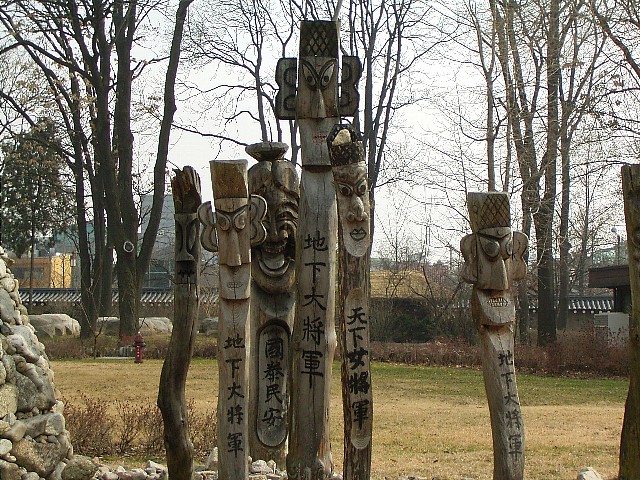 🇰🇷 South Korea and 1 moreJangseung장승
Wooden or stone poles that guard Korean villages and temples from evil spiritsTradition · Protection · Speaking with spirits and the dead Living
🇰🇷 South Korea and 1 moreJangseung장승
Wooden or stone poles that guard Korean villages and temples from evil spiritsTradition · Protection · Speaking with spirits and the dead Living
 🇫🇮 Finland and 1 moreFinnish mythology
The pre-Christian folklore and cosmology of the Finns and KareliansTradition · Speaking with spirits and the dead · Protection Revived
🇫🇮 Finland and 1 moreFinnish mythology
The pre-Christian folklore and cosmology of the Finns and KareliansTradition · Speaking with spirits and the dead · Protection Revived
 🇲🇽 MexicoNagualnāhualli
A Mesoamerican belief in humans who shapeshift into animal counterparts.Belief · Power and authority · Cursing and harm Living
🇸🇪 Sweden and 3 moreRunic magic
The use of ancient Germanic letters for spells, divination, and protectionTradition · Protection · Seeing and foretelling Living
🇲🇽 MexicoNagualnāhualli
A Mesoamerican belief in humans who shapeshift into animal counterparts.Belief · Power and authority · Cursing and harm Living
🇸🇪 Sweden and 3 moreRunic magic
The use of ancient Germanic letters for spells, divination, and protectionTradition · Protection · Seeing and foretelling Living
 🇲🇲 MyanmarBurmese folk religionNat Worship
Animistic worship of nature spirits and ancestors in Myanmar, often practiced alongside Buddhism.Tradition · Protection · Luck and prosperity Living
🇲🇲 MyanmarBurmese folk religionNat Worship
Animistic worship of nature spirits and ancestors in Myanmar, often practiced alongside Buddhism.Tradition · Protection · Luck and prosperity Living
 🇪🇸 SpainSorginak
Mythical beings and historical figures associated with Basque witchcraft and the goddess Mari.Figure · Speaking with spirits and the dead · Cursing and harm Historical
🇪🇸 SpainSorginak
Mythical beings and historical figures associated with Basque witchcraft and the goddess Mari.Figure · Speaking with spirits and the dead · Cursing and harm Historical
 🇬🇷 Greece and 5 moreCrossroads (folklore)
A junction between worlds where spirits are met and deals are madeBelief · Speaking with spirits and the dead · Cursing and harm Living
🇬🇷 Greece and 5 moreCrossroads (folklore)
A junction between worlds where spirits are met and deals are madeBelief · Speaking with spirits and the dead · Cursing and harm Living
 🇱🇦 Laos and 3 moreTai folk religionສາສະໜາຜີ
Spirits, ancestor rites, and soul-calling ceremonies of the Tai peoplesTradition · Protection · Healing Living
🇱🇦 Laos and 3 moreTai folk religionສາສະໜາຜີ
Spirits, ancestor rites, and soul-calling ceremonies of the Tai peoplesTradition · Protection · Healing Living
 🇮🇳 India and 5 moreAsian witchcraft
A broad overview of magical practices and persecution across Asian culturesTradition · Cursing and harm · Protection Living
🇫🇮 FinlandVäki
A supernatural power in Finnish mythology found in nature and objectsBelief · Cursing and harm · Healing Historical
🇰🇷 South KoreaDongti동티
Divine punishment in Korean mythology, often manifesting as sudden illness or death.Belief · Cursing and harm Historical
🇮🇳 India and 5 moreAsian witchcraft
A broad overview of magical practices and persecution across Asian culturesTradition · Cursing and harm · Protection Living
🇫🇮 FinlandVäki
A supernatural power in Finnish mythology found in nature and objectsBelief · Cursing and harm · Healing Historical
🇰🇷 South KoreaDongti동티
Divine punishment in Korean mythology, often manifesting as sudden illness or death.Belief · Cursing and harm Historical
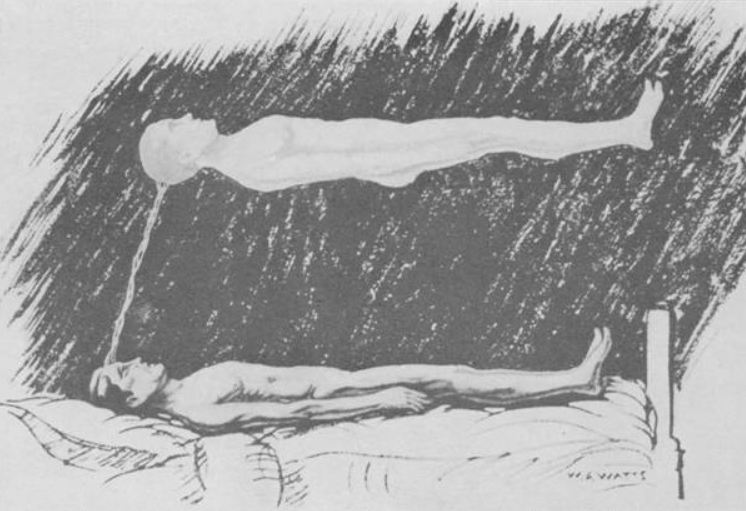 🇮🇳 India and 3 moreAstral projection
An intentional out-of-body experience where consciousness travels through the astral planeTradition · Speaking with spirits and the dead · Change and initiation Living
🇨🇱 Chile and 3 moreGualichu
An evil spirit feared in Mapuche and Tehuelche traditions, and a word for bad luckBeing · Cursing and harm Historical
🇮🇳 India and 3 moreAstral projection
An intentional out-of-body experience where consciousness travels through the astral planeTradition · Speaking with spirits and the dead · Change and initiation Living
🇨🇱 Chile and 3 moreGualichu
An evil spirit feared in Mapuche and Tehuelche traditions, and a word for bad luckBeing · Cursing and harm Historical
 🇳🇿 New Zealand and 4 moreFeather cloak
A garment of feathers worn by royalty and gods across cultures to signal rank or enable flightCharm · Power and authority · Wonder and entertainment Historical
🇳🇿 New Zealand and 4 moreFeather cloak
A garment of feathers worn by royalty and gods across cultures to signal rank or enable flightCharm · Power and authority · Wonder and entertainment Historical
Photo credits on this page
The small pictures above come from Wikimedia Commons under free licences. Some are cropped to fit.
- Astral projection: Hereward Carrington, Sylvan Muldoon., Public domain, source
- Tagalog religion: The original uploader was Rodsan18 at English Wikipedia . ( Original t, CC BY 2.5, source
- Tai folk religion: ( เทวประภาส มากคล้าย ), Tevaprapas, Public domain, source
- Curse: Katsushika Hokusai, Public domain, source
- Rainmaking: George Catlin, Public domain, source
- Georgian mythology: Mostafameraji, CC BY-SA 4.0, source
- Necromancy: Unknown author, CC BY 4.0, source
- Zangbeto: Grete Howard, CC BY 3.0, source
- Jangseung: Yoshiaki Sano, CC BY-SA 2.0, source
- Finnish mythology: Väinö Blomstedt, Public domain, source
- Nagual: Unknown author, Public domain, source
- Burmese folk religion: Wagaung ( talk ), CC BY-SA 3.0, source
- Sorginak: Errazking, CC BY-SA 4.0, source
- Feather cloak: Lusanaherandraton, CC BY-SA 4.0, source
- Asian witchcraft: Utagawa Kuniyoshi, Public domain, source
- Crossroads (folklore): MiddleOfAfrica, CC BY-SA 4.0, source
- Witch doctor: Lucjan Wędrychowski, Public domain, source
- Juju: ILN Staff, after special artist correspondent Mr Harries F.R.G.S., Public domain, source
- Magic in the Greco-Roman world: ArchaiOptix, CC BY-SA 4.0, source
- Ghost Dance: Unknown author, Public domain, source
- Cairn: Andrew Bossi, CC BY-SA 2.5, source
- Soul dualism: 尹真人, Public domain, source
- Wind Horse: Clemensmarabu, CC BY-SA 3.0, source
- Ghosts in Thai culture: Heinrich Damm ( User:Hdamm , Hdamm at de.wikipedia.org ), CC BY 2.0, source