Bois Caïman
French for 'Gator Wood'
The sacred site where enslaved Africans planned the Haitian Revolution through a Vodou ceremony.
Bois Caïman is a wooded location near Le Cap in Haiti. It is known as the place where a secret Vodou ritual was held on August 14, 1791, uniting enslaved people to launch the Haitian Revolution against French colonial rule.
- Ceremony held August 14, 1791 near Le Cap.
- Led by Houngan Dutty Boukman and mambo Cécile Fatiman.
- Marked the start of the Haitian Revolution.
- Accounts vary; no first-hand written records exist.
- Used as a symbol of resistance against oppression.
What it is
Bois Caïman refers to both a physical forest and the pivotal ceremony that occurred there. The event took place in the woods near Le Cap in Saint-Domingue. Enslaved Africans gathered to plan an uprising. This meeting marks the start of the Haitian Revolution. Participants used Vodou rituals to organize. They sought freedom from white enslavers. The site holds deep historical weight.
Where it comes from
The ceremony happened on the night of August 14, 1791. Dutty Boukman, a Houngan, led the gathering. Cécile Fatiman, a mambo, also presided. About two hundred enslaved people attended. They came from nearby plantations. The goal was to coordinate a revolt. White owners viewed these gatherings as harmless social events. This allowed the planning to proceed secretly.
How it is done
The group met in the dark forest. Dutty Boukman spoke to the crowd. He invoked a God who supported their cause. A woman entered a trance state. She danced among the attendees. Accounts vary on specific actions. Some say she cut a pig's throat. Blood was shared among participants. Others claim this detail is embellished. The core act was swearing unity.
Tools and materials
A black Creole pig is mentioned in later accounts. A knife was used in some versions. Offerings were brought by attendees. Blood was applied to foreheads. Bristles were kept for protection. These items symbolized strength. They represented a pact with spirits. The tools served as markers of commitment.
Bois Caïman, drawn and placed
- Living
- Revived
- Fading
- Historical
- Legendary
- Performed
- Lineage
- Haitian Vodou
- Timing
- night of August 14, 1791
What it is for
The gathering aimed to overthrow slavery. Participants wanted to kill their oppressors. They sought liberty and justice. The ritual united different groups. It created a shared black identity. Leaders promised divine support. The vow was to fight until free. The purpose was total liberation.
Who does it
Dutty Boukman acted as the main leader. He was an enslaved African Houngan. Cécile Fatiman served as a mambo. Both were respected spiritual figures. They guided the political strategy. Their roles blended religion and war. They inspired trust among the crowd. Their authority drove the movement.
Peoples and places
The event involved enslaved Africans in Saint-Domingue. Many came from Dahomey traditions. Taíno influences may have been present. The Northern Plain was affected. The revolution spread across Haiti. Different ethnic groups joined together. They shared a common enemy. Unity formed through shared struggle.
At a glance: who, where and when
Who does it
Peoples
Belief worlds
Occasions
What people believe
Participants believed in powerful spirits. A mysterious woman appeared during rites. She named Boukman the Supreme Chief. They trusted in divine vengeance. The God of whites was rejected. A new God supported their fight. Spirits offered invincibility. Faith fueled their courage.
When it is done
The date was August 14, 1791. The meeting occurred at night. Rain and storm clouds were present. The timing coincided with rising tensions. It marked a turning point. The season influenced the weather. Night provided secrecy. The date is now commemorated.
How scholars and sceptics see it
Historians debate the exact details. No first-hand written records exist. Antoine Dalmas wrote the first account in 1814. Herard Dumesle collected oral stories. Léon-François Hoffmann questions the facts. He sees it as a motivational myth. The narrative shaped national identity regardless of truth.
Cautions and what is closed
The French captured and beheaded Boukman. His head was displayed publicly. This showed French power. The rebellion caused widespread violence. Plantations burned in the Northern Plain. Social order collapsed temporarily. The event led to severe reprisals. Violence became a tool of war.
Compare and confuse
Similar ceremonies exist in other rebellions. Rituals often unite oppressed groups. Blood pacts appear in many cultures. Other sites mark revolutionary starts. Bois Caïman is unique in scale. Its legend inspires modern movements. Comparisons show patterns of resistance.
Law and persecution
Slavery was illegal under French law but practiced. The rebellion challenged colonial authority. Laws protected slave owners. Rebels broke these laws. The revolution changed legal status. Slavery was abolished later. The event remains a legal and cultural landmark.
Questions people ask about Bois Caïman
What is Bois Caïman?
It is a wooded site near Le Cap in Haiti. It hosted a key Vodou ceremony in 1791. This event launched the Haitian Revolution.
Who led the Bois Caïman ceremony?
Dutty Boukman, a Houngan, and Cécile Fatiman, a mambo, led the gathering. They were prominent enslaved leaders.
When did the ceremony take place?
It occurred on the night of August 14, 1791. Enslaved people met to plan their revolt against French rule.
Is the ceremony historically accurate?
Details are debated. No first-hand accounts exist. Later writers added dramatic elements. The event's impact is undeniable.
Why is Bois Caïman important today?
It symbolizes resistance and unity. Nationalists use it as an icon. It represents the fight for freedom.
Good reading and sources
The facts on this page come from the Wikipedia article "Bois Caïman", written by its contributors and used under the CC BY-SA 4.0 licence, and from its Wikidata record (CC0). EveryJaadu rewrote the text in its own words, with AI assistance, and compares every page with the article to make sure no passage is copied. It may be reused under the same CC BY-SA 4.0 licence with a link back.
It may contain mistakes. Names and customs differ from one community to the next, and some knowledge is closed to outsiders and left out here. This page describes belief and practice. It does not say that any of it works, it is not a how-to, and it is not medical advice. If something is wrong, tell us. Last refreshed 2026-10-06.
More from Haiti
All the entries from Haiti 🇭🇹 Haiti and 1 moreEzili DantorÈzili Dantò
A fierce mother spirit in Haitian Vodou who protects the marginalized and demands loyalty.Being · Protection · Love and attraction Living
🇭🇹 Haiti and 1 moreEzili DantorÈzili Dantò
A fierce mother spirit in Haitian Vodou who protects the marginalized and demands loyalty.Being · Protection · Love and attraction Living
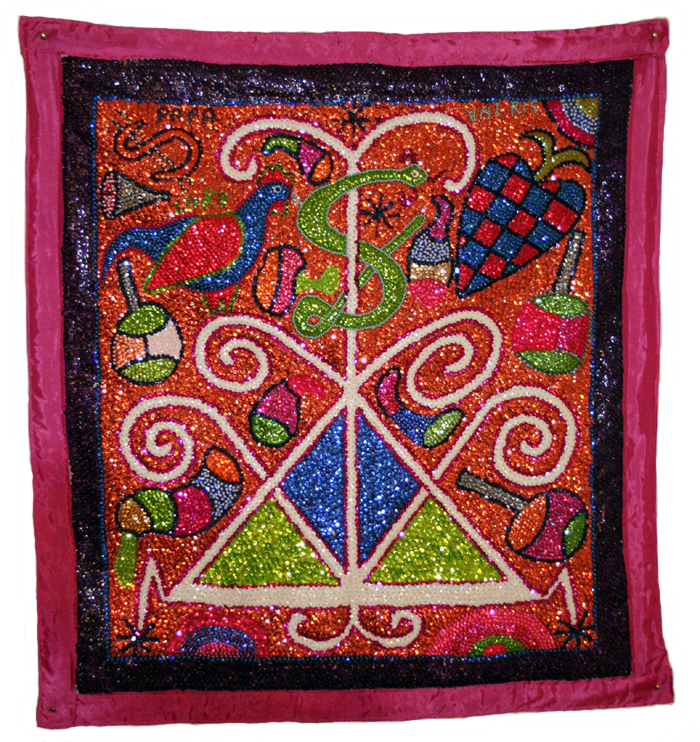 🇭🇹 Haiti and 2 moreHaitian VodouVodou
An Afro-Haitian religion blending West African traditions with Catholicism and FreemasonryTradition · Protection · Healing Living
🇧🇯 Benin and 2 morePapa Legba
A loa who stands at the crossroads and opens the gate between people and spiritsBeing · Speaking with spirits and the dead · Power and authority Living
🇭🇹 Haiti and 2 moreHaitian VodouVodou
An Afro-Haitian religion blending West African traditions with Catholicism and FreemasonryTradition · Protection · Healing Living
🇧🇯 Benin and 2 morePapa Legba
A loa who stands at the crossroads and opens the gate between people and spiritsBeing · Speaking with spirits and the dead · Power and authority Living
Related elsewhere
All rite 🇮🇸 Iceland and 2 moreSeiðr
A Norse magic of fate and spirit, practiced by seers and sorcerers in the Viking Age.Tradition · Seeing and foretelling · Cursing and harm Revived
🇮🇸 Iceland and 2 moreSeiðr
A Norse magic of fate and spirit, practiced by seers and sorcerers in the Viking Age.Tradition · Seeing and foretelling · Cursing and harm Revived
 🇿🇦 South AfricaSympathetic magic
A magical principle based on imitation and contact to influence the worldTradition · Protection · Healing Historical
🇿🇦 South AfricaSympathetic magic
A magical principle based on imitation and contact to influence the worldTradition · Protection · Healing Historical
 🇮🇳 India and 4 moreTantraतन्त्र
An esoteric yogic tradition from India focusing on ritual, mantra, and body-based spiritual practices.Tradition · Power and authority · Change and initiation Living
🇿🇦 South Africa and 5 moreMurder for body parts
The killing of people to harvest body parts for traditional medicine or the illegal organ trade.Belief · Cursing and harm · Power and authority Living
🇮🇳 India and 4 moreTantraतन्त्र
An esoteric yogic tradition from India focusing on ritual, mantra, and body-based spiritual practices.Tradition · Power and authority · Change and initiation Living
🇿🇦 South Africa and 5 moreMurder for body parts
The killing of people to harvest body parts for traditional medicine or the illegal organ trade.Belief · Cursing and harm · Power and authority Living