Seeing and foretelling
Divination, omens and oracles: asking what is hidden or still to come.
Divination is the attempt to learn what is hidden or still to come. It is found in nearly every culture, from the Chinese I Ching and Ifa in West Africa to the tarot, astrology, palm reading, the Roman augurs and the Greek oracle at Delphi. People consult diviners about marriage, trade, health, journeys and loss. This page covers who reads, what is read, and how the practice is regarded. It is among the oldest and most widely repeated forms of ritual.
What is read
Diviners read many things. Some read natural signs, such as birds, the entrails of animals, cracks in a heated shell or bone, and the stars. Some read objects thrown or drawn at random, such as bones, cowries, cards, runes, tea leaves or lots. Others receive answers in trance, dreams or possession. In China, oracle bones used in the Shang period are among the earliest written records. Many diviners say the reading is shaped by the question asked.
Who reads
The role can be a profession, a family inheritance, or a sign of calling. Ifa babalawo are men, while the Greek Pythia was a woman. Astrologers served courts in India, Persia and Europe, and card readers in cities serve poorer clients. Class and gender shape trust: a palace astrologer and a roadside parrot-reader may use the same texts and be judged very differently. Readers of the same system may disagree, and the best known diviners are expected to admit that signs can be read more than one way.
Law and religion
Responses vary. The Hebrew Bible forbids certain divination, medieval Christian authorities condemned it, and Islamic scholars largely reject claims to know the unseen, while still permitting dream interpretation and astrology in some schools. Modern states regulate fortune-telling under fraud laws, and some Indian states have passed laws against exploitative practices. Divination also persists inside religion, as in Ifa and Buddhist temple lots. Other traditions, such as Buddhism and Sikhism, reject much divination as a distraction from the path, while their followers may still visit astrologers for family matters.
Why it endures
Psychologists explain its appeal through the Barnum effect and confirmation bias, and a good reader also reads the client. Anthropologists add that divination can give a community a way to settle disputes and accept a choice. Practitioners often say their work is guidance, not prediction. A reading is not a substitute for medical, legal or financial advice. A reading is a performance of listening, and what a client takes from it often depends on what they already feel and on what they decide to do afterwards.
Seeing and foretelling on EveryJaadu
The entries written up so far, best known first.
 🇮🇩 Indonesia and 2 moreDukun
A traditional healer and spirit medium in Indonesian folk practiceTradition · Healing · Seeing and foretelling Living
 🇨🇳 China and 1 moreYue Lao月下老人
The Chinese deity of marriage who binds destined couples with red cordsBeing · Love and attraction · Binding and oaths Legendary
 🇷🇺 Russia and 2 moreDomovoyДомовой
A household spirit in Slavic folklore that guards the family and home.Being · Protection · Seeing and foretelling Historical
🇮🇪 IrelandFetch
A spectral double whose appearance signals death or long lifeBeing · Seeing and foretelling Historical
 🇺🇸 United StatesKahuna
A Hawaiian expert or priest, keeper of hidden knowledge in craft and spiritTradition · Healing · Seeing and foretelling Living
🇬🇧 United KingdomBarghest
A mythical black dog from Northern England that foretells death and haunts the countryside.Being · Seeing and foretelling · Cursing and harm Legendary
 🇮🇳 India and 2 moreSuryaसूर्य
The sun as a Hindu deity and the source of light and knowledgeBeing · Power and authority · Healing Historical
🇭🇺 HungaryTáltos
A Hungarian mythic figure with supernatural powers who acts as a spiritual mediator.Being · Healing · Seeing and foretelling Legendary
🇬🇧 United KingdomBlack dog
A spectral hound from English folklore that signals death or guards the living.Being · Cursing and harm · Protection Legendary
 🇸🇪 Sweden and 2 moreFreyja
Norse goddess of love, war, and seiðr magic who rides a chariot pulled by catsBeing · Love and attraction · Seeing and foretelling Legendary
🇯🇵 JapanKuda-gitsune管狐 (kuda-gitsune)
A small spirit kept in a tube or sleeve, used by Japanese folk practitioners for divination and cursing.Being · Seeing and foretelling · Cursing and harm Legendary
 🇮🇪 IrelandBadb
An Irish war goddess who appears as a crow to sow fear and predict death in battle.Being · Cursing and harm · Seeing and foretelling Legendary
🇮🇸 IcelandFylgja
A Nordic guardian spirit that shadows a person and their fateBeing · Seeing and foretelling · Luck and prosperity Legendary
 🇳🇬 NigeriaOrunmilaỌ̀rúnmìlà
Yoruba deity of wisdom and the creator of the Ifá divination systemBeing · Seeing and foretelling · Power and authority Living
 🇲🇽 Mexico and 5 moreLa Llorona
A vengeful ghost in Hispanic American folklore who mourns drowned children near water.Being · Cursing and harm · Seeing and foretelling Legendary
 🇨🇬 Republic of the CongoNkisi
A Kongo spirit, and the object a spirit is held to live inBeing · Protection · Healing Living
🇮🇳 IndiaVelichappaduവെളിച്ചപ്പാട്
A Hindu temple oracle in Kerala who channels deities through trance and danceBeing · Seeing and foretelling · Speaking with spirits and the dead Living
 🇺🇸 United StatesMothman
A humanoid cryptid from West Virginia folklore, linked to large birds and a bridge collapse.Being · Seeing and foretelling Living
 🇮🇱 Israel and 1 moreTeraphimתרפים
Ancient Hebrew household figures linked to ancestry, property rights and divinationBeing · Seeing and foretelling · Luck and prosperity Historical
 🇺🇸 United StatesAshtar
A channeled extraterrestrial figure central to mid-century American ufology and New Age spiritualityBeing · Speaking with spirits and the dead · Seeing and foretelling Living
 🇱🇹 Lithuania and 2 moreLaumaLaumė
A Baltic fairy-like spirit of the sky, weather, and newborn children.Being · Protection · Healing Historical
 🇫🇷 France and 3 moreLes LavandièresKannerez-Noz
Supernatural washerwomen who wash shrouds or bloodstained clothes for those about to die.Being · Seeing and foretelling Legendary
🇯🇵 JapanOsakabehime刑部姫
A yōkai spirit said to inhabit Himeji Castle and reveal its fate.Being · Seeing and foretelling Legendary
🇨🇳 China and 1 moreFengxi封豨
A two-headed boar monster and ancient rain deity from Chinese mythBeing · Cursing and harm · Seeing and foretelling Legendary
🇨🇳 ChinaShangyang商羊
A mythical Chinese bird that predicts rain by dancing on one legBeing · Seeing and foretelling Legendary
 🇮🇷 Iran and 5 moreKhidrالخضر
A Qur'anic guide and saint believed to hold hidden wisdom and aid those in need.Being · Seeing and foretelling · Power and authority Living
🇲🇽 MexicoTlanchana
A water spirit of the Matlatzinca people, born from an Otomi goddess.Being · Seeing and foretelling Legendary
🇬🇧 United Kingdom and 1 moreGrant
A medieval English demon resembling a prancing colt that warns of coming fires.Being · Seeing and foretelling Historical
 🇷🇺 RussiaAlkonostАлконост
A woman-faced bird of Russian folklore whose song makes listeners forget everythingBeing · Seeing and foretelling · Healing Legendary
 🇨🇦 CanadaMistapewmistâpêw (ᒥᐢᑖᐤ)
A spirit-being of the Cree peoples, known as the Great Man or Bigfoot.Being · Protection · Healing Living
 🇻🇳 VietnamBà Chúa Xứ婆主處
A Mekong Delta goddess of prosperity, asked for trade, health and fertilityBeing · Protection · Luck and prosperity Living
 🇬🇷 GreeceNymphνύμφη
A nature spirit from Greek myth, tied to specific places like springs or trees, often seen as a maiden.Being · Healing · Seeing and foretelling Historical
🇮🇳 IndiaByangomaব্যাঙ্গমা
Human-faced birds of Bengali tales that tell fortunes and carry the deservingBeing · Seeing and foretelling · Protection Legendary
🇯🇵 JapanFurutsubaki-no-rei古椿の霊
A spirit said to live in old camellia trees, appearing as a woman who lures or warnsBeing · Cursing and harm · Seeing and foretelling Legendary
🇬🇧 United KingdomCaoineag
A Highland spirit whose night cries signal impending death for a specific family lineBeing · Seeing and foretelling Historical
🇨🇱 Chile and 1 moreChonchon
A human head that flies at night in Mapuche belief, its cry warning of a death to comeBeing · Cursing and harm · Seeing and foretelling Legendary
🇨🇳 ChinaNine-tailed turtle九尾龜
A legendary Chinese creature linked to divination and folkloreBeing · Seeing and foretelling · Luck and prosperity Legendary
🇬🇧 United KingdomBluecap
A blue flame spirit of English mines that guides miners and warns of dangerBeing · Seeing and foretelling · Luck and prosperity Legendary
 🇵🇭 PhilippinesTigmamanukan
A pre-colonial Tagalog omen bird believed to guide journeys and aid creationBeing · Seeing and foretelling · Luck and prosperity Historical
 🇬🇷 Greece and 2 moreDioneΔιώνη
An ancient Greek oracular goddess and Titaness, mother of Aphrodite.Being · Seeing and foretelling Historical
 🇮🇹 ItalyŚuri𐌑𐌖𐌛 (Etruscan)
An ancient Etruscan deity of volcanic fire, the underworld, and healingBeing · Protection · Healing Historical
 🇺🇦 UkraineMolfarмольфар
A Carpathian folk healer and magician blending pagan and Christian traditionsBeing · Healing · Seeing and foretelling Legendary
🇧🇩 Bangladesh and 1 moreFolk deities of Sylhet
Seven local gods and goddesses of the Sylhet region, each with its own careBeing · Protection · Love and attraction Living
 🇨🇳 ChinaNine-Eared Hound九耳犬
A legendary dog from Leizhou Peninsula mythology that predicts prey and discovers the Thunder GodBeing · Seeing and foretelling · Power and authority Legendary
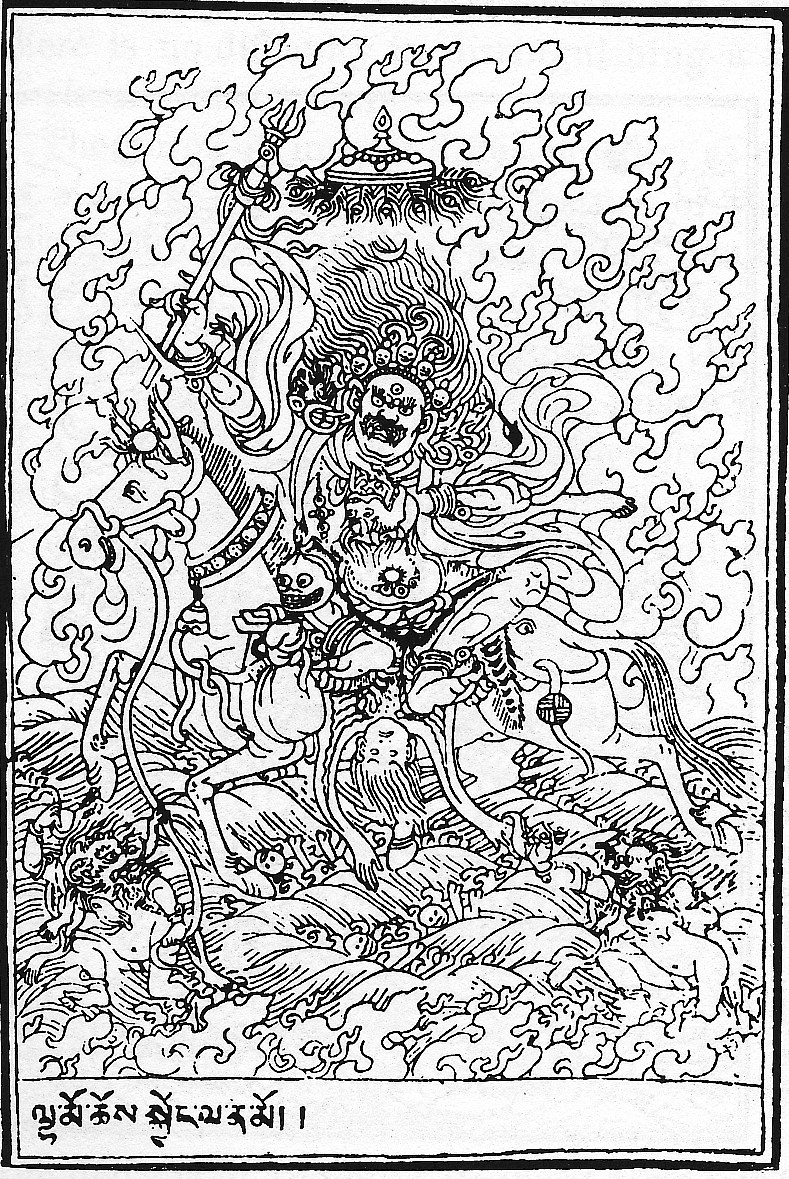 🇨🇳 China and 1 morePalden Lhamoདཔལ་ལྡན་ལྷ་མོ།
A fierce Tibetan Buddhist guardian of the teaching and of the Dalai LamasBeing · Protection · Seeing and foretelling Living
🇮🇪 IrelandAibellAoibheall
A Munster goddess turned fairy queen, said to foretell deathsFigure · Seeing and foretelling · Cursing and harm Legendary
 🇮🇳 India and 5 moreKaruppannaswamyகருப்பண்ணசாமி, കറുപ്പണ്ണസാമി
A fierce guardian deity worshipped as a village protector and ancestral enforcer of justice.Being · Protection · Healing Living
🇱🇹 Lithuania and 1 moreLaima
A Baltic goddess of fate connected to childbirth and destinyBeing · Seeing and foretelling · Luck and prosperity Historical
Photo credits on this page
The small pictures above come from Wikimedia Commons under free licences. Some are cropped to fit.
- Nine-Eared Hound: User:Vmenkov, CC BY-SA 3.0, source
- Orunmila: Unknown author, CC BY 3.0, source
- Ashtar: Evedawn99, Public domain, source
- Kahuna: Unknown author, Public domain, source
- Simbi: MiddleOfAfrica, CC BY-SA 4.0, source
- Freyja: John Bauer, Public domain, source
- Yue Lao: 仔仔好帥, CC BY-SA 4.0, source
- Alkonost: Viktor Vasnetsov, Public domain, source
- Mistapew: Alarichall, CC0, source
- Bà Chúa Xứ: Phương Huy, CC BY-SA 4.0, source
- Lauma: Raki_Man, CC BY 3.0, source
- Mothman: Tim Bertelink, CC BY-SA 4.0, source
- Nymph: Unknown author, Public domain, source
- Badb: Commonists, CC BY-SA 4.0, source
- La Llorona: Melvin Callejas, Public domain, source
- Domovoy: Ivan Bilibin, Public domain, source
- Teraphim: Athanasius Kircher, Public domain, source
- Tigmamanukan: Illustrator and uploader Dragonbite ., CC BY-SA 1.0, source
- Dione: Phidias, CC BY 2.5, source
- Śuri: Marie-Lan Nguyen, Public domain, source
- Dukun: Unknown author, CC BY-SA 3.0, source
- Palden Lhamo: L. Austine Waddell, Public domain, source
- Karuppannaswamy: GShas, CC0, source
- Surya: Ravi Varma Press, Public domain, source
- Molfar: Ніна Бурневіч, CC BY-SA 4.0, source
- Les Lavandières: Jean-Édouard Dargent, Public domain, source
- Khidr: Unknown author, Public domain, source