
Freyja
From Old Norse freyja, meaning lady or mistress, from Proto-Germanic *frawjōn
Norse goddess of love, war, and seiðr magic who rides a chariot pulled by cats
Freyja is a Norse goddess linked with fertility, war, gold, and seiðr divination. A member of the Vanir deities who rules over the meadow Fólkvangr, she travels in a cat-drawn chariot, wears the Brísingamen necklace, and receives half of all warriors who fall in battle.
- Freyja takes half of all warriors slain in battle to her hall Sessrúmnir in Fólkvangr.
- She travels in a chariot pulled by two cats and owns a cloak of falcon feathers.
- When weeping for her absent husband Óðr, her tears are said to fall as red gold.
- Plants named after Freyja in southern Sweden were later renamed for the Virgin Mary.
What it is
Freyja is a prominent goddess in Norse mythology, belonging to the divine family known as the Vanir. She oversees love, fertility, gold, war, and beauty, while also possessing seiðr, a form of magic used for discerning and shaping what is to come. In her celestial home of Fólkvangr, she dwells in the hall Sessrúmnir and selects half of all warriors who fall in combat, with the god Odin taking the other half. Mythological stories describe her driving a chariot pulled by a pair of cats, accompanied by the boar Hildisvíni. She also owns a magical garment of falcon feathers that allows shape-shifting and flight, as well as the prized collar known as Brísingamen.
Where it comes from
Knowledge of Freyja survives through Old Norse writings compiled during the thirteenth century in Iceland, notably the Poetic Edda, the Prose Edda, and Heimskringla by Snorri Sturluson, alongside various sagas and skaldic poems. Her name derives from the Proto-Germanic feminine term *frawjōn, meaning lady or mistress, which shares linguistic roots with Old High German frouwa and Old Saxon frūa. Linguists view the name as an honorific title or epithet that gradually supplanted her original, unrecorded personal name. It also links directly to the name of her brother Freyr, which translates to lord.
How it is done
Old Norse traditions describe several ways worshippers interacted with the goddess. In mythological poetry, her devoted follower Óttar constructed a stone altar called a hörgr, reddening the stones with sacrificial offerings of cattle blood to gain her favor. Classical prose notes that people approached Freyja directly with prayers regarding romance, love affairs, and affectionate verses, considering her the most accessible of deities. In addition, women facing difficult childbirth called upon Freyja alongside Frigg and nature spirits to aid labor and delivery.
Tools and materials
Several distinct items appear in lore tied to Freyja. Central to her regalia is Brísingamen, a celebrated necklace that once shook loose when she showed intense fury. To travel between worlds, she makes use of a cloak made from falcon plumage, which grants the wearer the form and flight of a bird of prey. She also journeys in a chariot drawn by two cats, and rides a loyal boar named Hildisvíni. On earth, stone altars formed the physical setting where worshippers presented sacrifices.
Freyja, drawn and placed
- Living
- Revived
- Fading
- Historical
- Legendary
- Performed
- Lineage
- Norse mythology
What it is for
Prayers and rites directed to Freyja centered on personal affection, passion, and safe childbirth. Petitioners turned to her because old texts describe her as particularly receptive to human requests concerning love and courtship. Her connection to seiðr allowed practitioners to perceive upcoming events and bend fate. Beyond domestic concerns, her mythological function encompassed warfare, where she determined the division of fallen fighters and welcomed half into her own hall.
Peoples and places
Reverence for Freyja was widespread across early Scandinavian societies, including Iceland, Norway, and Sweden. Her presence remained notable in southern Sweden, where rural communities named native plants after her, such as milkwort, once known as Freyja's hair. Country populations in Scandinavia remembered her as a supernatural presence well into the nineteenth century. In addition, the Old Norse word for noblewomen, fruvor, developed directly from her name, embedding her status within Scandinavian social language.
At a glance: who, where and when
Peoples
Belief worlds
Occasions
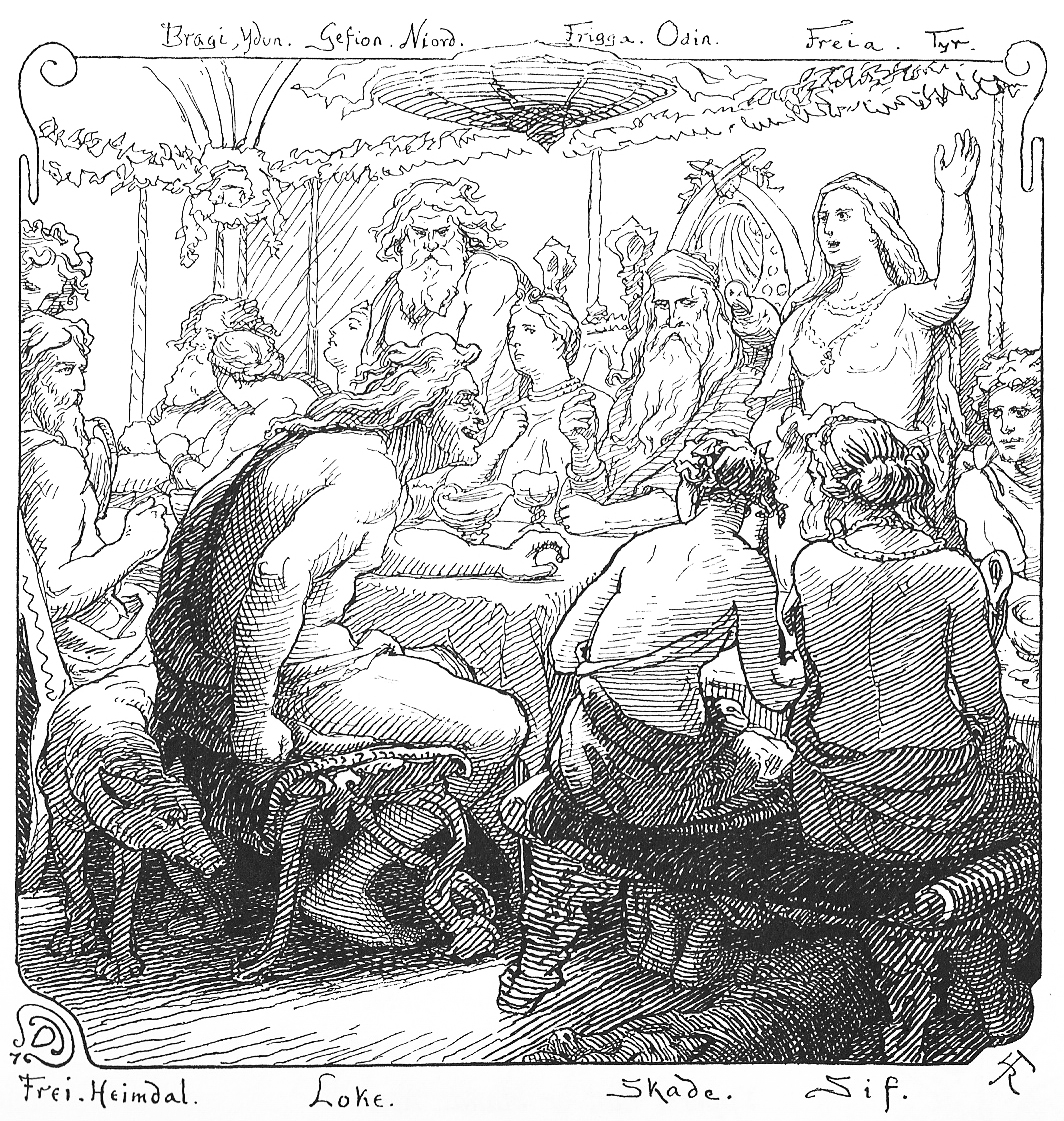
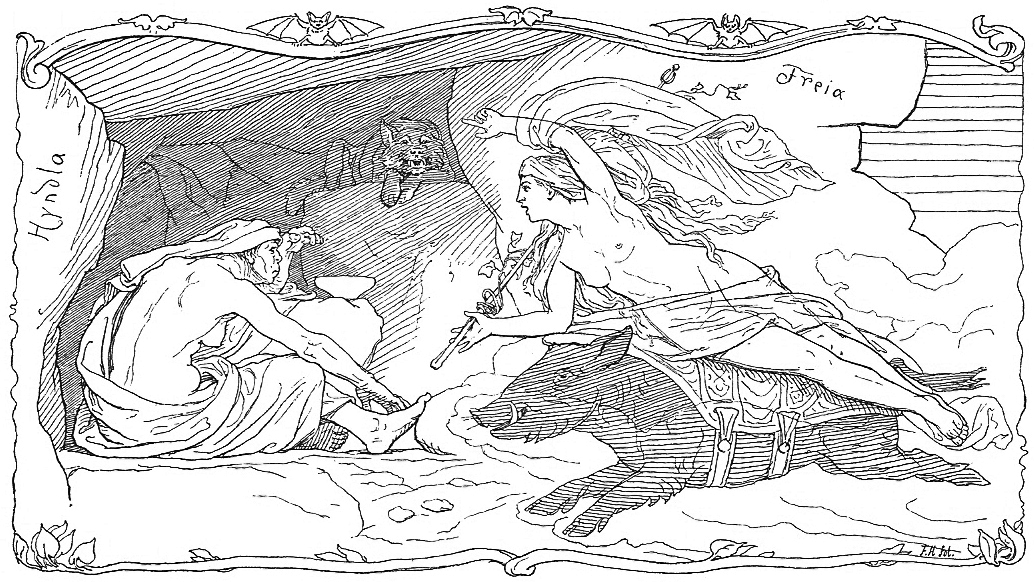
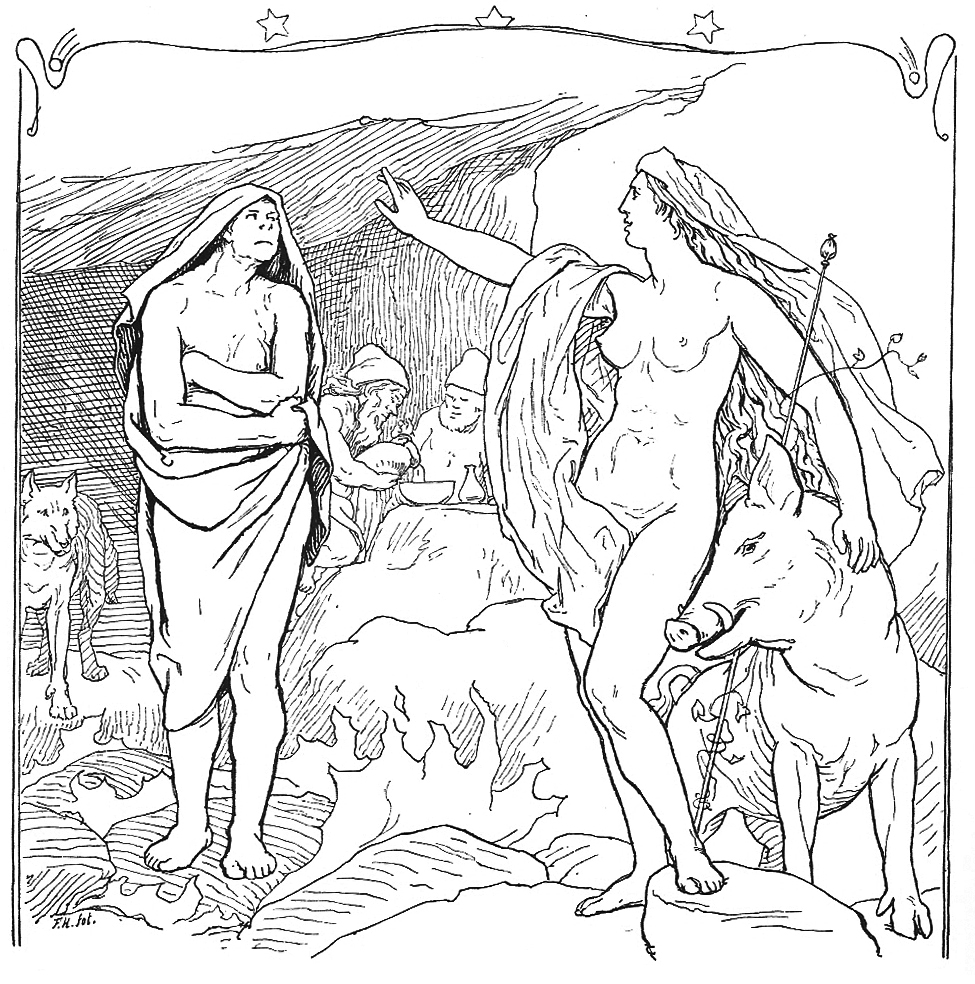

What people believe
Norse cosmological accounts place Freyja among the Vanir deities, born to the sea god Njörðr alongside her twin brother Freyr. She married the wandering god Óðr and bore two daughters, Hnoss and Gersemi. When her husband departed on lengthy journeys, her grief caused her to weep tears that turned into red gold. Divine realms recognized her power: frost giants repeatedly plotted to take her as a bride, while her hall Sessrúmnir served as a resting place for half of those killed in battle.
How scholars and sceptics see it
Academic researchers frequently examine whether Freyja and Frigg, Odin's wife, originated as a single Germanic mother goddess before splitting into distinct figures. Scholars note close parallels between Freyja and the valkyries, pointing out that both entities choose who perishes in battle. Other studies analyze her connection to figures such as the thrice-reborn Gullveig or Heiðr, the agricultural goddess Gefjon, Skaði, Menglöð, and a Germanic deity recorded by Roman historian accounts among the Suebi as Isis.
Compare and confuse
Freyja shares many overlapping roles with Frigg, leading historians to analyze whether both gods developed from one early figure. Her role in selecting fallen combatants mirrors the battlefield duties of valkyries. She is also compared to figures such as Gullveig, Gefjon, and Skaði. During the conversion to Christianity, local folk customs reassigned plants once dedicated to Freyja, transferring their names to the Virgin Mary.
Questions people ask about Freyja
What is Freyja?
Freyja is a major goddess in Norse mythology who belongs to the Vanir deities. She is linked to fertility, love, war, gold, and seiðr divination, and rules the celestial meadow Fólkvangr.
Where does the name Freyja come from?
The name comes from Proto-Germanic *frawjōn, which means lady or mistress. Scholars consider it an honorific title that eventually replaced her unrecorded original name, sharing roots with the German word Frau.
What magical items are associated with Freyja?
She owns the necklace Brísingamen and a feathered cloak that allows the wearer to transform into a falcon and fly. She also travels in a chariot pulled by two cats.
What was Freyja's role regarding fallen warriors?
According to Norse belief, Freyja receives half of the warriors who die on the battlefield in her meadow Fólkvangr, while the god Odin takes the remaining half to his hall, Valhalla.
Good reading and sources
- Freyja on WikipediaEncyclopedia
- More photos on Wikimedia CommonsPhotos and video
- Wikidata recordOpen data
The facts on this page come from the Wikipedia article "Freyja", written by its contributors and used under the CC BY-SA 4.0 licence, and from its Wikidata record (CC0). EveryJaadu rewrote the text in its own words, with AI assistance, and compares every page with the article to make sure no passage is copied. It may be reused under the same CC BY-SA 4.0 licence with a link back.
It may contain mistakes. Names and customs differ from one community to the next, and some knowledge is closed to outsiders and left out here. This page describes belief and practice. It does not say that any of it works, it is not a how-to, and it is not medical advice. If something is wrong, tell us. Last refreshed 2026-10-06.
More from Sweden
All the entries from Sweden 🇸🇪 Sweden and 2 moreMjölnirMjǫllnir
The hammer of the Norse thunder god Thor, used as a weapon and for blessingsBeing · Cursing and harm · Protection Historical
🇸🇪 Sweden and 2 moreMjölnirMjǫllnir
The hammer of the Norse thunder god Thor, used as a weapon and for blessingsBeing · Cursing and harm · Protection Historical
 🇮🇸 Iceland and 3 moreDraugr
A malevolent undead revenant from Nordic folklore, often guarding buried treasure.Being · Cursing and harm · Luck and prosperity Legendary
🇮🇸 Iceland and 3 moreDraugr
A malevolent undead revenant from Nordic folklore, often guarding buried treasure.Being · Cursing and harm · Luck and prosperity Legendary
 🇳🇴 Norway and 1 moreHuldra
A seductive forest spirit of Scandinavian folklore with a hidden animal tail.Being · Protection Legendary
🇳🇴 Norway and 1 moreHuldra
A seductive forest spirit of Scandinavian folklore with a hidden animal tail.Being · Protection Legendary
 🇩🇪 Germany and 3 moreMare
A spirit that sits on sleepers to cause nightmares and physical distressBeing · Cursing and harm Historical
🇩🇪 Germany and 3 moreMare
A spirit that sits on sleepers to cause nightmares and physical distressBeing · Cursing and harm Historical
Related elsewhere
All being 🇪🇬 Egypt and 5 moreHermetica
A collection of ancient texts attributed to Hermes Trismegistus, covering magic, alchemy and philosophy.Text · Seeing and foretelling · Change and initiation Historical
🇪🇬 Egypt and 5 moreHermetica
A collection of ancient texts attributed to Hermes Trismegistus, covering magic, alchemy and philosophy.Text · Seeing and foretelling · Change and initiation Historical
 🇨🇳 China and 1 moreYue Lao月下老人
The Chinese deity of marriage who binds destined couples with red cordsBeing · Love and attraction · Binding and oaths Legendary
🇨🇳 China and 1 moreYue Lao月下老人
The Chinese deity of marriage who binds destined couples with red cordsBeing · Love and attraction · Binding and oaths Legendary
 🇳🇬 NigeriaOrunmilaỌ̀rúnmìlà
Yoruba deity of wisdom and the creator of the Ifá divination systemBeing · Seeing and foretelling · Speaking with spirits and the dead Living
🇳🇬 NigeriaOrunmilaỌ̀rúnmìlà
Yoruba deity of wisdom and the creator of the Ifá divination systemBeing · Seeing and foretelling · Speaking with spirits and the dead Living
 🇮🇳 India and 5 moreAstrology
A divinatory practice that reads human fate through the positions of celestial bodies.Belief · Seeing and foretelling · Luck and prosperity Living
🇮🇳 India and 5 moreAstrology
A divinatory practice that reads human fate through the positions of celestial bodies.Belief · Seeing and foretelling · Luck and prosperity Living