Palden Lhamo
In its own language: དཔལ་ལྡན་ལྷ་མོ།
Tibetan dpal ldan lha mo, "Glorious Goddess"; the Sanskrit form is Śrīdēvī
A fierce Tibetan Buddhist guardian of the teaching and of the Dalai Lamas
Palden Lhamo is a fierce female protector in Vajrayana Buddhism, classed among the dharmapalas, the guardians of the Buddha's teaching, and held by Tibetan Buddhists to be an enlightened being. She is the special protector of the Dalai Lamas and the chief protectress of Tibet, and she is honoured in Tibet and Mongolia.
- Tibetan Buddhists hold her to be an enlightened being, not an ordinary goddess.
- She is the special protector of the Dalai Lamas and is revered in Tibet and Mongolia.
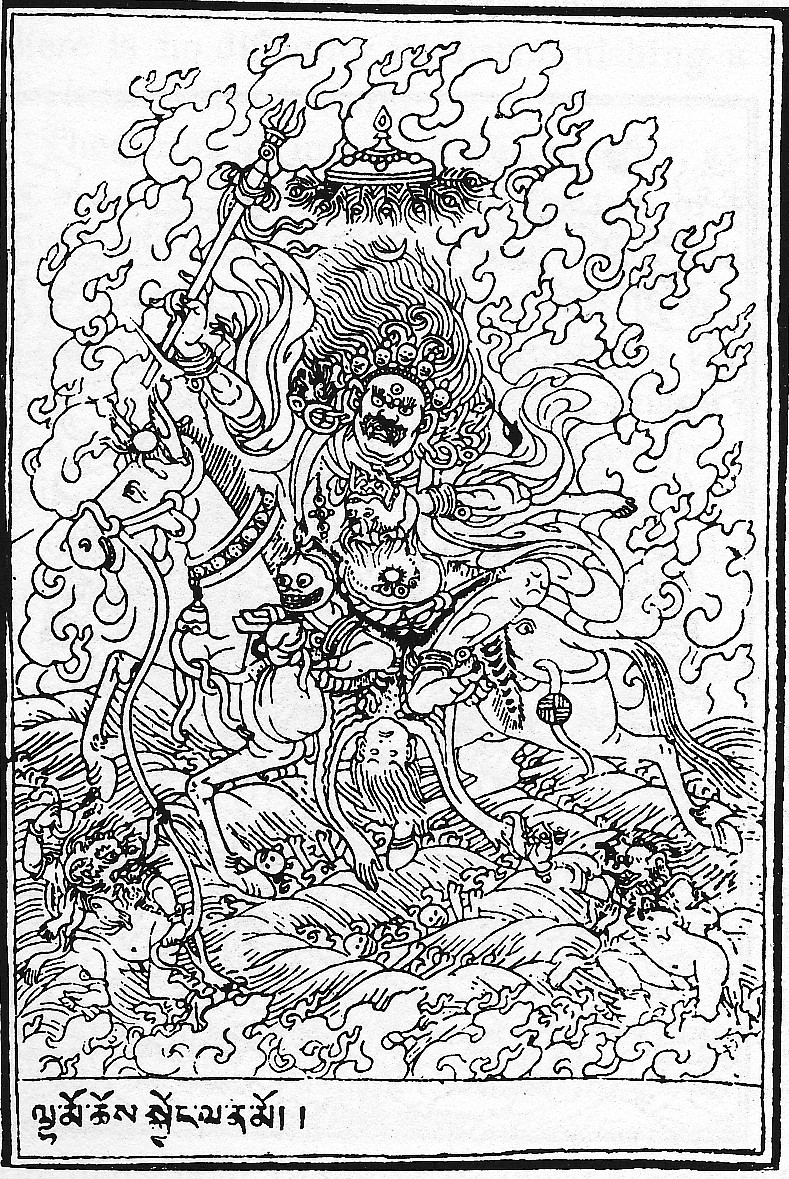
- She is pictured deep blue with red hair, three eyes, riding a white mule seated sideways.
- The mule's left haunch carries an eye, made from the wound an arrow left in the tale.
- Since the second Dalai Lama, regents and monks have sought visions at Lhamo La-tso.
What it is
Palden Lhamo is a protector deity of Vajrayana Buddhism, one of the beings known as dharmapalas, meaning guardians of the teaching. Tibetan Buddhists hold that she is enlightened rather than a minor spirit. She appears in the following of the Obstacle-Removing Mahakala, sometimes on her own and sometimes beside Ekajati, and her forms range widely: the common Gelug reading of her is a fierce emanation of Tara. Devotees call her the particular guardian of the Dalai Lamas and the main protectress of Tibet, and she is revered in Mongolia too. Artists give her blue skin, red hair, three eyes, and a white mule to ride.
Where it comes from
Her Tibetan name means "Glorious Goddess", and it also covers a number of fierce female protectors and dakinis, the sky-going figures of Tibetan art. The best-known tale belongs to Magzor Gyalmo, called Remati while she was married to a wicked king of Lanka; in that version both are rakshasas. She swore that if she could not turn him towards Buddhism and end his cruelty, his line would die out. Their son was being raised to destroy Buddhists, and she killed him, then fled north on a mule. The king shot the animal's haunch, and she healed it, turning the wound into an eye. Her road ran through India, Tibet and China into Mongolia, and she is said to have settled at Mount Oikhan in eastern Siberia. Later she fought her way out of hell, and the Buddha Vajradhara asked her to guard the dharma.
How it is done
Practice around her is mainly invocation, image-making and pilgrimage rather than a set spell. She is called on as a protector, and the tradition has it that she promised to keep a royal shrine in Lhasa safe from harm by humans and mamo demons if a likeness of her were put up there. Since the second Dalai Lama shaped the reincarnation system, regents and monks have gone to Lhamo La-tso, the lake she watches over, to meditate and to read visions about the next Dalai Lama. The shape she takes at that lake is a calm one, Gyelmo Makzor Ma, "Queen Torma Mother".
Tools and materials
Her chief attribute is the white mule, ridden seated sideways, with an eye on its left haunch where an arrow struck it. Makaravaktra, a dakini whose head is that of a makara, a water creature, holds the reins ahead of her, while the lion-headed dakini Simhamukha stands behind. She is shown deep blue with red hair and three eyes, and a kapala, a cup made from a human skull, is among her attributes, as is the rakshasa son's skin, used as a saddle covering. Her retinue takes in the four Goddesses of the Seasons, the five Sisters of Long Life and the twelve Tenma goddesses. One story has her present King Songtsän Gampo with an iron cup as a pledge.
Palden Lhamo, drawn and placed
- Living
- Revived
- Fading
- Historical
- Legendary
- Performed
- Lineage
- Vajrayana Buddhism; a protector of the Gelug school
What it is for
People seek her protection. Tibetan Buddhists hold that she guards the dharma and that her weapons are turned only on its enemies. She is asked to watch over Tibet and over the line of the Dalai Lamas, and, in one old account, to keep a royal shrine at Lhasa from damage. Because she is the guardian spirit of Lhamo La-tso, those who need guidance about a reincarnation look to her lake for visions. Yama, the lord of death, is said to have named her a guardian of the dharma. One tradition says she advised Lhalung Pelgyi Dorje, and that the anti-Buddhist king Langdarma was killed in 841.
Who does it
Her veneration belongs to Tibetan Buddhist clergy and lay devotees rather than to any single profession. She is the special protector of the Dalai Lamas, and the Gelug school sets her alongside its three main protectors, Yamaraja, Vaisravana and Mahakala. Regents and monks have travelled to her lake for visions since the second Dalai Lama formalised the reincarnation system, and ordinary Tibetan Buddhists revere her as well. The Eight Guardians of the Law, a group of protectors, count her among them, and she is the woman in that company. Tibetan Buddhists treat her as an enlightened being, not a lesser spirit.
Peoples and places
Palden Lhamo is honoured throughout Tibet and Mongolia, and is written of as celebrated in both. In Lhasa she is known as the Dharma-protectress of the city. Her legend traces a route from India through Tibet and China to Mongolia, ending at Mount Oikhan in eastern Siberia, and her particular seat is the lake Lhamo La-tso in Tibet, where monks look for visions when a new Dalai Lama must be found. South of that lake stands Chokorgyel Monastery, laid out as a triangle to echo three rivers, three mountains, the elements of water, earth and fire, and her female principle.
At a glance: who, where and when

What people believe
In Vajrayana Buddhism the protectors are not outside the teaching but part of it. Tibetan Buddhists hold that Palden Lhamo is enlightened, an emanation of Tara, and that she can take many fierce shapes as a dharmapala. She belongs to the retinue of the Obstacle-Removing Mahakala and may be shown alone or with Ekajati. Her story assumes rebirth, hells and charnel grounds, rakshasas and mamos, and dakinis. At her lake she is linked with the goddess Kali, and at Lhamo La-tso her peaceful form is called the Pacified Expression of the Common Wife Palden Lhamo.
Compare and confuse
Palden Lhamo is a broad name, applied to more than one fierce female protector, so figures under it are not always identical. In Sanskrit she is Śrīdēvī, in English usually Shri Devi, and in the tale her earlier name is Remati or Magzor Gyalmo. She is said to be an emanation of Tara, and at her lake, of Kali. She stands apart from the three Gelug protectors, Yamaraja, Vaisravana and Mahakala, though she shares the retinue of Mahakala, and her calm lake form carries titles of its own.
Law and persecution
What conflict appears in her story is religious rather than legal. Her legend tells of a king of Lanka who put dharma practitioners to death and raised a son to wipe out Buddhism, and of Langdarma, a Tibetan king hostile to the teaching, killed in 841 after she was said to have urged it. She is described as using her weapons only against enemies of Buddhism. Tibetan Buddhists revere her as the principal protectress of Tibet, and she is also called the Dharma-protectress of Lhasa.
Today
She belongs to living Tibetan Buddhism. Tibetan Buddhists still hold her to be an enlightened protector, and she keeps her place as the special guardian of the Dalai Lamas, a duty she is said to have promised in a vision to the first Dalai Lama. Regents and monks still travel to Lhamo La-tso to meditate when an incarnation must be found. Her following reaches beyond Tibet into Mongolia, and pictures of her are held in museum collections, among them early Central Tibetan paintings shown by the Metropolitan Museum of Art and images catalogued by Himalayan Art Resources.
Questions people ask about Palden Lhamo
What is Palden Lhamo?
She is a fierce female protector in Vajrayana Buddhism. Tibetan Buddhists count her among the dharmapalas, guardians of the Buddha's teaching, and hold that she is enlightened. She is the special protector of the Dalai Lamas and is revered in Tibet and in Mongolia.
Where does she come from?
Her veneration belongs to Tibetan Buddhism. Her legend makes her a queen of Lanka who fled north, passing through India, Tibet and China into Mongolia, where she is said to have settled at Mount Oikhan in eastern Siberia. Her name is Tibetan, and Sanskrit texts call her Śrīdēvī.
Why is she shown with a mule?
In the story she escapes her husband on a mule, and he shoots its haunch. She heals the wound and turns it into an eye said to watch over twenty-four regions. Depictions follow that account, showing her on the animal with the eye on its left rump.
What does the lake Lhamo La-tso have to do with her?
She is the guardian spirit of that lake and is said to have promised the first Dalai Lama that she would protect the line of reincarnations. Since the second Dalai Lama, regents and monks have gone there to meditate and seek visions for choosing the next Dalai Lama.
Is she the same as the goddess Kali?
Not the same. Her lake is sometimes called Palden Lhamo Kalidevi, which presents her as an emanation of Kali, and she is also taken to be an emanation of Tara. In Vajrayana Buddhism she is honoured as one of the protectors of the teaching.
Good reading and sources
- Palden Lhamo on WikipediaEncyclopedia
- More photos on Wikimedia CommonsPhotos and video
- Wikidata recordOpen data
The facts on this page come from the Wikipedia article "Palden Lhamo", written by its contributors and used under the CC BY-SA 4.0 licence, and from its Wikidata record (CC0). EveryJaadu rewrote the text in its own words, with AI assistance, and compares every page with the article to make sure no passage is copied. It may be reused under the same CC BY-SA 4.0 licence with a link back.
It may contain mistakes. Names and customs differ from one community to the next, and some knowledge is closed to outsiders and left out here. This page describes belief and practice. It does not say that any of it works, it is not a how-to, and it is not medical advice. If something is wrong, tell us. Last refreshed 2026-10-11.
More from China
All the entries from China 🇲🇳 Mongolia and 2 moreWind Horseརླུང་རྟ་
An East and Central Asian symbol of the soul, luck, and vital energyBeing · Luck and prosperity · Protection Living
🇲🇳 Mongolia and 2 moreWind Horseརླུང་རྟ་
An East and Central Asian symbol of the soul, luck, and vital energyBeing · Luck and prosperity · Protection Living
 🇲🇳 Mongolia and 2 moreMongolian shamanismBöö mörgöl
The animistic and shamanic ethnic religion of the Mongol peoples, centered on sky worship and ancestral spirits.Tradition · Protection · Healing Living
🇲🇳 Mongolia and 2 moreMongolian shamanismBöö mörgöl
The animistic and shamanic ethnic religion of the Mongol peoples, centered on sky worship and ancestral spirits.Tradition · Protection · Healing Living
 🇷🇺 Russia and 3 moreSiberian shamanism
The spirit-journey practices of North Asian peoples and their linguistic relativesTradition · Healing · Speaking with spirits and the dead Fading
🇷🇺 Russia and 3 moreSiberian shamanism
The spirit-journey practices of North Asian peoples and their linguistic relativesTradition · Healing · Speaking with spirits and the dead Fading
 🇨🇳 China and 4 moreSky burialབྱ་གཏོར་
A Tibetan funerary rite where human remains are offered to scavenging birdsRite · Speaking with spirits and the dead · Change and initiation Living
🇨🇳 China and 4 moreSky burialབྱ་གཏོར་
A Tibetan funerary rite where human remains are offered to scavenging birdsRite · Speaking with spirits and the dead · Change and initiation Living
Related elsewhere
All being 🇮🇹 ItalyFortunaFortūna
The Roman goddess of luck and fate, shown with a wheel and a horn of plentyBeing · Luck and prosperity · Seeing and foretelling Historical
🇮🇹 ItalyFortunaFortūna
The Roman goddess of luck and fate, shown with a wheel and a horn of plentyBeing · Luck and prosperity · Seeing and foretelling Historical
 🇯🇵 JapanOnmyōdō陰陽道
A Japanese system of divination and calendar science rooted in yin-yang philosophyTradition · Seeing and foretelling · Protection Revived
🇯🇵 JapanOnmyōdō陰陽道
A Japanese system of divination and calendar science rooted in yin-yang philosophyTradition · Seeing and foretelling · Protection Revived
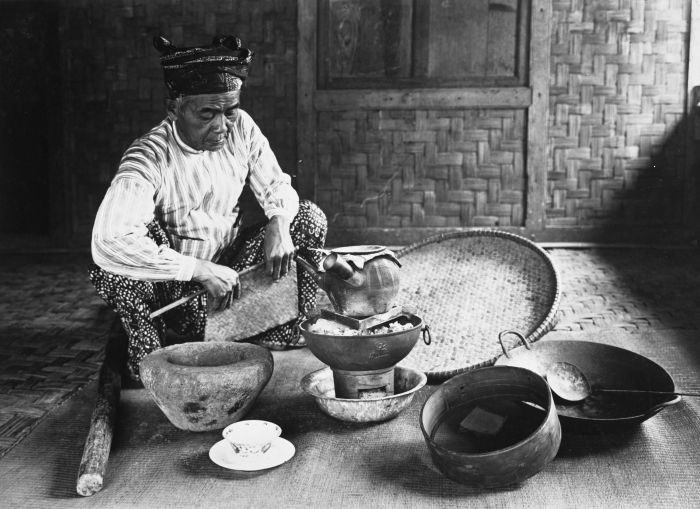 🇮🇩 Indonesia and 2 moreDukun
A traditional healer and spirit medium in Indonesian folk practiceTradition · Healing · Seeing and foretelling Living
🇮🇩 Indonesia and 2 moreDukun
A traditional healer and spirit medium in Indonesian folk practiceTradition · Healing · Seeing and foretelling Living
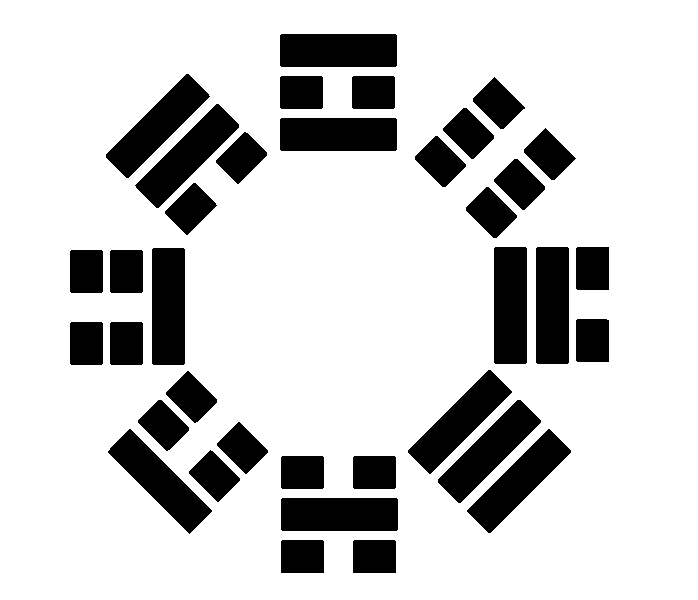 🇨🇳 China and 1 moreBagua八卦
A set of eight trigram symbols from China used in divination, cosmology, and feng shui.Tradition · Seeing and foretelling · Protection Living
🇨🇳 China and 1 moreBagua八卦
A set of eight trigram symbols from China used in divination, cosmology, and feng shui.Tradition · Seeing and foretelling · Protection Living