
Badb
from Old Irish badb meaning 'crow' or 'demon', possibly linked to words for 'battle' or 'strife'
An Irish war goddess who appears as a crow to sow fear and predict death in battle.
Badb is a war goddess from Irish mythology who takes the form of a crow or hag. She is believed to cause confusion among soldiers and foreshadow carnage before battles. She forms one part of the trio known as the three Morrígna alongside Macha and the Morrígan.
- Badb means 'crow' in Old Irish.
- She is part of the three Morrígna.
- She appears as a washer at the ford.
- She fights for the Tuatha Dé Danann.
- Her name may mean 'battle' or 'strife'.
What it is
Badb is a figure from Irish mythology identified as a war goddess. Her name translates directly to 'crow'. She is often called Badb Catha, which means 'battle crow'. Practitioners of these old stories hold that she intervenes in warfare to shift outcomes. She is said to create fear and confusion among enemy troops. She also acts as a predictor of death, appearing before major conflicts to signal the scale of loss. She is frequently grouped with two other deities, Macha and the Morrígan, into a collective known as the three Morrígna.
Where it comes from
The figure emerges from early Irish legend and mythological cycles. Texts such as the Lebor Gabála Érenn place her as a daughter of the goddess Ernmas. She is sometimes described as a wife to the war god Neit or occasionally to the Fomorian king Tethra. Scholars note conflicting accounts regarding her parentage and kinship. The etymology of her name points to Proto-Celtic roots related to crows or demons. Some linguists link the term to words for battle or strife, while others connect it to roots meaning to pierce or oppress.
How it is done
Badb does not follow a single ritual method but appears in various guises within narratives. She may manifest as an ugly hag prophesying downfall, or as a washer at a ford cleaning armor, which serves as an omen of death. In combat, she uses magic to conjure mist and rain, disorienting opponents. She is often heard screaming as a raven or crying among corpses. Her presence alone is enough to terrify soldiers and cause them to turn their weapons on themselves.
Tools and materials
The primary symbol associated with Badb is the crow or raven. She is also depicted using wailing cries and screams to induce panic. In some tales, she utilizes magical weather, creating clouds of mist and fire. The act of washing chariots and harnesses in a ford serves as a symbolic tool for foretelling death. These elements combine to form her reputation as a terrifying harbinger.
Badb, drawn and placed
- Living
- Revived
- Fading
- Historical
- Legendary
- Performed
- Lineage
- Irish mythology
- Timing
- before and during battles
What it is for
Her role is to influence the tide of battle through psychological warfare. By sowing confusion and fear, she aids her favored side. She also serves to warn of impending doom and high casualties. After victories, such as the defeat of the Fomorians, she shifts to singing prophecies of peace and future destruction. Her warnings are intended to mark significant historical turning points and the deaths of notable figures.
Who does it
As a mythological deity, Badb has no living human practitioners. She is studied by scholars of Celtic mythology and history. Ancient texts describe her actions rather than rituals performed in her honor. She is understood as a supernatural entity acting within the cosmic order of Irish legend, rather than a figure invoked by modern devotees.
Peoples and places
Badb is central to Irish mythology and the legends of the Tuatha Dé Danann. She is specifically tied to Ireland, where she is said to have sisters who gave their names to the land. Similar figures exist in other Celtic traditions, such as the Gaulish goddess Catubodua. She is also closely related to Nemain, another war goddess, leading some writers to treat them as interchangeable or identical entities.
At a glance: who, where and when
Peoples
What people believe
In the worldview of Irish myth, Badb represents the chaotic and deadly aspects of war. She embodies rage, fury, and violence. Her connection to crows links her to scavengers and the aftermath of battle. She is viewed as a supernatural force capable of altering reality through magic and prophecy. Her triple nature with Macha and the Morrígan highlights themes of fate, sovereignty, and destruction.
When it is done
She appears during times of conflict and crisis. Her manifestations are tied to specific battles, such as the First and Second Battles of Mag Tuired and the Táin Bó Cúailnge. She is also present at moments of personal tragedy, signaling the death of kings and heroes. There are no fixed annual festivals dedicated to her, only appearances during pivotal narrative events.
Questions people ask about Badb
What does the name Badb mean?
The name Badb comes from Old Irish and means 'crow'. It is also associated with words for battle, strife, or demon, reflecting her role as a war goddess and harbinger of doom.
Who are Badb's sisters?
Badb is one of the three Morrígna. Her sisters are Macha and the Morrígan (or Anand). Together they form a trio of war goddesses in Irish mythology, often acting in unison during battles.
How does Badb influence battles?
She causes fear and confusion among soldiers. She may use magic to create mist and fire, disorienting enemies. Her screams and presence can cause troops to flee or turn their weapons on themselves.
What forms does Badb take?
She appears as a crow or raven, an ugly hag, or a woman washing armor at a ford. Each form serves to predict death or sow terror among those facing battle.
Good reading and sources
The facts on this page come from the Wikipedia article "Badb", written by its contributors and used under the CC BY-SA 4.0 licence, and from its Wikidata record (CC0). EveryJaadu rewrote the text in its own words, with AI assistance, and compares every page with the article to make sure no passage is copied. It may be reused under the same CC BY-SA 4.0 licence with a link back.
It may contain mistakes. Names and customs differ from one community to the next, and some knowledge is closed to outsiders and left out here. This page describes belief and practice. It does not say that any of it works, it is not a how-to, and it is not medical advice. If something is wrong, tell us. Last refreshed 2026-10-05.
More from Ireland
All the entries from Ireland 🇬🇧 United Kingdom and 1 moreEach-uisge
A fierce water spirit of the Scottish Highlands and Irish shores that takes the form of a horse.Being · Cursing and harm Legendary
🇬🇧 United Kingdom and 1 moreFuath
A class of malevolent water spirits in Scottish and Irish folkloreBeing · Cursing and harm Legendary
🇬🇧 United Kingdom and 1 moreEach-uisge
A fierce water spirit of the Scottish Highlands and Irish shores that takes the form of a horse.Being · Cursing and harm Legendary
🇬🇧 United Kingdom and 1 moreFuath
A class of malevolent water spirits in Scottish and Irish folkloreBeing · Cursing and harm Legendary
 🇬🇧 United Kingdom and 1 moreBlue men of the Minchna fir ghorma
Mythical blue-skinned spirits of the Scottish strait who challenge sailors to poetry contestsBeing · Cursing and harm · Wonder and entertainment Legendary
🇬🇧 United Kingdom and 1 moreBlue men of the Minchna fir ghorma
Mythical blue-skinned spirits of the Scottish strait who challenge sailors to poetry contestsBeing · Cursing and harm · Wonder and entertainment Legendary
Related elsewhere
All being 🇲🇽 Mexico and 5 moreObsidian
Volcanic glass used for sharp tools, mirrors, and ritual divinationSubstance · Cursing and harm · Seeing and foretelling Historical
🇲🇾 Malaysia and 1 moreBomohبوموه
A Malay shaman and traditional healer who works with spirits, herbs, and geomancy.Tradition · Healing · Seeing and foretelling Living
🇲🇽 Mexico and 5 moreObsidian
Volcanic glass used for sharp tools, mirrors, and ritual divinationSubstance · Cursing and harm · Seeing and foretelling Historical
🇲🇾 Malaysia and 1 moreBomohبوموه
A Malay shaman and traditional healer who works with spirits, herbs, and geomancy.Tradition · Healing · Seeing and foretelling Living
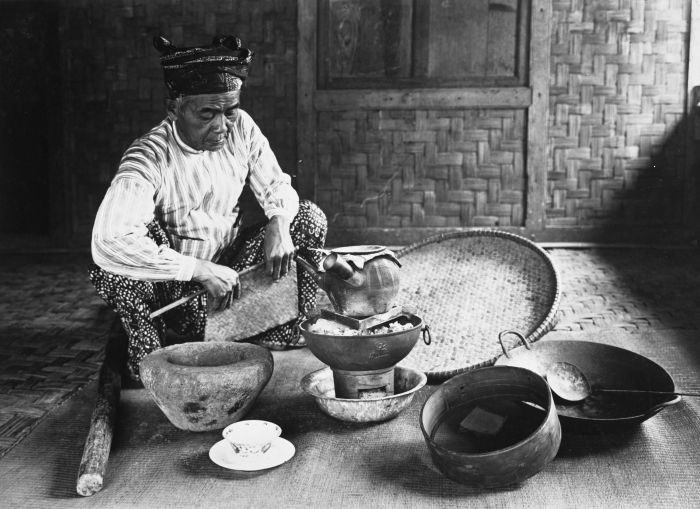 🇮🇩 Indonesia and 2 moreDukun
A traditional healer and spirit medium in Indonesian folk practiceTradition · Healing · Seeing and foretelling Living
🇯🇵 JapanKuda-gitsune管狐 (kuda-gitsune)
A small spirit kept in a tube or sleeve to aid fortune-telling and cursing in Japanese folklore.Being · Seeing and foretelling · Cursing and harm Legendary
🇮🇩 Indonesia and 2 moreDukun
A traditional healer and spirit medium in Indonesian folk practiceTradition · Healing · Seeing and foretelling Living
🇯🇵 JapanKuda-gitsune管狐 (kuda-gitsune)
A small spirit kept in a tube or sleeve to aid fortune-telling and cursing in Japanese folklore.Being · Seeing and foretelling · Cursing and harm Legendary