Spirits, creatures and beings
Djinn, fairies, orisha, golems and the other powers that magic deals with.
Beings are the powers that magic deals with: spirits, ancestors, gods, djinn, fairies, orisha, nats, kami, demons, golems, ghosts and the many kinds of household and landscape spirit. People in most cultures have described a world shared with unseen others, who may help, trouble or ask for respect. This page covers what these beings are said to be and the very different ways communities relate to them. They are always described here as what communities believe, not as established fact.
Different kinds of beings
A being can be a god with a priesthood, such as an orisha served in Yoruba religion, Cuba and Brazil. It can be an ancestor, honoured in China, Africa and Mexico. It can belong to a place, such as the kami of Shinto, the Thai phi or the Burmese nats. It can be a trouble-maker, like the djinn of Arabic and Islamic tradition, formed from smokeless fire, or the fairies of Ireland, whom people avoided naming.
Relationship, not command
In many traditions, a person does not command a being but enters a relationship with it, through offerings, promises and respect. Possession and mediumship are forms of that relationship, as in Vodou, Candomblé, Korean mudang rites and Sufi gatherings. In ceremonial magic of the European grimoires, by contrast, the magician summons spirits by name and authority, which the Church condemned as demon-raising. The same being may be loved in one household and feared in the next, and a spirit helpful to its servant can be harmful to a stranger.
Religions and renaming
Dominant religions often absorbed beings by relabelling them. Christian missionaries called many African and Indigenous spirits demons. Islam reads the djinn as real creatures, some of whom are Muslim, and Hindu and Buddhist traditions fold local deities into their own pantheons. Pagan and fairy beliefs were sometimes recast as the devil's work, which fed witch trials in Europe. Churches and mosques have sometimes divided beings into good and evil in ways the older traditions did not, so that a neutral local spirit became a demon on the day a missionary arrived.
Harm and interpretation
Belief in harmful spirits has been used to accuse people. Children in parts of West and Central Africa have been branded as witches possessed by evil spirits, and some have been abused by pastors or families in the name of deliverance. Scholars read spirit beliefs as ways to make sense of illness, loss and conflict, and many communities see them simply as neighbours. That is why accusations tied to spirit beliefs fall hardest on children and the vulnerable, and why many agencies train local leaders to challenge them.
Being on EveryJaadu
The entries written up so far, best known first.
 🇮🇷 Iran and 2 moreDivدیو
Monstrous creatures of Persian and West Asian lore, later adapted into Islamic and regional mythologiesBeing · Cursing and harm Legendary
 🇮🇱 Israel and 2 moreLeviathanלִוְיָתָן (Livyaṯān)
A primordial sea monster from ancient Near Eastern myth and biblical textBeing · Cursing and harm · Power and authority Historical
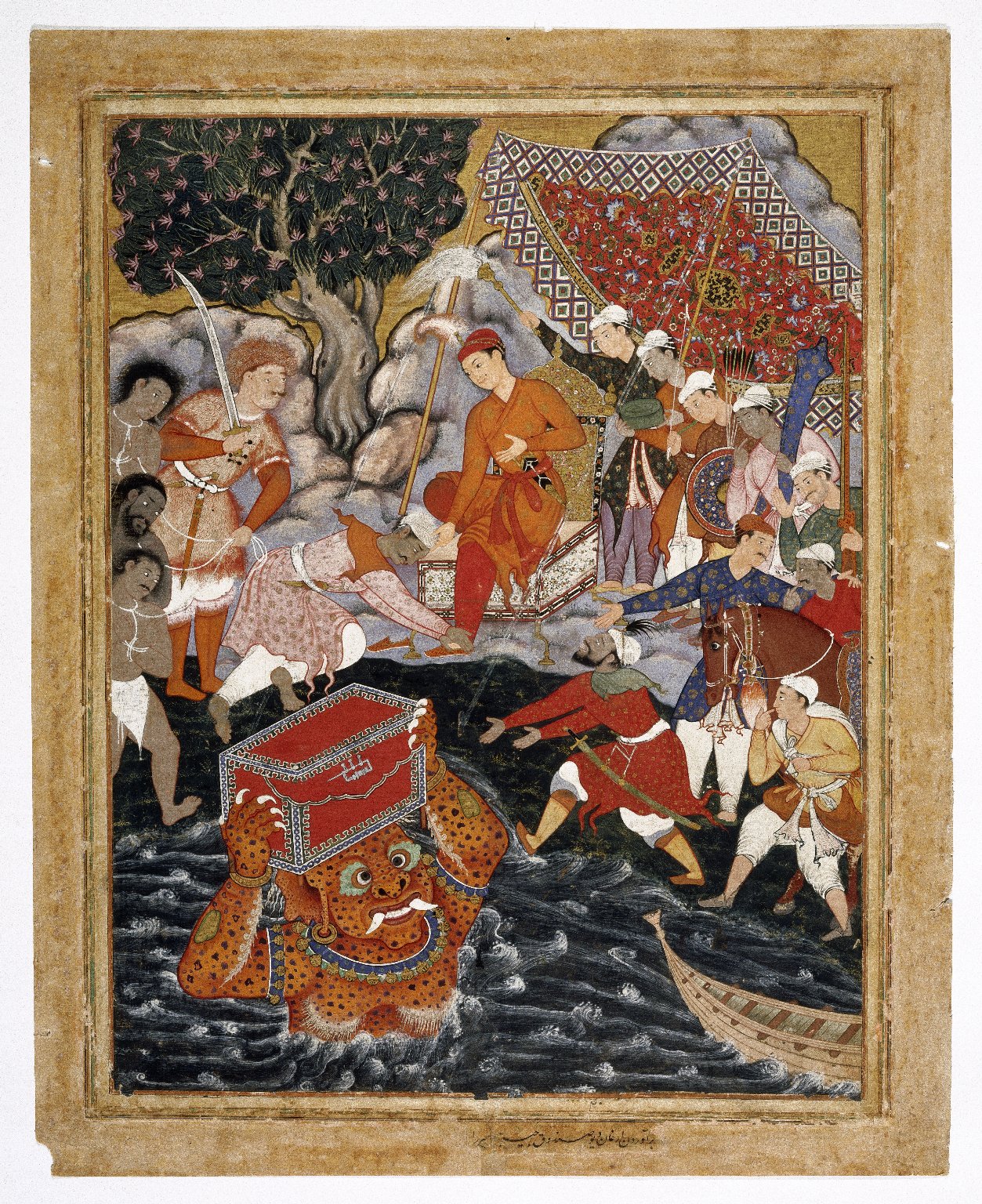 🇪🇬 Egypt and 3 moreIfritعفريت
A class of powerful chthonic spirits in Islamic tradition and folkloreBeing · Cursing and harm · Power and authority Historical
 🇮🇶 Iraq and 1 moreRabisu
A wind spirit in Akkadian myth sent to correct human transgressionsBeing · Cursing and harm · Cleansing and purification Historical
🇮🇶 Iraq and 1 morePazuzu𒀭𒅆𒊒𒍪𒍪 (pà.zu.zu)
A Mesopotamian wind demon and protective amulet against child-harming spiritsBeing · Protection · Cursing and harm Historical
🇮🇱 Israel and 2 moreBelialבְּלִיַּעַל
A Hebrew term for worthlessness that evolved into a demon of darkness in Jewish and Christian texts.Being · Cursing and harm Historical
 🇮🇷 Iran and 4 moreJinnجِنّ
Supernatural beings in Islamic and pre-Islamic Arabian belief, capable of shapeshifting and living in society.Being · Protection · Cursing and harm Living
🇮🇷 Iran and 3 moreDaeva𐬛𐬀𐬉𐬎𐬎𐬀
A Zoroastrian entity that evolved from rejected gods to personifications of evil.Being · Cursing and harm · Power and authority Historical
 🇪🇬 Egypt and 1 moreQareenقرين
A spiritual companion or double assigned to every human in Islamic beliefBeing · Cursing and harm · Power and authority Living
🇸🇾 SyriaLilulilû (Akkadian), lilu (Sumerian)
A class of Mesopotamian spirits linked to unfulfilled lives and illnessBeing · Cursing and harm · Healing Historical
🇦🇿 AzerbaijanBastyBasdı
A group of evil spirits and goblins from Turkic folklore in Anatolia.Being · Cursing and harm Legendary
 🇨🇳 China and 4 moreDragon
A serpentine mythical creature found in global folklore and art, representing power, chaos, or imperial authority.Being · Power and authority · Cursing and harm Legendary
 🇮🇱 Israel and 5 moreAstaroth
An arch-demon in Western occultism, derived from the ancient goddess Astarte.Being · Power and authority · Cursing and harm Historical
🇹🇷 Turkey and 4 moreAl BastyAlbastı
A female spirit of guilt and childbirth found in Turkic and Caucasian folkloreBeing · Cursing and harm Historical
 🇪🇬 Egypt and 2 moreAbyzou
A female demon of envy who targets newborns and pregnant women in late antique magic.Being · Cursing and harm · Protection Historical
🇮🇱 Israel and 2 moreRahabרַהַב
A Hebrew mythic sea monster and symbol of chaos, later used as a poetic name for Egypt.Being · Cursing and harm · Power and authority Legendary
🇮🇱 IsraelAgrat bat Mahlatאגרת בת מחלת
A demon in Jewish tradition who rules over destructive spirits and night hours.Being · Cursing and harm Historical
🇪🇬 Egypt and 1 moreMahalathמָחֲלַת
A queen of demons in Jewish mysticism and the mother of AgratBeing · Cursing and harm Historical
🇪🇬 EgyptEn-Naddahaالنداهة
A water spirit of the Nile who lures men to their doom with a hypnotic callBeing · Cursing and harm Fading
 🇮🇱 Israel and 2 moreTanninתַּנִּין
A sea monster of chaos in Canaanite and Hebrew myth, later a symbol for Egypt and Babylon.Being · Cursing and harm Legendary
🇸🇦 Saudi ArabiaAbu Fanousأبو فانوس
A wandering light of the Arabian desert, said to lure travellers and vanishBeing · Cursing and harm · Protection Living
🇮🇷 IranAkvan Divاکوان دیو
A shape-shifting demon from Persian mythology that disguises itself as a wild horse.Being · Cursing and harm Legendary
🇮🇶 Iraq and 1 moreMaymun
The seventh jinn king of Saturday and Saturn, honoured as a saint and feared as a demon.Being · Cursing and harm · Protection Legendary
🇮🇱 Israel and 1 moreSe'irimשעירים
Demons of Hebrew tradition linked to wild goats and ruined placesBeing · Cursing and harm Historical
 🇮🇱 Israel and 1 moreUnclean spiritπνεῦμα ἀκάθαρτον (pneuma akatharton)
A spirit of impurity in biblical belief, driven out by breath, smoke and wordsBeing · Cleansing and purification · Cursing and harm Living
🇮🇳 IndiaAl-Abyad
A jinn called the White King, tied to Monday, the Moon and silverBeing · Cursing and harm Legendary
🇮🇱 IsraelQlippothקְלִיפּוֹת
Impure spiritual forces in Jewish mysticism, opposites of the holy sefirotBeing · Cursing and harm Historical
 🇸🇾 SyriaEchidnaΈχιδνα
A half-woman, half-snake monster in Greek myth who mothered many famous beastsBeing · Cursing and harm Legendary
 🇪🇬 Egypt and 1 moreHypnalis
A legendary snake from medieval bestiaries that kills in sleepBeing · Cursing and harm Legendary
🇮🇷 Iran and 4 moreJinnجِنّ
Concealed beings from Arabian and Islamic tradition, accountable for their actions like humans.Being · Protection · Cursing and harm Living
 🇮🇶 IraqKūbu
Ghosts of stillborn fetuses in ancient Mesopotamian religion, feared and worshipped.Being · Protection · Cursing and harm Historical
Photo credits on this page
The small pictures above come from Wikimedia Commons under free licences. Some are cropped to fit.
- Abyzou: Paul Perdirizet (1870-4 juin 1938), Public domain, source
- Ancient Mesopotamian religion: editor Austen Henry Layard , drawing by L. Gruner, Public domain, source
- Leviathan: Gustave Doré, Public domain, source
- Qareen: عامر شاہین, CC BY-SA 3.0, source
- Kūbu: Françoise Foliot, CC BY-SA 4.0, source
- Tannin: Zakariya al-Qazwini, Public domain, source
- Div: Unknown Calligrapher, Public domain, source
- Echidna: Daderot, Public domain, source
- Astaroth: M. Jarrault, Public domain, source
- Ifrit: Unknown author, Public domain, source
- Japanese dragon: Katsushika Hokusai, Public domain, source
- Jinn: VenusFeuerFalle, CC0, source
- Hypnalis: Werner Seiler ( User:Centine ), Public domain, source
- Unclean spirit: David Shankbone, CC BY-SA 3.0, source