Rites, spells and ceremonies
Things done in a set way: cleansings, offerings, blessings, binding and unbinding, initiations.
A rite is something done in a set way: a cleansing, an offering, a blessing, an initiation, a binding. What marks it out is form, with fixed words, gestures, timing and often a specialist to lead it. Rites exist in every culture, from the Catholic exorcism and the Vedic fire offering to the Yoruba sacrifice and the Aboriginal ceremony. This page describes them as customs, in outline. Here they are described as customs and in outline only.
Parts of a rite
Most rites share a few parts: a prepared space, a purifying act, speech or song, a gesture, an offering, and a closing that returns everyone to ordinary life. Scholars such as Arnold van Gennep called rites of passage a sequence of separation, threshold and return. Many rites also mark a time: the new moon, the solstice, a death, a birth, a wedding. Some are done once in a lifetime and some every day, and the same gesture can be a rite in one house and a habit in the next.
Who may perform
Some rites belong to anyone in the household, such as sweeping the house at new year or tying a thread on a child's wrist. Others need an officiant: a priest, a medium, a shaman or an initiated elder. Women often hold domestic rites and are shut out of public priesthood, though in places such as Korea, the Philippines and parts of Africa women lead spirit rites. A rite is also tied to a community: it is done with others present, who witness it and agree that it counts.
Rites that hurt
Not every rite is gentle. Some involve animal sacrifice, which is a normal part of a number of living religions and is performed under rules of its own. Exorcism rites have caused real harm when applied to people with mental illness or to children accused of witchcraft, with deaths reported from beatings, fasting and restraint. Illness needs real medical care. Others are simple and joyful, such as a blessing over bread or a thread on a wrist, and carry no danger at all, which is why most rites are never remarked upon.
Change and commerce
Rites move with people. Diaspora communities adapt them to apartments, city streets and other languages. Some are now sold as retreats or workshops, which can strip them from their community and context. Tourism has also turned ceremonies into shows, and communities increasingly set rules about who may watch, photograph or join. Government rules shape rites too: some countries license ritual slaughter, others require permits for processions, and a few have banned particular ceremonies outright, so a rite can become a legal question as well as a religious one.
Rite on EveryJaadu
The entries written up so far, best known first.
 🇯🇵 JapanKagura神楽
A Shinto ritual dance where performers embody deities to purify and welcome spiritsTradition · Protection · Speaking with spirits and the dead Living
 🇮🇳 India and 5 moreSpirit possession
A state where a human body is controlled by an external spirit or deityBelief · Healing · Seeing and foretelling Living
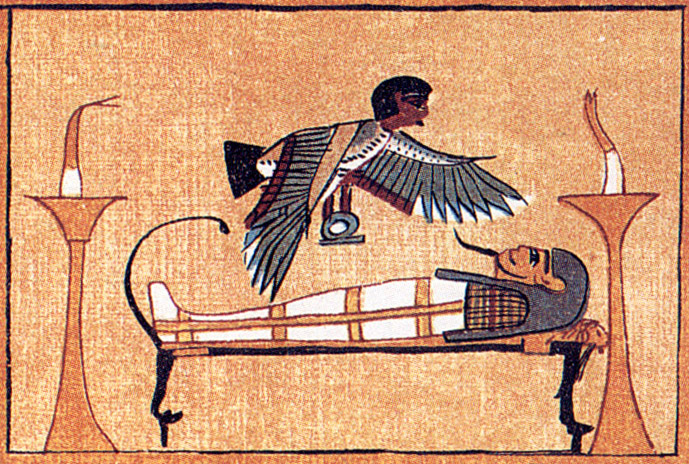 🇪🇬 Egypt and 1 moreSoul flight
A shamanic trance journey in which the soul is said to leave the bodyRite · Healing · Seeing and foretelling Living
 🇺🇸 United States and 3 moreSandpainting
A ritual art of pouring colored sand to create temporary images for healing or spiritual teachingTradition · Healing · Speaking with spirits and the dead Living
 🇫🇷 France and 1 moreLaying on of handsסמיכה
A physical gesture used across religions to convey authority, healing, or spiritual presence.Rite · Healing · Power and authority Living
 🇻🇺 Vanuatu and 5 moreKava culture
A shared ritual across Oceania where a root brew marks ceremony, respect, and social gathering.Tradition · Speaking with spirits and the dead · Luck and prosperity Living
 🇻🇺 VanuatuLand divingnanggol
A ritual jump from a wooden tower using vines to ensure a good harvestRite · Protection · Speaking with spirits and the dead Living
 🇲🇳 Mongolia and 2 moreMongolian shamanismBöö Mörgöl
The animistic and shamanic ethnic religion of the Mongols, involving spirit worship and ritual intercession.Tradition · Protection · Healing Living
 🇺🇸 United StatesGhost DanceNanissaanah
A circular movement seeking spiritual renewal and reunion with ancestorsRite · Speaking with spirits and the dead · Change and initiation Living
 🇪🇬 Egypt and 5 moreSacred dance
Movement used in worship to honour deities, heal communities, or connect with the spirit world.Tradition · Protection · Healing Living
 🇰🇷 South KoreaGut굿
Rites performed by Korean shamans to commune with spirits and ensure community welfare.Rite · Protection · Speaking with spirits and the dead Living
 🇸🇦 Saudi Arabia and 1 moreDhikrذِكْر
Islamic remembrance of God through repeated recitation and prayerRite · Speaking with spirits and the dead · Power and authority Living
 🇺🇸 United States and 5 moreRainmaking rites
Ceremonies performed to call rain through prayer, dance, or symbolic actsRite · Protection · Luck and prosperity Living
 🇨🇭 SwitzerlandMagic circle
A ritual boundary drawn or visualised to create sacred space and protectionTradition · Protection · Speaking with spirits and the dead Living
 🇨🇱 Chile and 1 moreMachi
Mapuche spiritual authorities and healers who bridge herbal knowledge and spirit realmsTradition · Healing · Speaking with spirits and the dead Living
 🇱🇦 Laos and 3 moreTai folk religionສາສະໜາຜີ
Spirits, ancestor rites, and soul-calling ceremonies of the Tai peoplesTradition · Protection · Healing Living
 🇮🇳 India and 1 moreJagarजागर
A Himalayan night ritual to wake local deities through song and tranceRite · Protection · Healing Living
 🇯🇵 JapanChinkon kishin鎮魂帰神
A Japanese spiritual practice combining soul calming with spirit possessionRite · Speaking with spirits and the dead · Healing Living
 🇨🇳 China and 1 moreFangxiangshi方相氏
An official Chinese exorcist who cleared demons from houses and tombsRite · Protection · Cleansing and purification Living
 🇨🇳 ChinaYao folk religion梅山教
The ethnic religion of the Yao, blended with Taoism since the 13th centuryTradition · Protection · Cleansing and purification Living
 🇵🇪 PeruChakapa
A leaf rattle used by Amazonian healers in ayahuasca ceremonies and spirit cleansing rituals.Rite · Healing · Speaking with spirits and the dead Living
 🇹🇷 Turkey and 2 moreHadraحضرة
A collective Sufi ritual of remembrance and chanting to experience Divine PresenceRite · Speaking with spirits and the dead · Power and authority Living
 🇮🇳 IndiaMaibi Jagoi
A shamanic ritual dance performed by Maibis during the Lai Haraoba ceremony in Manipur.Rite · Speaking with spirits and the dead Living
🇲🇽 MexicoVelada
A Mazatec healing ceremony using sacred plants to commune with the divineRite · Healing · Speaking with spirits and the dead Living
🇯🇲 Jamaica and 1 moreKromanti dance
A sacred Jamaican Maroon ceremony rooted in Asante traditions and ancestral possessionRite · Healing · Protection Living
 🇩🇿 AlgeriaMawsimموسم
Annual Maghrebi festival blending Sufi veneration with social and economic gatheringTradition · Speaking with spirits and the dead · Luck and prosperity Living
 🇱🇰 Sri Lanka and 1 moreSanni Yakumaසන්නි යකුම
A traditional Sinhalese exorcism ritual featuring eighteen masked dances to banish illness-causing demons.Rite · Healing · Cursing and harm Living
🇳🇵 Nepal and 3 moreGurung ShamanismTamu Cho
The ancient shamanic beliefs and rituals of the Gurung people in NepalTradition · Protection · Speaking with spirits and the dead Living
 🇻🇳 VietnamThánh Trần worshiptín ngưỡng thờ Đức Thánh Trần
A Vietnamese folk cult around a deified general, reached through mediums in trance danceTradition · Protection · Speaking with spirits and the dead Living
🇷🇺 Russia and 1 moreImitation of sounds in shamanism
Shamanic vocal and musical mimicry of nature to invoke spirits or transform identityRite · Speaking with spirits and the dead · Power and authority Living
 🇮🇳 IndiaKadangot Makkam
A North Malabar goddess who became a deity after being killed by her brothers.Being · Protection · Love and attraction Living
🇳🇵 NepalChhechu
An eleven-day Tamang ceremony in Nepal featuring ritual plays and exorcismsRite · Cursing and harm · Cleansing and purification Living
 🇮🇳 IndiaChillaچله
A forty-day solitary retreat of fasting and meditation in Sufi traditionRite · Speaking with spirits and the dead · Power and authority Living
Photo credits on this page
The small pictures above come from Wikimedia Commons under free licences. Some are cropped to fit.
- Chilla: Indischer Maler um 1630, Public domain, source
- Sacred dance: Jorge Barrios, CC BY-SA 3.0, source
- Spirit possession: Unknown author, CC BY 4.0, source
- Soul flight: Published by James Wasserman; facsimile made by E. A. Wallis Budge; or, Public domain, source
- Dhikr: Eugène Baugnies, Public domain, source
- Mongolian shamanism: Enrique Bendicho, CC BY-SA 4.0, source
- Ghost Dance: Unknown author, Public domain, source
- Yao folk religion: Daderot, Public domain, source
- Chakapa: Mario Martín /Archivo Centro Takiwasi, CC BY-SA 4.0, source
- Hadra: Zeinebtakouti, CC BY-SA 4.0, source
- Kava culture: Jaejay77, CC BY-SA 4.0, source
- Land diving: Paul Stein, CC BY-SA 2.0, source
- Jagar: Digvijay singh janoti, CC BY-SA 4.0, source
- Maibi Jagoi: Ramesh Lalwani, CC BY 2.0, source
- Chinkon kishin: Tomokiyo Yoshisane (友清歓真), also known as Tomokiyo Kyūgo (友清九吾), Public domain, source
- Kagura: Elstner Hilton, Public domain, source
- Mawsim: Beghdadi Walid, CC BY-SA 4.0, source
- Sanni Yakuma: Michael Gunther, CC BY-SA 4.0, source
- Sandpainting: Mnolf, CC BY-SA 3.0, source
- Laying on of hands: User:Lipsio, CC BY 3.0, source
- Thánh Trần worship: Rio Lam, CC BY-SA 4.0, source
- Kadangot Makkam: Shagil Kannur, CC BY-SA 4.0, source
- Gut: ReSearcher at English Wikipedia, CC BY-SA 3.0, source
- Tai folk religion: ( เทวประภาส มากคล้าย ), Tevaprapas, Public domain, source
- Witch: John William Waterhouse, Public domain, source
- Rainmaking rites: SJasminum, CC BY-SA 4.0, source
- Machi: Unknown author, Public domain, source
- Fangxiangshi: Gary Todd, CC0, source