Chhechu is an eleven-day festival of the Tamang people in Nepal. It combines Buddhist rites with community skits to drive away evil forces and restore balance.
- Eleven-day festival of the Tamang people in Nepal
- Includes tsema skits and three exorcisms
- Lamas distribute dough balls on the final day
- Effigies are thrown off cliffs to remove evil
- Kali Mai effigy is burned at dusk
What it is
Chhechu is a major annual event for the Tamang communities in Nepal. The festival lasts for eleven days and includes religious ceremonies, theatrical performances, and rituals aimed at removing negative influences. It serves as a communal gathering where spiritual leaders and local residents work together to maintain social and spiritual harmony within the village.
Where it comes from
The festival occurs during the Hindu lunar calendar month, starting on the fifth day (Panchami) and ending on the full moon (Purnima). It is practiced primarily in areas northwest of the Kathmandu Valley. The specific location of Mhanegang hosts large-scale performances that draw significant community participation.
How it is done
The event features three main types of activities: sportive plays called tsema, exorcisms, and general rituals. Villagers perform skits that mock dominant social classes or recount historical events. Exorcisms are conducted to eliminate threats, often involving the throwing of evil effigies off cliffs. Lamas lead men and boys in circling a central altar with weapons to scatter dust and remove specific evils.
Tools and materials
Participants use spears and swords during the ritual dances. A large effigy made of bamboo is constructed for the exorcism of Kali Mai. This effigy is burned in a flash fire at dusk. On the final day, lamas distribute small balls made of dough powder to community leaders and villagers.
Chhechu, drawn and placed
- Living
- Revived
- Fading
- Historical
- Legendary
- Performed
- Timing
- eleven days from Panchami to Purnima
What it is for
The primary goal is to remove threats and negative energies from the community. Specific rituals target the 'three evils': incomplete exchange, greed, and uncontrolled desire. Another rite aims to dispel the fury of Kali Mai and negate incestuous thoughts believed to please her. The festival also reinforces community bonds through shared performance.
Who does it
Buddhist lamas generate spiritual power (wang) while villagers contribute through performance. Elders organize and perform the skits. Men and boys wave weapons around the altar, while women participate in the Kali Mai dance using weaving instruments. The entire community engages in these roles to ensure the ritual's success.
Peoples and places
The Tamang people of Nepal practice Chhechu. The festival is particularly noted in Mhanegang, where large-scale performances take place. Other villages may conduct separate two-day exorcisms before joining the main event. The tradition reflects the cultural and religious identity of the Tamang communities in the region.
At a glance: who, where and when
Who does it
Peoples
Belief worlds
Occasions
What people believe
The rituals are based on Buddhist and local beliefs about spiritual balance. Lamas are seen as sources of power that help cleanse the community. The exorcisms address specific moral and spiritual failings, such as greed and unchecked desire. The burning of the Kali Mai effigy symbolizes the removal of her destructive influence and the purification of the village.
When it is done
Chhechu takes place over eleven days, beginning on Panchami and concluding on Purnima. The timing aligns with the Hindu lunar calendar. Specific rituals, such as the Kali Mai exorcism, occur at dusk. The distribution of dough balls happens on the final day of the festival.
How scholars and sceptics see it
Anthropologists view Chhechu as a complex interplay of Buddhist ritual and local folk traditions. The skits provide a safe outlet for social commentary and historical memory. The festival demonstrates how religious authority and community participation combine to address perceived spiritual threats.
Cautions and what is closed
The exorcisms involve intense physical activity and the burning of effigies. Participants must follow specific protocols to avoid offending the spirits being addressed. The rituals require careful coordination between lamas and villagers to ensure the proper removal of negative forces.
Compare and confuse
Chhechu shares elements with other Himalayan festivals that combine Buddhist rites with local customs. The use of skits for social critique is similar to practices in neighboring regions. The focus on exorcism and purification aligns with broader South Asian traditions of maintaining spiritual health.
Law and persecution
The festival is a recognized cultural event in Nepal. There are no reported legal restrictions on its practice. The government supports the preservation of Tamang cultural heritage, including events like Chhechu.
Today
Chhechu continues to be practiced by the Tamang communities in Nepal. It remains an important occasion for cultural expression and spiritual renewal. The festival adapts to modern contexts while preserving its traditional structure and meaning.
Questions people ask about Chhechu
What is Chhechu?
Chhechu is an eleven-day festival of the Tamang people in Nepal. It combines Buddhist rituals with community skits and exorcisms to remove negative influences and restore spiritual balance.
When does Chhechu take place?
The festival runs for eleven days, starting on the fifth day of the Hindu lunar month (Panchami) and ending on the full moon (Purnima).
What are the main activities?
The main activities include tsema skits that mock social classes, exorcisms to remove evil, and rituals led by lamas. Villagers also burn effigies to dispel negative forces.
Who performs in Chhechu?
Buddhist lamas provide spiritual power, while villagers perform skits and participate in exorcisms. Elders organize the performances, and men and women have distinct roles in the rituals.
What is the purpose of the Kali Mai ritual?
The Kali Mai ritual aims to remove the fury of the goddess Kali Mai from the village. It involves dancing around a bamboo effigy and burning it at dusk to negate harmful thoughts.
Good reading and sources
The facts on this page come from the Wikipedia article "Chhechu", written by its contributors and used under the CC BY-SA 4.0 licence, and from its Wikidata record (CC0). EveryJaadu rewrote the text in its own words, with AI assistance, and compares every page with the article to make sure no passage is copied. It may be reused under the same CC BY-SA 4.0 licence with a link back.
It may contain mistakes. Names and customs differ from one community to the next, and some knowledge is closed to outsiders and left out here. This page describes belief and practice. It does not say that any of it works, it is not a how-to, and it is not medical advice. If something is wrong, tell us. Last refreshed 2026-10-16.
More from Nepal
All the entries from Nepal 🇮🇳 India and 1 moreŚrāddhaश्राद्ध
A Hindu rite of ancestor worship involving food offerings and fire ritualsRite · Speaking with spirits and the dead · Cleansing and purification Living
🇮🇳 India and 1 moreŚrāddhaश्राद्ध
A Hindu rite of ancestor worship involving food offerings and fire ritualsRite · Speaking with spirits and the dead · Cleansing and purification Living
 🇮🇳 India and 1 morePitru Pakshaपितृ पक्ष
A sixteen-day Hindu period for honoring ancestors through food offerings and death ritesTradition · Speaking with spirits and the dead · Luck and prosperity Living
🇮🇳 India and 1 morePitru Pakshaपितृ पक्ष
A sixteen-day Hindu period for honoring ancestors through food offerings and death ritesTradition · Speaking with spirits and the dead · Luck and prosperity Living
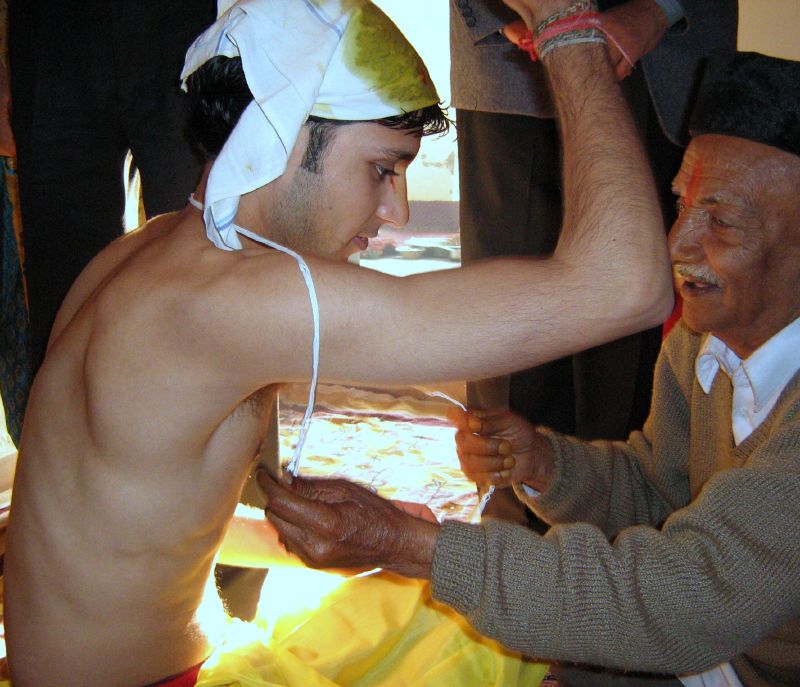 🇮🇳 India and 1 moreUpanayanaउपनयन
A Hindu rite of passage marking a student's initiation into formal education and spiritual discipline.Rite · Speaking with spirits and the dead · Power and authority Living
🇮🇳 India and 1 moreUpanayanaउपनयन
A Hindu rite of passage marking a student's initiation into formal education and spiritual discipline.Rite · Speaking with spirits and the dead · Power and authority Living
 🇮🇳 India and 2 moreKalachakraདུས་ཀྱི་འཁོར་ལོ།
A Tibetan Buddhist tantric deity and system of yogic time cyclesTradition · Change and initiation · Speaking with spirits and the dead Living
🇮🇳 India and 2 moreKalachakraདུས་ཀྱི་འཁོར་ལོ།
A Tibetan Buddhist tantric deity and system of yogic time cyclesTradition · Change and initiation · Speaking with spirits and the dead Living
Related elsewhere
All rite 🇮🇶 Iraq and 1 moreRabisu
A wind spirit in Akkadian myth sent to correct human transgressionsBeing · Cursing and harm · Cleansing and purification Historical
🇮🇶 Iraq and 1 moreRabisu
A wind spirit in Akkadian myth sent to correct human transgressionsBeing · Cursing and harm · Cleansing and purification Historical
 🇪🇸 Spain and 6 moreBurning of Judas
An Easter rite where an effigy of the betrayer is destroyed by fire or other meansRite · Cursing and harm · Cleansing and purification Living
🇪🇪 Estonia and 1 moreWitch trials in Latvia and Estonia
Early modern persecutions of sorcery and paganism by Baltic German authoritiesBelief · Cursing and harm · Cleansing and purification Historical
🇬🇷 GreeceDeipnonδεῖπνον
An ancient Athenian lunar offering to Hekate and the restless dead at the month's end.Rite · Protection · Cursing and harm Living
🇪🇸 Spain and 6 moreBurning of Judas
An Easter rite where an effigy of the betrayer is destroyed by fire or other meansRite · Cursing and harm · Cleansing and purification Living
🇪🇪 Estonia and 1 moreWitch trials in Latvia and Estonia
Early modern persecutions of sorcery and paganism by Baltic German authoritiesBelief · Cursing and harm · Cleansing and purification Historical
🇬🇷 GreeceDeipnonδεῖπνον
An ancient Athenian lunar offering to Hekate and the restless dead at the month's end.Rite · Protection · Cursing and harm Living