
Land diving
In its own language: nanggol
from the Saa word gol, meaning both the tower and the dive
A ritual jump from a wooden tower using vines to ensure a good harvest
Men on Pentecost Island in Vanuatu leap from tall wooden towers with vines tied to their ankles. The practice is believed to bring health and guarantee a bountiful yam harvest.
- Men jump from 20-30 meter wooden towers with ankle vines
- Ritual ensures a bountiful yam harvest and removes illness
- Origin legend involves a woman tricking her husband into a fatal jump
- Boys perform their first dive as a rite of passage into manhood
- Tourism revenue is managed by chiefs to maintain cultural integrity
What it is
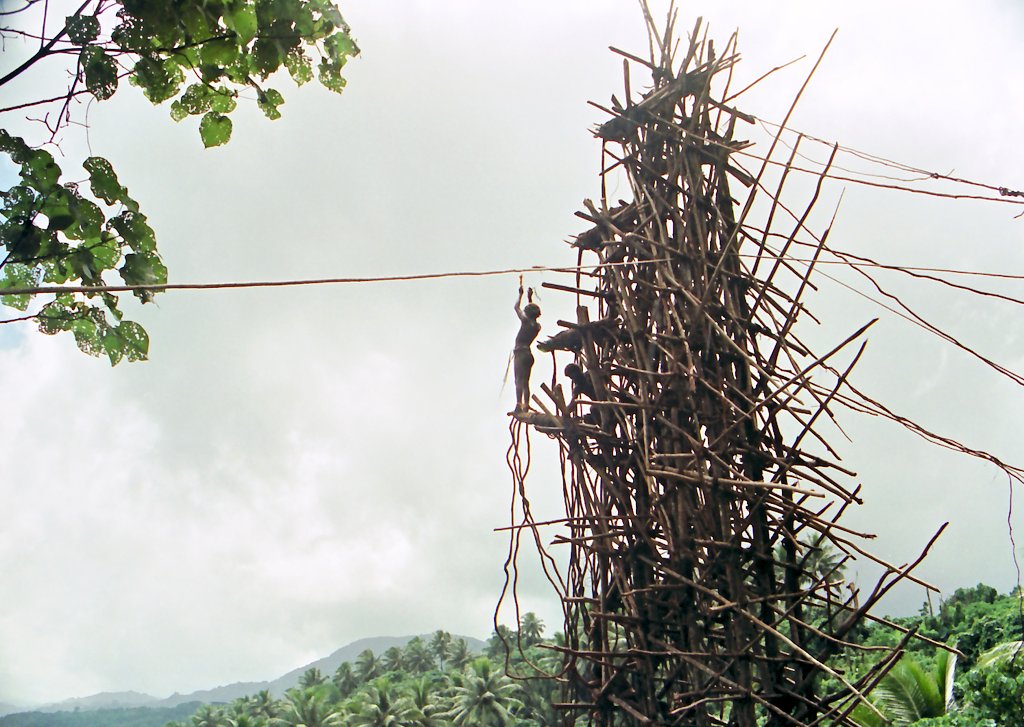
Land diving is a traditional rite performed by men on Pentecost Island in Vanuatu. Participants leap from tall wooden towers while attached to elastic tree vines at the ankles. The custom is deeply connected to the annual yam harvest cycle. It serves as a public display of courage and a spiritual act intended to bless the crops. The practice has evolved into a significant cultural symbol for the region.
Where it comes from
Legends attribute the origin to a dispute between a husband and wife. A woman tricked her husband into jumping from a tree without vines, causing his death. Men subsequently built taller towers to prove their bravery. Another version involves a woman named Tamalie who jumped to escape her husband. Women later adopted the practice, but men took it over to avoid seeing women in danger. The ritual shifted from trees to constructed wooden platforms over time.
How it is done
The ceremony begins with a ritual wash and anointing with coconut oil. Men wear traditional attire including boar tusks. Jumpers start from lower platforms and progress to higher ones. They cross their arms over their chests and tuck their heads to brush their shoulders against the ground. The vine length is carefully matched to the jumper's weight by elders. After the jump, villagers rush to assist the diver.
Tools and materials
The central tool is a wooden tower built over several weeks. The structure represents a human body, with platforms symbolizing male genitalia. Elastic lianas are selected for their sap content and flexibility. The vines are shredded at the ends to loop securely around ankles. No lucky charms are worn during the dive to prevent bad luck.
Land diving, drawn and placed
- Living
- Revived
- Fading
- Historical
- Legendary
- Performed
- Lineage
- culture of Vanuatu
- Timing
- during the dry season for preparation, April to June for the ritual
What it is for
The primary intent is to ensure a successful yam harvest. A high dive is believed to correlate with crop abundance. The ritual also aims to remove illnesses associated with the wet season. It demonstrates masculinity and warrior spirit. Boys undergo land diving as a rite of passage into manhood after circumcision.
Who does it
Only adult men participate in the jumps. Young boys perform their first dive after circumcision to mark their transition to adulthood. Village elders select and prepare the vines. Women provide support through dance but do not jump. The practice requires physical strength and mental fortitude to overcome fear.
Peoples and places
The ritual is specific to the Saa people of southern Pentecost Island. It remains a core element of local identity. The community maintains strict gender roles regarding participation. The tradition distinguishes itself from other Pacific island customs through its unique vertical architecture and vine mechanics.
At a glance: who, where and when
Who does it
Peoples
Belief worlds



What people believe
Villagers believe the dive enhances physical health and strength. The tower is inhabited by a spirit named Tamalie. Women must avoid the construction site to prevent the spirit from seeking vengeance. The ritual connects the community to ancestral spirits and ensures cosmic balance for agriculture.
When it is done
Preparation occurs during the dry season when vines have optimal elasticity. The actual dives take place annually between April and June. This period coincides with the yam harvest festival. The timing is crucial for both the structural integrity of the tower and the spiritual efficacy of the rite.
How scholars and sceptics see it
Anthropologists view land diving as a complex expression of cultural identity and social cohesion. Historians note its suppression by missionaries and subsequent revival post-independence. The ritual is studied as a form of resistance against colonial erasure of indigenous practices.
Cautions and what is closed
The activity carries significant physical risk. Divers can suffer broken necks, concussions, or fatal falls if vines fail. A historical incident involving Queen Elizabeth II resulted in a diver's death due to incorrect seasonal vines. Commercial tourism has led to safety debates and occasional bans on filming to protect cultural integrity.
Compare and confuse
Land diving is often compared to modern bungee jumping due to the use of elastic cords. However, the traditional practice is rooted in agricultural spirituality rather than recreation. The term naghol is distinct from generic adventure sports terminology.
Law and persecution
The Vanuatu government supports the ritual as part of national heritage. Chiefs formed a tourism council to manage commercial interactions. Efforts were made to claim royalties from bungee jumping enterprises, viewing them as derivative of the original custom. Legal protections aim to preserve authenticity against exploitation.
Questions people ask about Land diving
What is land diving?
It is a ritual from Pentecost Island in Vanuatu where men jump from wooden towers using vines tied to their ankles. The practice is performed to ensure a good yam harvest and demonstrate bravery.
Why do they perform land diving?
Practitioners believe the dive brings health, removes wet-season illnesses, and guarantees a bountiful yam harvest. It also serves as a rite of passage for boys becoming men.
Where does the tradition come from?
Legends say it started after a woman tricked her husband into jumping from a tree without vines. Men built towers to prove their courage and prevent being tricked again.
Is it safe?
The ritual carries risks of injury or death if vines break or are too short. Elders carefully match vine elasticity to each jumper's weight to minimize danger.
Good reading and sources
- Encyclopaedia BritannicaArticle
- National GeographicNational Geographic, Article
- Falling by Garrett SodenThe Guardian, Article
- Land diving on WikipediaEncyclopedia
- More photos on Wikimedia CommonsPhotos and video
- Wikidata recordOpen data
The facts on this page come from the Wikipedia article "Land diving", written by its contributors and used under the CC BY-SA 4.0 licence, and from its Wikidata record (CC0). EveryJaadu rewrote the text in its own words, with AI assistance, and compares every page with the article to make sure no passage is copied. It may be reused under the same CC BY-SA 4.0 licence with a link back.
It may contain mistakes. Names and customs differ from one community to the next, and some knowledge is closed to outsiders and left out here. This page describes belief and practice. It does not say that any of it works, it is not a how-to, and it is not medical advice. If something is wrong, tell us. Last refreshed 2026-10-05.
More from Vanuatu
All the entries from Vanuatu 🇻🇺 Vanuatu and 5 moreKava culture
A shared ritual across Oceania where a root brew marks ceremony, respect, and social gathering.Tradition · Speaking with spirits and the dead · Luck and prosperity Living
🇻🇺 Vanuatu and 5 moreKava culture
A shared ritual across Oceania where a root brew marks ceremony, respect, and social gathering.Tradition · Speaking with spirits and the dead · Luck and prosperity Living
 🇻🇺 VanuatuJohn Frum
A Melanesian cargo cult figure on Tanna Island who promises wealth and the return of American supplies.Figure · Luck and prosperity · Power and authority Living
🇳🇿 New Zealand and 5 moreTapu
A Polynesian concept of sacred restriction and spiritual prohibitionTradition · Protection · Speaking with spirits and the dead Living
🇻🇺 VanuatuJohn Frum
A Melanesian cargo cult figure on Tanna Island who promises wealth and the return of American supplies.Figure · Luck and prosperity · Power and authority Living
🇳🇿 New Zealand and 5 moreTapu
A Polynesian concept of sacred restriction and spiritual prohibitionTradition · Protection · Speaking with spirits and the dead Living
 🇻🇺 Vanuatu and 3 moreKastom
A Melanesian term for traditional life, covering magic, law and ritualTradition · Speaking with spirits and the dead · Power and authority Living
🇻🇺 Vanuatu and 3 moreKastom
A Melanesian term for traditional life, covering magic, law and ritualTradition · Speaking with spirits and the dead · Power and authority Living
Related elsewhere
All rite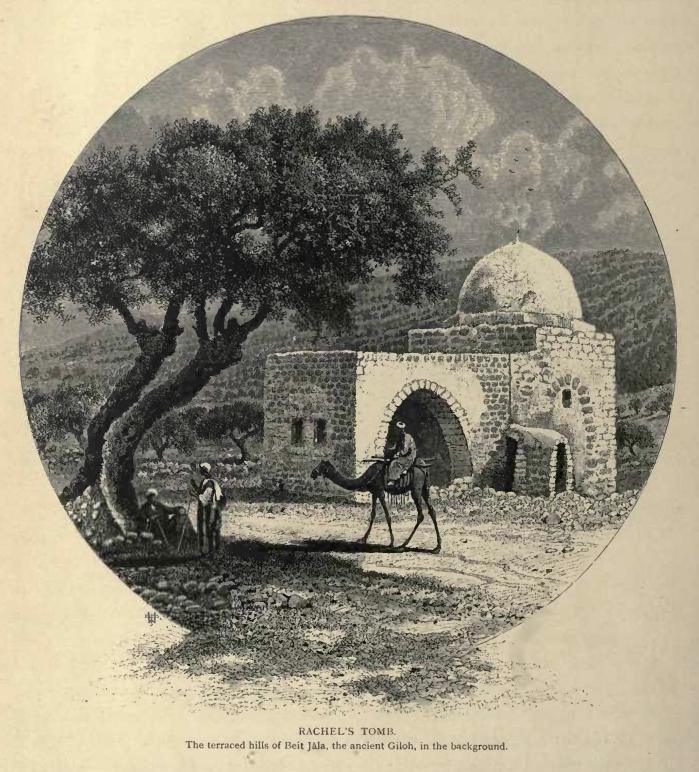 🇵🇸 Palestine and 1 moreRachel's TombQever Raḥel; Qabr Rāḥīl
A shared holy site near Bethlehem revered by Jews, Christians, and MuslimsTradition · Speaking with spirits and the dead · Protection Living
🇵🇸 Palestine and 1 moreRachel's TombQever Raḥel; Qabr Rāḥīl
A shared holy site near Bethlehem revered by Jews, Christians, and MuslimsTradition · Speaking with spirits and the dead · Protection Living
 🇪🇸 Spain and 5 moreSt John's Eve
A Christian vigil marked by bonfires and plant gathering on the summer solstice eveRite · Protection · Speaking with spirits and the dead Living
🇪🇸 Spain and 5 moreSt John's Eve
A Christian vigil marked by bonfires and plant gathering on the summer solstice eveRite · Protection · Speaking with spirits and the dead Living
 🇮🇳 India and 2 moreHomaहोम
A fire ritual found across Asian religions where offerings are burned as a votive exchange with the divine.Rite · Protection · Speaking with spirits and the dead Living
🇨🇳 China and 4 moreKitchen God灶君
The Chinese hearth deity who reports domestic conduct to the Jade EmperorBeing · Protection · Luck and prosperity Living
🇮🇳 India and 2 moreHomaहोम
A fire ritual found across Asian religions where offerings are burned as a votive exchange with the divine.Rite · Protection · Speaking with spirits and the dead Living
🇨🇳 China and 4 moreKitchen God灶君
The Chinese hearth deity who reports domestic conduct to the Jade EmperorBeing · Protection · Luck and prosperity Living