🇮🇩 Magic in Indonesia
68 entries from Indonesia, best known first, across 35 places of magic.
Kejawèn is a Javanese cultural tradition blending animism, Hinduism, Buddhism, and Islam. It emphasizes inner harmony and spiritual refinement alongside formal religious observance. This syncretic path offers a distinct ethical style for those seeking mystical connection within Indonesian society.
- Kebatinan means inwardness derived from Arabic batin
- Kyais serve as intermediaries between people and spirits
- Tapa involves ascetic trials like hanging from trees
- Abangan group mixes Islam with animistic beliefs
- Recognized as Kepercayaan under Ministry of Education
Overview
Kejawèn represents the indigenous spiritual core of Java, weaving together ancient animistic beliefs with later Hindu-Buddhist and Islamic influences. It functions less as a rigid institution and more as a way of life focused on inner peace and cosmic balance. The tradition absorbs external elements that align with local values, creating a unique blend of mysticism and daily ethics. While nominally Muslim communities often follow this undercurrent, it maintains its own distinct identity centered on self-cultivation and respect for unseen forces.
Practices and beliefs
Practitioners seek spiritual knowledge through meditation and ascetic disciplines known as tapa. These methods aim to purify the inner self and connect with a higher consciousness. Activities include silent contemplation and physical trials like hanging from trees or meditating under waterfalls. The goal is to control passions and achieve harmony with the universe. Rituals are often performed in natural settings such as caves or mountain tops rather than formal temples.
Rites and charms
Rites focus on internal purification rather than public ceremony. Followers engage in tiraka and tapabrata to refine their character and gain insight. These practices involve strict self-discipline and withdrawal from worldly comforts. Meditation serves as the primary tool for accessing inner wisdom. The rituals are personal and secretive, passed down through generations without standardized liturgies or sacred texts shared by all groups.
Who practises
Leaders include kyais who blend Islamic scholarship with pre-Islamic lore. They act as intermediaries between villagers and the supernatural realm. Membership spans various ethnicities and official religions, including some political figures. Practitioners identify as seekers of inner truth rather than adherents to a single dogma. The community includes both rural devotees and urban intellectuals interested in mystical philosophy.
Regions and communities
The tradition is strongest in Central and East Java, where historical Hindu-Buddhist kingdoms once thrived. Western Java also hosts numerous kebatinan groups. Urban centers see a mix of orthodox Islam and syncretic practices. Rural areas maintain stronger ties to animistic spirit cults and local shrine veneration. The distribution reflects historical migration patterns and colonial administrative boundaries.
The calendar
There are no universal festivals specific to Kejawèn itself. Observances align with the lunar calendar of Islam or agricultural cycles. Life events like births and deaths incorporate both Islamic rites and traditional Javanese customs. Seasonal changes influence meditation practices and retreats. The lack of fixed dates allows flexibility for individual spiritual journeys.
Law and the state
The state recognizes six official religions, leaving Kejawèn in a legal gray area. Groups often register under the category of Kepercayaan to avoid persecution. Some movements face scrutiny from orthodox Islamic authorities who view them as heterodox. Government tolerance varies, with periods of suppression followed by relative acceptance. Legal status depends on alignment with national philosophical principles.
Today
Modernization and urbanization challenge traditional folk Islam. Many young Javanese explore Kejawèn as a path to spiritual depth outside rigid orthodoxy. Migration spreads these beliefs to other islands and countries. Commercialization sometimes dilutes authentic practices for tourism. Despite pressures, the tradition persists as a vital component of Javanese cultural identity.
The facts in this overview come from the Wikipedia article "Kejawèn", written by its contributors and used under the CC BY-SA 4.0 licence. EveryJaadu rewrote the text in its own words, with AI assistance, and compares every page with the article to make sure no passage is copied. It may be reused under the same CC BY-SA 4.0 licence with a link back.
Places of magic in Indonesia
 🇮🇳 India and 2 moreRudrakshaरुद्राक्ष
Dried seeds of the Elaeocarpus tree used as prayer beads in Hindu and Buddhist traditions.Substance · Protection · Speaking with spirits and the dead Living
 🇮🇳 India and 5 moreKartikeyaKārttikeya
Hindu god of war and victory, son of Shiva and ParvatiBeing · Power and authority · Protection Living
 🇮🇩 IndonesiaBarongᬩᬭᭀᬂ
A lion-like spirit king of Balinese mythology who battles the witch-queen Rangda in ritual dance.Being · Protection · Wonder and entertainment Living
 🇮🇩 IndonesiaPenjorᬧᬾᬜ᭄ᚚᚚᭀᬃ
A curved bamboo pole marking prosperity in Balinese Hindu ceremonyTradition · Luck and prosperity · Power and authority Living
 🇮🇳 India and 5 moreMandalaमण्डल
A sacred geometric design used in Indian religions for meditation and spiritual mapping.Tradition · Speaking with spirits and the dead · Wonder and entertainment Living
 🇮🇳 India and 4 moreShivaशिव
A principal Hindu deity of destruction and yoga, worshipped across South and Southeast AsiaBeing · Power and authority · Change and initiation Living
 🇮🇳 India and 2 moreSuryaसूर्य
The sun as a Hindu deity and the source of light and knowledgeBeing · Power and authority · Healing Historical
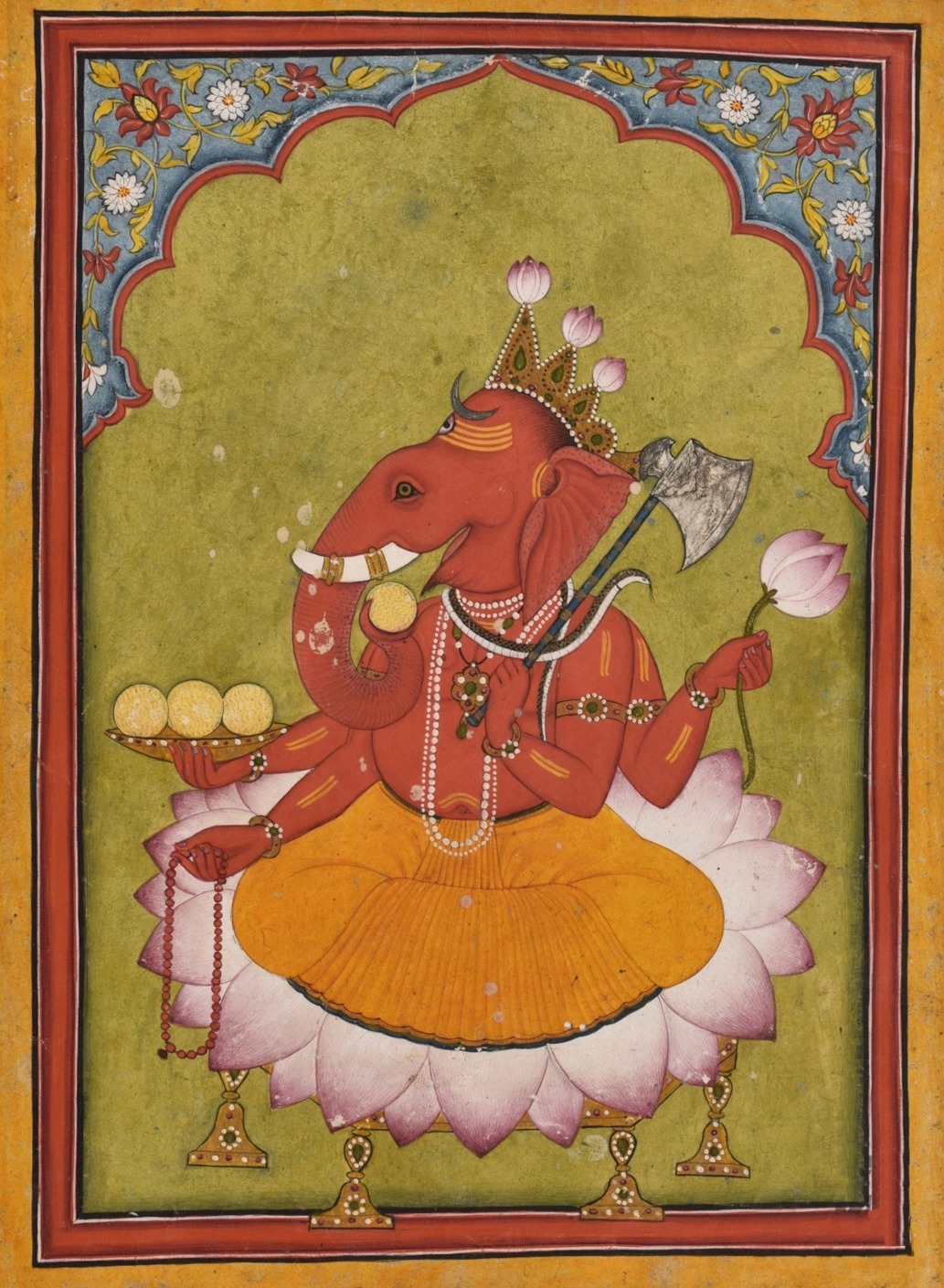 🇮🇳 India and 5 moreGaneshaगणेश (Gaṇeśa)
An elephant-headed Hindu deity worshipped as the remover of obstacles and patron of wisdom.Being · Protection · Luck and prosperity Living
 🇮🇳 India and 5 moreHanumanहनुमान्
A divine vanara deity of devotion and strength in HinduismBeing · Protection · Power and authority Living
 🇮🇳 India and 5 moreBhairavaभैरव
A fierce manifestation of Shiva and a Buddhist protector deity worshipped across South and East Asia.Being · Protection · Cursing and harm Living
 🇮🇩 Indonesia and 4 moreKejawènꦏꦗꦮꦺꦤ꧀ (Kajawèn)
A Javanese tradition blending animism, Hinduism, Buddhism and Islam into a path of inner harmony.Tradition · Protection · Speaking with spirits and the dead Living
 🇮🇩 IndonesiaNyepiᬜᬾᬧᬶ
A Balinese Hindu holiday of total silence, fasting, and darkness marking the new year.Tradition · Cleansing and purification · Speaking with spirits and the dead Living
 🇮🇩 IndonesiaOgoh-ogohᬳᭀᬕᭀᬄᬳᭀᬕᭀᬄ
Balinese statues paraded to symbolize and eliminate negative forces before the New YearTradition · Cursing and harm · Cleansing and purification Living
 🇹🇭 Thailand and 7 moreSpirit house
A small shrine found across Southeast Asia to appease local protective spiritsTradition · Protection · Speaking with spirits and the dead Living
 🇮🇩 IndonesiaRangdaᬭᬗ᭄ᬤ
A Balinese demon queen who leads witches in an eternal battle against good.Being · Cursing and harm · Wonder and entertainment Legendary
 🇮🇳 India and 5 moreKolamகோலம்
A daily geometric floor drawing made with rice flour at the home entrance in South IndiaRite · Protection · Luck and prosperity Living
🇲🇾 Malaysia and 1 moreBomohبوموه
A Malay traditional healer and spirit worker found in Malaysia and Indonesia.Tradition · Healing · Protection Living
 🇨🇳 China and 5 moreGhost FestivalZhongyuan Jie (中元节)
A festival for appeasing wandering spirits and honoring ancestors in East and Southeast AsiaRite · Speaking with spirits and the dead · Protection Living
 🇮🇳 India and 5 moreBindibindú
A dot worn on the forehead to mark spiritual focus and marital status in South Asia.Charm · Protection · Power and authority Living
 🇮🇳 India and 2 moreApsaraअप्सरस् (Sanskrit), អប្សរា (Khmer)
Celestial water spirits and dancers from Hindu and Buddhist traditions across South and Southeast AsiaBeing · Wonder and entertainment Legendary
🇮🇩 IndonesiaIndonesian numismatic charmUang Gobog
Coin-like amulets from Indonesia used for protection and ritual offerings.Charm · Protection · Luck and prosperity Living
 🇮🇳 India and 4 moreMakaraमकर
A legendary sea-creature in Hindu mythology and a symbol of water and thresholdsBeing · Protection · Power and authority Historical
 🇮🇳 India and 5 moreKinnaraकिन्नर (Sanskrit)
A half-human, half-bird creature from Hindu and Buddhist myth, known for music and devotion.Being · Love and attraction · Wonder and entertainment Legendary
 🇬🇷 Greece and 4 moreTutelary deity
A guardian spirit or god assigned to protect a specific place, person, or group.Being · Protection Living
 🇮🇩 IndonesiaAntabogaꦄꦤ꧀ꦠꦨꦺꦴꦒ
A serpent deity of Javanism and Sundanism who created the world turtle and rice goddessBeing · Power and authority Historical
 🇮🇩 IndonesiaBarongᬩᬭᭀᬂ
A lion-like spirit king of Bali who battles the witch queen Rangda in dance and mythBeing · Protection Living
 🇮🇳 India and 5 moreNavaratnaनवरत्न
A nine-gem talisman set in gold or silver, linked to Hindu astrology and planetary worshipCharm · Protection · Healing Living
 🇮🇩 IndonesiaGajamina
An elephant-headed fish creature used in Balinese sarcophagi and star namesBeing · Wonder and entertainment Legendary
 🇮🇳 India and 1 moreIravanஅரவான்
A Hindu deity worshipped as a severed head for healing and protectionFigure · Healing · Protection Living
 🇮🇩 IndonesiaBhoma
A Balinese earth god whose carved face on temple gates is believed to repel spiritsBeing · Protection · Love and attraction Living
Photo credits on this page
The small pictures above come from Wikimedia Commons under free licences. Some are cropped to fit.
- Mandala: Marion Golsteijn, CC BY-SA 3.0, source
- Makara: Subbhashinee S, CC BY-SA 3.0, source
- Barong: Michael Gunther, CC BY-SA 4.0, source
- Shiva: Indianhilbilly, CC BY-SA 3.0, source
- Kartikeya: Dassmahen, CC BY-SA 4.0, source
- Ganesha: anonymous, Public domain, source
- Rudraksha: Merasmita, CC BY-SA 4.0, source
- Gajamina: Youla Azkarrula, CC BY 4.0, source
- Penjor: Chainwit., CC BY-SA 4.0, source
- Kejawèn: Greenland4, Public domain, source
- Ghost Festival: Chong Fat, CC BY-SA 3.0, source
- Bindi: Vinay Sahay, CC BY-SA 4.0, source
- Rangda: Boy Lawson, CC BY-SA 3.0, source
- Barong: Skha, CC BY-SA 4.0, source
- Nyepi: Matt Croxson, Public domain, source
- Spirit house: Chainwit., CC BY-SA 4.0, source
- Brownie: Unknown author, CC BY-SA 2.5, source
- Kolam: mckaysavage, CC BY 2.0, source
- Bhoma: Siti Noviali, CC BY-SA 4.0, source
- Antaboga: fir0002 flagstaffotos [at] gmail.com Canon 20D + Tamron 28-75mm f/2.8, GFDL 1.2, source
- Bhairava: Saankav, CC BY-SA 4.0, source
- Apsara: Unknown author, CC0, source
- Hanuman: Niranjan Arminius, CC BY-SA 2.0, source
- Kinnara: ผู้สร้างสรรค์ผลงาน/ส่งข้อมูลเก็บในคลังข้อมูลเสรีวิกิมีเดียคอมมอนส์ - เ, Public domain, source
- Iravan: Chainwit., CC BY-SA 4.0, source
- Navaratna: Pradeep717, CC BY-SA 4.0, source
- Surya: Ravi Varma Press, Public domain, source
- Ogoh-ogoh: Simondodit, CC BY-SA 4.0, source
The weekly digest
Every Monday: seven entries you may not know, what is on the calendar this week, and one rite drawn step by step.