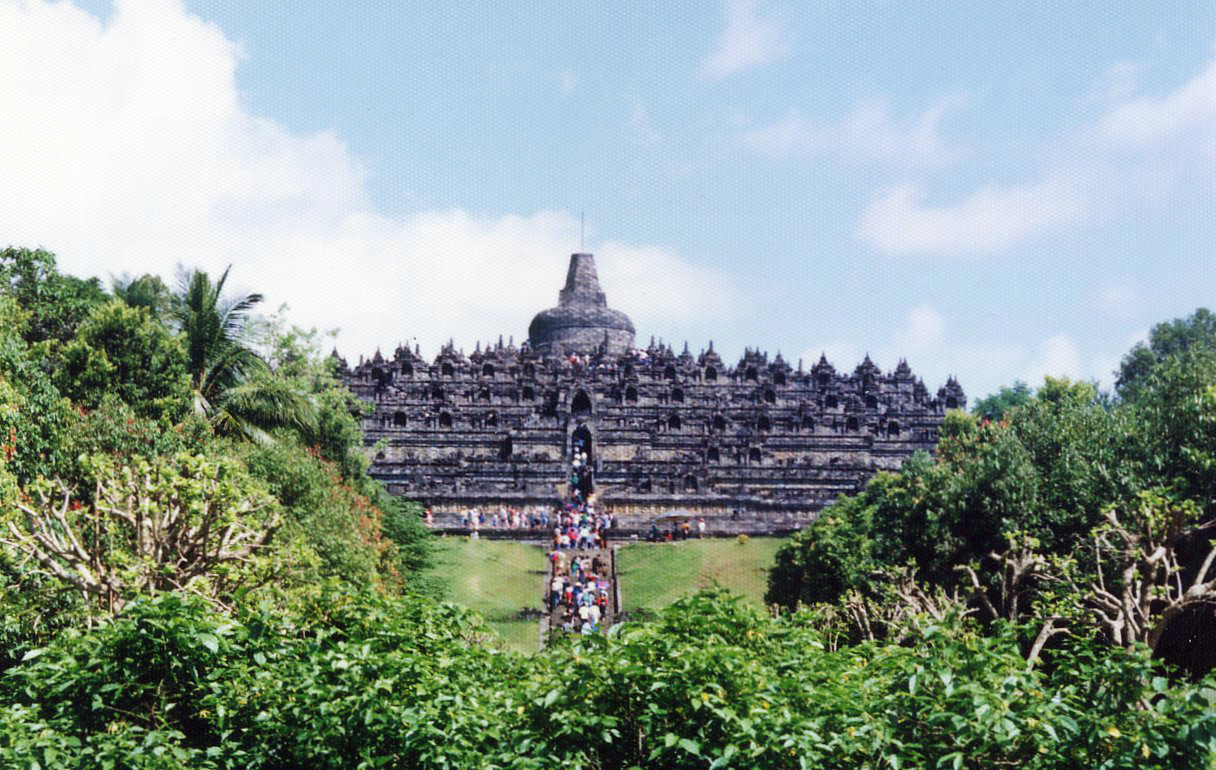
Kejawèn
In its own language: ꦏꦗꦮꦺꦤ꧀ (Kajawèn)
from Javanese kebatinan, meaning 'the science of the inner' or 'inwardness'
A Javanese tradition blending animism, Hinduism, Buddhism and Islam into a path of inner harmony.
Kejawèn is a cultural and spiritual tradition of the Javanese people in Indonesia. It combines ancient local beliefs with elements from major world religions to seek inner peace and cosmic balance.
- Blends animism, Hinduism, Buddhism and Islam
- Focuses on inner peace and the batin
- Strongest in Central and East Java
- Recognized as Kepercayaan in Indonesia
- Uses meditation and ascetic practices
What it is
Kejawèn, also called Javanism, is a living cultural tradition of the Javanese people. It is not a single organized religion but a style of life and an ethic. The practice blends animistic spirit beliefs with Hindu, Buddhist and Islamic ideas. Followers seek harmony within their inner self and connection to the universe. The term Kebatinan refers to this inward cultivation of peace. Kejawèn focuses on community rituals and outward practices. It is rooted in the history of Java and its diverse religious past.
Where it comes from
Java has long been a meeting place for many cultures. Indian influences arrived early through Hinduism and Buddhism. Ancient kingdoms like Mataram and Majapahit built great temples and spread these beliefs. Islam reached the region around the fifteenth century. Sufi mystics found it easy to blend with existing local traditions. The Dutch colonial period saw the rise of Theosophy, which influenced some Javanist groups. These layers created a unique syncretic tradition that filters foreign ideas to fit Javanese character.
How it is done
Practitioners engage in meditation to find inner wisdom and strength. They may meditate in caves or on mountain peaks. Some perform tapabrata, which are ascetic disciplines. These can include hanging from trees or sitting under waterfalls. Rituals often involve offerings and are performed at home or in natural settings. The goal is to control passions and achieve a state of perfection. Practices are passed down through generations and adapted by each follower.
Tools and materials
The main tool is the mind used in meditation. Practitioners use natural sites like mountains and caves as places of power. Offerings such as tumpeng rice are common in community rituals. Language plays a role, with Old Javanese used in ceremonies. The concept of batin, or the inner self, is central. Tools are simple and focus on internal transformation rather than external objects.
Kejawèn, drawn and placed
- Living
- Revived
- Fading
- Historical
- Legendary
- Performed
- Lineage
- Folk religion of Java
- Timing
- daily meditation and life crises
What it is for
The aim is to acquire ilmu, or spiritual knowledge. Followers seek emotional relief and physical strength. They want to purify their inner person and connect with the divine. The tradition emphasizes purity of heart over strict ritual observance. It offers a way to live with harmony in a complex world. Many see it as a complement to their official religious identity.
Who does it
Most practitioners are Javanese households. The tradition attracts people from other ethnic groups too. Scholars study it as a form of folk religion. Leadership is loose, revolving around kyais who teach both old and new lore. There is no single hierarchy. President Suharto was known to follow these beliefs. Membership is hard to count because many list themselves as Muslim or Hindu officially.
Peoples and places
The tradition is strongest in Central and East Java. It exists in Malaysia and Singapore among Javanese communities. Diaspora groups in Suriname and Australia maintain aspects of it. In Indonesia, it is recognized under the umbrella of Kepercayaan. The tradition varies by region, with some areas keeping stronger animist roots.
At a glance: who, where and when


What people believe
Beliefs mix metaphysics with mysticism. There is no single prophet or sacred book. Followers believe in a super-consciousness reachable through meditation. They value human wisdom and psychic clarity. The universe is seen as connected to the inner self. Harmony with the Almighty God is the ultimate goal. The tradition is tolerant and filters new ideas to fit local values.
When it is done
There are no fixed religious festivals specific to Kejawèn alone. Practices occur daily through meditation. Life events like crises may trigger specific rituals. The tradition does not have a distinct calendar of holy days. Instead, it follows the rhythms of daily life and nature.
How scholars and sceptics see it
Anthropologists like Clifford Geertz studied the split between santri and abangan. They describe Kejawèn as a form of syncretism. Scholars note its resistance to strict scriptural Islam. Theosophists played a key role in its modern organization. Researchers view it as a response to modernity and colonial rule. It is seen as a way to preserve Javanese identity.
Cautions and what is closed
The tradition faces pressure from orthodox Islamic groups. Some consider it heterodox or less pure. Legal recognition has shifted over time. It was once under the Ministry of Religion, then moved to Education. Practitioners must navigate official religious categories carefully.
Compare and confuse
It is often confused with pure Islam or Hinduism. The term Kepercayaan is a broad legal cover for many groups. Kebatinan is sometimes used interchangeably with Kejawèn. However, Kejawèn is more about culture and ethics. Abangan refers to the lower-class syncretic practice. Priyayi refers to the elite variety. Both share roots in Javanist thinking.
Law and persecution
The Indonesian government recognizes six official religions. Kejawèn is not one of them. It falls under Kepercayaan kepada Tuhan Yang Maha Esa. This status was granted in 1973. It is managed by the Ministry of Education and Culture. This allows followers to identify legally without converting. Other sects in Java face similar bureaucratic challenges.
Questions people ask about Kejawèn
What is Kejawèn?
It is a Javanese cultural tradition that blends local animism with Hindu, Buddhist and Islamic elements. It focuses on inner harmony and ethical living rather than strict dogma.
Where does it come from?
It originated in Java, Indonesia. It developed from ancient Indian influences and later Islamic Sufism, filtering them through Javanese culture.
Is it a religion?
It is considered a cultural tradition and ethic. In Indonesia, it is legally recognized as Kepercayaan, a belief system under the state's umbrella for non-official faiths.
How do people practice it?
Followers meditate to find inner wisdom. They may perform ascetic disciplines like hanging from trees. Rituals often happen at home or in nature.
Good reading and sources
The facts on this page come from the Wikipedia article "Kejawèn", written by its contributors and used under the CC BY-SA 4.0 licence, and from its Wikidata record (CC0). EveryJaadu rewrote the text in its own words, with AI assistance, and compares every page with the article to make sure no passage is copied. It may be reused under the same CC BY-SA 4.0 licence with a link back.
It may contain mistakes. Names and customs differ from one community to the next, and some knowledge is closed to outsiders and left out here. This page describes belief and practice. It does not say that any of it works, it is not a how-to, and it is not medical advice. If something is wrong, tell us. Last refreshed 2026-10-06.
More from Indonesia
All the entries from Indonesia 🇮🇩 IndonesiaNyepiᬜᬾᬧᬶ
A Balinese day of total silence, fasting, and self-reflection to mark the new year.Rite · Cleansing and purification · Speaking with spirits and the dead Living
🇮🇩 IndonesiaNyepiᬜᬾᬧᬶ
A Balinese day of total silence, fasting, and self-reflection to mark the new year.Rite · Cleansing and purification · Speaking with spirits and the dead Living
 🇮🇩 IndonesiaOgoh-ogohᬳᭀᬕᭀᬄ ᬳᭀᬕᭀᬄ
Balinese sculptures paraded and burned to cleanse the environment before NyepiTradition · Cursing and harm · Cleansing and purification Living
🇮🇩 IndonesiaOgoh-ogohᬳᭀᬕᭀᬄ ᬳᭀᬕᭀᬄ
Balinese sculptures paraded and burned to cleanse the environment before NyepiTradition · Cursing and harm · Cleansing and purification Living
 🇮🇩 IndonesiaPenjorᬧᬾᬜ᭄ᚚᚚᭀᬃ
A curved bamboo pole marking prosperity in Balinese Hindu ceremonyTradition · Luck and prosperity · Power and authority Living
🇮🇩 IndonesiaPenjorᬧᬾᬜ᭄ᚚᚚᭀᬃ
A curved bamboo pole marking prosperity in Balinese Hindu ceremonyTradition · Luck and prosperity · Power and authority Living
Related elsewhere
All tradition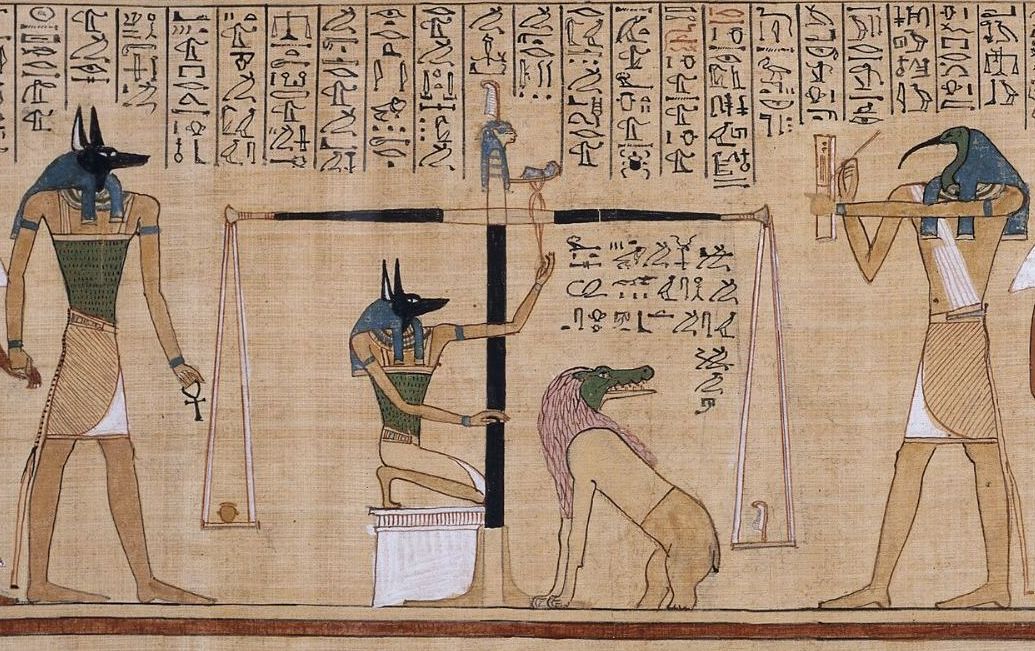 🇪🇬 EgyptAncient Egyptian afterlife beliefs
A system of rituals and texts guiding the soul through the underworld to eternal rebirthTradition · Protection · Speaking with spirits and the dead Historical
🇪🇬 EgyptAncient Egyptian afterlife beliefs
A system of rituals and texts guiding the soul through the underworld to eternal rebirthTradition · Protection · Speaking with spirits and the dead Historical
 🇺🇸 United StatesGhost DanceNanissaanah
A circular movement seeking spiritual renewal and reunion with ancestorsRite · Speaking with spirits and the dead · Change and initiation Living
🇺🇸 United StatesGhost DanceNanissaanah
A circular movement seeking spiritual renewal and reunion with ancestorsRite · Speaking with spirits and the dead · Change and initiation Living
 🇮🇳 IndiaChakraचक्र
Meditation points in the subtle body used in Hindu and Buddhist yogaTradition · Speaking with spirits and the dead · Change and initiation Living
🇮🇳 IndiaChakraचक्र
Meditation points in the subtle body used in Hindu and Buddhist yogaTradition · Speaking with spirits and the dead · Change and initiation Living
 🇮🇳 India and 2 moreHomaहोम
A fire ritual found across Asian religions where offerings are burned as a votive exchange with the divine.Rite · Protection · Speaking with spirits and the dead Living
🇮🇳 India and 2 moreHomaहोम
A fire ritual found across Asian religions where offerings are burned as a votive exchange with the divine.Rite · Protection · Speaking with spirits and the dead Living