Speaking with spirits and the dead
Mediumship, ancestor rites, possession and the offerings made to the unseen.
Speaking with spirits and the dead is the aim of mediumship, ancestor rites, possession and necromancy. It runs from the spirit mediums of Korea and Brazil to Vodou possession, Chinese ancestor offerings, the Mexican Day of the Dead, Victorian spiritualism and the Witch of Endor of the Bible. It is a central practice in some living religions and a frequent target of fraud in others. This page covers who speaks to the dead and how they are judged.
Ways of contact
Methods differ. In possession, a spirit or deity is said to speak through the body of a medium, as in Vodou, Candomblé, Haitian and Brazilian rites, and in Korean gut. In trance or dream, a shaman travels to the spirit world. In offerings and festivals, families feed and talk to ancestors, as in the Hungry Ghost month in China and the ofrenda in Mexico. Spiritualism added the seance and the table-rapping of the 1840s.
Who may
In many societies, women lead: Korean mudang, Okinawan yuta, Brazilian mães de santo and the Western spiritualist mediums of the nineteenth century, who found in mediumship a public role denied elsewhere. Elsewhere, the role is for elders and ancestors' descendants. Some traditions require initiation, and some say contact with the dead is not for outsiders to attempt. Spirits and ancestors are not always friendly: mediums report angry, hungry or lost beings, and rites exist for settling them, such as offerings for neglected ancestors in China and Vietnam.
Authority and fear
Religions disagree. Christianity, Judaism and Islam each forbid certain contact with the dead while honouring prayer for them. Spiritist movements around Kardec in Brazil and France treat communication as a doctrine. Colonial authorities banned possession cults in many places, often labelling them devil worship, and some Pentecostal churches today condemn them in the same terms. The rites are widely found in Africa too, where ancestors are consulted at the family shrine and are held to watch over the living.
Fraud, grief and study
Grieving people are vulnerable. Fraudulent mediums, from the Fox sisters, who confessed in 1888, to modern cold readers, have taken money by exploiting loss. Researchers point to cold reading and to the ideomotor effect behind the Ouija board. Many bereaved people also report real comfort from rites that keep a bond with the dead, and counsellors acknowledge that continuing bonds are common. Doctors and psychologists note that a grief reaction can include hearing or sensing the dead, which is common and not in itself a sign of illness.
Speaking with spirits and the dead on EveryJaadu
The entries written up so far, best known first.
 🇮🇳 India and 5 morePretaप्रेत
A suffering spirit of insatiable hunger found in Asian religious traditionsBeing · Speaking with spirits and the dead Living
🇮🇳 India and 5 morePretaप्रेत
A suffering spirit of insatiable hunger found in Asian religious traditionsBeing · Speaking with spirits and the dead Living
 🇸🇩 Sudan and 5 moreIncense
Aromatic plant materials burned to release fragrant smoke for ritual, scent, or timekeeping.Substance · Protection · Speaking with spirits and the dead Living
🇸🇩 Sudan and 5 moreIncense
Aromatic plant materials burned to release fragrant smoke for ritual, scent, or timekeeping.Substance · Protection · Speaking with spirits and the dead Living
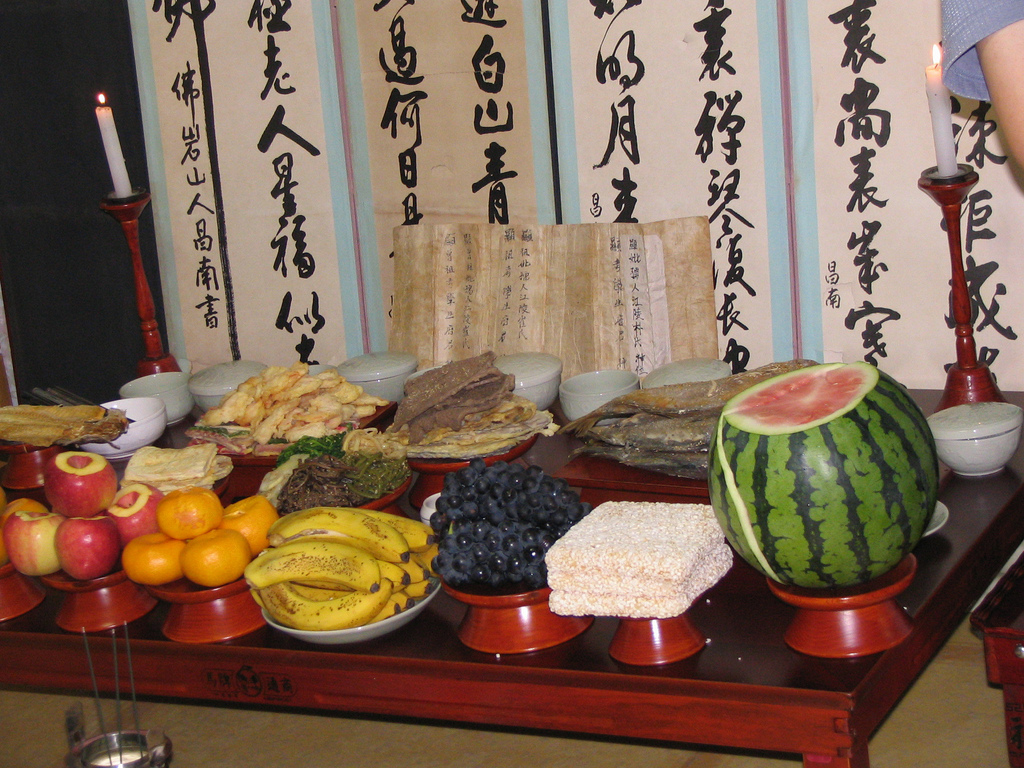 🇰🇷 South Korea and 1 moreChuseok추석 (Chuseok), 한가위 (Hangawi)
A Korean autumn harvest festival marked by ancestral rites and feasting on the full moon.Tradition · Speaking with spirits and the dead · Luck and prosperity Living
🇰🇷 South Korea and 1 moreChuseok추석 (Chuseok), 한가위 (Hangawi)
A Korean autumn harvest festival marked by ancestral rites and feasting on the full moon.Tradition · Speaking with spirits and the dead · Luck and prosperity Living
 🇯🇵 JapanShinto shrine神社 (jinja)
A structure housing kami deities within the Shinto tradition of JapanTradition · Protection · Speaking with spirits and the dead Living
🇯🇵 JapanShinto shrine神社 (jinja)
A structure housing kami deities within the Shinto tradition of JapanTradition · Protection · Speaking with spirits and the dead Living
 🇯🇵 JapanOfudaお札/御札 (ofuda)
Paper and wooden talismans from Japanese Shinto shrines and Buddhist templesCharm · Protection · Cleansing and purification Living
🇯🇵 JapanOfudaお札/御札 (ofuda)
Paper and wooden talismans from Japanese Shinto shrines and Buddhist templesCharm · Protection · Cleansing and purification Living
 🇮🇳 India and 5 moreAncestor worship
Rites of respect for the dead that maintain family bonds and seek spiritual guidanceTradition · Protection · Speaking with spirits and the dead Living
🇮🇳 India and 5 moreAncestor worship
Rites of respect for the dead that maintain family bonds and seek spiritual guidanceTradition · Protection · Speaking with spirits and the dead Living
 🇨🇳 China and 5 moreJoss paper金紙
Paper burned as money and goods for ancestors, gods and the deadCharm · Speaking with spirits and the dead · Luck and prosperity Living
🇨🇳 China and 5 moreJoss paper金紙
Paper burned as money and goods for ancestors, gods and the deadCharm · Speaking with spirits and the dead · Luck and prosperity Living
 🇨🇳 China and 5 moreQingming Festival清明节
A spring day for sweeping graves, feeding the dead and honouring ancestorsTradition · Speaking with spirits and the dead · Protection Living
🇨🇳 China and 4 moreKitchen God灶君
The Chinese hearth deity who reports domestic conduct to the Jade EmperorBeing · Protection · Luck and prosperity Living
🇨🇳 China and 5 moreQingming Festival清明节
A spring day for sweeping graves, feeding the dead and honouring ancestorsTradition · Speaking with spirits and the dead · Protection Living
🇨🇳 China and 4 moreKitchen God灶君
The Chinese hearth deity who reports domestic conduct to the Jade EmperorBeing · Protection · Luck and prosperity Living
 🇯🇵 JapanKami神
Spirits and deities of Shinto, found in nature, ancestors, and placesBeing · Protection · Luck and prosperity Living
🇯🇵 JapanKami神
Spirits and deities of Shinto, found in nature, ancestors, and placesBeing · Protection · Luck and prosperity Living
 🇯🇵 JapanTorii鳥居
A traditional Japanese gate marking the boundary between the mundane and sacred spaces of Shinto shrines.Tradition · Speaking with spirits and the dead · Protection Living
🇯🇵 JapanTorii鳥居
A traditional Japanese gate marking the boundary between the mundane and sacred spaces of Shinto shrines.Tradition · Speaking with spirits and the dead · Protection Living
 🇯🇵 JapanKagura神楽
A Shinto ritual dance where performers embody deities to purify and welcome spiritsTradition · Protection · Speaking with spirits and the dead Living
🇯🇵 JapanKagura神楽
A Shinto ritual dance where performers embody deities to purify and welcome spiritsTradition · Protection · Speaking with spirits and the dead Living
 🇨🇳 China and 1 moreAncestor veneration in China中國傳統宗法性宗教
Rites for dead kin who are thought to watch over the familyTradition · Protection · Speaking with spirits and the dead Living
🇨🇳 China and 1 moreAncestor veneration in China中國傳統宗法性宗教
Rites for dead kin who are thought to watch over the familyTradition · Protection · Speaking with spirits and the dead Living
 🇯🇵 Japan and 1 moreMisogi禊
A Shinto rite of full-body purification using cold waterRite · Cleansing and purification · Speaking with spirits and the dead Living
🇯🇵 Japan and 1 moreMisogi禊
A Shinto rite of full-body purification using cold waterRite · Cleansing and purification · Speaking with spirits and the dead Living
 🇮🇳 India and 5 moreMandalaमण्डल
A sacred geometric design used in Indian religions for meditation and spiritual mapping.Tradition · Speaking with spirits and the dead · Wonder and entertainment Living
🇯🇵 JapanYutaユタ
Okinawan folk shamans who guide families through spirits and fortune-tellingTradition · Protection · Healing Living
🇮🇳 India and 5 moreMandalaमण्डल
A sacred geometric design used in Indian religions for meditation and spiritual mapping.Tradition · Speaking with spirits and the dead · Wonder and entertainment Living
🇯🇵 JapanYutaユタ
Okinawan folk shamans who guide families through spirits and fortune-tellingTradition · Protection · Healing Living
 🇨🇳 China and 1 moreDongyue Dadi東嶽大帝
The Chinese mountain god of Mount Tai who rules lifespans and underworld recordsBeing · Speaking with spirits and the dead · Power and authority Living
🇨🇳 China and 1 moreDongyue Dadi東嶽大帝
The Chinese mountain god of Mount Tai who rules lifespans and underworld recordsBeing · Speaking with spirits and the dead · Power and authority Living
 🇸🇳 Senegal and 5 moreAncestor veneration
Rituals of respect and offerings for the dead across many culturesTradition · Protection · Speaking with spirits and the dead Living
🇸🇳 Senegal and 5 moreAncestor veneration
Rituals of respect and offerings for the dead across many culturesTradition · Protection · Speaking with spirits and the dead Living
 🇨🇳 China and 1 moreJiaobei筊杯 (jiǎobēi)
Wooden crescent blocks thrown in pairs to ask temple deities yes or no questionsOracle · Seeing and foretelling · Speaking with spirits and the dead Living
🇨🇳 China and 1 moreJiaobei筊杯 (jiǎobēi)
Wooden crescent blocks thrown in pairs to ask temple deities yes or no questionsOracle · Seeing and foretelling · Speaking with spirits and the dead Living
 🇯🇵 JapanChinkon kishin鎮魂帰神
A Japanese spiritual practice combining soul calming with spirit possessionRite · Speaking with spirits and the dead · Healing Living
🇯🇵 JapanChinkon kishin鎮魂帰神
A Japanese spiritual practice combining soul calming with spirit possessionRite · Speaking with spirits and the dead · Healing Living
 🇯🇵 Japan and 4 moreHousehold deity
A spirit or minor god believed to guard a home and its family members.Being · Protection · Speaking with spirits and the dead Historical
🇯🇵 Japan and 4 moreHousehold deity
A spirit or minor god believed to guard a home and its family members.Being · Protection · Speaking with spirits and the dead Historical
 🇨🇳 ChinaSuperstition in China
A broad category for folk beliefs and rituals dismissed as backward by modern Chinese authoritiesBelief · Protection · Luck and prosperity Living
🇨🇳 ChinaSuperstition in China
A broad category for folk beliefs and rituals dismissed as backward by modern Chinese authoritiesBelief · Protection · Luck and prosperity Living
 🇯🇵 JapanMagatama勾玉
A curved Japanese bead used as jewelry, status symbol, and sacred object in Shinto.Charm · Power and authority · Speaking with spirits and the dead Living
🇯🇵 JapanMagatama勾玉
A curved Japanese bead used as jewelry, status symbol, and sacred object in Shinto.Charm · Power and authority · Speaking with spirits and the dead Living
 🇯🇵 JapanGoryō御霊
A Japanese belief in appeasing vengeful spirits through Shinto shrinesBelief · Protection · Speaking with spirits and the dead Historical
🇯🇵 JapanGoryō御霊
A Japanese belief in appeasing vengeful spirits through Shinto shrinesBelief · Protection · Speaking with spirits and the dead Historical
 🇯🇵 JapanKabura-ya鏑矢
A Japanese arrow with a whistling tip used in ritual archery and Shinto ritesSubstance · Protection · Speaking with spirits and the dead Living
🇯🇵 JapanKabura-ya鏑矢
A Japanese arrow with a whistling tip used in ritual archery and Shinto ritesSubstance · Protection · Speaking with spirits and the dead Living
Photo credits on this page
The small pictures above come from Wikimedia Commons under free licences. Some are cropped to fit.
- Kabura-ya: urasimaru, CC BY-SA 2.0, source
- Chinkon kishin: Tomokiyo Yoshisane (友清歓真), also known as Tomokiyo Kyūgo (友清九吾), Public domain, source
- Incense: nakimusi, CC BY 2.0, source
- Ofuda: 教派研究 (Sectarian research), CC BY-SA 3.0, source
- Shinto shrine: No machine-readable author provided. Fg2 assumed (based on copyright c, Public domain, source
- Ancestor worship: Lyn Gateley, CC BY 2.0, source
- Jiaobei: Jnzl's Public Domain Photos, CC BY 2.0, source
- Kami: Bernard Gagnon, CC BY-SA 3.0, source
- Torii: JordyMeow, CC BY-SA 3.0, source
- Jesa: by Joseph Steinberg (Baltimoron in Korea) at Flickr, CC BY-SA 2.0, source
- Kagura: Elstner Hilton, Public domain, source
- Ancestor veneration in China: Three huntings, CC BY-SA 4.0, source
- Misogi: Ds13 at English Wikipedia, CC BY-SA 3.0, source
- Magatama: Kakidai, CC BY-SA 3.0, source
- Mandala: Marion Golsteijn, CC BY-SA 3.0, source
- Dongyue Dadi: H2v5o68z, CC0, source
- Ancestor veneration: Thang Nguyen, CC BY-SA 2.0, source
- Joss paper: Vmenkov, CC BY-SA 3.0, source
- Household deity: Claus Ableiter, CC BY-SA 3.0, source
- Qingming Festival: Jacklee ., CC BY-SA 3.0, source
- Preta: Temple, Richard Carnac, Sir, Public domain, source
- Goryō: Tsukioka Yoshitoshi (1839–1892), Public domain, source
- Superstition in China: Gary Todd, CC0, source