Traditions and systems
Whole bodies of practice: Vodou, shamanism, hoodoo, Wicca, onmyodo, Ifa and the rest.
A tradition is a whole body of magical practice with its own teachers, vocabulary and rules, as distinct from a single charm or rite. Ifa in West Africa, Vodou in Haiti, Tibetan Buddhist ritual, Wicca in Britain and America, and Siberian shamanism are all traditions in this sense. Some are living religions, some are modern inventions, and some survive only in fragments. This page looks at how they differ and what each label hides. Each is described here in its own terms wherever the community has chosen to share them.
Who holds them
A tradition has keepers. In Ifa, a babalawo trains for years and memorises the verses of Odu. In Haitian Vodou, a houngan or mambo is initiated within a house and a lineage. Wicca, by contrast, grew from the writings of Gerald Gardner in the 1950s and spreads by books and covens. Access varies: some traditions are open, some require initiation, and some are closed to outsiders by the community's own rule.
Names that mislead
Outsiders have often given traditions names their keepers did not choose. Colonial officials and missionaries called African and Indigenous religions fetishism, witchcraft or devil worship. The word voodoo, borrowed from the Haitian religion, became a stock horror image, while practitioners say Vodou. Many people also reject the word magic for what they see as plain religion, worship of ancestors or medicine of the land. Some are written down in long poems or scriptures, while others are carried only in memory, song and apprenticeship, which affects how outsiders can study them.
How states treat them
Treatment ranges from protection to prohibition. Haiti recognised Vodou as a religion in 2003. Britain repealed its Witchcraft Act only in 1951. Several African and Pacific states still prosecute witchcraft accusations, and Saudi Arabia has executed people for sorcery. Many traditions were absorbed rather than banned: Santeria wore the faces of Catholic saints, and Taoist ritual was licensed by Chinese emperors. Recognition on paper does not end prejudice: a faith can be legal under a constitution and still be mocked, taxed or policed at local level.
Scholars and sceptics
Anthropologists such as Evans-Pritchard, who studied the Azande in the 1930s, described magic as a coherent system of explanation, not stupidity. Historians stress that boundaries between religion, magic and science were drawn by particular people for particular reasons. Sceptics point out that tests of efficacy have found no effect beyond expectation. Many tradition-bearers answer that the question misses what the practice is for. Folklorists add that traditions are always changing, with no pure original to return to, and that revival is itself a form of change.
Tradition on EveryJaadu
The entries written up so far, best known first.
 🇨🇺 Cuba and 5 moreBrujería
A syncretic blend of Indigenous, African and Catholic folk magic across Latin America and the CaribbeanTradition · Healing · Protection Living
 🇧🇷 Brazil and 2 moreCandomblé
An Afro-Brazilian religion blending West African spirits with Catholic imageryTradition · Speaking with spirits and the dead · Healing Living
 🇸🇷 SurinameWinti
An Afro-Surinamese tradition of spirit veneration and ancestral worshipTradition · Protection · Healing Living
 🇨🇺 Cuba and 2 moreAbakuá
A male-only Cuban religious fraternity with West African roots and strict secrecyTradition · Protection · Speaking with spirits and the dead Living
 🇧🇷 Brazil and 5 moreSanto Daime
A Brazilian syncretic religion using ayahuasca for spiritual work and healingTradition · Healing · Speaking with spirits and the dead Living
 🇨🇺 Cuba and 4 moreSanteríaRegla de Ocha
An Afro-Cuban religion blending Yoruba spirits with Catholic saintsTradition · Protection · Healing Living
 🇬🇹 Guatemala and 3 moreMaya religion
The living spiritual practices of the Maya peoples, shaped by centuries of contact with Catholicism.Tradition · Protection · Healing Living
 🇵🇪 Peru and 1 moreQuyllurit'iQoyllur Rit'i
A syncretic Andean pilgrimage celebrating the Pleiades and the Lord of Star SnowTradition · Protection · Healing Living
 🇹🇹 Trinidad and Tobago and 5 moreSpiritual Baptist
An Afro-Caribbean Christian faith blending African traditions with Baptist worshipTradition · Speaking with spirits and the dead · Protection Living
 🇭🇹 Haiti and 1 moreOungan
A male priest in Haitian Vodou who leads rituals and serves as a medium for spirits.Tradition · Speaking with spirits and the dead · Healing Living
 🇨🇱 Chile and 1 moreMachi
Mapuche spiritual authorities and healers who bridge herbal knowledge and spirit realmsTradition · Healing · Speaking with spirits and the dead Living
 🇨🇱 Chile and 1 moreMapuche religion
The traditional spiritual practice of the Mapuche people of Chile and ArgentinaTradition · Protection · Healing Living
🇧🇷 Brazil and 3 moreBatuque
An Afro-Brazilian religion with spirit possession and a pantheon of Orixás and encantadosTradition · Speaking with spirits and the dead Living
 🇭🇹 Haiti and 2 moreHaitian VodouVodou
An Afro-Haitian religion blending West African traditions with Catholicism and FreemasonryTradition · Protection · Healing Living
🇧🇷 BrazilQuimbanda
An Afro-Brazilian spirit religion centred on exús and pombagirasTradition · Speaking with spirits and the dead · Luck and prosperity Living
 🇲🇽 Mexico and 5 moreFolk Catholicism
Local religious customs that blend official Church teaching with indigenous or regional traditions.Tradition · Protection · Healing Living
 🇭🇹 Haiti and 2 moreManbo
A female priestess in Haitian Vodou who leads rituals and healing workTradition · Healing · Speaking with spirits and the dead Living
 🇫🇷 France and 5 moreKardecist SpiritismSpiritisme
A French spiritualist doctrine based on communication with spirits and reincarnation.Tradition · Speaking with spirits and the dead · Protection Living
 🇵🇪 Peru and 2 moreInca religion
The polytheistic beliefs and rites of the Inca Empire across the AndesTradition · Protection · Luck and prosperity Historical
 🇲🇽 MexicoOfrenda
A Mexican home altar built to welcome the souls of the dead during Día de los MuertosTradition · Speaking with spirits and the dead Living
🇯🇲 Jamaica and 1 moreMyal
An Afro-Jamaican healing tradition rooted in Arawak and Akan spiritualityTradition · Healing · Protection Living
 🇬🇹 Guatemala and 1 moreTzolkʼinAj Ilabal Qʼij
A 260-day cycle used by the Maya for divination and ritual timingTradition · Seeing and foretelling · Luck and prosperity Living
 🇲🇽 Mexico and 5 moreDay of the DeadDía de los Muertos
A Mexican holiday honoring the dead with altars, food, and humor during Allhallowtide.Tradition · Speaking with spirits and the dead · Luck and prosperity Living
 🇨🇺 Cuba and 5 morePalo
An Afro-Cuban religion centered on spirit vessels and ancestral powerTradition · Healing · Cursing and harm Living
🇭🇹 HaitiVodou veve (sample)Vèvè
Ground drawings that call the lwa.Tradition · Speaking with spirits and the dead Living
 🇹🇹 Trinidad and Tobago and 4 moreTrinidad Orisha
A syncretic Afro-Caribbean faith blending Yoruba spirit work with Christian and other traditions in Trinidad.Tradition · Speaking with spirits and the dead · Healing Living
 🇨🇺 Cuba and 1 moreHaitian Vodou in CubaVodú Haitiano
A Caribbean religious tradition brought by migrants and maintained in eastern CubaTradition · Speaking with spirits and the dead · Protection Living
🇧🇷 BrazilTerreiro do Bate Folha
A historic Candomblé house in Brazil with a large forest reserveTradition · Speaking with spirits and the dead Living
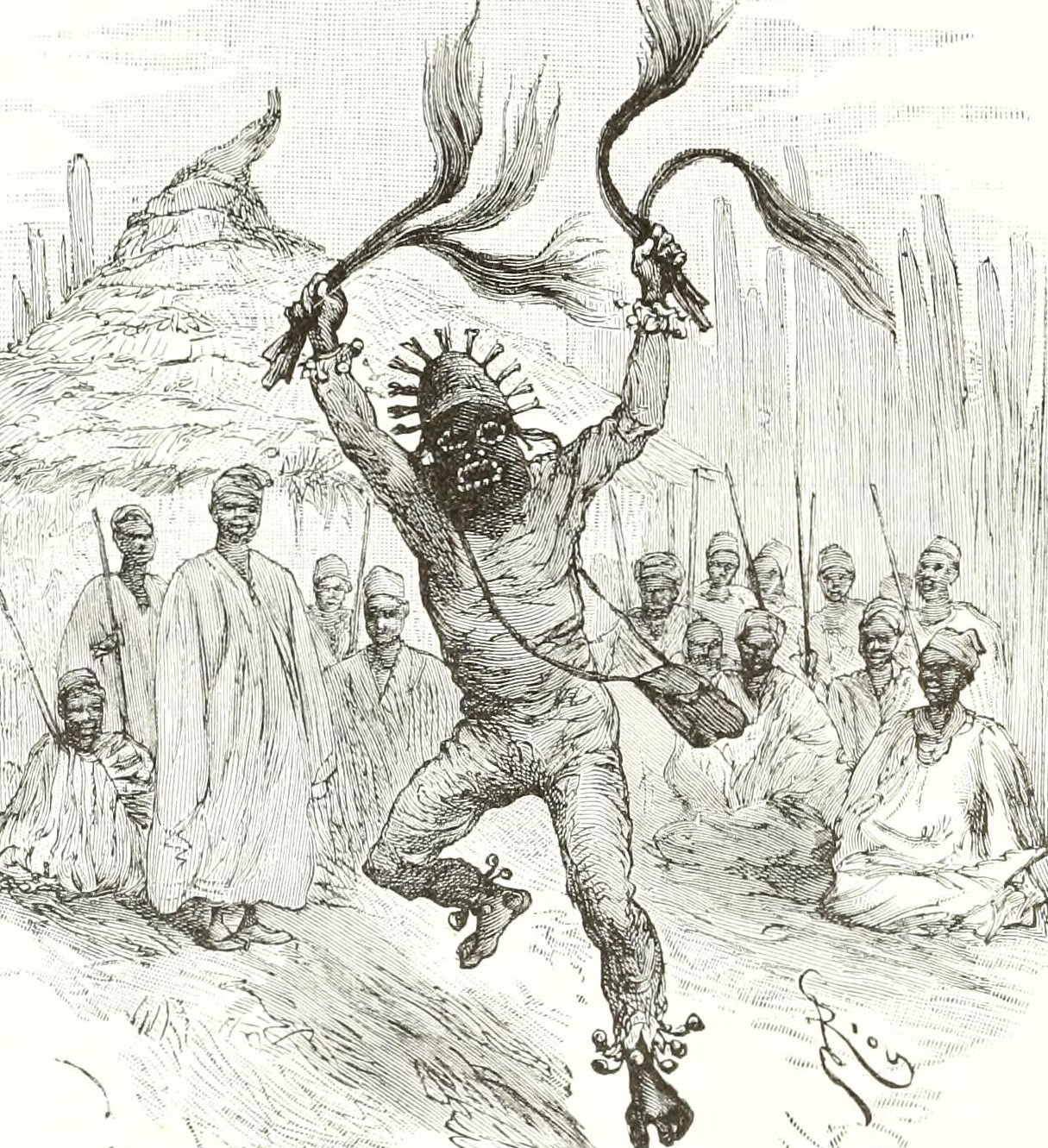 🇹🇹 Trinidad and Tobago and 1 moreTrinidadian Vodunu
A West African Vodun tradition practiced in Trinidad and Tobago with Catholic elementsTradition · Speaking with spirits and the dead · Power and authority Living
🇲🇽 MexicoEntheogenics and the Maya
Hallucinogenic substances used by the Maya for spiritual rituals and healingTradition · Speaking with spirits and the dead · Healing Historical
 🇧🇷 Brazil and 1 moreCandomblé Angola
A branch of Candomblé in Brazil honouring Nzambi and the divinities called NkisiTradition · Speaking with spirits and the dead · Protection Living
🇭🇹 Haiti and 1 moreHaitian Vodou and homosexuality
The place of LGBTQ people in Hait Vodou practice and beliefTradition · Speaking with spirits and the dead Living
🇭🇹 HaitiChristian-Vodou
The blending of Haitian Vodou and Roman Catholicism into a single spiritual practiceTradition · Speaking with spirits and the dead · Protection Living
🇲🇽 MexicoMazatec shamanism
A Mazatec healing tradition centered on visionary plant ceremonies called veladasTradition · Healing · Speaking with spirits and the dead Living
🇧🇷 BrazilIle Maroia LajiIlê Maroiá Lájié
An old Candomblé house in Salvador, with roots traced to a Yoruba kingdomTradition · Speaking with spirits and the dead Living
 🇧🇷 BrazilCasa das MinasQuerebentã Toi Zomadonu
A historic Tambor de Mina temple in Brazil with roots in the Kingdom of DahomeyTradition · Speaking with spirits and the dead · Power and authority Living
🇦🇷 Argentina and 1 moreSan Baltasar
A folk saint of African origin, honoured in Argentina with drums and dance on 6 JanuaryFigure · Protection · Speaking with spirits and the dead Living
 🇧🇷 Brazil and 1 moreIjexá
A Yoruba-derived rhythm central to Candomblé ritual and Brazilian carnival musicTradition · Speaking with spirits and the dead · Power and authority Living
🇧🇷 Brazil and 1 moreZoogodô Bogum Malê Rundó
A historic Candomblé temple in Salvador that preserves the Jejé branch and Fon languageTradition · Speaking with spirits and the dead Living
 🇧🇷 BrazilIlê Axé Iyá Nassô Oká
A historic Candomblé Ketu temple in Salvador, Brazil, known for its heritage status and lineage of high priestesses.Tradition · Speaking with spirits and the dead · Power and authority Living
🇬🇾 Guyana and 3 moreComfa
A Guyanese folk religion blending African, Christian, and Asian traditions through spirit possession.Tradition · Speaking with spirits and the dead · Cursing and harm Living
Photo credits on this page
The small pictures above come from Wikimedia Commons under free licences. Some are cropped to fit.
- Xtabay: Unknown author, Public domain, source
- European witchcraft: Unknown author, CC BY 4.0, source
- Ilê Axé Iyá Nassô Oká: Toluaye, Public domain, source
- Egungun: Ìṣẹ̀ṣeAssembly, CC BY-SA 4.0, source
- West African Vodún: I cropped, original authors are Ridpath, John Clark, CC BY-SA 4.0, source
- Inca religion: Chronicler Martín of Murúa (Cronista Martín de Murúa), Public domain, source
- Ofrenda: Eneas de Troya, CC BY 2.0, source
- Tzolkʼin: Lacambalam, CC BY-SA 4.0, source
- Day of the Dead: RubeHM, CC BY-SA 4.0, source
- Palo: Burkhard Mücke, CC BY-SA 4.0, source
- Candomblé Angola: autor desconhecido, CC BY-SA 3.0, source
- Candomblé: André Koehne, CC BY-SA 3.0, source
- Christian-Vodou: Calvin Hennick, for WBUR Boston, CC BY 3.0, source
- Winti: G. Glaser (Fotograaf/photographer)., CC BY-SA 3.0, source
- Abakuá: M. Puente, Public domain, source
- Santo Daime: Tonelada, CC BY-SA 3.0, source
- Haitian Vodou in Cuba: Dr. Anthony R. Picciolo, NOAA NODC, Public domain, source
- Santería: Jorge Royan, CC BY-SA 3.0, source
- Quyllurit'i: AgainErick, CC BY-SA 3.0, source
- Spiritual Baptist: N Chadwick, CC BY-SA 2.0, source
- Oungan: Anthony Karen, CC BY 4.0, source
- Machi: Unknown author, Public domain, source
- Mapuche religion: Gary Todd, CC0, source
- Haitian Vodou: Sam Fentress, CC BY-SA 2.0, source
- Manbo: Aliceba, CC BY-SA 4.0, source
- Ijexá: Alex@Eddi ( Diskussion ), CC BY-SA 3.0, source
- Casa das Minas: clecio muller frança leal, CC BY-SA 4.0, source
- Kardecist Spiritism: Coprosme, CC BY-SA 4.0, source