
Day of the Dead
In its own language: Día de los Muertos
Spanish for "Day of the Dead"
A Mexican holiday honoring the dead with altars, food, and humor during Allhallowtide.
The Day of the Dead is a Mexican holiday celebrated on November 1 and 2 to remember deceased friends and family. Families build home altars and visit graves with offerings while sharing humorous stories and traditional foods like sugar skulls and pan de muerto.
- Celebrated on November 1 and 2 in Mexico
- Families build ofrendas with food and photos
- Humorous tone with mock epitaphs for friends
- Blends Aztec rituals with Catholic Allhallowtide
- Recognized by UNESCO in 2008
What it is
The Day of the Dead is a holiday where families gather to pay respects to those who have died. It takes place over two days in early November. The tone is often humorous, with celebrants sharing amusing anecdotes about the departed. It falls within the Christian period known as Allhallowtide. People create home altars called ofrendas and visit graves with gifts. The festival is a key part of Mexican culture and is observed by people of Mexican heritage worldwide.
Where it comes from
Scholars debate whether the holiday has pre-Hispanic roots or is a modern adaptation. Some argue it stems from ancient Aztec rituals honoring the dead. Others see it as a local expression of European Allhallowtide brought by the Spanish. Historians note that the modern celebration was shaped by 20th-century nationalism. Government officials promoted indigenous iconography to foster national identity. This process involved isolating the holiday from strict Catholic control. The tradition became a symbol of Mexican heritage and is taught in schools.
How it is done
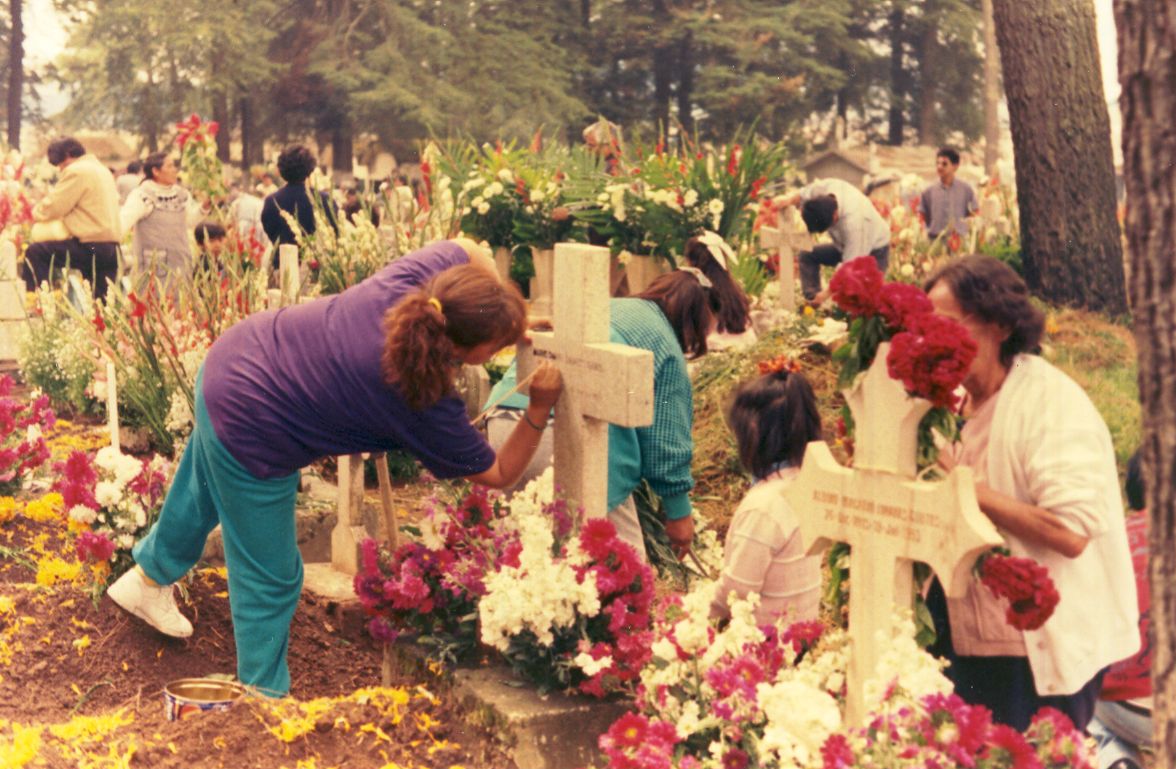
Families build ofrendas at home using marigold flowers and photos. They place favorite foods and drinks of the deceased on these altars. People visit cemeteries to leave gifts and clean graves. Friends exchange candy sugar skulls and share pan de muerto. Writers compose calaveras literarias, which are mock epitaphs for living acquaintances. These verses are light-hearted and irreverent. The celebrations emphasize collective memory and storytelling rather than sorrow.
Tools and materials
Cempasúchil flowers are used to decorate altars and guide spirits. Calaveras, or skull imagery, appear in art and candy. Ofrendas are the central structures for remembrance. Sugar skulls serve as gifts for friends and family. Pan de muerto is a special bread shared during the holiday. These items represent the connection between the living and the dead.
Day of the Dead, drawn and placed
- Living
- Revived
- Fading
- Historical
- Legendary
- Performed
- Lineage
- Syncretic blend of Indigenous Mesoamerican beliefs and Spanish Catholic traditions
- Timing
- November 1 and 2
What it is for
The holiday is for remembering and honoring deceased relatives. It allows families to maintain a relationship with their ancestors. The purpose is communal remembrance rather than individual grief. It provides a space for laughter and joy alongside respect. People seek to keep the memory of their loved ones alive through ritual and food.
Who does it
Households are the primary practitioners of this tradition. Families organize the altars and plan the visits to graves. Children learn the customs through participation in school and community events. The practice is passed down through generations. It involves both religious observance and cultural performance.
Peoples and places
The holiday is central to Mexican identity. It is observed by people of Mexican heritage in the United States and elsewhere. In Mexico, it is a national holiday and a school break. Different regions may include additional days like October 31. The celebration reflects a blend of indigenous and Spanish influences. It unites various communities under a shared cultural framework.
At a glance: who, where and when
Who does it
Belief worlds
Occasions



What people believe
The holiday blends indigenous views of death with Catholic beliefs. Ancient Aztecs dedicated months to honoring the dead. These practices were compressed into the two days of All Saints' and All Souls' Days. Bones and skulls held sacred power in pre-Columbian times. The Spanish repurposed some symbols, turning them into memento mori. The current tradition emphasizes the ephemeral nature of life. It views death as a natural part of the human experience.
When it is done
The main dates are November 1 and 2. November 1 is All Saints' Day, dedicated to children. November 2 is All Souls' Day, for adults. Some locales include October 31 or November 6. The timing aligns with the Christian liturgical calendar. It coincides with the end of the harvest season in many areas.
How scholars and sceptics see it
Academics disagree on the origins of the holiday. Some assert strong indigenous pre-Hispanic roots. Others view it as a 20th-century invention to promote nationalism. Researchers note that medieval European traditions influenced the celebration. The use of skeleton imagery is linked to the Danse Macabre. Historians point out that the modern parade was inspired by a film. UNESCO recognized the tradition as intangible cultural heritage in 2008.
Cautions and what is closed
The holiday is a public celebration with no specific health risks. However, commercialization can lead to cultural appropriation. Some critics argue that the indigenous narrative is politically motivated. The tradition has been adapted for tourism and media. This can distort the original meaning of the rituals. Families guard certain aspects of their private ceremonies.
Compare and confuse
The Day of the Dead is related to Halloween and Allhallowtide. It shares themes with other Latin American commemorations of the dead. Unlike some grieving traditions, it focuses on celebration. The humor distinguishes it from solemn memorial services. It is similar to festivals that honor ancestors through food and offerings.
Law and persecution
The holiday is a national holiday in Mexico. Schools are closed, and businesses operate with reduced hours. The government supports the celebration as a cultural asset. It is protected as intangible cultural heritage by UNESCO. There are no legal restrictions on its practice. Public parades are organized with official permission.
Rites that involve Day of the Dead
Days linked to Day of the Dead
Questions people ask about Day of the Dead
What is the Day of the Dead?
It is a Mexican holiday celebrated on November 1 and 2. Families honor deceased relatives with altars, food, and stories. The tone is often humorous and celebratory rather than sad.
Where does the holiday come from?
It combines ancient Aztec rituals with Spanish Catholic traditions. Scholars debate the exact origins, but it is now a symbol of Mexican national identity. It falls during the Christian period of Allhallowtide.
What do people eat during the holiday?
People share pan de muerto, a special bread. They also give and receive candy sugar skulls. Altars feature the favorite foods and drinks of the deceased.
Is it only celebrated in Mexico?
It is most prominent in Mexico but is observed by people of Mexican heritage worldwide. Communities in the United States and other countries also hold celebrations.
Good reading and sources
- Literary CalaverasSmithsonian Magazine, Article
- Mexico City stages first Day of the Dead paradeBBC, Article
- Day of the Dead on WikipediaEncyclopedia
- More photos on Wikimedia CommonsPhotos and video
- Wikidata recordOpen data
The facts on this page come from the Wikipedia article "Day of the Dead", written by its contributors and used under the CC BY-SA 4.0 licence, and from its Wikidata record (CC0). EveryJaadu rewrote the text in its own words, with AI assistance, and compares every page with the article to make sure no passage is copied. It may be reused under the same CC BY-SA 4.0 licence with a link back.
It may contain mistakes. Names and customs differ from one community to the next, and some knowledge is closed to outsiders and left out here. This page describes belief and practice. It does not say that any of it works, it is not a how-to, and it is not medical advice. If something is wrong, tell us. Last refreshed 2026-10-05.
More from Mexico
All the entries from Mexico 🇲🇽 Mexico and 2 moreChild sacrifice
The ritual killing of children to appease deities or restore cosmic order in ancient culturesRite · Cursing and harm · Speaking with spirits and the dead Historical
🇲🇽 Mexico and 2 moreChild sacrifice
The ritual killing of children to appease deities or restore cosmic order in ancient culturesRite · Cursing and harm · Speaking with spirits and the dead Historical
 🇨🇺 Cuba and 2 moreSanteríaRegla de Ocha
An Afro-Cuban religion blending Yoruba beliefs with Catholicism and SpiritismTradition · Protection · Healing Living
🇨🇺 Cuba and 2 moreSanteríaRegla de Ocha
An Afro-Cuban religion blending Yoruba beliefs with Catholicism and SpiritismTradition · Protection · Healing Living
 🇲🇽 Mexico and 5 moreWitchcraft in Latin AmericaBrujería
A syncretic blend of Indigenous, African, and European magical practices across Latin AmericaTradition · Protection · Healing Living
🇲🇽 Mexico and 5 moreWitchcraft in Latin AmericaBrujería
A syncretic blend of Indigenous, African, and European magical practices across Latin AmericaTradition · Protection · Healing Living
 🇲🇽 Mexico and 3 moreCurandero
A folk healer in Latin America and the United States who blends indigenous and Catholic traditions.Tradition · Healing · Protection Living
🇲🇽 Mexico and 3 moreCurandero
A folk healer in Latin America and the United States who blends indigenous and Catholic traditions.Tradition · Healing · Protection Living
Related elsewhere
All tradition 🇪🇬 Egypt and 2 moreLibation
The ritual pouring of liquid as an offering to spirits or the deadRite · Speaking with spirits and the dead · Protection Living
🇨🇳 China and 4 moreKitchen God灶君
The Chinese hearth deity who reports domestic conduct to the Jade EmperorBeing · Protection · Luck and prosperity Living
🇪🇬 Egypt and 2 moreLibation
The ritual pouring of liquid as an offering to spirits or the deadRite · Speaking with spirits and the dead · Protection Living
🇨🇳 China and 4 moreKitchen God灶君
The Chinese hearth deity who reports domestic conduct to the Jade EmperorBeing · Protection · Luck and prosperity Living
 🇬🇧 United Kingdom and 1 moreWell dressing
A rural English custom of decorating water sources with natural designsTradition · Protection · Speaking with spirits and the dead Living
🇬🇧 United Kingdom and 1 moreWell dressing
A rural English custom of decorating water sources with natural designsTradition · Protection · Speaking with spirits and the dead Living
 🇮🇳 India and 1 moreNavagrahaनवग्रह
A group of nine celestial deities in Hinduism that govern fate and astrologyTradition · Protection · Luck and prosperity Living
🇮🇳 India and 1 moreNavagrahaनवग्रह
A group of nine celestial deities in Hinduism that govern fate and astrologyTradition · Protection · Luck and prosperity Living