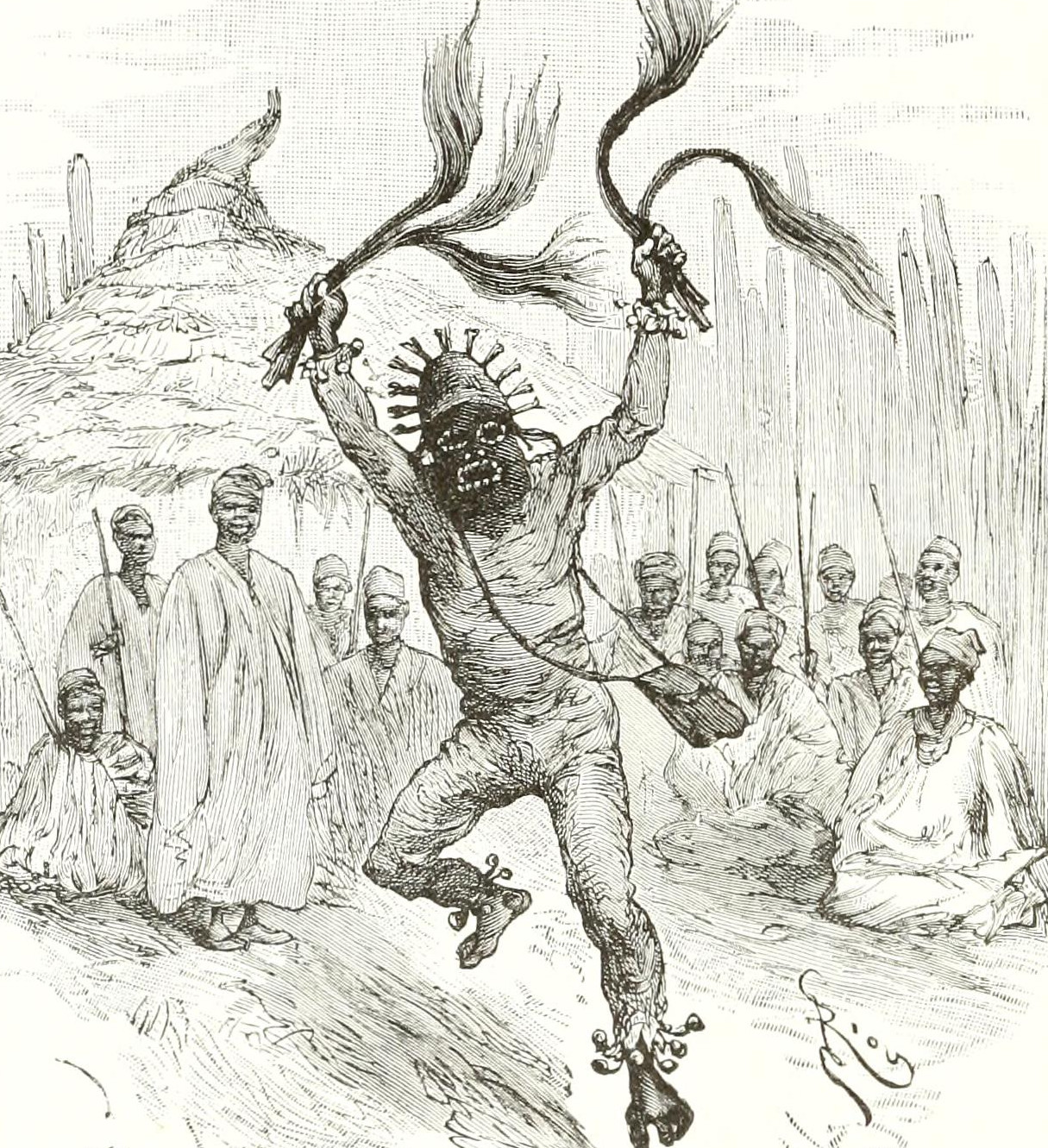
Trinidadian Vodunu
A West African Vodun tradition practiced in Trinidad and Tobago with Catholic elements
Trinidadian Vodunu is the practice of Vodun within Trinidad and Tobago. It originated from the Kingdom of Dahomey and was brought by freed Africans after slavery ended. The Rada community maintains its rituals and spiritual hierarchy.
- Originates from the Kingdom of Dahomey in present-day Benin
- Papa Nanee established the Dangbwe Comme Compound in 1868
- Blood from sacrifices is ritually fried and consumed
- Christian saints and crucifixes appear alongside African objects
- Led by a hubono who guides the Rada community
What it is
Trinidadian Vodunu represents the continuation of West African Vodun within Trinidad and Tobago. It is primarily observed by the Rada community. The practice blends traditional African religious structures with local Caribbean contexts. It involves specific rituals, a defined priesthood, and a unique approach to spiritual connection.
Where it comes from
The tradition traces its roots to the Kingdom of Dahomey, now Benin. It arrived in Trinidad and Tobago following the abolition of slavery. Abojevi Zahwenu, also called Papa Nanee, played a key role. He arrived unchained on a Portuguese slaver and founded the Dangbwe Comme Compound in Belmont in 1868. This site serves as a lasting spiritual base for the community.
How it is done
Ceremonies known as Vodunu or Saraka form the core of the practice. These include seasonal and non-seasonal events. Animal sacrifices are offered to deities and ancestors. Hens, pigeons, turtles, goats, and cows are used. Preparation occurs in kitchens near sacred shrines. The blood is ritually fried and consumed. Sacred drumming connects participants to the spirit world.
Tools and materials
Consecrated drums are essential for ritual music. The vodunkwe, or house of the gods, houses the practice space. Inside, images of Christian saints and crucifixes stand alongside traditional African objects. This syncretism reflects the integration of Catholicism into the Vodun framework. Shrines serve as focal points for offerings.
Trinidadian Vodunu, drawn and placed
- Living
- Revived
- Fading
- Historical
- Legendary
- Performed
- Lineage
- West African Vodun
- Timing
- seasonal and non-seasonal ceremonies
What it is for
The tradition aims to maintain spiritual continuity and community cohesion. Rituals facilitate communion with ancestors and deities. The hubono guides these interactions. Sacrifices honor the spirits and sustain the religious order. The practice preserves cultural identity and historical memory for the Rada people.
Who does it
A hubono leads the spiritual hierarchy. This priest guides the community and upholds customs. Notable figures include Achovi, Padonu, Sobo, Sedley Antoine, and Henry Antoine. The hubono conducts rituals and preserves knowledge. This role ensures the survival of traditions across generations.
Peoples and places
The Rada community in Trinidad and Tobago sustains this tradition. They maintain distinct practices rooted in Dahomean heritage. The Dangbwe Comme Compound remains central. Other groups may practice Vodun differently, but the Rada preserve specific ceremonial methods and leadership structures passed down since the nineteenth century.
At a glance: who, where and when
Peoples
Belief worlds
What people believe
Vodunu operates within a worldview where spirits and ancestors influence daily life. Deities receive offerings through sacrificial rites. Blood consumption symbolizes spiritual connection. Syncretism allows Catholic symbols to coexist with African deities. The practice respects both ancestral laws and adapted local beliefs.
When it is done
Ceremonies occur during seasonal and non-seasonal periods. Rituals align with spiritual needs rather than a strict calendar. Drumming marks important moments in the cycle of worship.
How scholars and sceptics see it
Scholars view Trinidadian Vodunu as an example of diaspora religion. It demonstrates how African traditions adapt in new environments. The blending of Catholic and African elements highlights cultural resilience. Researchers study the community's preservation of Dahomean practices despite displacement.
Cautions and what is closed
Animal sacrifice is a sensitive aspect of the practice. Some observers may misinterpret these rituals. The community maintains these rites as sacred obligations. Outsiders are not privy to all details. The practice requires respect for its closed nature and spiritual significance.
Compare and confuse
Trinidadian Vodunu shares roots with Haitian Vodou and Cuban Santeria. All derive from West African traditions. However, each has developed unique local characteristics. The Rada community's use of Catholic imagery parallels other syncretic forms in the Caribbean.
Law and persecution
The practice is legal and recognized within Trinidad and Tobago. No specific laws suppress it. The community operates openly from their historic compound. Religious freedom protections allow its continuation.
Today
The Dangbwe Comme Compound continues to function as a spiritual center. The current hubono, Henry Antoine, leads the community. The tradition survives through oral transmission and active practice. It remains a vital part of Trinidad's cultural landscape.
Questions people ask about Trinidadian Vodunu
What is Trinidadian Vodunu?
It is a Vodun tradition practiced in Trinidad and Tobago by the Rada community. It stems from West African roots and includes specific rituals and leadership structures.
Where did it come from?
It originates from the Kingdom of Dahomey. Practitioners were brought to Trinidad and Tobago after slavery ended, carrying their religious customs with them.
How are rituals performed?
Ceremonies involve animal sacrifices to deities and ancestors. Drums connect participants to spirits. Catholic symbols often accompany traditional African religious items in the shrine.
Who leads the practice?
A hubono, or spiritual leader, guides the community. This priest conducts rituals and preserves the traditions passed down from founders like Papa Nanee.
Good reading and sources
The facts on this page come from the Wikipedia article "Trinidadian Vodunu", written by its contributors and used under the CC BY-SA 4.0 licence, and from its Wikidata record (CC0). EveryJaadu rewrote the text in its own words, with AI assistance, and compares every page with the article to make sure no passage is copied. It may be reused under the same CC BY-SA 4.0 licence with a link back.
It may contain mistakes. Names and customs differ from one community to the next, and some knowledge is closed to outsiders and left out here. This page describes belief and practice. It does not say that any of it works, it is not a how-to, and it is not medical advice. If something is wrong, tell us. Last refreshed 2026-10-06.
More from Trinidad and Tobago
All the entries from Trinidad and Tobago 🇹🇹 Trinidad and Tobago and 5 moreSpiritual Baptist
An Afro-Caribbean Christian faith blending African traditions with Baptist worshipTradition · Speaking with spirits and the dead · Protection Living
🇹🇹 Trinidad and Tobago and 5 moreSpiritual Baptist
An Afro-Caribbean Christian faith blending African traditions with Baptist worshipTradition · Speaking with spirits and the dead · Protection Living
 🇹🇹 Trinidad and Tobago and 3 moreCaribbean folklore
The blended tales and spirits of the Caribbean islandsTradition · Wonder and entertainment Living
🇹🇹 Trinidad and Tobago and 3 moreCaribbean folklore
The blended tales and spirits of the Caribbean islandsTradition · Wonder and entertainment Living
 🇯🇲 Jamaica and 5 moreObeah
A Caribbean tradition of ritual healing and spell-casting with African rootsTradition · Protection · Healing Living
🇯🇲 Jamaica and 5 moreObeah
A Caribbean tradition of ritual healing and spell-casting with African rootsTradition · Protection · Healing Living
 🇹🇹 Trinidad and Tobago and 4 moreTrinidad Orisha
A syncretic Afro-Caribbean faith blending Yoruba spirit work with Christian and other traditions in Trinidad.Tradition · Speaking with spirits and the dead · Healing Living
🇹🇹 Trinidad and Tobago and 4 moreTrinidad Orisha
A syncretic Afro-Caribbean faith blending Yoruba spirit work with Christian and other traditions in Trinidad.Tradition · Speaking with spirits and the dead · Healing Living
Related elsewhere
All tradition 🇺🇸 United States and 1 moreMedicine wheel
Circular stone formations built by Indigenous peoples of North America for ceremony and astronomy.Tradition · Speaking with spirits and the dead · Power and authority Living
🇺🇸 United States and 1 moreMedicine wheel
Circular stone formations built by Indigenous peoples of North America for ceremony and astronomy.Tradition · Speaking with spirits and the dead · Power and authority Living
 🇮🇶 Iraq and 5 moreGrimoire
A textbook containing instructions for spells, rituals, and the creation of magical objects.Text · Protection · Healing Historical
🇳🇴 NorwayEsbat
A monthly Wiccan ritual held at the full or new moon for worship and community.Rite · Speaking with spirits and the dead · Love and attraction Living
🇮🇶 Iraq and 5 moreGrimoire
A textbook containing instructions for spells, rituals, and the creation of magical objects.Text · Protection · Healing Historical
🇳🇴 NorwayEsbat
A monthly Wiccan ritual held at the full or new moon for worship and community.Rite · Speaking with spirits and the dead · Love and attraction Living