
Manbo
from Fon nanbo, meaning mother of magic
A female priestess in Haitian Vodou who leads rituals and healing work
A manbo is a priestess in the Haitian Vodou religion, serving as a spiritual leader and healer. The role originates from Fon traditions in West Africa and involves mediating between the physical and spiritual realms through possession and ritual.
- Manbo means mother of magic in the Fon language
- Cécile Fatiman led the Bois Caïman ceremony in 1791
- Initiation includes head washing and nine days of seclusion
- Manbos use the ason rattle to command spirits
- Female leadership is prominent in urban Haitian centers
What it is
A manbo is a female priestess within the Haitian Vodou tradition. She serves as a religious leader, healer, and mediator between humans and the spirit world. Unlike hierarchical clerical structures, manbos lead autonomous groups known as hounfos. They guide devotees through complex rituals, offer spiritual counsel, and perform healing work. The role is distinct from the male counterpart, the oungan, though both hold similar authority over their respective congregations.
Where it comes from
The practice traces its roots to the Fon people of Dahomey, in present-day Benin. Enslaved Africans brought these religious concepts to Saint-Domingue, now Haiti. The term derives from the Fon word nanbo, meaning mother of magic. Female leadership was established in West African religions to manage dangerous contact with spirits. This gendered division of religious roles persisted through the slave trade and became prevalent in urban Haitian centers like Port-au-Prince.
How it is done
Manbos lead rituals involving song, dance, prayer, and offerings to call upon loa. They may be possessed by spirits themselves or oversee the possession of others. Rituals use theatrical elements like drumming to induce trance states. Manbos draw vèvès, or spiritual symbols, to mark sacred space. They interpret messages from spirits to provide advice or warnings. The process requires precise knowledge of spirit attributes and names to ensure safe interaction.
Tools and materials
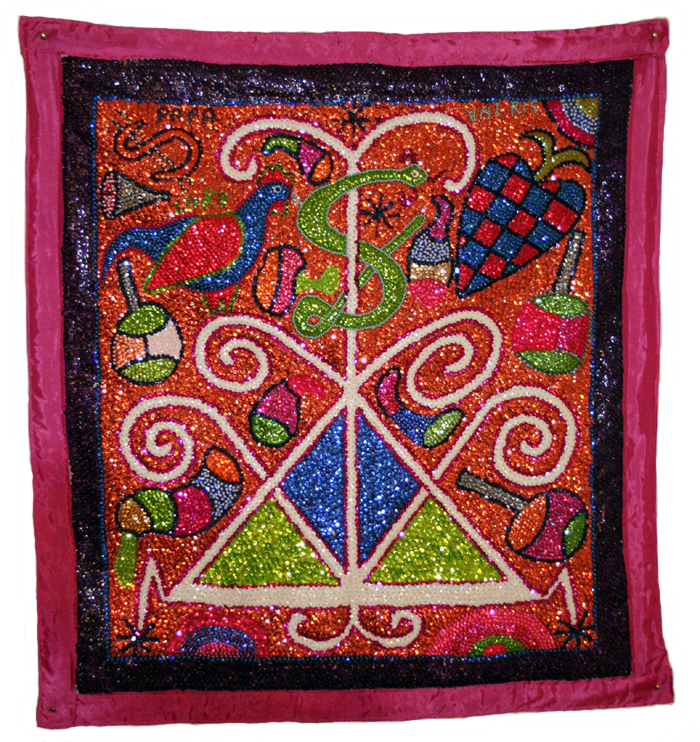
The ason, a sacred beaded rattle, is a primary tool for manbos in Southern Haiti. It grants leverage in the spirit realm and signifies priestly authority. Vèvès are drawn on the ground to invoke specific loa. Drums and singing facilitate the transition into possession. Altars made of stone hold offerings and serve as focal points in the hounfo. These objects help structure the ritual environment and connect practitioners to the divine.
Manbo, drawn and placed
- Living
- Revived
- Fading
- Historical
- Legendary
- Performed
- Lineage
- Haitian Vodou
- Timing
- during initiation and rituals
What it is for
Manbos seek to heal physical and spiritual ailments, ward off evil, and bring good luck. They act as intermediaries to remove barriers between the earthly and spiritual realms. Devotees consult them for diagnosis of suffering caused by living, dead, or spirits. The relationship with loa is often viewed as a contract: rituals are offered in exchange for protection and guidance. Manbos use their konesans, or intuitive knowledge, to read people and address their needs.
Who does it
Manbos are chosen through spirit possession or dream revelations. Initiation involves rigorous training and several steps, including lave tèt (head washing) and kouche (seclusion). Candidates learn spirit names, attributes, and symbols. The profession is sometimes hereditary, but refusal is rare due to fear of divine punishment. Within temples, they are called manman. They exercise independent authority, though rural areas often favor male priesthood.
Peoples and places
The tradition is central to Haitian Vodou, particularly in urban centers like Port-au-Prince. It also exists in the diaspora, notably in New Orleans and Brooklyn. In Haiti, female leadership is more common in cities, while rural areas may lean toward patriarchal structures. The Fon heritage links the practice to Benin and western Nigeria. Notable figures include Cécile Fatiman and Marie Laveau, who shaped local interpretations in the United States.
At a glance: who, where and when
Who does it
Belief worlds
Occasions

What people believe
Vodou holds that the head houses the gwo bonanj, a guardian spirit directing consciousness. Contact with loa is dangerous and requires trained specialists. Spirits can possess anyone, but only manbos can safely communicate with them. The body is seen as flesh borrowed by spirits during possession. Manbos possess konesans, allowing them to interpret cosmic knowledge revealed through trance. This knowledge enables them to direct individuals back to consciousness after possession.
When it is done
Initiations occur when spirits call a candidate, often through dreams. The kouche phase involves nine days of seclusion in the djévò. Rituals are performed as needed for healing, protection, or community events. The Bois Caïman ceremony in August 1791 marked a pivotal historical moment. Daily life in the hounfo revolves around maintaining relationships with loa through regular offerings and prayers.
How scholars and sceptics see it
Anthropologists study manbos as key figures in Afro-diasporic religions. Ethnographic accounts, such as Karen McCarthy Brown's work on Mama Lola, highlight their social impact. Scholars note the role of manbos in challenging Western misconceptions of Vodou. Research examines how female leadership provides social mobility in Haitian society. Studies also explore the tension between autonomous priesthood and broader cultural misogyny.
Cautions and what is closed
Contact with spirits is considered dangerous without proper training. Manbos supervise possessions to prevent harm to individuals. Refusing the priesthood is feared due to potential divine punishment. Misogyny exists in Haitian culture, affecting how manbos and oungans are perceived. Oungans may face scrutiny for mistreating female hunsi. Popular culture often misrepresents Vodou practices, leading to stigma and misunderstanding.
Compare and confuse
Manbos are often confused with oungans, the male priests of Vodou. Both roles share similar responsibilities but differ in gender and regional prevalence. The term mambo is sometimes used interchangeably with manbo. In Louisiana, Marie Laveau practiced a variant known as Louisiana Voodoo. These traditions share West African roots but developed distinct characteristics in different colonial contexts.
Law and persecution
Vodou has faced suppression and persecution throughout history. Colonial authorities and missionaries often labeled it witchcraft or fetishism. The Bois Caïman ceremony is linked to the Haitian Revolution, which altered legal and social structures. Modern practitioners navigate stereotypes and misinformation. Legal protections vary by country, with some regions recognizing Vodou as a legitimate religion.
Today
Manbos continue to lead communities in Haiti and abroad. Diaspora groups maintain traditions in places like New Orleans and Brooklyn. Popular culture references, such as television series, keep figures like Marie Laveau visible. However, these representations often distort actual practices. Manbos actively challenge misconceptions through public engagement and media appearances. The tradition remains a vital part of Haitian identity and spiritual life.
Questions people ask about Manbo
What is a manbo?
A manbo is a female priestess in Haitian Vodou who leads rituals, heals the sick, and mediates between humans and spirits. She heads an autonomous temple group and guides devotees through spiritual practices.
Where does the term come from?
The word comes from the Fon language of Benin, where nanbo means mother of magic. Enslaved Fon people brought this concept to Haiti, where it evolved into the title for Vodou priestesses.
How does one become a manbo?
Candidates are chosen by spirit possession or dreams. They undergo initiation steps like head washing and seclusion. Training involves learning spirit names and rituals to gain the knowledge needed for priesthood.
What tools do manbos use?
Manbos use the ason, a sacred beaded rattle, to interact with spirits. They also draw vèvès symbols and use drums and offerings during rituals to invite loa presence and guide possession.
Are there famous manbos?
Yes. Cécile Fatiman played a key role in the 1791 Haitian Revolution. Marie Laveau became a famous figure in New Orleans. Mama Lola gained recognition through ethnographic studies in Brooklyn.
Good reading and sources
The facts on this page come from the Wikipedia article "Manbo (Vodou)", written by its contributors and used under the CC BY-SA 4.0 licence, and from its Wikidata record (CC0). EveryJaadu rewrote the text in its own words, with AI assistance, and compares every page with the article to make sure no passage is copied. It may be reused under the same CC BY-SA 4.0 licence with a link back.
It may contain mistakes. Names and customs differ from one community to the next, and some knowledge is closed to outsiders and left out here. This page describes belief and practice. It does not say that any of it works, it is not a how-to, and it is not medical advice. If something is wrong, tell us. Last refreshed 2026-10-05.
More from Haiti
All the entries from Haiti 🇭🇹 Haiti and 2 moreBokorbòkò
A Haitian Vodou practitioner said to serve spirits for both protection and harmTradition · Protection · Cursing and harm Living
🇭🇹 Haiti and 2 moreBokorbòkò
A Haitian Vodou practitioner said to serve spirits for both protection and harmTradition · Protection · Cursing and harm Living
 🇭🇹 Haiti and 2 moreHaitian VodouVodou
An Afro-Haitian religion blending West African traditions with Catholicism and FreemasonryTradition · Protection · Healing Living
🇭🇹 HaitiVodou veve (sample)Vèvè
Ground drawings that call the lwa.Tradition · Speaking with spirits and the dead Living
🇭🇹 Haiti and 2 moreHaitian VodouVodou
An Afro-Haitian religion blending West African traditions with Catholicism and FreemasonryTradition · Protection · Healing Living
🇭🇹 HaitiVodou veve (sample)Vèvè
Ground drawings that call the lwa.Tradition · Speaking with spirits and the dead Living
 🇭🇹 Haiti and 1 moreEzili DantorÈzili Dantò
A fierce mother spirit in Haitian Vodou who protects the marginalized and demands loyalty.Being · Protection · Love and attraction Living
🇭🇹 Haiti and 1 moreEzili DantorÈzili Dantò
A fierce mother spirit in Haitian Vodou who protects the marginalized and demands loyalty.Being · Protection · Love and attraction Living
Related elsewhere
All tradition 🇸🇪 Sweden and 1 moreSoul flight
A trance practice where the spirit leaves the body to visit other realmsRite · Healing · Seeing and foretelling Historical
🇸🇪 Sweden and 1 moreSoul flight
A trance practice where the spirit leaves the body to visit other realmsRite · Healing · Seeing and foretelling Historical
 🇮🇹 Italy and 5 moreRelic
An object or body part kept to honor a holy person and mark their connection to the divineCharm · Protection · Healing Living
🇮🇹 Italy and 5 moreRelic
An object or body part kept to honor a holy person and mark their connection to the divineCharm · Protection · Healing Living
 🇲🇦 Morocco and 5 moreWild rueاسپند
A desert plant whose seeds hold psychoactive alkaloids and serve as incense in the Middle East.Substance · Protection · Speaking with spirits and the dead Living
🇲🇦 Morocco and 5 moreWild rueاسپند
A desert plant whose seeds hold psychoactive alkaloids and serve as incense in the Middle East.Substance · Protection · Speaking with spirits and the dead Living
 🇺🇸 United States and 1 moreCalifornian white sage
A California shrub used by Indigenous peoples for food, healing, and ritual cleansingSubstance · Protection · Healing Living
🇺🇸 United States and 1 moreCalifornian white sage
A California shrub used by Indigenous peoples for food, healing, and ritual cleansingSubstance · Protection · Healing Living