Beliefs, omens and superstitions
Luck and unluck, the evil eye, knocking on wood and the small customs people keep without asking why.
Beliefs, omens and superstitions are the small customs people keep without asking why: knocking on wood, salt over the shoulder, avoiding the number thirteen, the evil eye, a black cat crossing the road, a first visitor of the new year. They are found on every continent and are rarely tied to a priest or book. This page looks at where they come from, what the word superstition hides, and why they persist.
What they look like
Beliefs differ by place. The number four is avoided in China, Japan and Korea because it sounds like the word for death, while thirteen is avoided in much of the West. In India, a sneeze before leaving home may delay a journey, and a lemon and chillies are hung over a shop. The evil eye is feared under many names: nazar, mal de ojo, ayin hara. First-footing at new year in Scotland is said to bring luck to a house.
Whose word is superstition
The word superstition has a history. Roman writers used it for religion they disliked, and Christian writers for forbidden practice. Today it often means someone else's belief. Many religions regard some of their own customs as faith and others as superstition, and where the line falls depends on the speaker. Using the word can mark a speaker as modern and a neighbour as backward. Tests of common superstitions show that people who hold them are not less educated or less rational than others, and many hold them lightly.
Why people keep them
Psychologists find that superstition rises with uncertainty and stakes, which is why athletes, sailors, students and gamblers are known for them. Anthropologist Bronislaw Malinowski observed in the 1920s that Trobriand fishermen used rites in dangerous deep-sea fishing and not in safe lagoon fishing. Most people who follow small customs say they do so partly in jest and partly just in case. Similar customs turn up in places that have never met each other, which suggests that people everywhere respond to risk in similar ways.
When belief causes harm
Most superstitions are harmless. Some are not: beliefs about witchcraft have led to killings in parts of Africa, India and Papua New Guinea, and beliefs about albinism have led to attacks in Tanzania and Malawi. Others cost people money, as when a fee is demanded to lift a bad omen. Education, law and trusted community leaders have all been part of reducing harm. Campaigns by health workers, teachers and community radio have been effective where they listen first and explain later.
Belief on EveryJaadu
The entries written up so far, best known first.
 🇮🇶 Iraq and 4 moreAstrology
A system of divination that links human affairs to the positions of celestial bodiesTradition · Seeing and foretelling · Luck and prosperity Living
 🇺🇸 United States and 5 moreSatanism
A modern set of beliefs using the figure of Satan as a symbol or deity.Tradition · Power and authority · Cursing and harm Living
 🇱🇻 Latvia and 1 moreLatvian mythology
A collection of myths about gods, spirits, and the afterlife from the Baltic region.Tradition · Speaking with spirits and the dead · Power and authority Living
 🇬🇧 United KingdomEnglish folklore
The myths, legends, and customs of England passed down through generations.Tradition · Protection · Cursing and harm Living
 🇮🇪 Ireland and 5 moreFairy ring
A natural ring of mushrooms surrounded by folklore about dancing spirits and witches.Belief · Wonder and entertainment Living
🇬🇧 United Kingdom and 1 moreScottish folkloreBeul-aithris na h-Alba
The myths, creatures and beliefs of the Scottish people, recorded from ancient times to the present.Tradition · Seeing and foretelling · Protection Living
🇮🇳 IndiaMuhurtamuhūrta
A Hindu unit of time used to select auspicious moments for rituals and daily practiceBelief · Power and authority · Speaking with spirits and the dead Living
 🇮🇪 Ireland and 4 moreWinter solstice
The shortest day and longest night of the year, marked by rites of solar returnTradition · Seeing and foretelling · Protection Living
🇨🇳 China and 3 moreQi氣 / 气
A vital force in Chinese philosophy and medicine, believed to flow through all living things.Substance · Healing · Power and authority Living
 🇮🇳 India and 2 moreYantraयन्त्र
A geometric diagram from Indian traditions used for worship and meditationCharm · Protection · Speaking with spirits and the dead Living
 🇨🇦 Canada and 1 moreTotemdoodem
A spirit or symbol linking a group to nature, from Ojibwe clan systems to Australian kinshipBelief · Speaking with spirits and the dead · Power and authority Living
 🇺🇸 United StatesPunxsutawney Phil
A groundhog who serves as the central figure in an annual American weather prediction festival.Belief · Seeing and foretelling Living
🇮🇳 India and 1 moreDaayan
A vengeful female spirit from Indian folklore, often blamed for misfortune and violence.Being · Cursing and harm Living
 🇺🇸 United States and 4 moreRainmaking
Efforts to force rain through technology, ritual, or trickeryTradition · Protection · Luck and prosperity Living
 🇪🇸 SpainFolklore of Spain
The oral traditions, legends, and folktales of the Iberian PeninsulaTradition · Wonder and entertainment Living
 🇮🇳 India and 1 moreNakshatraनक्षत्रम् (Nakṣatram)
A system of lunar mansions used in Hindu and Buddhist astrology to map the sky.Tradition · Seeing and foretelling · Luck and prosperity Living
 🇬🇷 Greece and 5 moreBay Laurelδάφνη
An aromatic Mediterranean plant used in cooking and as a symbol of victory and purification.Substance · Protection · Cleansing and purification Living
 🇳🇴 Norway and 2 moreValknut
A symbol of three interlocked triangles found on Germanic artifacts and used in modern Heathenry.Belief · Power and authority Living
 🇸🇳 Senegal and 5 morePentagramπεντάγραμμον
A five-pointed star figure used across history for protection, ritual, and cosmologyCharm · Protection · Binding and oaths Living
 🇷🇺 Russia and 12 moreSlavic Native FaithРодноверие
A modern polytheistic movement drawing on Slavic folklore, romanticism, and global spiritual traditions.Tradition · Speaking with spirits and the dead · Power and authority Living
 🇨🇳 China and 2 moreOnomancy
Divination based on the letters, numbers, or written strokes of a person's nameOracle · Seeing and foretelling · Luck and prosperity Living
 🇮🇳 India and 2 morePlanets in astrology
Seven celestial bodies used to map human character and destinyBelief · Power and authority · Luck and prosperity Living
 🇮🇪 Ireland and 5 moreHoly well
A water source revered for healing and ritual across pagan and Christian traditionsTradition · Healing · Speaking with spirits and the dead Living
 🇨🇴 ColombiaColombian folklore
Beliefs and legends passed down through generations in ColombiaTradition · Wonder and entertainment Living
🇸🇪 Sweden and 3 moreRunic magic
The use of ancient Germanic letters for spells, divination, and protectionTradition · Protection · Seeing and foretelling Living
 🇮🇳 India and 1 moreMantraमन्त्रम्
A sacred sound or phrase repeated to focus the mind and invoke spiritual powerText · Speaking with spirits and the dead · Power and authority Living
 🇮🇳 IndiaLeft-Hand and Right-Hand Paths
Two distinct orientations in occult magic, dividing taboo-breaking from orthodoxy.Tradition · Change and initiation · Power and authority Living
 🇬🇧 United Kingdom and 7 moreSaint Andrew's Day
A Christian feast day marked by national holidays in Scotland and Romania, and folk divination across Europe.Rite · Seeing and foretelling · Luck and prosperity Living
 🇮🇳 India and 1 moreKundaliniकुण्डलिनी
A dormant energy in Hinduism believed to rise through the spine for spiritual liberationBelief · Change and initiation · Power and authority Living
 🇮🇳 India and 3 moreSpirit
An invisible force or soul found in many cultures, linked to gods, humans, and nature.Being · Speaking with spirits and the dead · Power and authority Living
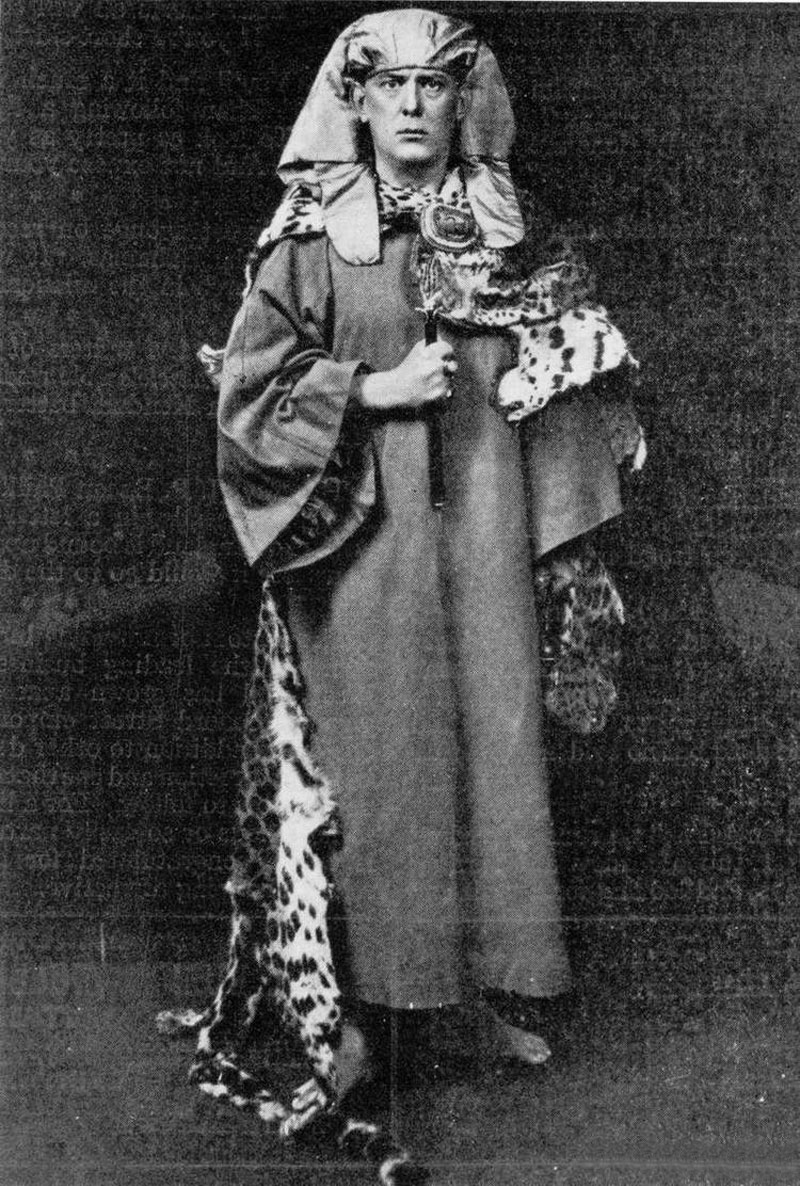 🇪🇬 Egypt and 4 moreThelema
A Western esoteric philosophy centered on discovering and following one's True WillTradition · Change and initiation · Power and authority Living
🇷🇺 RussiaAugust curse
A Russian belief that severe disasters and national tragedies cluster in the month of August.Belief Living
 🇮🇱 Israel and 4 moreAngelמלאך
A supernatural messenger or intermediary spirit found in many religious traditions.Being · Speaking with spirits and the dead · Protection Living
 🇱🇰 Sri LankaMara
A Buddhist figure representing the forces that block spiritual awakening and keep beings trapped in rebirth.Being · Cursing and harm · Binding and oaths Living
 🇺🇸 United StatesAshtar
A channeled extraterrestrial figure central to mid-century American ufology and New Age spiritualityBeing · Speaking with spirits and the dead · Seeing and foretelling Living
🇯🇲 Jamaica and 3 moreDuppy
A Caribbean term for a ghost or malevolent spirit, rooted in West African folklore.Being · Cursing and harm · Luck and prosperity Living
🇮🇱 Israel and 1 moreTerritorial spirit
A belief that demons or angels rule over specific lands and nations.Belief · Cursing and harm · Power and authority Living
🇬🇧 United Kingdom and 1 moreSuperman curse
An urban legend linking misfortunes to actors and creators in Superman adaptationsBelief · Cursing and harm Living
 🇺🇸 United States and 3 moreFortune telling fraud
A confidence trick where a grifter invents a curse to extract money from a vulnerable client.Belief · Cursing and harm Living
🇬🇧 United KingdomThe White Goddess
Robert Graves's 1948 essay on one moon goddess behind many namesText Living
 🇮🇱 Israel and 1 moreUnclean spiritπνεῦμα ἀκάθαρτον (pneuma akatharton)
A spirit of impurity in biblical belief, driven out by breath, smoke and wordsBeing · Cleansing and purification · Cursing and harm Living
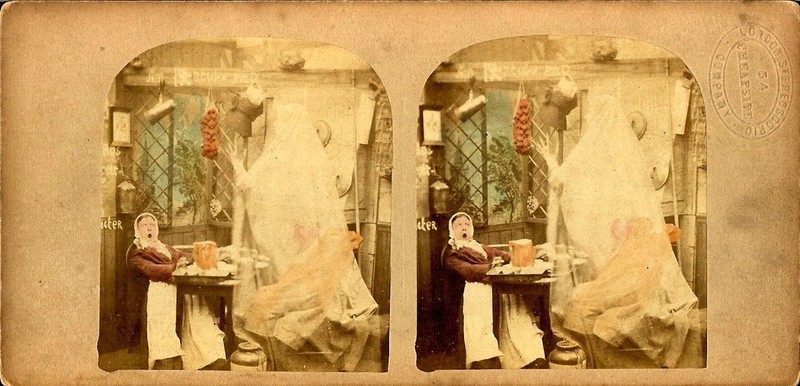 🇺🇸 United StatesSpirit photography
Photographs made or taken to show the dead, from studio sittings to haunted housesTradition · Speaking with spirits and the dead Living
 🇺🇸 United States and 4 moreHaunted house
A house said to hold the spirits of its dead, and how the scares are investigatedBelief · Speaking with spirits and the dead · Wonder and entertainment Living
 🇮🇱 Israel and 1 moreTree of life vision
A symbolic prophecy in the Book of Mormon about salvation and spiritual perilBelief · Protection · Healing Living
 🇮🇱 IsraelMatzevahמַצֵּבָה
A standing stone used as a sacred marker or grave monument in ancient and Jewish traditionCharm · Speaking with spirits and the dead · Protection Living
🇮🇪 IrelandLatoon fairy bush
A whitethorn tree in County Clare saved from a motorway by folkloric warnings of misfortuneBelief · Protection Living
🇺🇸 United StatesGhost sickness
A grief illness blamed on ghosts or witches, from North America to PolynesiaBelief · Healing · Cleansing and purification Living
 🇨🇳 ChinaFish in Chinese mythology鱼 (yú)
A cultural symbol of wealth and abundance in Chinese traditionBelief · Luck and prosperity · Love and attraction Living
Photo credits on this page
The small pictures above come from Wikimedia Commons under free licences. Some are cropped to fit.
- Winter solstice: Image by Przemyslaw " Blueshade " Idzkiewicz, CC BY-SA 2.0, source
- Sex magic: Unknown author, Public domain, source
- Totem: Jami430, CC BY-SA 4.0, source
- Rainmaking: George Catlin, Public domain, source
- Folklore of Spain: Mikipons, CC BY-SA 4.0, source
- Nakshatra: Kishorekumar 62, CC BY-SA 3.0, source
- Bay Laurel: Forest and Kim Starr, CC BY 3.0 us, source
- Valknut: Sacrificial_scene_on_Hammars_(I).JPG : Berig derivative work: The Man, CC BY-SA 3.0, source
- Fish in Chinese mythology: Daderot, Public domain, source
- Mantra: Markrosenrosen, CC BY-SA 3.0, source
- Matzevah: Gilslovik, CC BY-SA 4.0, source
- Tree of life vision: David Hyrum Smith, Public domain, source
- Mara: Under the Bo, CC BY-SA 3.0, source
- Colombian folklore: Unknown author, Public domain, source
- Planets in astrology: Jan van Loon, Public domain, source
- Kundalini: Pierjasi at Dutch Wikipedia, CC BY-SA 3.0, source
- Fortune telling fraud: Simon Vouet, Public domain, source
- Unclean spirit: David Shankbone, CC BY-SA 3.0, source
- Spirit photography: Лондонская Стереоскопическая Компания, 1850-е годы, Public domain, source
- Haunted house: John Anster Fitzgerald, Public domain, source
- Saint Andrew's Day: Henryk Siemiradzki, Public domain, source
- Left-Hand and Right-Hand Paths: Eliphas Levi, Public domain, source
- Astrology: Wilfredor, CC0, source
- Onomancy: Unknown author, Public domain, source
- Ashtar: Evedawn99, Public domain, source
- Spirit: Jastrow, Public domain, source
- Angel: Unknown author, CC0, source
- Slavic Native Faith: Union of Slavic Rodnover Communities (Союз Славянских Общин Славянской, CC BY-SA 4.0, source
- Satanism: Alexandre Cabanel, Public domain, source
- Pentagram: Tomruen, Attribution, source
- Punxsutawney Phil: Anthony Quintano, CC BY 2.0, source
- Yantra: Photo by Daniel Conrad (Chromacon), artwork by Daniel Conrad under dir, Public domain, source
- Fairy ring: User:Mrs skippy, Public domain, source
- English folklore: J. R. Skelton, Public domain, source
- Latvian mythology: Dezidor, CC BY 3.0, source
- Holy well: The Speckled Bird, CC BY-SA 4.0, source