
Yantra
In its own language: यन्त्र
from Sanskrit root yam, meaning to sustain or support
A geometric diagram from Indian traditions used for worship and meditation
A yantra is a sacred geometrical diagram rooted in the tantric traditions of India. It serves as a focal point for deity worship, meditation, and rituals seeking spiritual or material benefits.
- Originates from Sanskrit meaning 'machine' or 'support'
- Central point is the bindu, representing the deity
- Colors white, red, and black denote nature's qualities
- Used for meditation, worship, and protective talismans
- Sak yant tattoos apply designs to the human body
What it is
A yantra is a sacred geometric diagram central to tantric practices in Hinduism, Buddhism, and Jainism. Practitioners believe these diagrams possess occult powers that can be activated through ritual. They are often placed on temple floors or kept in homes as protective talismans. The designs rely on symmetry and precise mathematical proportions to represent cosmic unity and divine energy.
Where it comes from
Representations of yantras in India may date back to the Upper Paleolithic era, with the Baghor stone cited as an early example. This triangular stone features engravings linked to goddess worship and Shakti. The term itself evolved from Rigvedic Sanskrit, where it originally meant a physical prop or surgical instrument.
How it is done
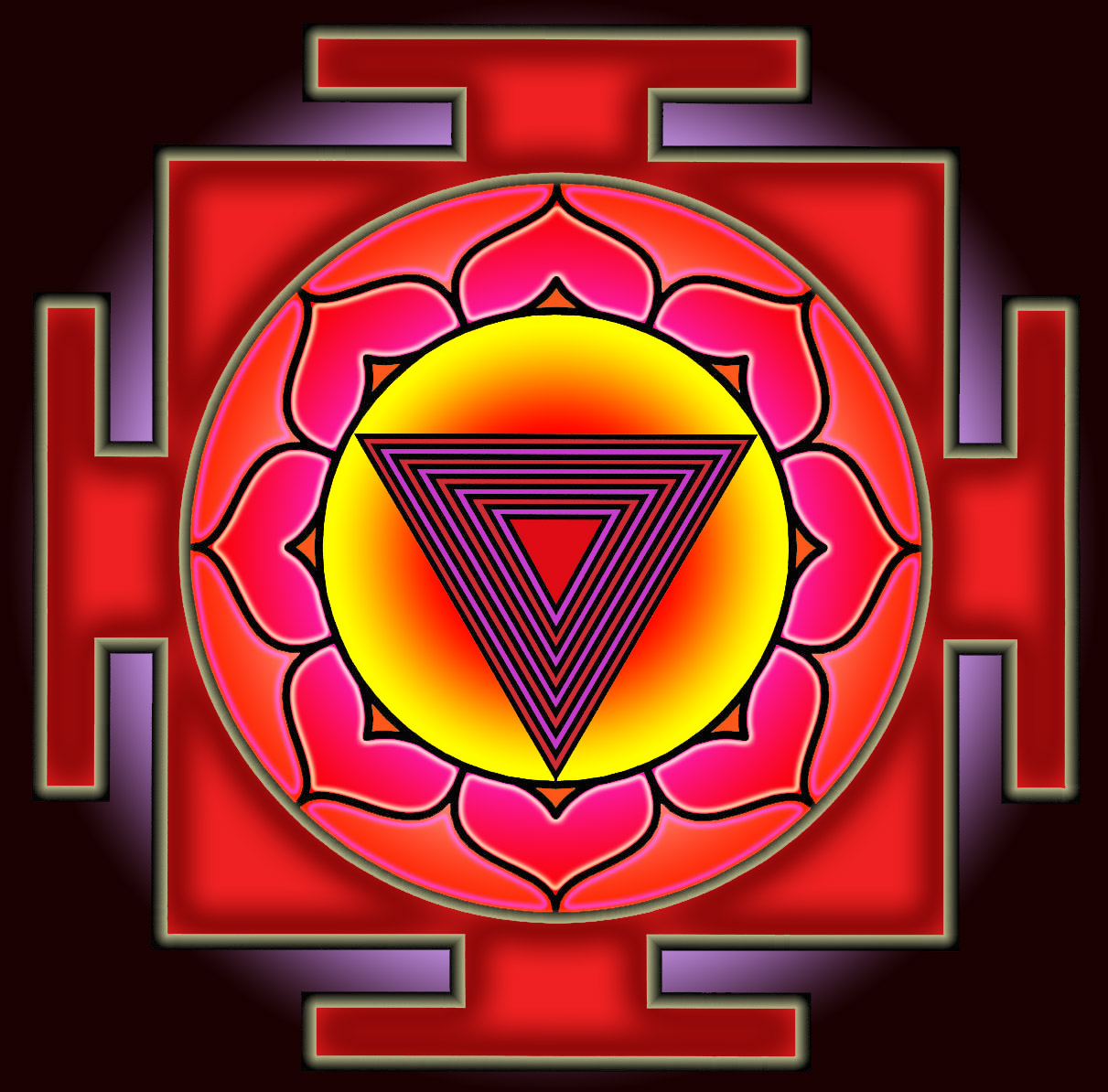
The practice involves creating or using a diagram composed of concentric geometric shapes radiating from a central point called the bindu. These shapes include triangles, circles, and lotus petals, often enclosed by a square representing the earth. A priest typically consecrates the yantra by chanting mantras to energize it. Without this ritual activation, practitioners consider the diagram lifeless. Users may place ritual implements upon simple yantras or wear complex ones as amulets.
Tools and materials
Yantras utilize specific colors and symbols to convey meaning. White, red, and black represent the three qualities of nature: purity, activation, and inertia. The central bindu marks the deity's presence, while triangles indicate masculine or feminine divine aspects. Hexagrams show the union of these forces. Lotus petals symbolize transcendence, and outer squares denote cardinal directions. Mantras inscribed within the design act as sound vibrations representing cosmic powers.
Yantra, drawn and placed
- Living
- Revived
- Fading
- Historical
- Legendary
- Performed
- Lineage
- Tantric traditions of Indian religions
- Timing
- during daily ritual worship or meditation
What it is for
Devotees use yantras to seek protection from harmful influences, attract wealth, or develop spiritual powers. They serve as aids for deep meditation by providing a visual anchor for the mind. Specific designs are associated with particular vows or tasks, ranging from material success to spiritual liberation. In some Buddhist traditions, a yantra is required once a deity accepts a practitioner's prayer, serving as a permanent link to that divine force.
Who does it
Ritual specialists, such as priests, consecrate yantras to activate their power. Household members use them for daily worship and personal meditation. In Southeast Asian Buddhism, trained practitioners known as ruesi or wicha experts create sak yant tattoos. These artists use sharpened metal rods to ink sacred designs onto the skin, believing the markings offer charisma and fortune to the bearer.
Peoples and places
The tradition is deeply embedded in Hindu, Buddhist, and Jain cultures across South Asia. In India, yantras are standard fixtures in temples and private shrines. Sri Lankan Buddhists integrate them into devotional practices requiring deity acceptance. Nepali artisans produce designs that influence modern interpretations. The practice extends globally, with large-scale ground drawings appearing in places like New Jersey under the guidance of contemporary gurus.
At a glance: who, where and when
Belief worlds


What people believe
Yantras operate on the principle that geometric forms and sound vibrations shape reality. Triangles and hexagrams map the balance between male and female divine energies. Colors are not decorative but denote inner states of consciousness. The diagram acts as a machine for sustaining spiritual focus and channeling divine energy into the physical world.
When it is done
Yantras are employed during daily ritual worship and specific initiations. They are used in sadhanas performed by spiritual seekers aiming for transformation. While not tied to a single annual festival, they are integral to ongoing religious observances. Some desire-oriented rites involve creating temporary yantras on birch bark or paper using materials like rice paste or ashes.
How scholars and sceptics see it
Researchers classify yantras based on their functional usage in rituals. Anthropologists study how these diagrams facilitate meditation and deity worship. Historians trace the connection between ancient geometric engravings and modern tantric practices. Experts analyze the symbolic language of colors and shapes to understand their theological significance.
Cautions and what is closed
Practitioners emphasize that unenergized yantras lack power. The tradition requires proper consecration by qualified individuals. In tattoo culture, strict rules govern the application and maintenance of sak yant designs. Violating these taboos is believed to nullify the protective benefits. The practice remains closed to those who do not follow the established ritual protocols.
Compare and confuse
Yantras are often compared to mandalas, though they tend to be smaller and less colorful. Both use sacred geometry, but yantras function more as active instruments for specific goals. The term is distinct from kolam or rangoli, which are decorative floor art forms. Sak yant tattoos represent a unique fusion of yantra symbolism and body modification traditions in Southeast Asia.
Rites that involve Yantra
Questions people ask about Yantra
What is a yantra?
A yantra is a sacred geometric diagram from Indian tantric traditions. It serves as a tool for meditation, deity worship, and rituals seeking spiritual or material benefits.
Where did yantras originate?
They stem from the tantric traditions of Hinduism, Buddhism, and Jainism in India.
How are yantras used?
Practitioners use them for meditation, temple worship, and as protective talismans. Priests consecrate them with mantras to activate their perceived occult powers for specific goals.
What do the shapes mean?
Geometric shapes represent cosmic principles. Triangles indicate masculine or feminine divine aspects, while the central bindu marks the deity. Colors denote inner states of consciousness.
Good reading and sources
- Yantra on WikipediaEncyclopedia
- More photos on Wikimedia CommonsPhotos and video
- Wikidata recordOpen data
The facts on this page come from the Wikipedia article "Yantra", written by its contributors and used under the CC BY-SA 4.0 licence, and from its Wikidata record (CC0). EveryJaadu rewrote the text in its own words, with AI assistance, and compares every page with the article to make sure no passage is copied. It may be reused under the same CC BY-SA 4.0 licence with a link back.
It may contain mistakes. Names and customs differ from one community to the next, and some knowledge is closed to outsiders and left out here. This page describes belief and practice. It does not say that any of it works, it is not a how-to, and it is not medical advice. If something is wrong, tell us. Last refreshed 2026-10-05.
More from India
All the entries from India 🇮🇳 IndiaChakraचक्र
Meditation points in the subtle body used in Hindu and Buddhist yogaTradition · Speaking with spirits and the dead · Change and initiation Living
🇮🇳 IndiaPashupata Shaivismपाशुपत
An early Hindu ascetic school focused on liberation through ritual and devotion to ShivaTradition · Cursing and harm · Power and authority Historical
🇮🇳 IndiaChakraचक्र
Meditation points in the subtle body used in Hindu and Buddhist yogaTradition · Speaking with spirits and the dead · Change and initiation Living
🇮🇳 IndiaPashupata Shaivismपाशुपत
An early Hindu ascetic school focused on liberation through ritual and devotion to ShivaTradition · Cursing and harm · Power and authority Historical
 🇮🇳 India and 1 moreHeliotrope
A green and red mineral stone used as an amulet for health, invisibility, and courage.Charm · Protection · Healing Historical
🇮🇳 India and 1 moreHeliotrope
A green and red mineral stone used as an amulet for health, invisibility, and courage.Charm · Protection · Healing Historical
 🇮🇳 IndiaKapalikaकापालिक
A medieval Indian Shaivite ascetic order known for wearing skulls and transgressive ritualsTradition · Power and authority Historical
🇮🇳 IndiaKapalikaकापालिक
A medieval Indian Shaivite ascetic order known for wearing skulls and transgressive ritualsTradition · Power and authority Historical
Related elsewhere
All tradition 🇦🇺 Australia and 1 moreTattoo
A permanent mark made by placing pigment under the skin to form a design.Tradition · Protection · Power and authority Living
🇦🇺 Australia and 1 moreTattoo
A permanent mark made by placing pigment under the skin to form a design.Tradition · Protection · Power and authority Living
 🇸🇩 Sudan and 5 moreIncense
Aromatic plant materials burned to release fragrant smoke for ritual, scent, or timekeeping.Substance · Protection · Speaking with spirits and the dead Living
🇸🇩 Sudan and 5 moreIncense
Aromatic plant materials burned to release fragrant smoke for ritual, scent, or timekeeping.Substance · Protection · Speaking with spirits and the dead Living
 🇪🇸 Spain and 5 moreSt John's Eve
A Christian vigil marked by bonfires and plant gathering on the summer solstice eveRite · Protection · Speaking with spirits and the dead Living
🇪🇸 Spain and 5 moreSt John's Eve
A Christian vigil marked by bonfires and plant gathering on the summer solstice eveRite · Protection · Speaking with spirits and the dead Living
 🇮🇪 Ireland and 5 moreCairn
A human-made stack of stones used as a marker, memorial, or religious symbol across many cultures.Tradition · Protection · Speaking with spirits and the dead Living
🇮🇪 Ireland and 5 moreCairn
A human-made stack of stones used as a marker, memorial, or religious symbol across many cultures.Tradition · Protection · Speaking with spirits and the dead Living