🇮🇹 Magic in Italy
136 entries from Italy, best known first, across 80 places of magic.
Italian magic blends ancient pagan roots with Catholic ritual, creating a unique landscape of folk healing and protective charms. Practices like Segnature coexist alongside regional spirits and seasonal festivals that mark the passage of time.
- Segnature uses ritual gestures and prayers to heal illness and remove curses
- The Befana delivers gifts on Epiphany Eve, blending pagan and Christian traditions
- Sardinian Janas lived in rock-cut tombs known as Domus de Janas
- Krampus acts as an anti-Saint Nicholas in Alpine Christmas folklore
- Witches like the Janare were persecuted in Valcamonica during the 16th century
Overview
The magical traditions of Italy rest on a deep layer of pre-Christian beliefs that merged with Christian practices over centuries. This fusion created a distinct cultural fabric where saints and ancient spirits share the same space. The country’s varied geography fostered diverse local customs, from Alpine nymphs to Sardinian fairies. These beliefs often served practical purposes, offering protection against illness or misfortune in daily life. Neighboring regions influenced these traditions, yet each area maintained its own specific characters and rituals.
Practices and beliefs
A key practice is Segnature, a form of folk healing using ritual gestures and prayers to cure illness or remove curses. Practitioners trace crosses on patients while reciting secret words passed down through families. This method blends Catholic symbols with older shamanic techniques. Other common practices involve charms against the evil eye and rituals to influence weather. Divination and protective amulets are also widespread, reflecting a belief in unseen forces affecting health and fortune.
Rites and charms
Rites often center on life events and seasonal changes. The Befana delivers gifts on Epiphany Eve, linking ancient figures to Christian holidays. Carnival celebrations feature characters like Bombasìn, representing wild human nature. Healing ceremonies involve specific movements and spoken invocations to restore balance. Protective rites include sweeping homes or placing salt at doors to ward off negative energy. These customs reinforce community bonds and provide structure to the annual cycle.
Who practises
Healers known as Segnatori or Segnatrici perform rituals using inherited knowledge. They are respected for their ability to heal and protect communities from harm. Witches appear in various regional forms, such as the Janare in Benevento or the Masca in Piedmont. Some are viewed as malevolent, while others are seen as ambiguous figures. Diviners and mediums interpret signs to guide people through uncertainty. These roles are typically filled by individuals chosen by lineage or local recognition rather than formal training.
Regions and communities
Magic varies significantly across Italy’s regions. Sardinia features unique beings like the Janas and Cogas, tied to ancient tombs and wells. The Alpine north includes aquatic nymphs called Anguana and demons like Krampus. Southern areas have strong traditions of house spirits and witches like the Maciara. Urban centers blend old folklore with modern legends. Each region preserves its own set of characters, reflecting local history and environment.
The calendar
Festivals mark the calendar with magical significance. Epiphany involves gift-giving by the Befana, connecting winter solstice traditions to Christian celebration. Carnival features masks and monsters that release social tensions. Summer afternoons invoke creatures like Sa Mama 'e su Sole to manage heat and sleep. Life events like births and deaths trigger specific rituals to ensure safety and honor ancestors. These dates anchor magical practices in the rhythm of the year.
Law and the state
Historical persecution occurred during witch hunts, particularly in Valcamonica in the sixteenth century. Modern legal status varies, with some practices recognized as cultural heritage while others face skepticism. Authorities generally tolerate folk healing unless it causes harm. Churches may view certain rituals with suspicion but often integrate them into local culture. There is no unified national law governing all folk beliefs, allowing regional autonomy.
Today
Folklore remains vibrant through tourism and cultural revival. Festivals attract visitors interested in traditional costumes and stories. Urban legends continue to evolve, reflecting contemporary anxieties. Migration has spread Italian magical concepts globally, adapting them to new contexts. Commercialization sometimes simplifies complex traditions, but communities work to preserve authentic practices. Younger generations engage with these beliefs through media and education.
The facts in this overview come from the Wikipedia article "Folklore of Italy", written by its contributors and used under the CC BY-SA 4.0 licence. EveryJaadu rewrote the text in its own words, with AI assistance, and compares every page with the article to make sure no passage is copied. It may be reused under the same CC BY-SA 4.0 licence with a link back.
Places of magic in Italy
 🇪🇸 Spain and 5 moreAlfonso X of Castileel Sabio
A medieval king who sponsored astronomical tables and translated works on magic and astrology.Text · Power and authority · Seeing and foretelling Historical
🇪🇸 Spain and 5 moreAlfonso X of Castileel Sabio
A medieval king who sponsored astronomical tables and translated works on magic and astrology.Text · Power and authority · Seeing and foretelling Historical
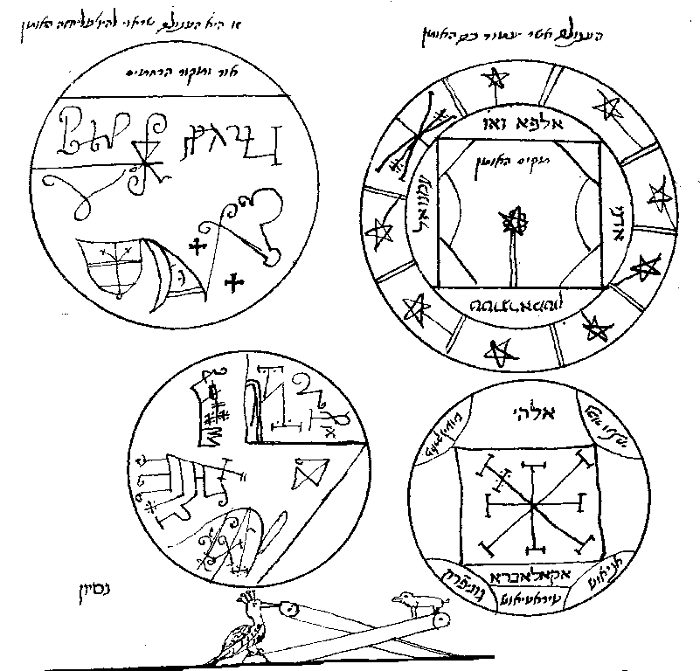 🇮🇹 Italy and 2 moreKey of SolomonClavicula Salomonis
A Renaissance grimoire attributed to King Solomon, detailing ritual preparations and invocations.Text · Cursing and harm · Love and attraction Historical
🇮🇹 Italy and 2 moreKey of SolomonClavicula Salomonis
A Renaissance grimoire attributed to King Solomon, detailing ritual preparations and invocations.Text · Cursing and harm · Love and attraction Historical
 🇬🇷 Greece and 3 moreOracle
A person or site believed to channel divine insight and predict the future.Oracle · Seeing and foretelling · Power and authority Historical
🇬🇷 Greece and 3 moreOracle
A person or site believed to channel divine insight and predict the future.Oracle · Seeing and foretelling · Power and authority Historical
 🇮🇹 ItalyJupiterIuppiter
The Roman sky father and king of the gods, associated with thunder and oathsBeing · Power and authority · Protection Historical
🇮🇹 ItalyJupiterIuppiter
The Roman sky father and king of the gods, associated with thunder and oathsBeing · Power and authority · Protection Historical
 🇮🇹 Italy and 1 moreSaturnSāturnus
Roman god of time and agriculture, linked to the Saturnalia festivalBeing · Luck and prosperity · Power and authority Historical
🇮🇹 Italy and 1 moreSaturnSāturnus
Roman god of time and agriculture, linked to the Saturnalia festivalBeing · Luck and prosperity · Power and authority Historical
 🇬🇷 Greece and 2 moreMagic in the Greco-Roman world
Private supernatural practices in ancient Greece and Rome, distinct from public state religion.Tradition · Protection · Cursing and harm Historical
🇬🇷 Greece and 2 moreMagic in the Greco-Roman world
Private supernatural practices in ancient Greece and Rome, distinct from public state religion.Tradition · Protection · Cursing and harm Historical
 🇫🇷 France and 1 moreCernunnos
An antlered Celtic deity associated with nature and fertilityBeing · Power and authority · Luck and prosperity Historical
🇫🇷 France and 1 moreCernunnos
An antlered Celtic deity associated with nature and fertilityBeing · Power and authority · Luck and prosperity Historical
 🇮🇳 India and 1 moreHeliotrope
A green and red mineral stone used as an amulet for health, invisibility, and courage.Charm · Protection · Healing Historical
🇫🇷 France and 5 moreCount of St. GermainComte de Saint Germain
An 18th-century European adventurer known for alchemy, music, and claims of immortality.Figure · Power and authority · Wonder and entertainment Historical
🇮🇳 India and 1 moreHeliotrope
A green and red mineral stone used as an amulet for health, invisibility, and courage.Charm · Protection · Healing Historical
🇫🇷 France and 5 moreCount of St. GermainComte de Saint Germain
An 18th-century European adventurer known for alchemy, music, and claims of immortality.Figure · Power and authority · Wonder and entertainment Historical
 🇬🇷 Greece and 1 moreHecateἙκάτη
A Greek goddess of magic, crossroads, and the moon, often shown in three forms.Being · Protection · Power and authority Historical
🇬🇷 Greece and 1 moreHecateἙκάτη
A Greek goddess of magic, crossroads, and the moon, often shown in three forms.Being · Protection · Power and authority Historical
 🇫🇷 France and 1 moreNostradamus
A French astrologer and physician known for a book of poetic propheciesText · Seeing and foretelling · Power and authority Historical
🇫🇷 France and 1 moreNostradamus
A French astrologer and physician known for a book of poetic propheciesText · Seeing and foretelling · Power and authority Historical
 🇮🇹 Italy and 2 moreAugury
A Roman rite of reading bird behavior to learn the will of the godsRite · Power and authority · Seeing and foretelling Historical
🇮🇹 Italy and 2 moreAugury
A Roman rite of reading bird behavior to learn the will of the godsRite · Power and authority · Seeing and foretelling Historical
 🇮🇹 Italy and 3 moreRenaissance magic
A 15th and 16th century revival of magical arts blending philosophy, astrology, and hidden knowledge.Tradition · Power and authority · Seeing and foretelling Historical
🇮🇹 Italy and 3 moreRenaissance magic
A 15th and 16th century revival of magical arts blending philosophy, astrology, and hidden knowledge.Tradition · Power and authority · Seeing and foretelling Historical
 🇪🇬 Egypt and 2 moreIsisꜣst (Egyptian)
Egyptian goddess of magic, mourning and kingship, mother of HorusBeing · Protection · Healing Historical
🇪🇬 Egypt and 2 moreIsisꜣst (Egyptian)
Egyptian goddess of magic, mourning and kingship, mother of HorusBeing · Protection · Healing Historical
 🇩🇪 Germany and 2 moreOccultism in Nazism
The study of alleged magical links to the Nazi regime and the myths that surround themBelief · Cursing and harm · Power and authority Historical
🇩🇪 Germany and 2 moreOccultism in Nazism
The study of alleged magical links to the Nazi regime and the myths that surround themBelief · Cursing and harm · Power and authority Historical
 🇮🇹 Italy and 2 moreBulla
A round Roman amulet given to freeborn boys as a mark of status and protectionCharm · Protection · Luck and prosperity Historical
🇮🇹 Italy and 2 moreBulla
A round Roman amulet given to freeborn boys as a mark of status and protectionCharm · Protection · Luck and prosperity Historical
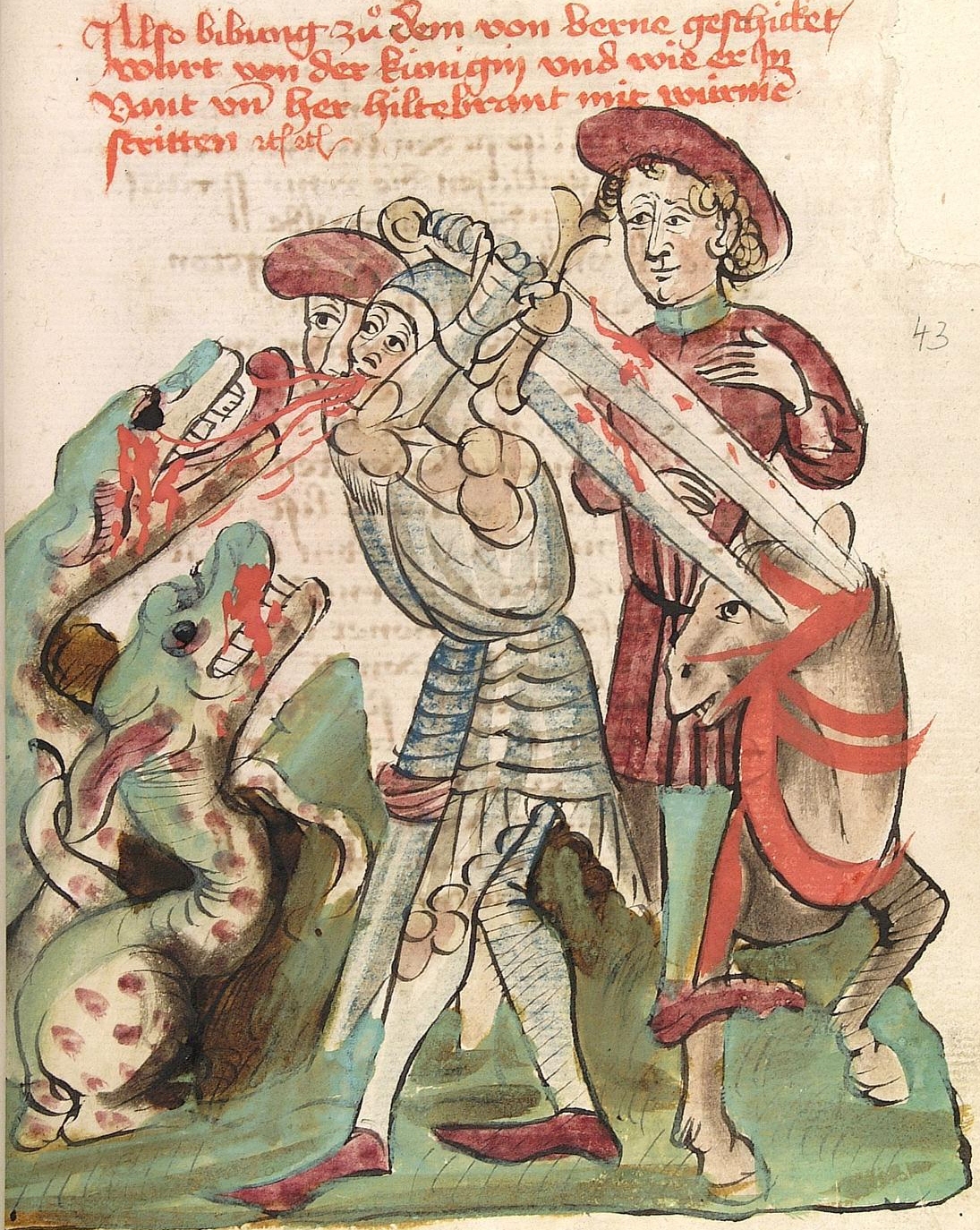 🇩🇪 Germany and 2 moreDietrich von Bern
A legendary Germanic hero based on the Ostrogothic king Theodoric the GreatFigure · Power and authority Historical
🇩🇪 Germany and 2 moreDietrich von Bern
A legendary Germanic hero based on the Ostrogothic king Theodoric the GreatFigure · Power and authority Historical
 🇮🇪 Ireland and 4 moreFairy Queen
A female ruler of fairies found in folklore, literature, and witchcraft trials across Europe.Figure · Power and authority Historical
🇮🇪 Ireland and 4 moreFairy Queen
A female ruler of fairies found in folklore, literature, and witchcraft trials across Europe.Figure · Power and authority Historical
 🇮🇹 ItalyAlchemical DoorPorta Alchemica
A Roman gate covered in alchemical symbols and legends of transmutationCharm · Power and authority · Wonder and entertainment Historical
🇮🇹 ItalyAlchemical DoorPorta Alchemica
A Roman gate covered in alchemical symbols and legends of transmutationCharm · Power and authority · Wonder and entertainment Historical
 🇮🇹 ItalyShe-wolf (Roman mythology)lupa
The mythical wolf that nursed Rome's founders and became the city's enduring symbolFigure · Power and authority Historical
🇮🇹 ItalyShe-wolf (Roman mythology)lupa
The mythical wolf that nursed Rome's founders and became the city's enduring symbolFigure · Power and authority Historical
 🇮🇹 ItalyGli ExperimentiGli Experimenti de la Ex.ma S.r Caterina da Furlj Matre de lo inllux.mo S.r Giouanni de Medici
A 16th-century manuscript of alchemical, medicinal, and cosmetic recipes by Caterina SforzaText · Healing · Power and authority Historical
🇮🇹 ItalyGli ExperimentiGli Experimenti de la Ex.ma S.r Caterina da Furlj Matre de lo inllux.mo S.r Giouanni de Medici
A 16th-century manuscript of alchemical, medicinal, and cosmetic recipes by Caterina SforzaText · Healing · Power and authority Historical
 🇮🇹 ItalyAngitia
A Sabine and Roman goddess of healing and snake magic in central ItalyBeing · Healing · Power and authority Historical
🇮🇹 ItalyAngitia
A Sabine and Roman goddess of healing and snake magic in central ItalyBeing · Healing · Power and authority Historical
 🇬🇷 Greece and 1 moreHephaestusἭφαιστος
The Greek smith god who forged divine weapons and crafted automata for the gods.Being · Power and authority Historical
🇮🇹 Italy and 1 moreBooks of secrets
Early modern European compilations of recipes and formulae framed as hidden knowledgeText · Power and authority Historical
🇮🇹 Italy and 2 moreOsirian Egyptian OrderOrdine Osirideo Egizio
An Italian esoteric society tracing its roots to 18th-century Naples and ancient Hermetic traditions.Tradition · Power and authority · Speaking with spirits and the dead Historical
🇬🇷 Greece and 1 moreHephaestusἭφαιστος
The Greek smith god who forged divine weapons and crafted automata for the gods.Being · Power and authority Historical
🇮🇹 Italy and 1 moreBooks of secrets
Early modern European compilations of recipes and formulae framed as hidden knowledgeText · Power and authority Historical
🇮🇹 Italy and 2 moreOsirian Egyptian OrderOrdine Osirideo Egizio
An Italian esoteric society tracing its roots to 18th-century Naples and ancient Hermetic traditions.Tradition · Power and authority · Speaking with spirits and the dead Historical
 🇪🇸 Spain and 3 moreJewish heraldry
Heraldic achievements used by Jewish communities in Europe and abroadTradition · Power and authority Historical
🇪🇸 Spain and 3 moreJewish heraldry
Heraldic achievements used by Jewish communities in Europe and abroadTradition · Power and authority Historical
 🇩🇪 Germany and 4 moreWolfsangel
A Z-shaped symbol from German heraldry with a history as a hunting tool, liberty emblem, and hate sign.Power and authority Historical
🇩🇪 Germany and 4 moreWolfsangel
A Z-shaped symbol from German heraldry with a history as a hunting tool, liberty emblem, and hate sign.Power and authority Historical
 🇮🇹 ItalyŚuri𐌑𐌖𐌛 (Etruscan)
An ancient Etruscan deity of volcanic fire, the underworld, and healingBeing · Protection · Healing Historical
🇮🇹 ItalyDe Umbris Idearum
A 1582 treatise by Giordano Bruno on memory, magic and philosophyText · Power and authority · Wonder and entertainment Historical
🇮🇹 ItalyŚuri𐌑𐌖𐌛 (Etruscan)
An ancient Etruscan deity of volcanic fire, the underworld, and healingBeing · Protection · Healing Historical
🇮🇹 ItalyDe Umbris Idearum
A 1582 treatise by Giordano Bruno on memory, magic and philosophyText · Power and authority · Wonder and entertainment Historical
 🇸🇪 Sweden and 4 moreSun cross
A cross inside a circle found in prehistoric art and modern political symbolsBelief · Power and authority Historical
🇸🇪 Sweden and 4 moreSun cross
A cross inside a circle found in prehistoric art and modern political symbolsBelief · Power and authority Historical
Photo credits on this page
The small pictures above come from Wikimedia Commons under free licences. Some are cropped to fit.
- Alfonso X of Castile: Otto Posse (1847-1921), Public domain, source
- Occultism in Nazism: Peretz Kaminsky, Public domain, source
- Augur: Unknown author, Public domain, source
- Śuri: Marie-Lan Nguyen, Public domain, source
- Jewish heraldry: Consulta Araldica, 1868, CC BY-SA 4.0, source
- Bulla: Anonymous ( Category:Etruscans ) Unknown author, Public domain, source
- Cernunnos: Nationalmuseet, Roberto Fortuna og Kira Ursem, Public domain, source
- Heliotrope: Ra'ike (see also: de:Benutzer:Ra'ike ), CC BY-SA 3.0, source
- Fairy: Henry Fuseli, Public domain, source
- Hecate: Henryk Siemiradzki, Public domain, source
- Nostradamus: After César de Notre-Dame, Public domain, source
- Renaissance magic: Unknown author, Public domain, source
- Isis: Ägyptischer Maler um 1360 v. Chr., Public domain, source
- Angitia: Marica Massaro, CC BY-SA 4.0, source
- Dietrich von Bern: Workshop of Diebolt Lauber, Hagenau 1444-1448, CC BY-SA 3.0, source
- Wolves in folklore, religion and mythology: Unknown author, CC0, source
- Oracle: John William Waterhouse, Public domain, source
- Alchemical Door: Sailko, CC BY 2.5, source
- Gli Experimenti: Mattman723, CC BY-SA 3.0, source
- Key of Solomon: Anonymous Unknown author, Public domain, source
- Hephaestus: Foundry Painter (name vase), Public domain, source
- Magic in the Greco-Roman world: ArchaiOptix, CC BY-SA 4.0, source
- Saturn: Robert Lowe, CC BY 2.0, source
- Wolfsangel: User:Poeticbent, Public domain, source
- Jupiter: ArchaiOptix, CC BY-SA 4.0, source
- Sun cross: National Museum of Denmark, CC BY-SA 3.0, source
The weekly digest
Every Monday: seven entries you may not know, what is on the calendar this week, and one rite drawn step by step.