
Wolfsangel
from German 'wolf' and 'angel', meaning 'wolf's hook'
A Z-shaped symbol from German heraldry with a history as a hunting tool, liberty emblem, and hate sign.
The Wolfsangel is a heraldic charge from Germany and eastern France, originally inspired by medieval wolf traps. It served as an early symbol of German independence before being adopted by Nazi military units, where it now functions primarily as a neo-Nazi emblem.
- Inspired by medieval wolf traps with Z-shaped hooks
- Adopted by Nazi SS divisions like Das Reich
- Used on town seals in Wolfach since 1299
- Designated a hate symbol by the Anti-Defamation League
- Revived by Hermann Löns' 1910 novel Der Wehrwolf
What it is
The Wolfsangel is a heraldic charge originating in Germany and eastern France. Its design mimics a medieval wolf trap consisting of a Z-shaped hook suspended from a crescent bar. The stylized version often appears as a Z with a central horizontal stroke, resembling the rune Ƶ. While historically linked to folk magic beliefs that it could ward off wolves, its primary identity is as a civic and military emblem rather than a magical object.
Where it comes from
The symbol derives from practical hunting tools used in medieval Europe to catch wolves. Hunters concealed hooks in meat baited on chains attached to tree branches. By the late Middle Ages, the shape evolved into a popular symbol in German forested regions, appearing on town seals like those of Wolfach in 1299. It later gained political weight during the Thirty Years' War when militia groups adopted it as a badge of resistance against foreign forces.
How it is done
As a heraldic charge, the Wolfsangel is depicted in coats of arms and banners. Variations include the vertical form associated with thunderbolts and the horizontal form linked to werewolves. In forestry, it served as a boundary marker on trees and uniforms. Historically, the physical trap involved hanging a hooked mechanism from a bar to impale animals attempting to seize baited meat.
Tools and materials
The original device used a Z-shaped iron hook called the crampon or Doppelhaken. This was attached via a chain to a larger crescent-shaped bar known as the Wolfsanker or hameçon. Medieval hunters also utilized blood trails and wattle fencing to guide wolves toward the concealed trap mechanism.
Wolfsangel, drawn and placed
- Living
- Revived
- Fading
- Historical
- Legendary
- Performed
- Lineage
- German heraldry
What it is for
Initially, the symbol represented protection against wolves in regions where they were prevalent. It subsequently became a potent emblem of German liberty and independence during peasant revolts and wartime resistance. In modern contexts, it is widely recognized as a hate symbol and a marker of neo-Nazi ideology.
Who does it
The symbol is maintained by heraldic historians and municipal authorities who use it in local coats of arms. It was historically worn by foresters and gamekeepers as part of their official uniforms and badges. Today, it is primarily studied by scholars and monitored by organizations tracking extremist symbols.
Peoples and places
The Wolfsangel is deeply rooted in German culture, appearing in the heraldry of cities like Wolfach and Rüsselsheim. It is also found in eastern French municipalities such as Wolfisheim. In Ukraine, far-right groups have adopted similar variations, while Italian fascist movements and American neo-Nazi organizations have used the symbol to signal political alignment.
At a glance: who, where and when


What people believe
Medieval folklore held that the stylized symbol possessed magical powers to ward off wolves. Some observers mistakenly identified the Z-shape as an ancient runic character, specifically confusing it with the pseudo-rune gibor from the Armanen set. These associations stem from visual similarities rather than historical runic usage.
When it is done
The symbol appears on historical documents and seals dating back to the thirteenth century. It was prominently displayed during the Thirty Years' War and revived in the twentieth century through literature and military insignia. Modern usage is restricted to specific commemorative or extremist contexts.
How scholars and sceptics see it
Anthropologists and historians note the symbol's transition from a practical hunting tool to a political emblem of resistance. Scholars observe that its adoption by Nazi units created a lasting association with fascism. Researchers emphasize that its current status as a hate symbol overrides its earlier meanings of local identity or agricultural utility.
Cautions and what is closed
The symbol is designated as a hate symbol by the Anti-Defamation League and other monitoring groups. In Germany, displaying the Wolfsangel is illegal if connected to neo-Nazi activities. Misuse of the symbol can lead to legal consequences and social stigma, particularly when interpreted as support for extremist ideologies.
Compare and confuse
The Wolfsangel is often confused with ancient runes due to its resemblance to the Eihwaz rune. However, it is distinct from genuine runic systems. It differs from the Donnerkeil (thunderbolt) in orientation and from the Werwolf symbol in specific heraldic conventions. Other hunting symbols lack the complex political baggage accumulated by this charge.
Law and persecution
German law prohibits the public display of the Wolfsangel when associated with neo-Nazi groups. Exceptions exist for artistic or educational purposes that critically examine the symbol's history. International organizations classify it as a hate symbol, influencing how it is treated in sports and public discourse across various countries.
Questions people ask about Wolfsangel
What is the Wolfsangel?
It is a heraldic symbol from Germany and France shaped like a Z with a crossbar. It originates from medieval wolf traps used by hunters to catch wolves using baited hooks.
Is the Wolfsangel an ancient rune?
No. Although it resembles the pseudo-rune gibor from the Armanen set, it has no equivalent in ancient runic systems. It is a heraldic charge derived from hunting tools.
Why is the symbol controversial today?
It was widely used by Nazi military units and is now listed as a hate symbol by organizations like the Anti-Defamation League. Displaying it can be illegal in Germany if linked to extremism.
Where did the symbol originate?
It comes from medieval European wolf traps. The name means 'wolf's hook'. It appeared on civic seals in German forest towns like Wolfach in the fourteenth century.
Good reading and sources
- Wolfsangel on WikipediaEncyclopedia
- More photos on Wikimedia CommonsPhotos and video
- Wikidata recordOpen data
The facts on this page come from the Wikipedia article "Wolfsangel", written by its contributors and used under the CC BY-SA 4.0 licence, and from its Wikidata record (CC0). EveryJaadu rewrote the text in its own words, with AI assistance, and compares every page with the article to make sure no passage is copied. It may be reused under the same CC BY-SA 4.0 licence with a link back.
It may contain mistakes. Names and customs differ from one community to the next, and some knowledge is closed to outsiders and left out here. This page describes belief and practice. It does not say that any of it works, it is not a how-to, and it is not medical advice. If something is wrong, tell us. Last refreshed 2026-10-09.
More from Germany
All the entries from Germany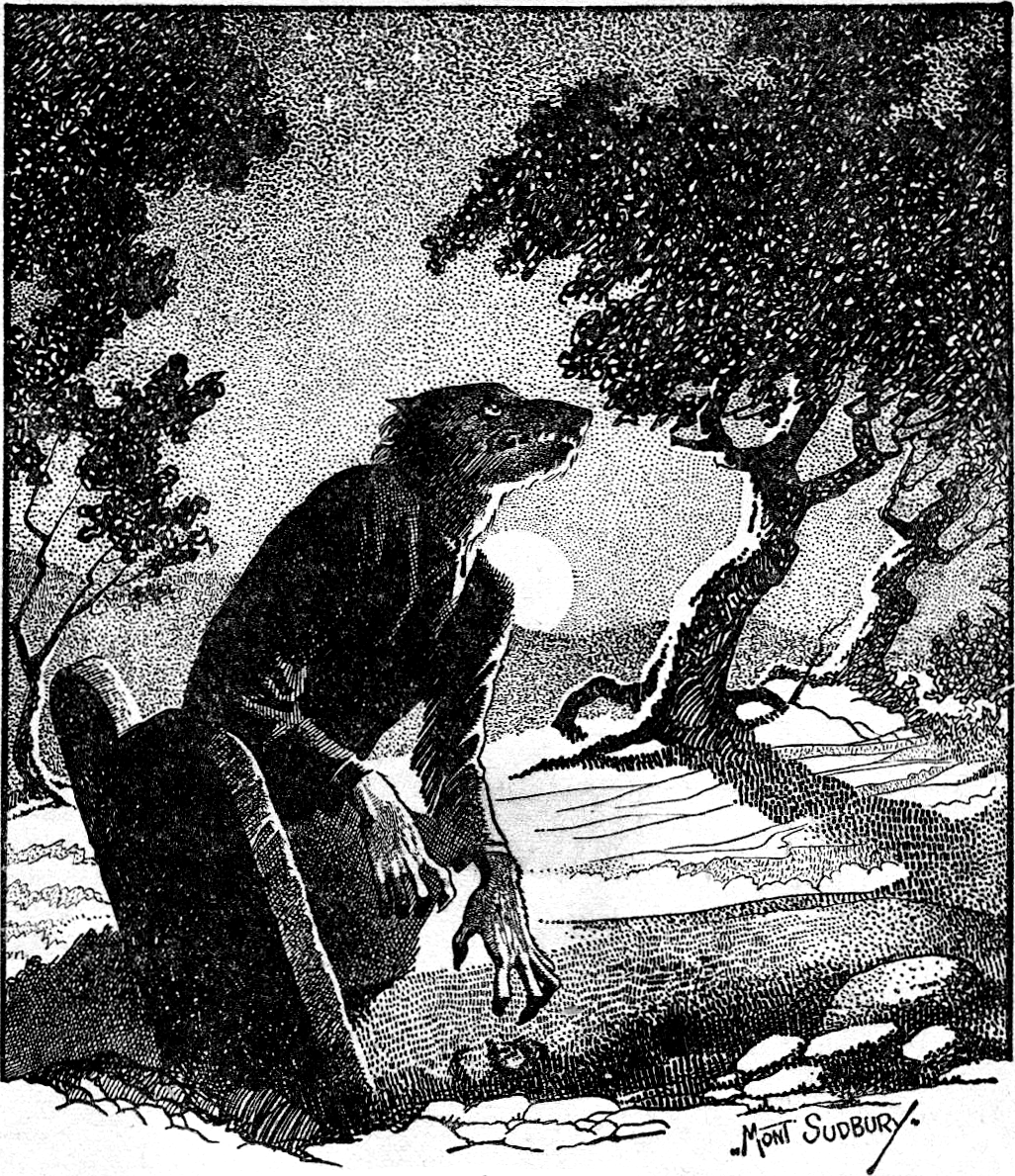 🇫🇷 France and 5 moreWerewolf
A mythical shapeshifter that turns into a wolf, central to European witch-hunts and Gothic horror.Being · Cursing and harm · Wonder and entertainment Legendary
🇫🇷 France and 5 moreWerewolf
A mythical shapeshifter that turns into a wolf, central to European witch-hunts and Gothic horror.Being · Cursing and harm · Wonder and entertainment Legendary
 🇦🇺 Australia and 5 moreSword swallowing
A dangerous stage skill where a performer guides a blade down the throat into the stomachIllusion · Wonder and entertainment Living
🇩🇪 GermanyJohannes Junius
Mayor of Bamberg executed in the witch trials, known for a letter to his daughterFigure Historical
🇦🇺 Australia and 5 moreSword swallowing
A dangerous stage skill where a performer guides a blade down the throat into the stomachIllusion · Wonder and entertainment Living
🇩🇪 GermanyJohannes Junius
Mayor of Bamberg executed in the witch trials, known for a letter to his daughterFigure Historical
 🇩🇪 Germany and 5 moreWitch trials in the Holy Roman Empire
A wave of executions across Central Europe between the fifteenth and eighteenth centuries.Belief · Cursing and harm Historical
🇩🇪 Germany and 5 moreWitch trials in the Holy Roman Empire
A wave of executions across Central Europe between the fifteenth and eighteenth centuries.Belief · Cursing and harm Historical
Related elsewhere
 🇮🇳 India and 5 moreAstrology
A divinatory practice that reads human fate through the positions of celestial bodies.Belief · Seeing and foretelling · Luck and prosperity Living
🇮🇳 India and 5 moreAstrology
A divinatory practice that reads human fate through the positions of celestial bodies.Belief · Seeing and foretelling · Luck and prosperity Living
 🇮🇳 India and 2 morePalmistry
A divination method that interprets the lines and shapes of the hand to predict fate or reveal character.Oracle · Seeing and foretelling · Power and authority Living
🇮🇳 India and 2 morePalmistry
A divination method that interprets the lines and shapes of the hand to predict fate or reveal character.Oracle · Seeing and foretelling · Power and authority Living
 🇨🇳 China and 3 moreChinese dragon龍
A legendary water deity and imperial symbol in East Asian cultureBeing · Protection · Luck and prosperity Historical
🇨🇳 China and 3 moreChinese dragon龍
A legendary water deity and imperial symbol in East Asian cultureBeing · Protection · Luck and prosperity Historical
 🇮🇳 IndiaTaraतारा (Sanskrit), তারা (Bengali)
A fierce Hindu goddess of protection and wisdom, central to the Mahavidya tradition.Being · Protection · Power and authority Living
🇮🇳 IndiaTaraतारा (Sanskrit), তারা (Bengali)
A fierce Hindu goddess of protection and wisdom, central to the Mahavidya tradition.Being · Protection · Power and authority Living