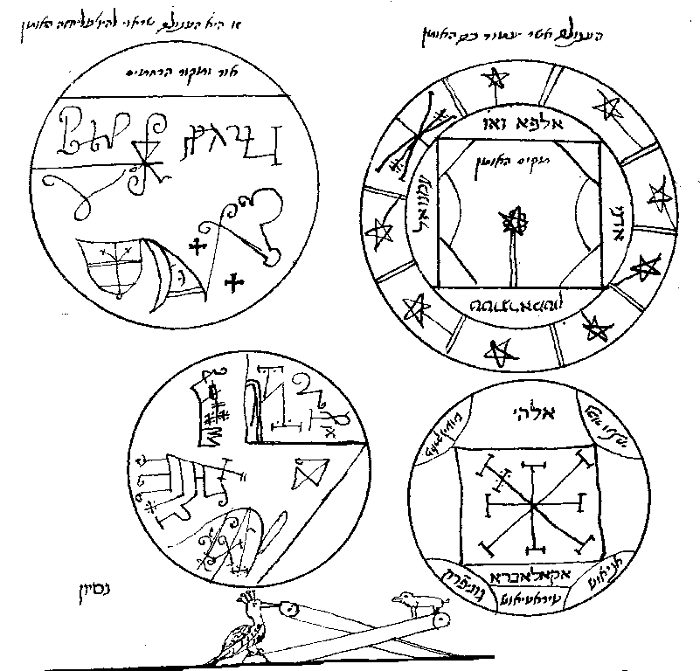
Key of Solomon
In its own language: Clavicula Salomonis
Latin for Clavis Solomonicus, attributing the work to the biblical monarch.
A Renaissance grimoire attributed to King Solomon, detailing ritual preparations and invocations.
The Key of Solomon is a pseudepigraphical magical text from the Italian Renaissance, likely composed in the fourteenth or fifteenth century. It outlines elaborate ceremonial procedures for operations believed to invoke divine protection and compel spiritual entities.
- Attributed to King Solomon but written in the 14th or 15th century.
- Divided into two books covering invocations and purifications.
- Requires strict moral purity and divine invocation for success.
- Influenced later grimoires like the Lemegeton.
- Translated into English by S.L. MacGregor Mathers in 1889.
What it is
The Key of Solomon stands as a prominent example of Renaissance magical literature. Scholars classify it as a grimoire, a manual of spells and rituals. The text claims authorship by the ancient Israelite king, though historians agree it was written centuries later. It focuses on structured ceremonies rather than spontaneous magic. Practitioners view it as a guide to accessing hidden powers through strict adherence to ritual law. The work divides its instructions into two main sections, each addressing different types of operations.
Where it comes from
The manuscript likely originated in Italy during the fourteenth or fifteenth century. Its creation reflects the intellectual climate of the Renaissance, where classical texts were revived and reinterpreted. While some scholars suggest Greek influences, the primary textual tradition appears Latin or Italian. Later versions emerged in Hebrew, French, and English. The text evolved over time, with various scribes adding or altering details. This fluidity makes pinpointing a single original version difficult, but the core structure remains consistent across early manuscripts.
How it is done
The text demands rigorous preparation before any operation. The operator must undergo purification and confess sins to ensure divine favor. Rituals require specific materials prepared at precise astrological moments. Symbols are drawn using particular alphabets, such as the Transitus Fluvii script. Each tool and substance must be blessed with exact words. Unlike later works that list demon names, this text emphasizes invoking God’s power directly. The magician acts as an intermediary, relying on holy authority rather than personal will alone.
Tools and materials
Materials include amulets, drawings, and consecrated objects. Each item requires specific ingredients obtained through prescribed methods. Astrological timing dictates when these items must be crafted. The text details how to purify substances and mark them with protective signs. Symbols often incorporate esoteric alphabets to encode their meaning. The precision of material selection is crucial; incorrect components render the ritual ineffective. Blessings accompany every physical element, transforming ordinary matter into sacred instruments.
Key of Solomon, drawn and placed
- Living
- Revived
- Fading
- Historical
- Legendary
- Performed
- Lineage
- Renaissance magic
What it is for
Users seek various outcomes through these rituals. Operations aim to reveal stolen goods, grant invisibility, or attract love and favor. Some passages describe cursing enemies or compelling spirits to obey commands. However, all actions are framed within a context of divine service. The magician does not act independently but channels higher powers. Success depends on moral purity and correct procedure. Fear of divine retribution keeps practitioners cautious. The text serves as both a practical guide and a moral warning against misuse.
Who does it
The ideal operator is termed an exorcist in Book II. Training involves mastering complex rituals and maintaining strict ethical standards. Gender roles are not explicitly defined in the surviving texts, but historical context suggests male dominance in scholarly circles. Status relies on knowledge of Latin and astrological systems. Modern readers approach the text academically, studying its structure and influence. Few attempt full reconstruction due to the demanding nature of the requirements.
Peoples and places
The text circulated widely across Europe, particularly in France and Italy. French manuscripts from the eighteenth century show significant adaptation. Hebrew versions appeared later, likely derived from Latin sources. English translations emerged in the nineteenth century, popularizing the work among occultists. Cultural differences shaped how local scribes interpreted the rituals. Despite these variations, the core Solomonic attribution remained constant. The text transcended national borders, becoming a shared reference point for European magic.
At a glance: who, where and when
Who does it
Belief worlds
What people believe
The underlying worldview assumes a hierarchy of spiritual beings. Angels, demons, and human souls interact within a divinely ordered universe. Magic operates through covenantal relationships with God. Invocations address the Creator directly, seeking permission to command lesser spirits. The text rejects autonomous demonic power, framing all efficacy as granted by heaven. Moral integrity is essential; sin blocks access to magical forces. This theological framework distinguishes it from purely pagan or folk traditions.
When it is done
Astrological timing plays a central role in scheduling operations. Specific planetary hours and lunar phases determine when rituals should begin. No fixed annual festivals are mandated, but personal readiness matters. Operators must feel spiritually aligned before proceeding. Life events like birth or death may trigger specific requests for aid. The flexibility allows adaptation to individual circumstances while maintaining cosmic alignment.
How scholars and sceptics see it
Historians view the text as a product of Renaissance syncretism. It blends Jewish, Christian, and classical elements into a coherent system. Anthropologists note its emphasis on structure and order, reflecting contemporary legal and scientific trends. Skeptics dismiss its claims as superstition, focusing instead on its cultural impact. Literary critics appreciate its influence on later fantasy and occult literature. The pseudepigraphical nature raises questions about authorship and authenticity, yet its historical value remains undisputed.
Cautions and what is closed
The text warns against unworthy users, promising failure or danger for those lacking piety. Historical accounts suggest some practitioners faced social ostracism or legal trouble. Modern audiences should recognize the text’s age and cultural distance. Misinterpretation can lead to unsafe practices or psychological distress. Fraudulent editions have exploited interest in the work for commercial gain.
Compare and confuse
The Key differs from later works like the Lemegeton, which lists specific demon names. It lacks the detailed hierarchies found in seventeenth-century grimoires. Instead, it focuses on general principles of invocation and purification. Similar themes appear in other Solomonic texts, but each varies in detail and tone. Confusion often arises between the Greater and Lesser Keys, despite their distinct contents. Understanding these distinctions clarifies the evolution of Western magical theory.
Questions people ask about Key of Solomon
What is the Key of Solomon?
It is a Renaissance grimoire attributed to King Solomon, detailing rituals for invoking divine power and managing spiritual entities.
When was it written?
Scholars believe it originated in Italy during the fourteenth or fifteenth century, long after the biblical Solomon's time.
How does one perform its rituals?
Practitioners must purify themselves, use specific materials at astrologically correct times, and invoke God directly for authority.
Is it dangerous to read?
The text claims unworthy readers will fail or face consequences, though modern scholars view this as literary convention.
Where can I find translations?
Notable English versions include those by S.L. MacGregor Mathers (1889) and Stephen Skinner and David Rankine (2008).
Good reading and sources
- Key of Solomon on WikipediaEncyclopedia
- More photos on Wikimedia CommonsPhotos and video
- Wikidata recordOpen data
The facts on this page come from the Wikipedia article "Key of Solomon", written by its contributors and used under the CC BY-SA 4.0 licence, and from its Wikidata record (CC0). EveryJaadu rewrote the text in its own words, with AI assistance, and compares every page with the article to make sure no passage is copied. It may be reused under the same CC BY-SA 4.0 licence with a link back.
It may contain mistakes. Names and customs differ from one community to the next, and some knowledge is closed to outsiders and left out here. This page describes belief and practice. It does not say that any of it works, it is not a how-to, and it is not medical advice. If something is wrong, tell us. Last refreshed 2026-10-05.
More from Italy
All the entries from Italy 🇮🇹 ItalyMarsilio Ficino
A Renaissance priest and philosopher who revived Plato and blended astrology with Christian theology.Text · Speaking with spirits and the dead · Healing Historical
🇮🇹 ItalyMarsilio Ficino
A Renaissance priest and philosopher who revived Plato and blended astrology with Christian theology.Text · Speaking with spirits and the dead · Healing Historical
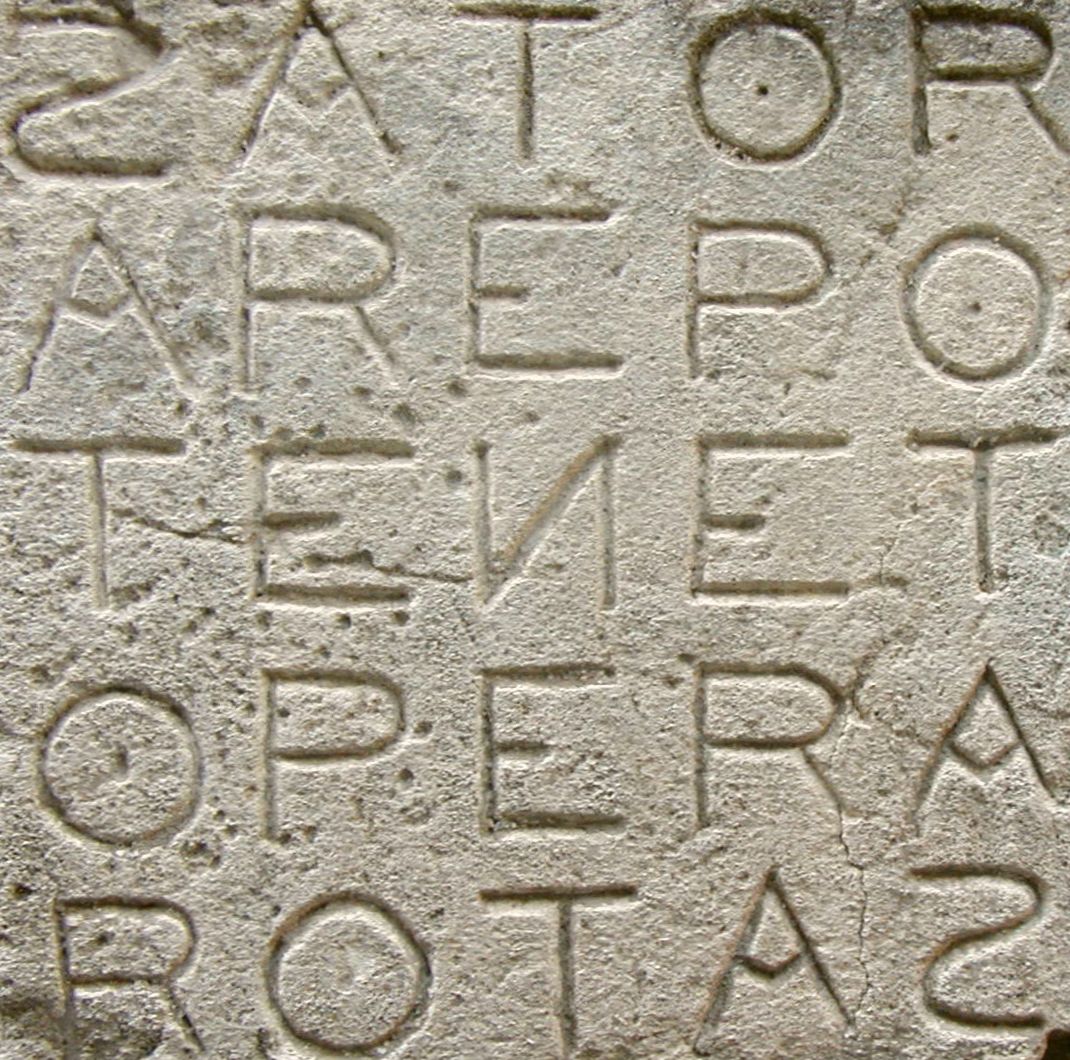 🇮🇹 Italy and 5 moreSator Square
A five-word Latin palindrome found in Roman ruins and medieval churchesCharm · Protection · Healing Historical
🇮🇹 Italy and 5 moreSator Square
A five-word Latin palindrome found in Roman ruins and medieval churchesCharm · Protection · Healing Historical
 🇫🇷 France and 1 moreNostradamus
A French astrologer and physician known for a book of poetic propheciesText · Seeing and foretelling · Power and authority Historical
🇫🇷 France and 1 moreNostradamus
A French astrologer and physician known for a book of poetic propheciesText · Seeing and foretelling · Power and authority Historical
 🇮🇹 Italy and 1 morePietro d'Abano
A medieval physician and astrologer accused of heresy and magic.Text · Healing · Wonder and entertainment Historical
🇮🇹 Italy and 1 morePietro d'Abano
A medieval physician and astrologer accused of heresy and magic.Text · Healing · Wonder and entertainment Historical
Related elsewhere
All text 🇨🇳 China and 2 moreFox spirit狐狸精
A shapeshifting creature from Chinese folklore that can take human form and live for centuries.Being · Cursing and harm · Love and attraction Legendary
🇨🇳 China and 2 moreFox spirit狐狸精
A shapeshifting creature from Chinese folklore that can take human form and live for centuries.Being · Cursing and harm · Love and attraction Legendary
 🇨🇱 ChileTrauco
A small forest spirit from Chiloé mythology known for seducing women and causing pregnancyBeing · Love and attraction · Cursing and harm Legendary
🇨🇱 ChileTrauco
A small forest spirit from Chiloé mythology known for seducing women and causing pregnancyBeing · Love and attraction · Cursing and harm Legendary
 🇮🇳 India and 5 moreHoliहोली
A Hindu spring festival marked by coloured powders and bonfires to celebrate love and virtue.Tradition · Love and attraction · Cursing and harm Living
🇮🇳 India and 5 moreHoliहोली
A Hindu spring festival marked by coloured powders and bonfires to celebrate love and virtue.Tradition · Love and attraction · Cursing and harm Living