
Nostradamus
from Latinised form of his surname, meaning Our Lady
A French astrologer and physician known for a book of poetic prophecies
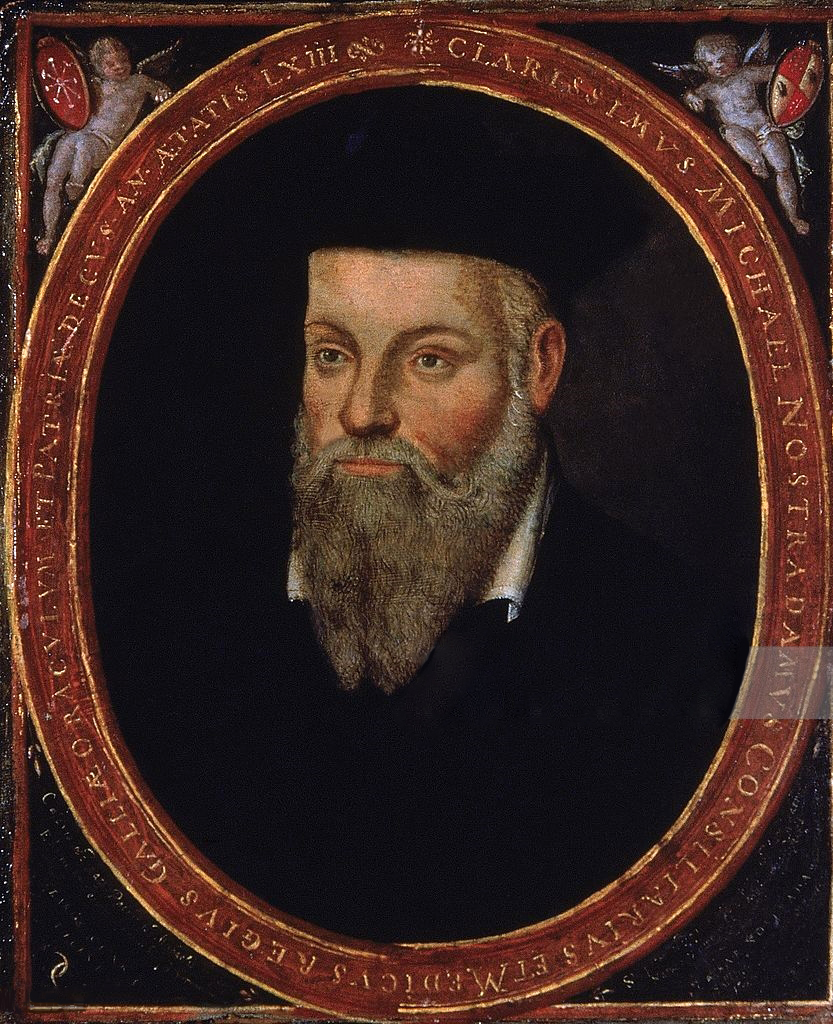
Michel de Nostredame was a sixteenth-century French astrologer, apothecary, and physician who wrote Les Prophéties. This collection of quatrains is said to predict future events, though scholars view the work as vague verse open to many interpretations.
- Born in Saint-Rémy-de-Provence in December 1503
- Published Les Prophéties in 1555 with poetic quatrains
- Consulted by Queen Catherine de' Medici for royal horoscopes
- Expelled from University of Montpellier for being an apothecary
- Died in July 1566, reportedly predicting his own death
What it is
Nostradamus refers to Michel de Nostredame, a French figure active in the sixteenth century. He worked as an apothecary and physician before turning to astrology. His main legacy is Les Prophéties, a book published in 1555 containing poetic verses called quatrains. These lines are widely believed by supporters to forecast major world events. The text uses complex language and multiple languages to obscure its meaning. While some readers see clear predictions, academic sources argue the verses are intentionally vague and can be applied to almost any historical occurrence after the fact.
Where it comes from
He was born in Saint-Rémy-de-Provence in 1503. His paternal family had converted from Judaism to Catholicism shortly before his birth. He studied at the University of Avignon but left when plague closed the school. He later attempted to study medicine at Montpellier but was expelled for having worked as an apothecary, which was considered a manual trade. After traveling and working as a healer, he began publishing almanacs in 1550. The success of these annual guides led him to write the longer prophetic verses that became Les Prophéties.
How it is done
The work consists of four-line poems known as quatrains. Nostradamus used a mix of French, Latin, Greek, Italian, and Provençal to create ambiguity. He employed word games and unusual syntax to hide specific meanings. The verses were grouped into sets of one hundred, called Centuries. Some editions contain fewer than expected due to printing errors or lost pages. Readers attempt to match these vague lines to past or future events. The method relies on interpretation rather than clear statement, allowing the same text to fit many different scenarios.
Tools and materials
He used almanacs and horoscopes as primary tools for his clients. Wealthy patrons provided their birth charts for him to calculate fortunes. He also produced medical texts and translations of ancient works. His prophetic book relied on literary precedent and historical references rather than new rituals. He did not use physical objects for divination but relied on celestial calculations and poetic composition.
Nostradamus, drawn and placed
- Living
- Revived
- Fading
- Historical
- Legendary
- Performed
- Lineage
- Renaissance astrology and medicine
- Timing
- annual publication and royal consultation
What it is for
People sought his advice for personal guidance and political insight. Catherine de' Medici, queen of France, consulted him regarding threats to her family and the kingdom. He wrote almanacs for general public consumption, offering yearly forecasts. His prophetic book aimed to provide long-term visions of history. Supporters believe his work reveals hidden truths about the future, while critics see it as entertainment or confusion.
Who does it
Nostradamus trained as a healer and studied medicine, though he never earned a formal doctorate. He worked as an apothecary and treated patients during plague outbreaks. Later, he served as an astrological consultant to nobles. Queen Catherine de' Medici appointed him Counselor and Physician-in-Ordinary to King Charles IX. His role shifted from medical practitioner to esoteric advisor for the French court.
Peoples and places
The tradition is primarily French, rooted in Provence. He traveled through Italy and influenced European courts. His work spread across Europe through printed editions. Different cultures have interpreted his verses in various ways over centuries. The French elite, particularly the royal family, were his main contemporary audience. Modern interest remains global, with readers worldwide attempting to decode his lines.
At a glance: who, where and when


What people believe
His worldview combined Renaissance medicine with astrology. He believed celestial movements influenced human affairs. The Church tolerated his astrology as long as it did not cross into forbidden magic. He feared persecution for heresy but avoided direct conflict with religious authorities. His prophecies reflect a belief in predetermined events visible through careful study of the stars and historical patterns.
When it is done
He published almanacs annually, starting each year on January first. His prophetic book was released in installments, with the first appearing in 1555. He died in July 1566, reportedly predicting his own death. His work was tied to the calendar years of the mid-sixteenth century. Royal consultations often occurred during times of political crisis or uncertainty.
How scholars and sceptics see it
Academic sources reject the idea that Nostradamus possessed supernatural powers. Historians note that his predictions are vague and retrofitted to events after they happen. Scholars point out that mistranslations and deliberate misinterpretations create the illusion of accuracy. The lack of original manuscripts means modern editions vary significantly. Researchers view his work as a product of its time, blending literature, astrology, and medical practice.
Cautions and what is closed
He faced legal trouble for publishing almanacs without bishop permission. A brief imprisonment resulted from violating royal decrees. Some contemporaries viewed him as a fraud or insane. Accusations of heresy loomed but did not result in execution. Modern readers should be aware that many legends about his life are apocryphal. His medical methods, such as bloodletting, were standard for his era but ineffective against plague.
Compare and confuse
His work is often compared to other prophetic traditions, though his style is unique. Unlike clairvoyants who claim direct spiritual contact, he relied on calculation and poetry. His almanacs differ from serious medical texts by focusing on fortune-telling. Other astrologers of his time produced similar charts, but his poetic format gained lasting fame. The term Nostradamus has become synonymous with vague prophecy in popular culture.
Questions people ask about Nostradamus
Who was Nostradamus?
He was Michel de Nostredame, a French astrologer, apothecary, and physician born in 1503. He is best known for writing Les Prophéties, a book of poetic verses believed by some to predict future events.
What is Les Prophéties?
It is a collection of four-line poems called quatrains, first published in 1555. The verses use mixed languages and ambiguous syntax, leading supporters to claim they forecast major historical events.
Did Nostradamus really predict the future?
Scholars say no. They argue his verses are vague and can fit many events. Predictions are often matched to history after the fact, creating an illusion of accuracy through reinterpretation.
Why did he move to Salon-de-Provence?
After losing his first family to plague, he settled there in 1547. He married a wealthy widow and spent his remaining years writing almanacs and his prophetic book.
Good reading and sources
- Nostradamus on WikipediaEncyclopedia
- More photos on Wikimedia CommonsPhotos and video
- Wikidata recordOpen data
The facts on this page come from the Wikipedia article "Nostradamus", written by its contributors and used under the CC BY-SA 4.0 licence, and from its Wikidata record (CC0). EveryJaadu rewrote the text in its own words, with AI assistance, and compares every page with the article to make sure no passage is copied. It may be reused under the same CC BY-SA 4.0 licence with a link back.
It may contain mistakes. Names and customs differ from one community to the next, and some knowledge is closed to outsiders and left out here. This page describes belief and practice. It does not say that any of it works, it is not a how-to, and it is not medical advice. If something is wrong, tell us. Last refreshed 2026-10-05.
More from France
All the entries from France 🇬🇧 United Kingdom and 2 moreKing ArthurBrenin Arthur
A legendary British king and folk hero of medieval literature and Welsh mythologyFigure · Power and authority · Wonder and entertainment Legendary
🇬🇧 United Kingdom and 2 moreKing ArthurBrenin Arthur
A legendary British king and folk hero of medieval literature and Welsh mythologyFigure · Power and authority · Wonder and entertainment Legendary
 🇫🇷 France and 2 moreÉliphas Lévi
A French writer who shaped modern occult thought and ceremonial magic.Text · Power and authority · Speaking with spirits and the dead Historical
🇫🇷 France and 2 moreÉliphas Lévi
A French writer who shaped modern occult thought and ceremonial magic.Text · Power and authority · Speaking with spirits and the dead Historical
 🇮🇹 Italy and 2 moreKey of SolomonClavicula Salomonis
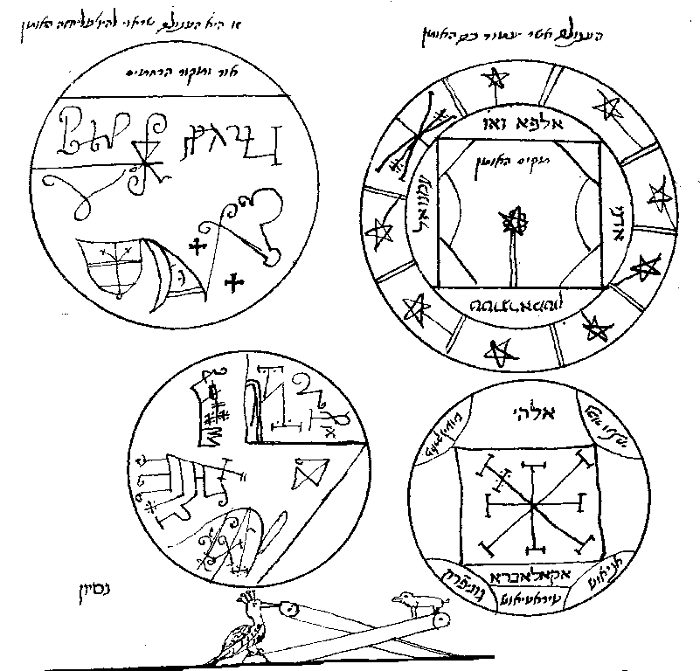
A Renaissance grimoire attributed to King Solomon, detailing ritual preparations and invocations.Text · Cursing and harm · Love and attraction Historical
🇮🇹 Italy and 2 moreKey of SolomonClavicula Salomonis
A Renaissance grimoire attributed to King Solomon, detailing ritual preparations and invocations.Text · Cursing and harm · Love and attraction Historical
 🇩🇪 Germany and 5 moreWitch trials in the Holy Roman Empire
A wave of executions across Central Europe between the fifteenth and eighteenth centuries.Belief · Cursing and harm Historical
🇩🇪 Germany and 5 moreWitch trials in the Holy Roman Empire
A wave of executions across Central Europe between the fifteenth and eighteenth centuries.Belief · Cursing and harm Historical
Related elsewhere
All text 🇮🇳 India and 5 moreAstrology
A divinatory practice that reads human fate through the positions of celestial bodies.Belief · Seeing and foretelling · Luck and prosperity Living
🇮🇳 India and 5 moreAstrology
A divinatory practice that reads human fate through the positions of celestial bodies.Belief · Seeing and foretelling · Luck and prosperity Living
 🇮🇳 India and 2 morePalmistry
A divination method that interprets the lines and shapes of the hand to predict fate or reveal character.Oracle · Seeing and foretelling · Power and authority Living
🇪🇬 Egypt and 1 moreBook of Thoth
A collection of ancient Egyptian texts attributed to the god of writing and knowledge.Text · Power and authority · Seeing and foretelling Historical
🇮🇳 India and 2 morePalmistry
A divination method that interprets the lines and shapes of the hand to predict fate or reveal character.Oracle · Seeing and foretelling · Power and authority Living
🇪🇬 Egypt and 1 moreBook of Thoth
A collection of ancient Egyptian texts attributed to the god of writing and knowledge.Text · Power and authority · Seeing and foretelling Historical
 🇮🇷 Iran and 5 moreMagi
Priests of Zoroastrianism and the figures who inspired the word for magicTradition · Seeing and foretelling · Power and authority Living
🇮🇷 Iran and 5 moreMagi
Priests of Zoroastrianism and the figures who inspired the word for magicTradition · Seeing and foretelling · Power and authority Living