Hindu and Tantric: magic in this belief world
Mantra, yantra, tantra, puja and the folk goddess cults of India and Nepal.
Hindu practice holds a very large range of ritual: Vedic fire offerings, mantra and yantra, tantra, temple puja, astrology, and the village goddess cults of India and Nepal. Many Hindus would call this worship, not magic, while scholars note that charms, spells and rites of power run through the tradition from the Atharvaveda onward. This page covers the range and the tensions inside it. Hindu communities live in every continent, and their rites differ by language and household.
Mantra, yantra and tantra
A mantra is a sacred sound or phrase, a yantra a diagram, and tantra a family of ritual traditions that use both. Tantric practice is varied: some is household devotion, some is initiatory work under a guru, and some has been sensationalised abroad as sex magic, a picture most practitioners reject. Knowledge is passed through initiation, and many texts are closed to outsiders. Initiation into a mantra is usually given by a guru or family teacher, and the same sound may be said to work only when received in the right way.
Folk and village practice
Beyond the temple, villages have healers, exorcists and mediums who work with goddesses and spirits. Practices against the evil eye include the lemon and chillies, black dots and a rite of waving salt and chillies before a child. Jyotisha, Indian astrology, is consulted for weddings, names and business, and is taught in some universities, which scientists have criticised. Healers and goddess shrines, such as those of Sitala for smallpox and fever and of Bhagavati in Kerala, draw crowds who seek relief and protection.
Gender, caste and law
Access follows caste and gender. Priesthood is largely male and Brahmin, though women lead some rites, and low-caste and Dalit practitioners lead many village cults. Accusations of witchcraft, in India often called dayan or dain, have killed people in states such as Jharkhand and Assam, and several states have passed laws against witch-hunting. Maharashtra and Karnataka have anti-superstition laws. Hindu reformers have also attacked such practice: the Arya Samaj, founded in 1875, opposed idol worship and ritual excess, and rationalist groups in India campaign against godmen who claim miracles.
Diaspora and commerce
Overseas, communities keep household rites and temple worship, and pandits conduct weddings by video. Yoga and tantra are now global industries, and Western teachers have sold forms far from their roots, while Indian reformers and some Hindus object. Scholars point to centuries of overlap between Hindu, Buddhist, Jain and Islamic traditions of charms and healing. Hindu temples in Britain, North America and Southeast Asia now host priests trained in India, and some rites have been adapted to the calendar of working life.
Hindu and Tantric on EveryJaadu
The entries written up so far, best known first.
 🇮🇳 IndiaMangalaमंगल (Maṅgala)
A Hindu deity of Mars, war, and the planet's red lightBeing · Power and authority · Protection Living
🇮🇳 IndiaMangalaमंगल (Maṅgala)
A Hindu deity of Mars, war, and the planet's red lightBeing · Power and authority · Protection Living
 🇮🇳 India and 3 moreMaha Shivaratriमहाशिवरात्रि
A Hindu night of fasting and vigil dedicated to the deity ShivaTradition · Protection · Speaking with spirits and the dead Living
🇮🇳 India and 3 moreMaha Shivaratriमहाशिवरात्रि
A Hindu night of fasting and vigil dedicated to the deity ShivaTradition · Protection · Speaking with spirits and the dead Living
 🇮🇳 IndiaKamakhya Templekamakhya mondir
A Hindu temple in Assam known for its yoni shrine and the Ambubachi Mela festivalTradition · Protection · Healing Living
🇮🇳 IndiaKamakhya Templekamakhya mondir
A Hindu temple in Assam known for its yoni shrine and the Ambubachi Mela festivalTradition · Protection · Healing Living
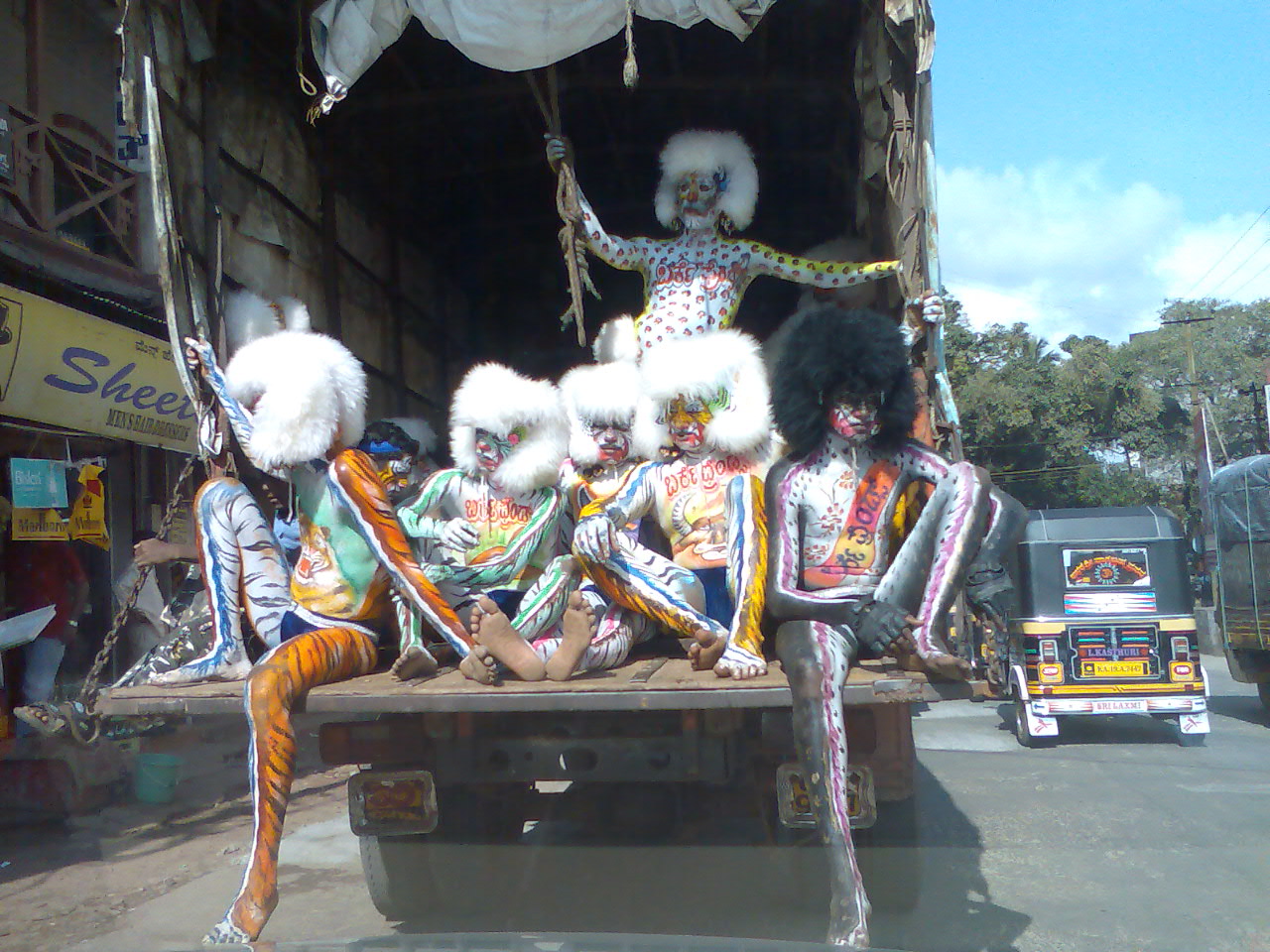 🇮🇳 IndiaPili Yesaಪಿಲಿವೇಷ
A coastal Karnataka folk dance where performers paint themselves as tigers to honour the Goddess DurgaIllusion · Protection · Power and authority Living
🇮🇳 IndiaPili Yesaಪಿಲಿವೇಷ
A coastal Karnataka folk dance where performers paint themselves as tigers to honour the Goddess DurgaIllusion · Protection · Power and authority Living
 🇮🇳 IndiaBhadrakaliभद्रकाली
A fierce Hindu goddess worshipped in Kerala and Nashik for protection and spiritual knowledgeBeing · Protection · Speaking with spirits and the dead Living
🇮🇳 IndiaBhadrakaliभद्रकाली
A fierce Hindu goddess worshipped in Kerala and Nashik for protection and spiritual knowledgeBeing · Protection · Speaking with spirits and the dead Living
 🇮🇳 India and 5 moreBhairavaभैरव
A fierce manifestation of Shiva and a Buddhist protector deity worshipped across South and East Asia.Being · Protection · Cursing and harm Living
🇮🇳 India and 5 moreBhairavaभैरव
A fierce manifestation of Shiva and a Buddhist protector deity worshipped across South and East Asia.Being · Protection · Cursing and harm Living
 🇳🇵 NepalTaleju𑐟𑐮𑐾𑐖𑐸 (Newar) / तलेजु (Devanagari)
A royal goddess of the Kathmandu Valley, worshipped as Durga and Tara.Being · Protection · Power and authority Living
🇳🇵 NepalTaleju𑐟𑐮𑐾𑐖𑐸 (Newar) / तलेजु (Devanagari)
A royal goddess of the Kathmandu Valley, worshipped as Durga and Tara.Being · Protection · Power and authority Living
 🇱🇰 Sri Lanka and 1 moreKataragama templeකතරගම / கதிர்காமம் முருகன் கோயில்
A Sri Lankan shrine shared by Buddhists, Hindus, Muslims and VeddasTradition · Protection · Speaking with spirits and the dead Living
🇱🇰 Sri Lanka and 1 moreKataragama templeකතරගම / கதிர்காமம் முருகன் கோயில்
A Sri Lankan shrine shared by Buddhists, Hindus, Muslims and VeddasTradition · Protection · Speaking with spirits and the dead Living
 🇮🇳 India and 2 moreHomaहोम
A fire ritual found across Asian religions where offerings are burned as a votive exchange with the divine.Rite · Protection · Speaking with spirits and the dead Living
🇮🇳 India and 2 moreHomaहोम
A fire ritual found across Asian religions where offerings are burned as a votive exchange with the divine.Rite · Protection · Speaking with spirits and the dead Living
 🇮🇳 India and 1 moreRangoliरंगोली
Floor art made with coloured powders and flowers to welcome guests and deitiesTradition · Protection · Luck and prosperity Living
🇮🇳 India and 1 moreRangoliरंगोली
Floor art made with coloured powders and flowers to welcome guests and deitiesTradition · Protection · Luck and prosperity Living
 🇮🇳 IndiaBhuta KolaBhūta Kōla
A Tulu folk dance and ritual where spirits are channelled into human performersTradition · Protection · Speaking with spirits and the dead Living
🇮🇳 IndiaBhuta KolaBhūta Kōla
A Tulu folk dance and ritual where spirits are channelled into human performersTradition · Protection · Speaking with spirits and the dead Living
 🇮🇳 India and 5 moreBindiबिंदी
A dot worn on the forehead to mark spiritual focus and cultural identityCharm · Protection · Power and authority Living
🇮🇳 India and 5 moreBindiबिंदी
A dot worn on the forehead to mark spiritual focus and cultural identityCharm · Protection · Power and authority Living
 🇮🇳 IndiaAkshaya Tritiyaअक्षय तृतीया
A Hindu and Jain spring festival marking a day of inexhaustible merit and new beginnings.Tradition · Luck and prosperity · Protection Living
🇮🇳 IndiaAkshaya Tritiyaअक्षय तृतीया
A Hindu and Jain spring festival marking a day of inexhaustible merit and new beginnings.Tradition · Luck and prosperity · Protection Living
 🇮🇳 IndiaKautuka
A red or yellow ritual thread worn for protection in South Asian traditionsCharm · Protection Living
🇮🇳 IndiaKautuka
A red or yellow ritual thread worn for protection in South Asian traditionsCharm · Protection Living
 🇮🇳 India and 5 moreKolamகோலம்
A daily geometric floor drawing made with rice flour at the home entrance in South IndiaTradition · Protection · Luck and prosperity Living
🇮🇳 India and 5 moreKolamகோலம்
A daily geometric floor drawing made with rice flour at the home entrance in South IndiaTradition · Protection · Luck and prosperity Living
 🇮🇳 India and 1 moreYoginiयोगिनी
A female master of yoga and tantra, or a fierce goddess aspect in Indian temples.Tradition · Power and authority · Protection Historical
🇮🇳 India and 1 moreYoginiयोगिनी
A female master of yoga and tantra, or a fierce goddess aspect in Indian temples.Tradition · Power and authority · Protection Historical
 🇮🇳 India and 5 moreHanumanहनुमान्
A divine vanara deity of devotion and strength in HinduismBeing · Protection · Power and authority Living
🇮🇳 India and 5 moreHanumanहनुमान्
A divine vanara deity of devotion and strength in HinduismBeing · Protection · Power and authority Living
 🇮🇳 India and 2 moreYantraयन्त्र
A geometric diagram from Indian traditions used for worship and meditationTradition · Protection · Speaking with spirits and the dead Living
🇮🇳 India and 2 moreYantraयन्त्र
A geometric diagram from Indian traditions used for worship and meditationTradition · Protection · Speaking with spirits and the dead Living
 🇮🇳 India and 3 moreYakshiniयक्षिणी
Some guard, some haunt: female nature spirits of Hindu, Buddhist and Jain loreBeing · Protection · Luck and prosperity Living
🇮🇳 India and 3 moreYakshiniयक्षिणी
Some guard, some haunt: female nature spirits of Hindu, Buddhist and Jain loreBeing · Protection · Luck and prosperity Living
 🇮🇳 India and 1 morePitru Pakshaपितृ पक्ष
A sixteen-day Hindu period for honoring ancestors through food offerings and death ritesTradition · Speaking with spirits and the dead · Luck and prosperity Living
🇮🇳 India and 1 morePitru Pakshaपितृ पक्ष
A sixteen-day Hindu period for honoring ancestors through food offerings and death ritesTradition · Speaking with spirits and the dead · Luck and prosperity Living
 🇮🇳 India and 2 moreRudrakshaरुद्राक्ष
Dried seeds of the Elaeocarpus tree used as prayer beads in Hindu and Buddhist traditions.Substance · Protection · Speaking with spirits and the dead Living
🇮🇳 India and 2 moreRudrakshaरुद्राक्ष
Dried seeds of the Elaeocarpus tree used as prayer beads in Hindu and Buddhist traditions.Substance · Protection · Speaking with spirits and the dead Living
 🇮🇳 IndiaTaraतारा (Sanskrit), তারা (Bengali)
A fierce Hindu goddess of protection and wisdom, central to the Mahavidya tradition.Being · Protection · Power and authority Living
🇮🇳 IndiaTaraतारा (Sanskrit), তারা (Bengali)
A fierce Hindu goddess of protection and wisdom, central to the Mahavidya tradition.Being · Protection · Power and authority Living
 🇮🇳 IndiaMahakaleshwar JyotirlingaMahākāleśvara
A sacred Shiva shrine in Ujjain, India, known for its south-facing idol and ancient origins.Tradition · Protection · Power and authority Living
🇮🇳 IndiaMahakaleshwar JyotirlingaMahākāleśvara
A sacred Shiva shrine in Ujjain, India, known for its south-facing idol and ancient origins.Tradition · Protection · Power and authority Living
 🇮🇳 IndiaTheyyam
A ritual dance from Kerala where performers embody deities through elaborate costume and songRite · Speaking with spirits and the dead · Protection Living
🇮🇳 IndiaTheyyam
A ritual dance from Kerala where performers embody deities through elaborate costume and songRite · Speaking with spirits and the dead · Protection Living
 🇮🇳 IndiaKavu
Sacred forest patches in South India that protect local deities and wildlifeTradition · Protection · Speaking with spirits and the dead Living
🇮🇳 IndiaKavu
Sacred forest patches in South India that protect local deities and wildlifeTradition · Protection · Speaking with spirits and the dead Living
 🇮🇳 India and 1 moreNavagrahaनवग्रह
A group of nine celestial deities in Hinduism that govern fate and astrologyTradition · Protection · Luck and prosperity Living
🇮🇳 India and 1 moreNavagrahaनवग्रह
A group of nine celestial deities in Hinduism that govern fate and astrologyTradition · Protection · Luck and prosperity Living
 🇮🇳 IndiaKumkumकुङ्कुमम्
A red powder made from turmeric and lime, used in Hindu markings and ritualsSubstance · Protection · Luck and prosperity Living
🇮🇳 IndiaKumkumकुङ्कुमम्
A red powder made from turmeric and lime, used in Hindu markings and ritualsSubstance · Protection · Luck and prosperity Living
 🇮🇳 India and 5 moreAncestor worship
Rites of respect for the dead that maintain family bonds and seek spiritual guidanceTradition · Protection · Speaking with spirits and the dead Living
🇮🇳 India and 5 moreAncestor worship
Rites of respect for the dead that maintain family bonds and seek spiritual guidanceTradition · Protection · Speaking with spirits and the dead Living
 🇮🇳 India and 3 moreYakshaयक्ष (Sanskrit), ยักษ์ (Thai)
Nature spirits and guardian deities in South and Southeast Asian traditionsBeing · Protection · Power and authority Living
🇮🇳 India and 3 moreYakshaयक्ष (Sanskrit), ยักษ์ (Thai)
Nature spirits and guardian deities in South and Southeast Asian traditionsBeing · Protection · Power and authority Living
 🇮🇳 India and 2 moreBrahmarakshasaब्रह्मराक्षसः
A cursed Brahmin spirit in Hindu lore, feared for harm and venerated in temples.Being · Cursing and harm · Protection Living
🇮🇳 India and 2 moreBrahmarakshasaब्रह्मराक्षसः
A cursed Brahmin spirit in Hindu lore, feared for harm and venerated in temples.Being · Cursing and harm · Protection Living
 🇮🇳 India and 3 moreDakiniḍākinī
A goddess figure in Hinduism and Buddhism, ranging from flesh-eating demoness to enlightened energy.Being · Cursing and harm · Power and authority Historical
🇮🇳 India and 3 moreDakiniḍākinī
A goddess figure in Hinduism and Buddhism, ranging from flesh-eating demoness to enlightened energy.Being · Cursing and harm · Power and authority Historical
 🇮🇳 India and 1 moreDiyaदीया
A small oil lamp used in prayers and festivals across the Indian subcontinentTradition · Protection · Luck and prosperity Living
🇮🇳 India and 1 moreDiyaदीया
A small oil lamp used in prayers and festivals across the Indian subcontinentTradition · Protection · Luck and prosperity Living
 🇮🇳 IndiaKaliकाली
A fierce Hindu goddess of time and destruction, worshipped as a protective mother.Being · Protection · Cursing and harm Living
🇮🇳 IndiaKaliकाली
A fierce Hindu goddess of time and destruction, worshipped as a protective mother.Being · Protection · Cursing and harm Living
 🇮🇳 India and 2 moreDurga Pujaদুর্গাপূজা
A ten-day autumn festival honouring the goddess Durga and her victory over evil.Tradition · Protection · Luck and prosperity Living
🇮🇳 India and 2 moreDurga Pujaদুর্গাপূজা
A ten-day autumn festival honouring the goddess Durga and her victory over evil.Tradition · Protection · Luck and prosperity Living
 🇮🇳 India and 1 moreSantoshi Mataसंतोषी माता
A Hindu goddess of contentment worshipped through a Friday ritual fast.Being · Protection · Luck and prosperity Living
🇮🇳 India and 1 moreSantoshi Mataसंतोषी माता
A Hindu goddess of contentment worshipped through a Friday ritual fast.Being · Protection · Luck and prosperity Living
 🇮🇳 IndiaAtharvavedaअथर्ववेद
The fourth Veda of Hinduism, containing spells, healing rites, and domestic rituals.Text · Protection · Healing Historical
🇮🇳 IndiaAtharvavedaअथर्ववेद
The fourth Veda of Hinduism, containing spells, healing rites, and domestic rituals.Text · Protection · Healing Historical
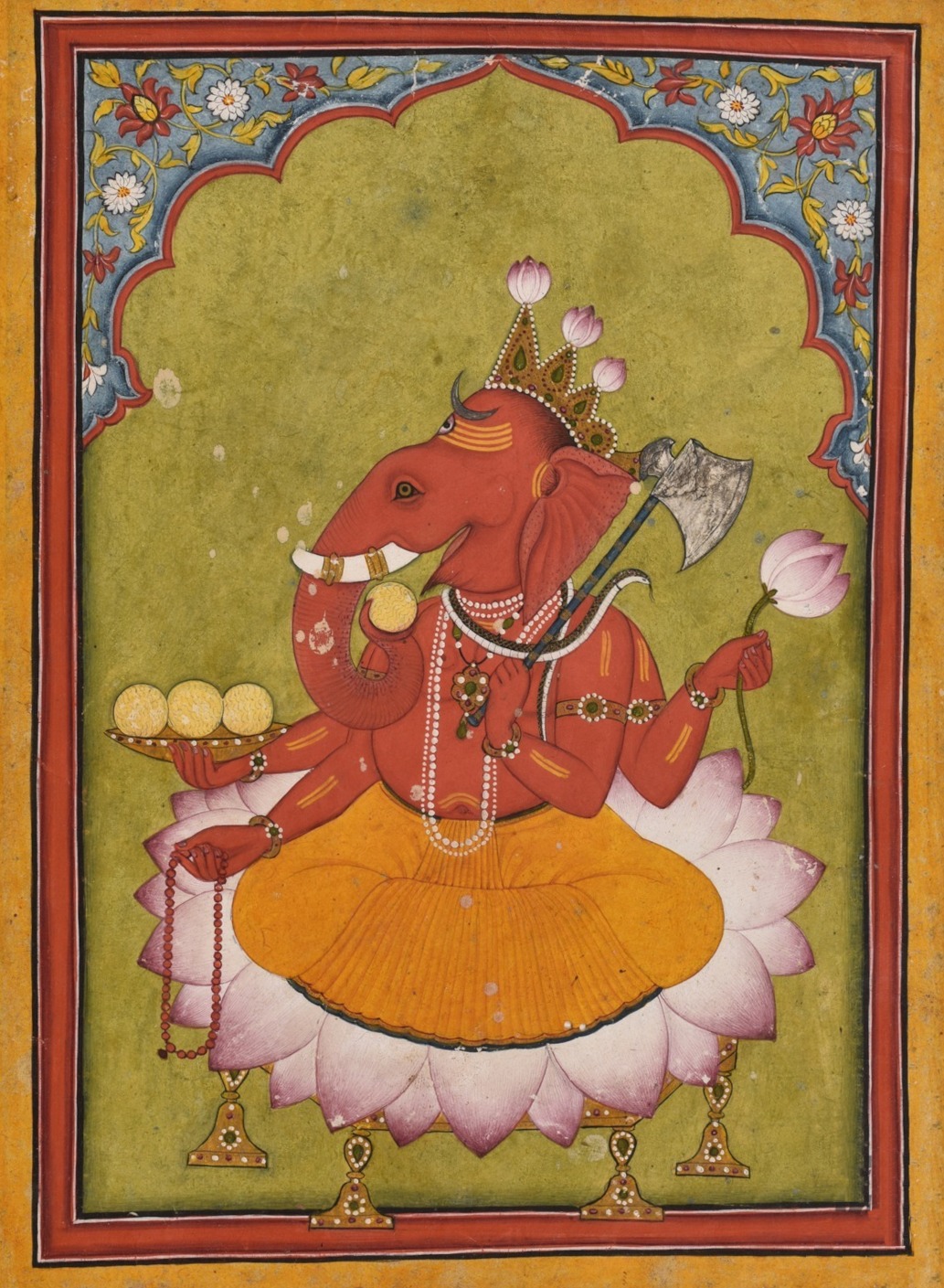 🇮🇳 India and 5 moreGaneshaगणेश (Gaṇeśa)
An elephant-headed Hindu deity worshipped as the remover of obstacles and patron of wisdom.Being · Protection · Luck and prosperity Living
🇮🇳 India and 5 moreGaneshaगणेश (Gaṇeśa)
An elephant-headed Hindu deity worshipped as the remover of obstacles and patron of wisdom.Being · Protection · Luck and prosperity Living
 🇮🇳 India and 5 moreKartikeyaKārttikeya
Hindu god of war and victory, son of Shiva and ParvatiBeing · Power and authority · Protection Living
🇮🇳 India and 5 moreKartikeyaKārttikeya
Hindu god of war and victory, son of Shiva and ParvatiBeing · Power and authority · Protection Living
 🇮🇳 India and 2 moreBhootभूत
A restless spirit of the dead in South Asian belief and folkloreBeing · Cursing and harm · Protection Living
🇮🇳 IndiaMangala Dosha
A Hindu astrological belief that Mars causes marital trouble and the rituals used to address itBelief · Protection Living
🇮🇳 India and 2 moreBhootभूत
A restless spirit of the dead in South Asian belief and folkloreBeing · Cursing and harm · Protection Living
🇮🇳 IndiaMangala Dosha
A Hindu astrological belief that Mars causes marital trouble and the rituals used to address itBelief · Protection Living
 🇮🇳 India and 5 moreAsian witchcraft
A broad overview of magical practices and persecution across Asian culturesTradition · Cursing and harm · Protection Living
🇮🇳 India and 5 moreAsian witchcraft
A broad overview of magical practices and persecution across Asian culturesTradition · Cursing and harm · Protection Living
 🇮🇳 India and 4 moreMakaraमकर
A legendary sea-creature in Hindu mythology and a symbol of water and thresholdsBeing · Protection · Power and authority Historical
🇮🇳 India and 4 moreMakaraमकर
A legendary sea-creature in Hindu mythology and a symbol of water and thresholdsBeing · Protection · Power and authority Historical
 🇮🇳 IndiaKirtimukhaकीर्तिमुख
A swallowing face motif in Hindu and Buddhist temple architecture across South and Southeast AsiaBeing · Protection · Cleansing and purification Historical
🇮🇳 IndiaKirtimukhaकीर्तिमुख
A swallowing face motif in Hindu and Buddhist temple architecture across South and Southeast AsiaBeing · Protection · Cleansing and purification Historical
 🇮🇳 IndiaPulimaranja Thondachan
A theyyam deity of North Malabar, born from a shapeshifter who became a leopard.Figure · Protection · Power and authority Living
🇮🇳 IndiaPulimaranja Thondachan
A theyyam deity of North Malabar, born from a shapeshifter who became a leopard.Figure · Protection · Power and authority Living
 🇮🇳 IndiaKuttichathan Theyyam
A North Kerala ritual dance honoring a guardian deity born of divine and human linesIllusion · Protection · Speaking with spirits and the dead Living
🇮🇳 IndiaKuttichathan Theyyam
A North Kerala ritual dance honoring a guardian deity born of divine and human linesIllusion · Protection · Speaking with spirits and the dead Living
 🇮🇳 IndiaAshapura Mataआशापुरा माता
A Hindu goddess worshipped as the clan protector of Rajput and other communities in western India.Being · Protection · Luck and prosperity Living
🇮🇳 IndiaAshapura Mataआशापुरा माता
A Hindu goddess worshipped as the clan protector of Rajput and other communities in western India.Being · Protection · Luck and prosperity Living
 🇮🇳 IndiaDrishti bommai
A fearsome doll hung at homes and vehicles to ward off the evil eye in South India.Charm · Protection Living
🇮🇳 IndiaDrishti bommai
A fearsome doll hung at homes and vehicles to ward off the evil eye in South India.Charm · Protection Living
 🇮🇳 IndiaNagnechiya Maa
Guardian goddess of the Rathore Rajputs, worshipped in RajasthanBeing · Protection · Power and authority Living
🇮🇳 IndiaNagnechiya Maa
Guardian goddess of the Rathore Rajputs, worshipped in RajasthanBeing · Protection · Power and authority Living
Photo credits on this page
The small pictures above come from Wikimedia Commons under free licences. Some are cropped to fit.
- Kolam: mckaysavage, CC BY 2.0, source
- Bhoot: Anilbhardwajnoida, CC BY-SA 3.0, source
- Tara: Chore Bagan Art Studio, Public domain, source
- Mahakaleshwar Jyotirlinga: Ashverse, CC BY-SA 4.0, source
- Theyyam: Shagil Kannur, CC BY-SA 4.0, source
- Kavu: Ashwin.appus, CC BY-SA 4.0, source
- Navagraha: Kiran891, CC BY-SA 4.0, source
- Kumkum: Thamizhpparithi Maari, CC BY-SA 3.0, source
- Ancestor worship: Lyn Gateley, CC BY 2.0, source
- Yaksha: Gunkarta ( talk ), CC BY-SA 3.0, source
- Brahmarakshasa: Chaitnyags, CC BY-SA 4.0, source
- Dakini: Didier Descouens, Public domain, source
- Diya: Suyash Dwivedi, CC BY-SA 4.0, source
- Kali: Raja Ravi Varma, Public domain, source
- Durga Puja: Subhrajyoti07, CC BY-SA 4.0, source
- Santoshi Mata: Nishu0246, CC BY-SA 4.0, source
- Atharvaveda: William Dwight Whitney / Charles Rockwell Lanman, Public domain, source
- Ganesha: anonymous, Public domain, source
- Kartikeya: Dassmahen, CC BY-SA 4.0, source
- Maha Shivaratri: Navneesh Ramessur, CC BY-SA 4.0, source
- Kamakhya Temple: JyotiPN, CC BY-SA 4.0, source
- Pili Yesa: Premnath Kudva, CC BY 3.0, source
- Bhadrakali: unknown Basholi artist, Public domain, source
- Bhairava: Saankav, CC BY-SA 4.0, source
- Taleju: Unknown author, CC BY-SA 4.0, source
- Kataragama temple: Ghostface Buddha, CC BY-SA 2.0, source
- Kirtimukha: Sailko, CC BY 3.0, source
- Homa: Vyacheslav Argenberg, CC BY 4.0, source
- Rangoli: SreeramKalyan, CC0, source
- Bhuta Kola: Unknown author, Public domain, source
- Asian witchcraft: Utagawa Kuniyoshi, Public domain, source
- Bindi: Vinay Sahay, CC BY-SA 4.0, source
- Akshaya Tritiya: Fgndgndgnr, CC BY-SA 4.0, source
- Drishti bommai: Chrissy starsi, CC BY-SA 4.0, source
- Kautuka: Aditya.Asopa, CC BY-SA 4.0, source
- Mangala: E. A. Rodrigues, Public domain, source
- Yogini: Soumendra Barik, CC BY-SA 3.0, source
- Makara: Subbhashinee S, CC BY-SA 3.0, source
- Hanuman: Niranjan Arminius, CC BY-SA 2.0, source
- Yantra: Photo by Daniel Conrad (Chromacon), artwork by Daniel Conrad under dir, Public domain, source
- Yakshini: Brihaspati, CC BY-SA 4.0, source
- Pitru Paksha: Firoz Shakir, CC BY-SA 3.0, source
- Rudraksha: Merasmita, CC BY-SA 4.0, source
- Pulimaranja Thondachan: Uajith, CC BY-SA 4.0, source
- Kuttichathan Theyyam: Ajeeshkumar4u, CC BY-SA 4.0, source
- Ashapura Mata: Rossifummi, CC BY-SA 4.0, source
- Nagnechiya Maa: Jairajsingh123, CC0, source