
Taleju
In its own language: 𑐟𑐮𑐾𑐖𑐸 (Newar) / तलेजु (Devanagari)
A royal goddess of the Kathmandu Valley, worshipped as Durga and Tara.
Taleju is a goddess venerated in the Kathmandu Valley of Nepal. Hindus view her as a form of Durga, while Newar and Tibetan Buddhists see her as a manifestation of Tara. She served as the royal tutelary deity for the Malla kings.
- She was the royal tutelary deity of the Malla kings.
- Hindus see her as Durga; Buddhists see her as Tara.
- Her main shrine is in Bhaktapur Durbar Square.
- Offerings include arura grain and white muslin cloth.
- Her golden statue is said to have descended from heaven.
What it is
Taleju is a goddess central to the spiritual life of the Kathmandu Valley in Nepal. She holds a unique position as a shared figure across different religious traditions. Hindus regard her as Taleju Bhavani, a fierce aspect of the mother goddess Durga. Practitioners of Newar Buddhism and Tibetan Buddhism identify her with Tara, the enlightened female Buddha. Historically, she was not just a household deity but the specific protector of the state. The Malla rulers claimed her as their personal guardian, linking their political authority directly to her divine presence.
Where it comes from
The origins of Taleju are recorded in several ancient texts. A Tibetan diary from the early seventeenth century tells a story involving the saint Milarepa and a speaking Tara image that prophesied an epidemic. Later Sanskrit genealogies from the seventeenth century link her arrival in Nepal to Harisimha, a king who migrated from Oudh. These chronicles say he brought the goddess to Bhaktapur in the fourteenth century. European observers in the eighteenth century noted that locals believed her golden statue had descended from heaven. The name itself has uncertain roots, though some scholars suggest it means 'deity of the high temple' in the local Newar language.
How it is done
Worship of Taleju is deeply tied to the royal palaces of the Kathmandu Valley. Temples dedicated to her stand in the durbar squares of Kathmandu, Patan, and Bhaktapur. The principal shrine is located in Bhaktapur, where her image resides in a southern courtyard building. Rituals involve offerings of arura, a type of grain, and fine muslin cloth. During major festivals, the goddess is honored through processions and special prayers. The rituals are conducted by priests who maintain the temples and perform the daily rites required to keep the deity pleased.
Tools and materials
The primary tool of worship is the golden statue of the goddess, which is considered sacred because it is believed to have come from the sky. Offerings include arura grains and rolls of white muslin cloth. The physical spaces used for worship are the palace courtyards, specifically the southern buildings designated for her shrine. These locations serve as the focal points for both royal and public devotion during the festival season.
Taleju, drawn and placed
- Living
- Revived
- Fading
- Historical
- Legendary
- Performed
- Lineage
- Shaktism and Vajrayana Buddhism
- Timing
- during festivals like Dashain and Navaratri
What it is for
Taleju serves as a protector of the kingdom and its people. As the royal tutelary deity, she was believed to grant power and legitimacy to the Malla kings. Her blessings were sought for victory and stability. For ordinary people, she represents the protective power of the divine mother. Devotees pray to her during times of crisis or during annual festivals to ensure safety and prosperity for their families and communities.
Who does it
The priesthood maintains the temples in the three historic capitals. These priests are trained to perform the specific rituals required by the deity. In the past, the Malla kings themselves played a direct role in her worship, viewing her as their personal guide. Today, the practice continues through established priestly lineages and the broader community of devotees who visit the shrines during festivals.
Peoples and places
The goddess is primarily worshipped by the Newar people of the Kathmandu Valley. Her cult was established by the Malla dynasty, who built temples in all their settlements. The tradition spans Hindu and Buddhist communities, showing how the same figure can be interpreted differently within distinct theological frameworks. This shared reverence highlights the syncretic nature of religion in Nepal.
At a glance: who, where and when
Peoples
Belief worlds
Occasions


What people believe
In Hindu theology, Taleju is a form of Durga, embodying the creative and destructive powers of the divine feminine. In Buddhist contexts, she is seen as Tara, a bodhisattva who offers protection and swift aid. Believers hold that she listens to sincere prayers and can intervene in worldly affairs. The belief in her heavenly origin reinforces her status as a supreme being who transcends ordinary human experience.
When it is done
Her worship peaks during major Hindu and Buddhist festivals. Dashain is a key time when her power is celebrated, particularly in relation to royal history. Navaratri and Mahanavami also feature special honors for her. The festival of Mohani is another occasion when devotees gather to pay respects. These dates mark the annual cycle of devotion in the Kathmandu Valley.
How scholars and sceptics see it
Historians study the Taleju cult to understand the political and religious dynamics of medieval Nepal. Scholars note how the Malla kings used her worship to consolidate power. Researchers analyze the various names and titles she held, such as Yeṭā Parameśvarī, to trace her evolving identity. Anthropologists examine how her dual identity as Durga and Tara reflects the blending of Hindu and Buddhist traditions in the region.
Cautions and what is closed
Access to the inner sanctums of the Taleju temples was historically restricted. Only the king and high priests were allowed inside the main shrine. This closed knowledge reinforced the secrecy and sacredness of the royal cult. Outsiders were generally barred from witnessing the most intimate rituals, maintaining the distinction between the divine and the profane.
Compare and confuse
Taleju is often compared to Tulaja Bhavani of Maharashtra due to similar names and iconography. However, scholars debate whether this is a direct link or a later conflation. In Tibet, she is identified with Tara, a widely worshipped figure across East Asia. This comparison shows how local deities can absorb characteristics of more universal gods.
Law and persecution
The temples of Taleju are protected cultural heritage sites. After the fall of the monarchy, these sites became public property. Laws govern their preservation and the conduct of rituals within them. The government recognizes their historical importance and ensures they remain open for worship and tourism.
Today
Today, Taleju remains a vital part of Nepali religious life. The temples in Kathmandu, Patan, and Bhaktapur attract thousands of visitors during festivals. The goddess continues to be revered by both Hindus and Buddhists. Her legacy as a symbol of national unity and spiritual protection endures in the modern era.
Days linked to Taleju
Questions people ask about Taleju
Who is Taleju?
Taleju is a goddess worshipped in the Kathmandu Valley of Nepal. She is viewed as a form of Durga by Hindus and as Tara by Buddhists. She was the royal protector of the Malla kings.
Where is Taleju worshipped?
She is primarily worshipped in Nepal, specifically in the Kathmandu Valley. Major temples exist in the durbar squares of Kathmandu, Patan, and Bhaktapur.
What is the origin of Taleju?
Chronicles say she arrived with King Harisimha in the fourteenth century. Some stories claim her golden statue fell from the sky. Others link her to the saint Milarepa and a prophecy about an epidemic.
When is Taleju honored?
She is honored during major festivals like Dashain, Navaratri, and Mohani. These occasions involve special prayers, processions, and offerings at her temples.
Good reading and sources
The facts on this page come from the Wikipedia article "Taleju", written by its contributors and used under the CC BY-SA 4.0 licence, and from its Wikidata record (CC0). EveryJaadu rewrote the text in its own words, with AI assistance, and compares every page with the article to make sure no passage is copied. It may be reused under the same CC BY-SA 4.0 licence with a link back.
It may contain mistakes. Names and customs differ from one community to the next, and some knowledge is closed to outsiders and left out here. This page describes belief and practice. It does not say that any of it works, it is not a how-to, and it is not medical advice. If something is wrong, tell us. Last refreshed 2026-10-06.
More from Nepal
All the entries from Nepal 🇮🇳 India and 3 moreYakshaयक्ष (Sanskrit), ยักษ์ (Thai)
Nature spirits and guardian deities in South and Southeast Asian traditionsBeing · Protection · Power and authority Living
🇮🇳 India and 3 moreYakshaयक्ष (Sanskrit), ยักษ์ (Thai)
Nature spirits and guardian deities in South and Southeast Asian traditionsBeing · Protection · Power and authority Living
 🇮🇳 India and 3 moreDakiniḍākinī
A goddess figure in Hinduism and Buddhism, ranging from flesh-eating demoness to enlightened energy.Being · Cursing and harm · Power and authority Historical
🇮🇳 India and 3 moreDakiniḍākinī
A goddess figure in Hinduism and Buddhism, ranging from flesh-eating demoness to enlightened energy.Being · Cursing and harm · Power and authority Historical
 🇮🇳 India and 1 moreYoginiयोगिनी
A female master of yoga and tantra, or a fierce goddess aspect in Indian temples.Tradition · Power and authority · Protection Historical
🇮🇳 India and 1 moreYoginiयोगिनी
A female master of yoga and tantra, or a fierce goddess aspect in Indian temples.Tradition · Power and authority · Protection Historical
 🇮🇳 India and 6 moreChurel
A female revenant of South Asian folklore, feared for luring men awayBeing · Cursing and harm Legendary
🇮🇳 India and 6 moreChurel
A female revenant of South Asian folklore, feared for luring men awayBeing · Cursing and harm Legendary
Related elsewhere
All being 🇨🇳 China and 3 moreChinese dragon龍
A legendary water deity and imperial symbol in East Asian cultureBeing · Protection · Luck and prosperity Historical
🇨🇳 China and 3 moreChinese dragon龍
A legendary water deity and imperial symbol in East Asian cultureBeing · Protection · Luck and prosperity Historical
 🇵🇭 Philippines and 1 moreAgimatAnting-anting
A Filipino amulet or charm believed to grant protection, power, and supernatural abilities.Charm · Protection · Love and attraction Living
🇵🇭 Philippines and 1 moreAgimatAnting-anting
A Filipino amulet or charm believed to grant protection, power, and supernatural abilities.Charm · Protection · Love and attraction Living
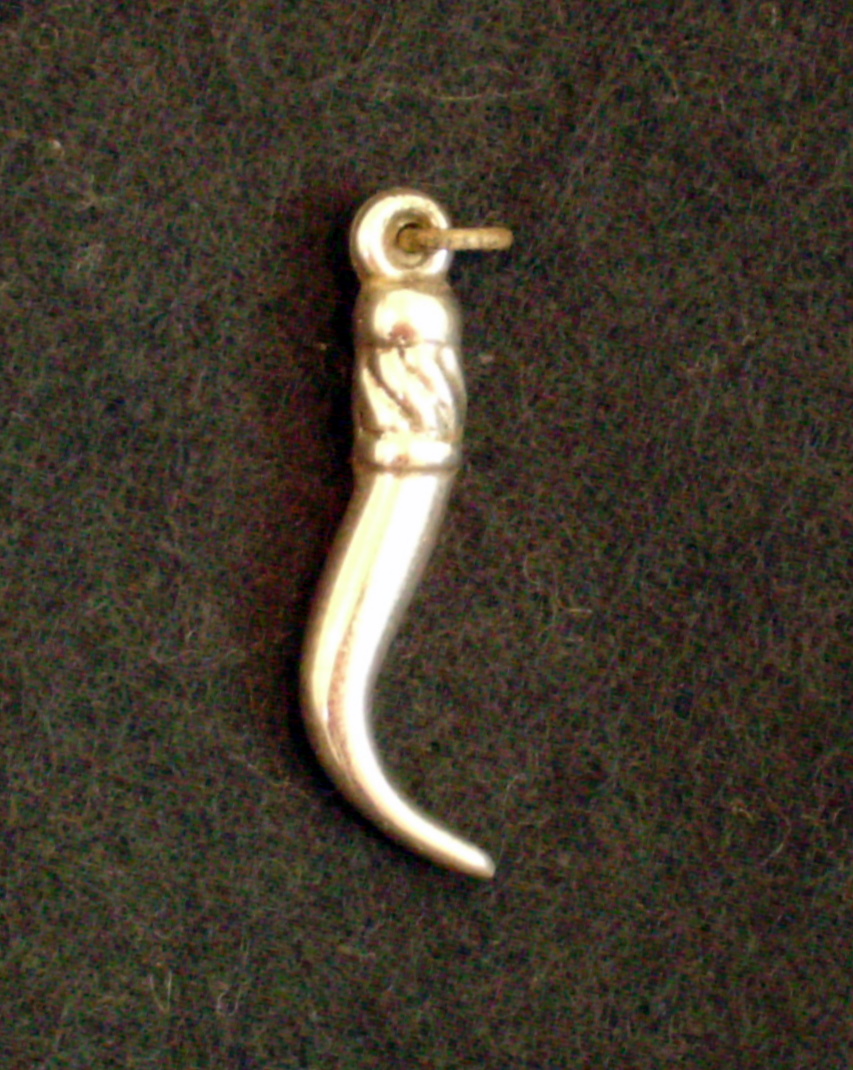 🇮🇹 ItalyCornicello
A twisted horn charm worn in Italy to ward off the evil eye and invite luck.Charm · Protection · Luck and prosperity Living
🇮🇹 ItalyCornicello
A twisted horn charm worn in Italy to ward off the evil eye and invite luck.Charm · Protection · Luck and prosperity Living
 🇫🇷 France and 5 moreYule log
A large wooden log burned in the hearth during winter festivals across Europe and North America.Tradition · Protection · Luck and prosperity Living
🇫🇷 France and 5 moreYule log
A large wooden log burned in the hearth during winter festivals across Europe and North America.Tradition · Protection · Luck and prosperity Living