
Ashapura Mata
In its own language: आशापुरा माता
A Hindu goddess worshipped as the clan protector of Rajput and other communities in western India.
Ashapura Mata is a form of Devi, the great mother goddess in Hinduism. She serves as the kuldevi, or clan deity, for several groups including the Jadeja Rajputs of Kutch and the Chauhans of Rajasthan. Devotees believe she grants wishes and protects her followers.
- She is the kuldevi of the Jadeja Rajputs of Kutch.
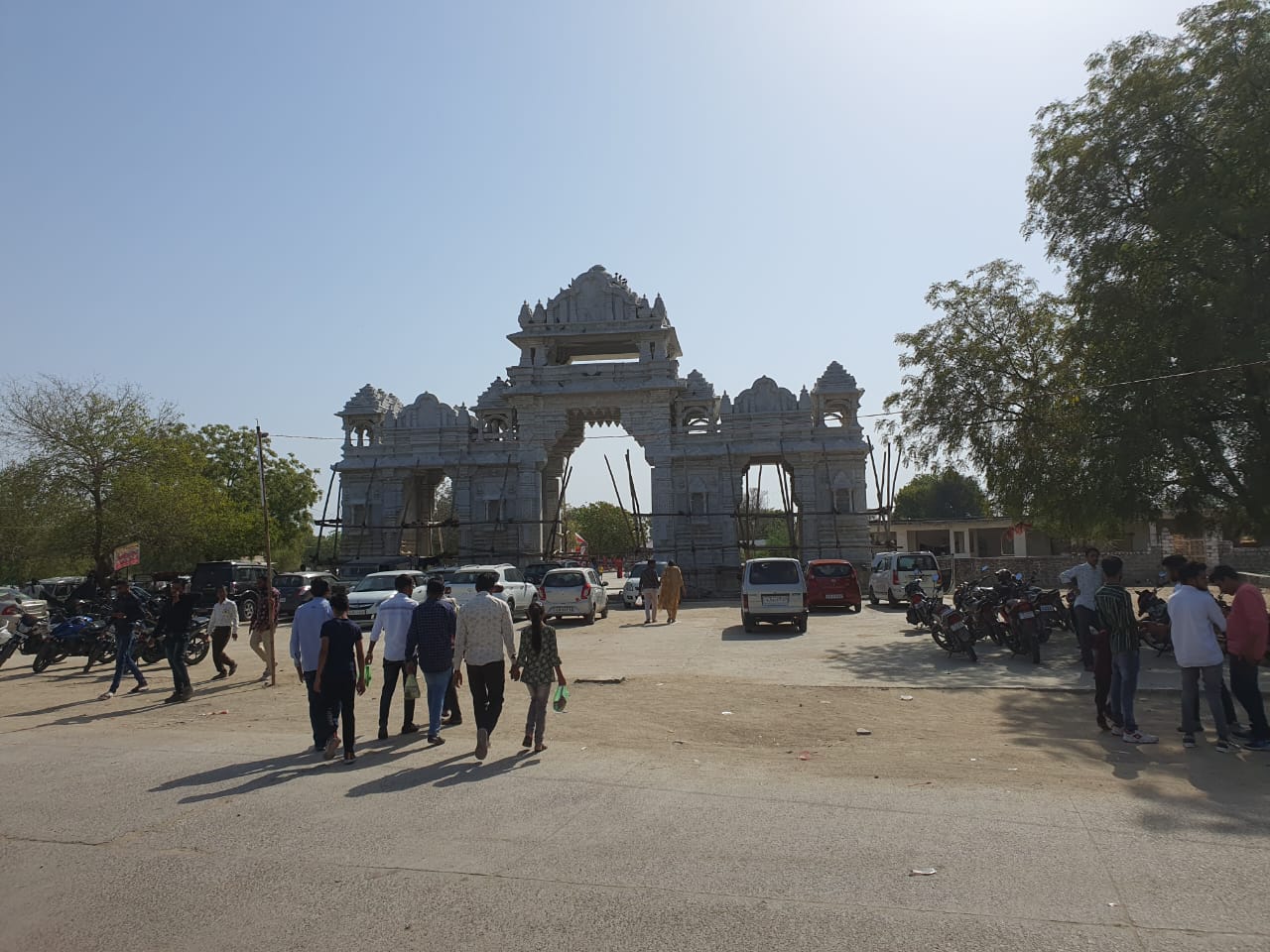
- Temples exist in Rajasthan, Gujarat, and Madhya Pradesh.
- Devotees believe she fulfills the wishes of her followers.
- She is considered an expansion of Shakambhari Devi.
- Major festivals occur during Navratri at sacred sites.
What it is
Ashapura Mata is a Hindu goddess who represents an aspect of Devi, the supreme female divine power. She is primarily revered as a kuldevi, which means she is the ancestral protector deity for specific clans and communities. Followers view her as a benevolent figure who listens to prayers and fulfills the desires of her devotees. Her worship is deeply embedded in the cultural identity of Rajput families and other social groups across western India.
Where it comes from
The goddess is often considered an expansion of Shakambhari Devi, whose origins trace back over a thousand years at Sambhar Lake City. A second major temple was established in Nadol during the tenth century by Rao Lakshman Chauhan. He credited his rise to power to her blessings after he fulfilled a wish. The name Ashapura became associated with this lineage. Later, the Chudasama royal family of Junagadh adopted her as their clan deity after she granted them a son.
How it is done
Worship involves visiting temples dedicated to her presence. Devotees offer prayers and seek her blessings for protection and prosperity. Annual gatherings occur during Navratri, where large numbers of pilgrims travel to sacred sites like Mata no Madh. Rituals include yajnas, which are fire ceremonies performed to honor the goddess. Communities maintain these traditions through generations, passing down stories of her intervention in their history.
Tools and materials
Temples serve as the primary focal points for devotion. Structures such as those in Ghumli and Modran house murtis, or images, of the goddess. Pilgrims bring offerings to these sites. The lion, a traditional mount of Devi, is symbolically present in narratives describing her power. Sacred geography includes hills and fortified towns where her shrines stand as guardians of the land.
Ashapura Mata, drawn and placed
- Living
- Revived
- Fading
- Historical
- Legendary
- Performed
- Lineage
- Shaktism
- Timing
- Navratri
What it is for
People turn to Ashapura Mata for protection and the fulfillment of wishes. Families regard her as their spiritual guardian who ensures the continuity and safety of their lineage. Requests range from personal desires to the success of rulers in battle. She is seen as a powerful intercessor who can alter fate for those who show devotion and respect her authority.
Who does it
The practice is maintained by households and community leaders within specific clans. Rajput dynasties, including the Jadejas and Chauhans, historically established her worship as central to their political and social life. Brahmin priests and local elders oversee temple rituals. The devotion is passed down through family lines, with each generation reaffirming their connection to the deity.
Peoples and places
The goddess is central to the Jadeja Rajputs of Kutch and Gujarat. The Chauhan dynasty of Rajasthan also claims her as their ancestor protector. Other groups include the Patiyats, Karad Vanias, Lohanas, and Khichda Sindhis. These communities span regions from Saurashtra to Central Gujarat, sharing a common reverence for her protective qualities despite regional differences.
At a glance: who, where and when
Who does it
Belief worlds
Occasions


What people believe
Hindu theology places Ashapura Mata within the Shaktism tradition, which honors the divine feminine energy. She is viewed as a manifestation of Shakti, the creative and destructive force of the universe. Believers hold that she resides in sacred locations, listening to the cries of her followers. Her power is linked to the natural world, as seen in legends involving demons and holy sages.
When it is done
The most significant time for worship is Navratri, a nine-night festival dedicated to the goddess. During this period, thousands gather at temples for special ceremonies. The first day of Navratri sees particular activity, with yajnas conducted to honor her. These events reinforce community bonds and allow devotees to collectively seek her blessings for the coming year.
How scholars and sceptics see it
Anthropologists study Ashapura Mata as a key element of Rajput identity and clan structure. Historians examine how her worship evolved alongside political dynasties in medieval India. Scholars note the transition from Shakambhari to Ashapura as a reflection of local religious adaptation. Researchers analyze temple inscriptions and oral traditions to understand the spread of her cult across western India.
Cautions and what is closed
The practice is generally open to the communities that revere her. There are no indications of restricted knowledge or dangerous rituals associated with her worship in the provided material.
Compare and confuse
Ashapura Mata is closely related to Shakambhari Devi, from whom she is said to have expanded. While Shakambhari has older roots, Ashapura represents a localized form favored by specific clans. This mirrors other Hindu goddesses who take on regional names and attributes while retaining core divine characteristics. The concept of kuldevi is shared across many Indian communities, each with their own patron deity.
Law and persecution
Temples operate openly, and festivals attract large public participation. There is no indication of conflict between state law and religious practice in the context of her veneration.
Today
Ashapura Mata remains a living deity for millions of devotees in India. Temples in cities like Mumbai, Bangalore, and Pune serve diaspora communities. Annual fairs continue to draw pilgrims from across Gujarat and beyond. The goddess maintains her role as a protector and wish-granter, adapting to modern contexts while preserving ancient traditions.
Questions people ask about Ashapura Mata
Who is Ashapura Mata?
She is a Hindu goddess and an aspect of Devi. She is worshipped as the clan protector, or kuldevi, by Rajput families and other communities in western India.
Where does her worship originate?
Her roots are linked to Shakambhari Devi at Sambhar Lake City. The name Ashapura became prominent through the Chauhan dynasty in Nadol during the tenth century.
Which communities worship her?
She is revered by the Jadeja Rajputs, Chauhans, Patiyats, Karad Vanias, Lohanas, and Khichda Sindhis across Gujarat and Rajasthan.
What is her main purpose?
Devotees believe she grants wishes and provides protection. She is seen as a benevolent guardian who intervenes in the lives of her followers.
When is she celebrated?
The primary celebration is Navratri, a nine-night festival. Large gatherings and fire ceremonies take place at temples like Mata no Madh during this time.
Good reading and sources
The facts on this page come from the Wikipedia article "Ashapura Mata", written by its contributors and used under the CC BY-SA 4.0 licence, and from its Wikidata record (CC0). EveryJaadu rewrote the text in its own words, with AI assistance, and compares every page with the article to make sure no passage is copied. It may be reused under the same CC BY-SA 4.0 licence with a link back.
It may contain mistakes. Names and customs differ from one community to the next, and some knowledge is closed to outsiders and left out here. This page describes belief and practice. It does not say that any of it works, it is not a how-to, and it is not medical advice. If something is wrong, tell us. Last refreshed 2026-10-11.
More from India
All the entries from India 🇮🇳 India and 3 moreYakshaयक्ष (Sanskrit), ยักษ์ (Thai)
Nature spirits and guardian deities in South and Southeast Asian traditionsBeing · Protection · Power and authority Living
🇮🇳 India and 1 moreDaayanदायन
A vengeful female spirit from Indian folklore, often blamed for misfortune and witchcraft accusations.Being · Cursing and harm · Luck and prosperity Living
🇮🇳 India and 3 moreYakshaयक्ष (Sanskrit), ยักษ์ (Thai)
Nature spirits and guardian deities in South and Southeast Asian traditionsBeing · Protection · Power and authority Living
🇮🇳 India and 1 moreDaayanदायन
A vengeful female spirit from Indian folklore, often blamed for misfortune and witchcraft accusations.Being · Cursing and harm · Luck and prosperity Living
 🇮🇳 IndiaTaraतारा (Sanskrit), তারা (Bengali)
A fierce Hindu goddess of protection and wisdom, central to the Mahavidya tradition.Being · Protection · Power and authority Living
🇮🇳 IndiaTaraतारा (Sanskrit), তারা (Bengali)
A fierce Hindu goddess of protection and wisdom, central to the Mahavidya tradition.Being · Protection · Power and authority Living
 🇮🇳 India and 2 moreBrahmarakshasaब्रह्मराक्षसः
A cursed Brahmin spirit in Hindu lore, feared for harm and venerated in temples.Being · Cursing and harm · Protection Living
🇮🇳 India and 2 moreBrahmarakshasaब्रह्मराक्षसः
A cursed Brahmin spirit in Hindu lore, feared for harm and venerated in temples.Being · Cursing and harm · Protection Living
Related elsewhere
All being 🇧🇪 Belgium and 2 moreHorseshoe
A metal shoe for a horse's hoof and a talisman of good fortuneCharm · Protection · Luck and prosperity Living
🇧🇪 Belgium and 2 moreHorseshoe
A metal shoe for a horse's hoof and a talisman of good fortuneCharm · Protection · Luck and prosperity Living
 🇪🇬 Egypt and 3 moreAmulet
A portable object worn or carried to ward off harm and invite fortuneCharm · Protection · Luck and prosperity Living
🇪🇬 Egypt and 3 moreAmulet
A portable object worn or carried to ward off harm and invite fortuneCharm · Protection · Luck and prosperity Living
 🇨🇳 China and 3 moreChinese dragon龍
A legendary water deity and imperial symbol in East Asian cultureBeing · Protection · Luck and prosperity Historical
🇨🇳 China and 3 moreChinese dragon龍
A legendary water deity and imperial symbol in East Asian cultureBeing · Protection · Luck and prosperity Historical
 🇨🇳 China and 5 moreGuanyin觀音 (Guānyīn)
The Bodhisattva of compassion, worshipped across East Asia as a listener to human sufferingBeing · Protection · Healing Living
🇨🇳 China and 5 moreGuanyin觀音 (Guānyīn)
The Bodhisattva of compassion, worshipped across East Asia as a listener to human sufferingBeing · Protection · Healing Living